
Loading, please wait...
LOT 0642
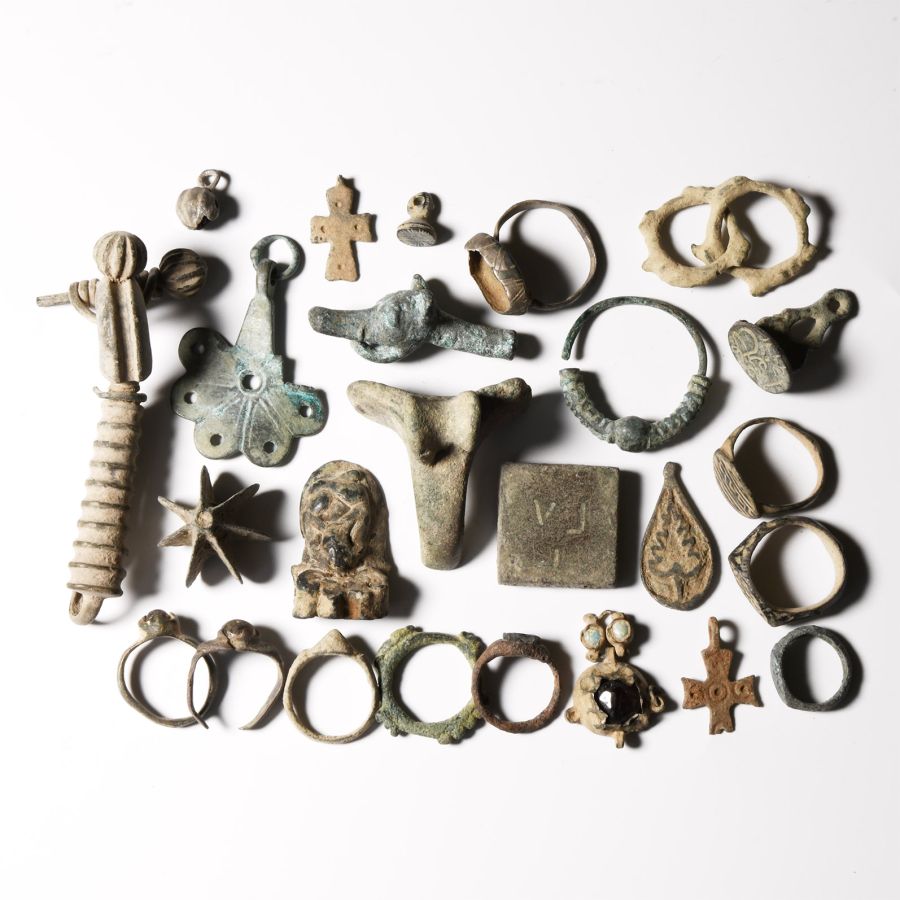
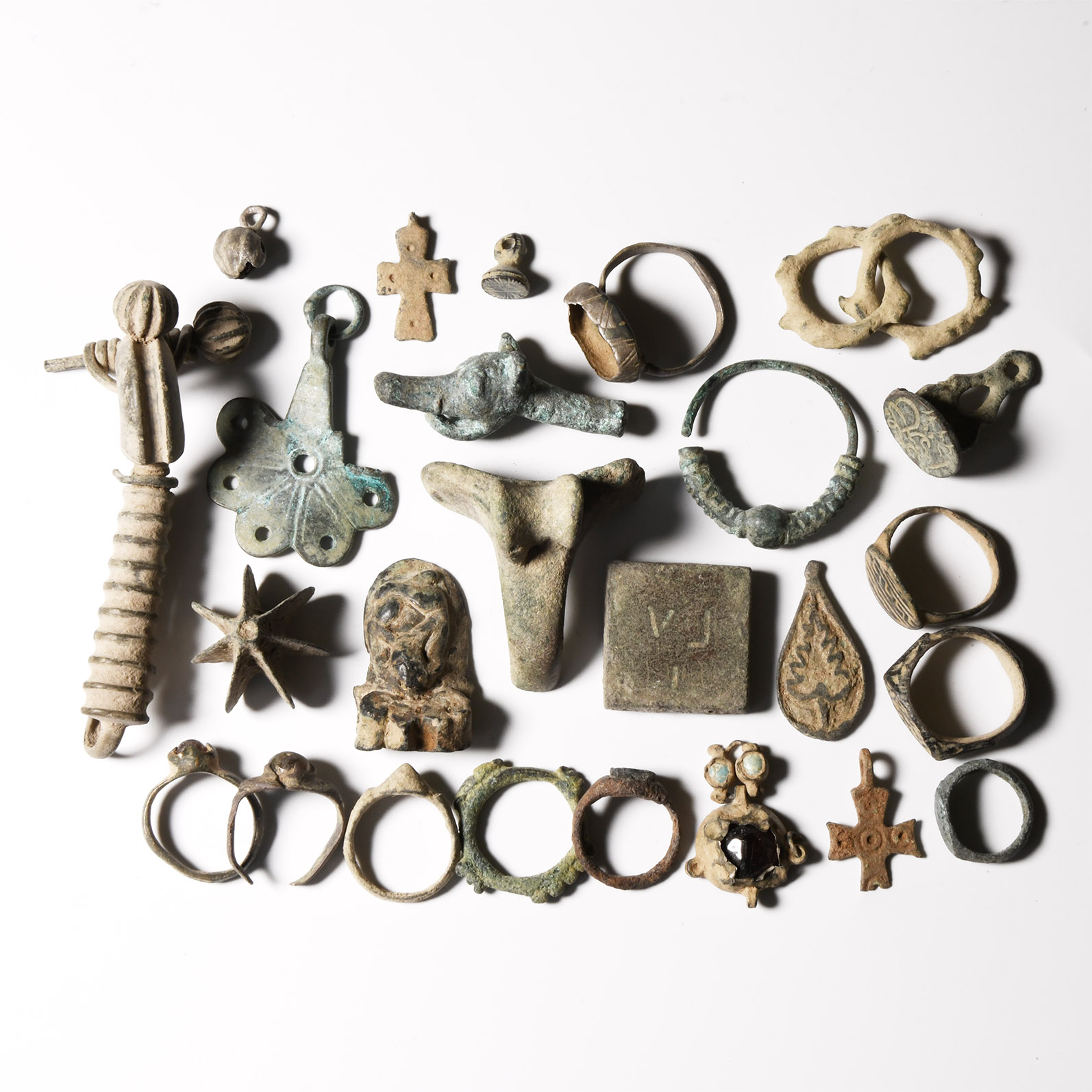
Roman and Later Bronze Artefact Group
1ST MILLENNIUM B.C. AND LATER
3/8 - 3 in. (207 grams total, 10-75 mm).
Including a bow brooch, finger rings, tabular lead-alloy trade weight and other items. [25, No Reserve]
ProvenanceEx North London, UK, gentleman, 1990s-2000s.
CONDITIONTimeLine Auctions follows a vetting process to ensure the authenticity and legality of all items, reinforcing our commitment to integrity and responsible trading. Each antiquity, antique, and coin lot undergoes thorough examination by a vetting committee of at least ten external specialists, professional trade association members, scientists, and archaeologists: Our Vetting Process
AUCTIONS:
TimeLine is a leading auction house specialising in antiquities, ancient art, collectables, natural history, coins, medals, and books. Our auctions offer museums, collectors, historians, and enthusiasts the opportunity to acquire unique and historically significant pieces.
-
.jpg)
Roman Carnelian Figural Gemstone
Circa 2nd-3rd century A.D.Estimate: £300 - 400 (+bp*)
Opening Bid: £150
With a seated female and goat, tree to the rear, all on a baseline; supplied with a museum-quality impression. 0.58 grams, 12 mm
From the collection of a Swiss gentleman formed in Europe from 1970-1980s; thence by descent from the family in London. -
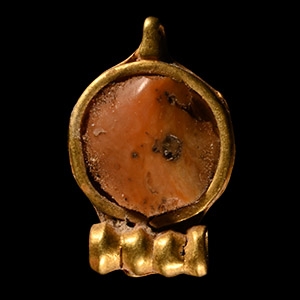
Roman Gold Pendant with Coral
3rd-5th century A.D.Sold for (Inc. bp): £176
Comprising a ribbed loop; round setting with an inset pink coral cabochon, small loop below. 0.74 grams, 13 mm
From a late Japanese specialist collector, 1970-2000s. -
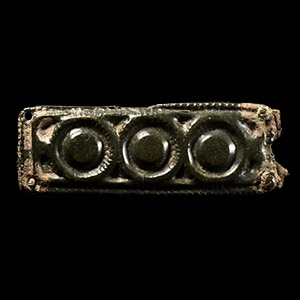
Romano-British Bronze Strap End with Bosses
1st-2nd century A.D.Sold for (Inc. bp): £20
Sheet bronze plaque with pelletted border, three roundel within raised rims, rivet to each corner attaching to the securing plate beneath; old inked collector's find-spot legend 'GRIMSBY'. 6.97 grams, 54 mm
Found Grimsby, UK.
