
Loading, please wait...
LOT 0722
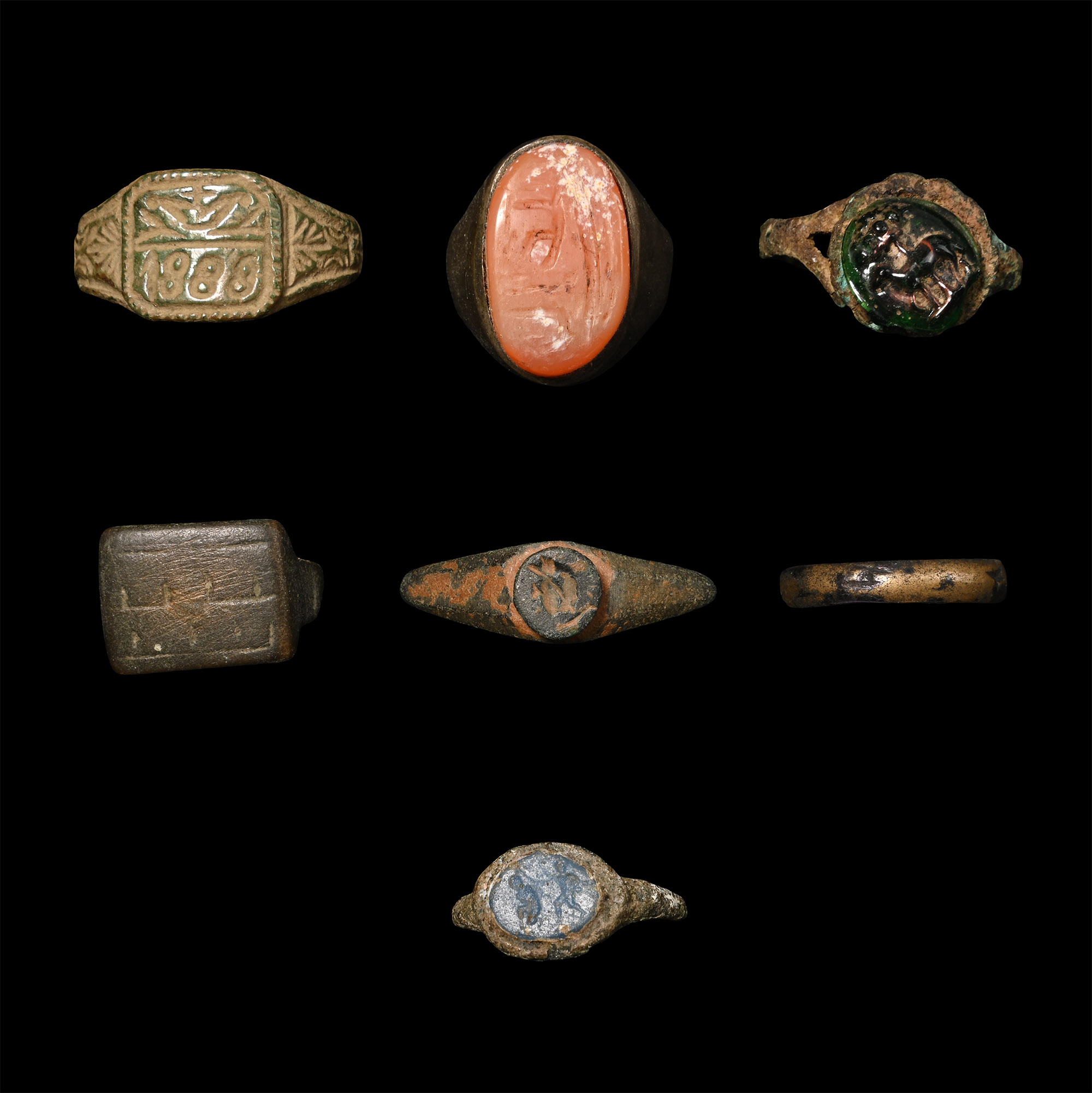
Roman and Later Bronze and Silver Ring Group
1ST-19TH CENTURY A.D.
3/4 - 1 1/8 in. (32 grams total, 19-28 mm).
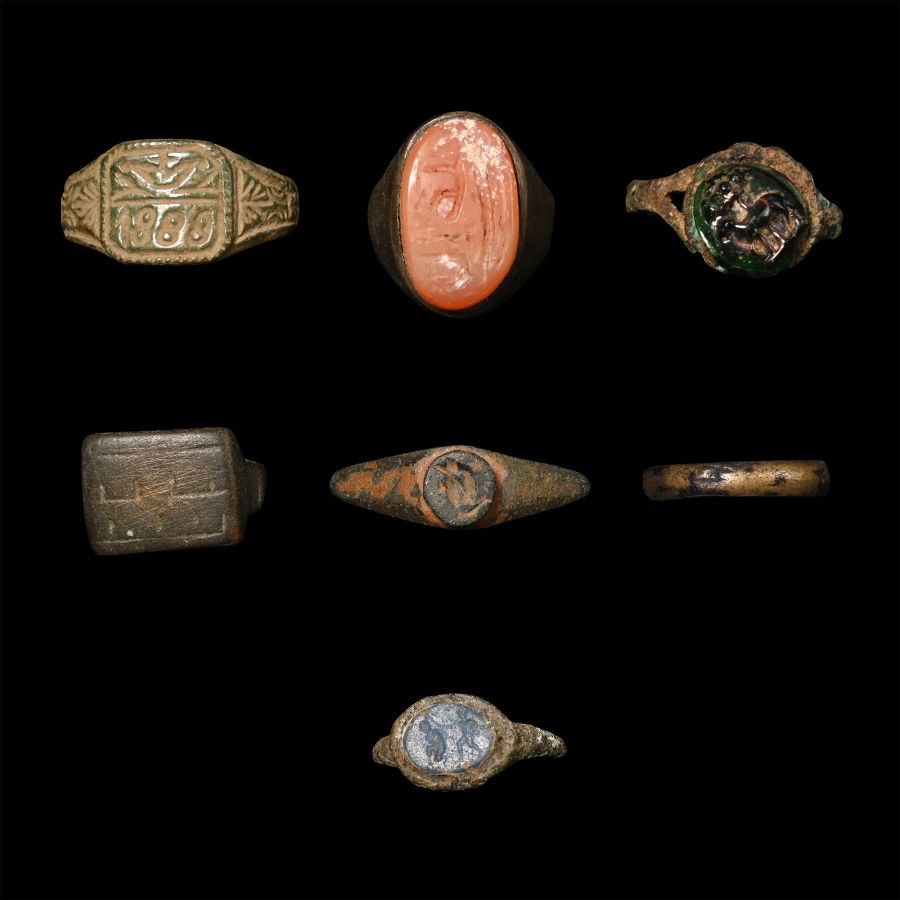
Mixed group of rings comprising: a D-section ring; a ring with angled shoulders and raised circular bezel; a ring with slender hoop and bezel set with a blue intaglio with two figures; a large ring with rectangular bezel with '1888' with a cross above; a ring with large rectangular bezel with faint remains of an inscription; a ring with forked shoulders and the bezel set with a dark green glass intaglio with a low-relief image of a doe before a tree; a ring with an oval pale orange carnelian intaglio bearing an inscription. [7, No Reserve]
ProvenanceFrom the private collection of a European gentleman (1942-2024), formed since the 1970s.
CONDITIONTimeLine Auctions follows a vetting process to ensure the authenticity and legality of all items, reinforcing our commitment to integrity and responsible trading. Each antiquity, antique, and coin lot undergoes thorough examination by a vetting committee of at least ten external specialists, professional trade association members, scientists, and archaeologists: Our Vetting Process
AUCTIONS:
TimeLine is a leading auction house specialising in antiquities, ancient art, collectables, natural history, coins, medals, and books. Our auctions offer museums, collectors, historians, and enthusiasts the opportunity to acquire unique and historically significant pieces.
-
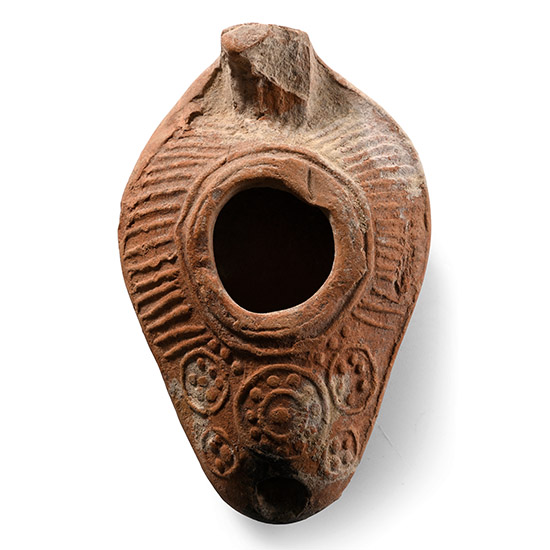
Roman Ovoid Oil Lamp with Low Relief Decoration
Holy Land, circa 2nd-3rd century A.D.Sold for (Inc. bp): £46
Stub handle to the rear, vertical ribs on the body and the nozzle with ring-and-dot motifs. 65 grams, 87 mm
Ex Ancient Art Shop, Windsor, UK, 1990s. Ex private West County, UK, collection. -
.jpg)
Roman Bronze Gnostic Ring with Chnoubis
3rd-4th century A.D.Sold for (Inc. bp): £416
With a D-section hoop and an oval bezel with the solar deity Chnoubis, its snake-body coiled and its lion head surrounded by seven rays of light. 5.35 grams, 22.96 mm overall, 19.07 mm internal diameter (approximate size British S, USA 9, Europe 20, Japan 19)
Ex German art market, 2000s. Acquired from an EU collector living in London. From the collection of a Surrey, UK, gentleman. -
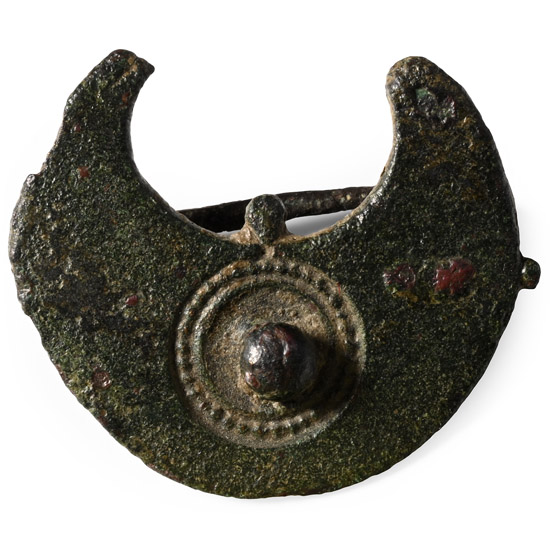
Roman Bronze Crescentic Plate Brooch
2nd-3rd century A.D.Sold for (Inc. bp): £143
Plate brooch with concentric lines around a raised boss; pin-lugs, pin and catchplate to the reverse. 5.77 grams, 29 mm
From the private coin collection of a West London, UK, gentleman, formed since the mid 1980s.
