
Loading, please wait...
LOT 0755
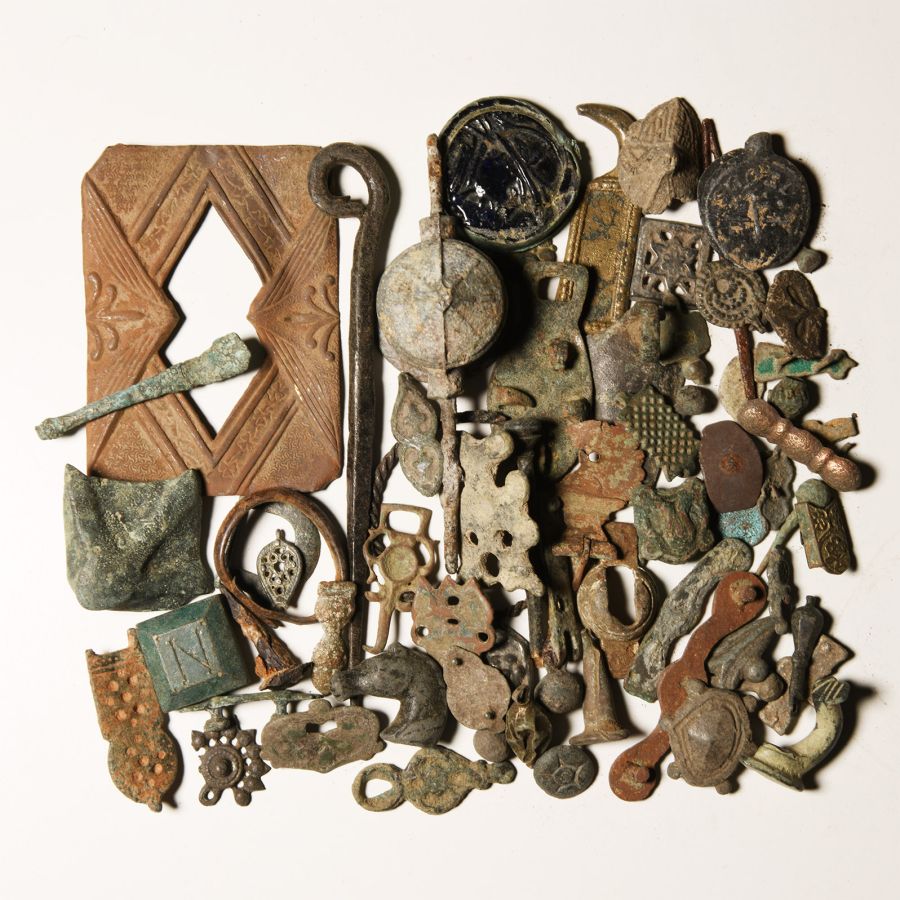
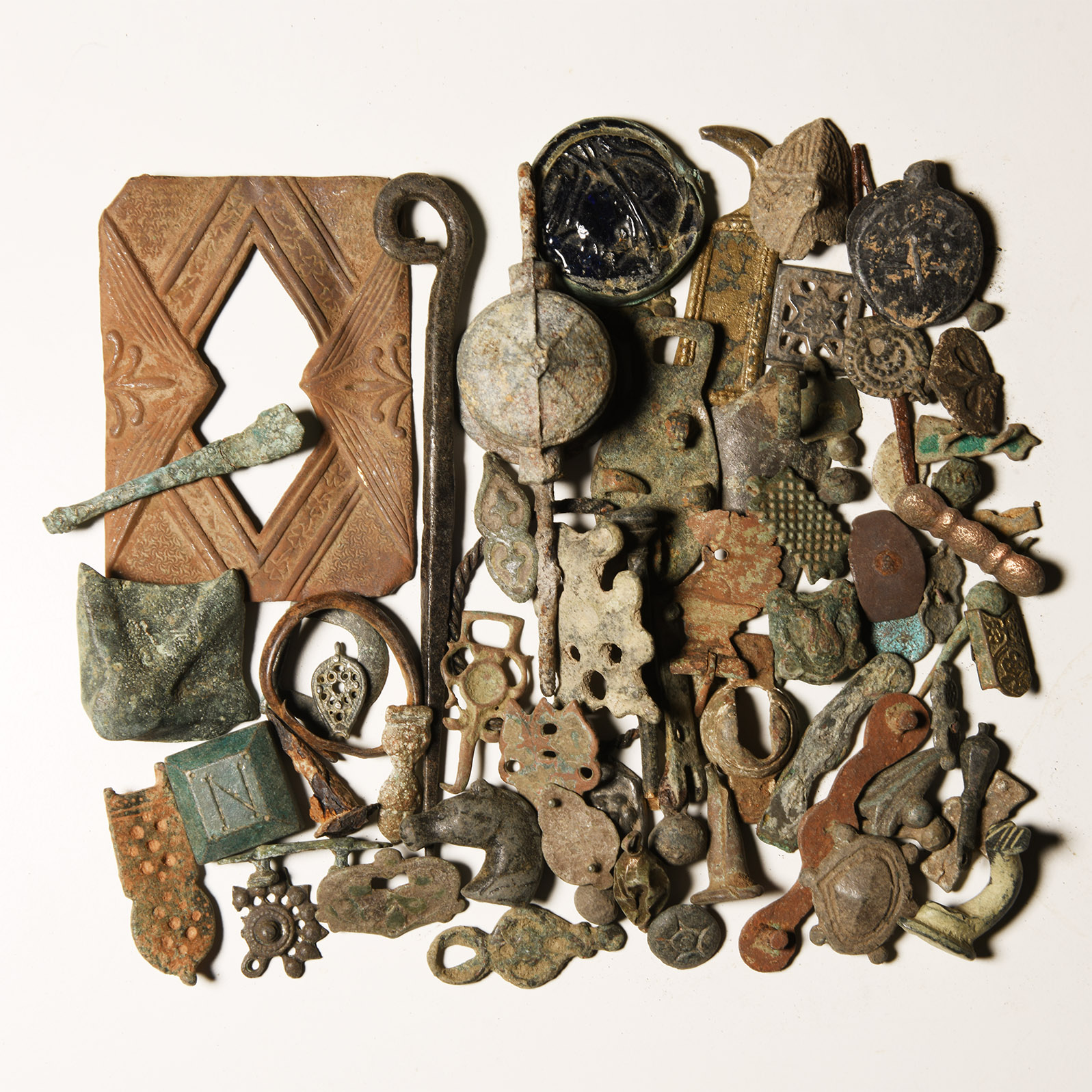
Roman and Later Artefact Group
1ST-20TH CENTURY A.D.
3/8 - 5 1/4 in. (498 grams total, 0.8-13.3 cm).
Comprising complete and fragmentary artefacts: a glass cameo; seal; implements; strap ends; mounting studs; brooches; weights; buckles; pendants; together with other miscellaneous artefacts. [70, No Reserve]
ProvenanceAcquired on the UK art market.
Property of a Ruislip, UK, gentleman, by inheritance.
TimeLine Auctions follows a vetting process to ensure the authenticity and legality of all items, reinforcing our commitment to integrity and responsible trading. Each antiquity, antique, and coin lot undergoes thorough examination by a vetting committee of at least ten external specialists, professional trade association members, scientists, and archaeologists: Our Vetting Process
AUCTIONS:
TimeLine is a leading auction house specialising in antiquities, ancient art, collectables, natural history, coins, medals, and books. Our auctions offer museums, collectors, historians, and enthusiasts the opportunity to acquire unique and historically significant pieces.
-
.jpg)
Roman Bronze-Handled Key with Panther
1st-4th century A.D.Estimate: £600 - 800 (+bp*)
Opening Bid: £300
The bronze handle modelled as the forequarters of a panther leaping from a crown of fronds, with stylised facial detailing; iron stem, bit and wards. 74 grams, 77 mm
Acquired on the German art market around 2000s. From the collection of an EU gentleman living in the UK. -
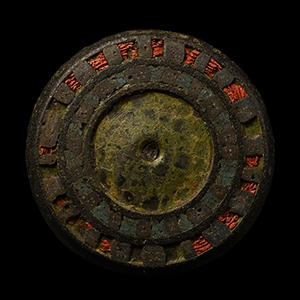
Large Roman Bronze Millefiori Mount
Circa 2nd century A.D.Sold for (Inc. bp): £260
Discoid in form with chamfered side edge and mounting lug to reverse centre, decorated with concentric circles populated with red and blue enamelled square cells. 12.9 grams, 42 mm
Found near Great Walsingham, Norfolk, UK, circa 2005. -
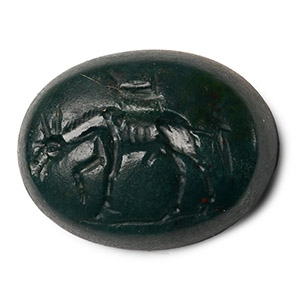
Roman Bifacial Green Jasper Gemstone with Saddled Male Donkey and EVM
1st century A.D.Estimate: £800 - 1,000 (+bp*)
Opening Bid: £444
The intaglio with a donkey (mule?) grazing, body facing right; Latin inscription on the verso ‘EVM’ (him). 0.98 grams, 12 mm
Acquired in the late 1980s-early 1990s. Important North West London collection.
Donkeys were used by the Roman army from circa 200 B.C. but mules, the hybrid offspring of a male donkey and a female horse, were to become the most important working animals for the military and were used to pull heavy artillery such as catapults. It has been estimated that there were probably half a million mules serving in the Roman army by the time of Augustus (31 B.C.-A.D. 14). DNA studies have now shown that mules may have comprised up to 50% of the equids in the Roman Empire. The use of pack-mules for the army continued in the Eastern Roman army until the fall of Constantinople.
