
Loading, please wait...
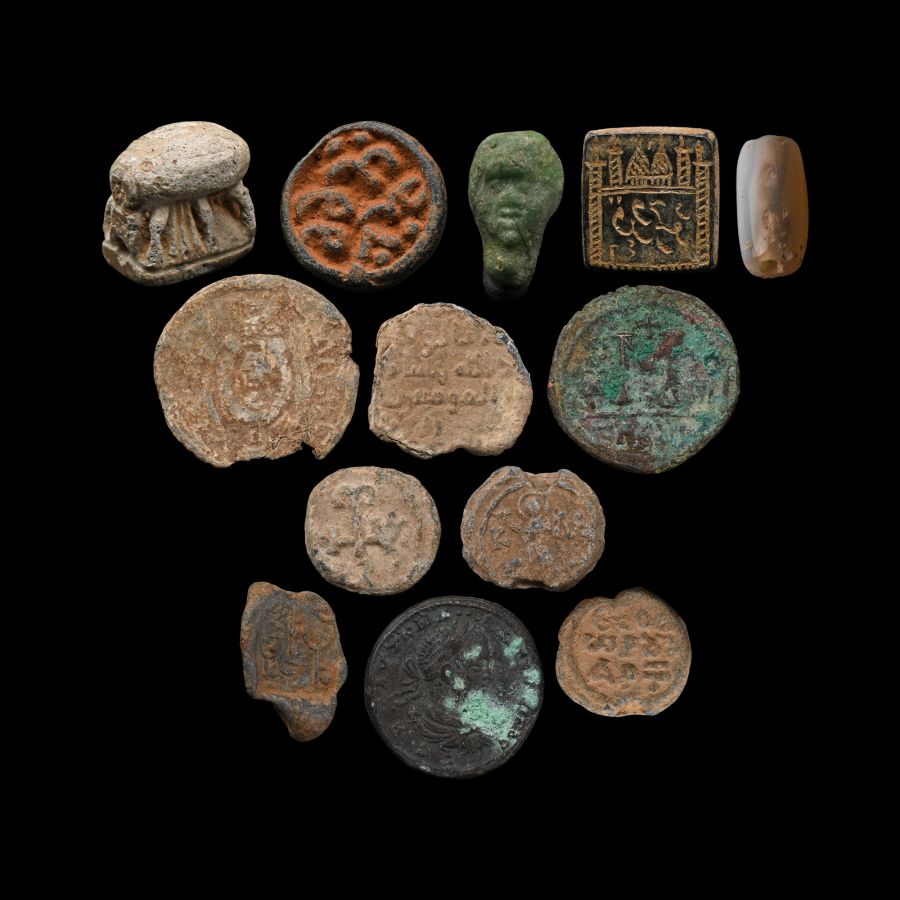
LOT 0730
Roman and Later Artefact Collection
CIRCA 1ST MILLENNIUM A.D.
5/8 - 1 1/8 in. (101 grams total, 17-30 mm).
Including scaraboid amulet, fusiform banded agate bead, bronze head from a votive figure and other items. [16]
ProvenancePrivate collection, acquired on the German art market in 1992; thence by descent.
LiteratureCf. for a similar coin of Tiberius II Ireland, S., Greek, Roman and Byzantine Coins at Amasya (ancient Amaseia) Turkey, London, 2000, nos.3672.
FootnotesAmong the collection there is an interesting coin (AE follis) of Tiberius II, Μ, above cross, to left ANNO, to right VIII, in ex. THEUP., AD 590-591.
CONDITIONTimeLine Auctions follows a vetting process to ensure the authenticity and legality of all items, reinforcing our commitment to integrity and responsible trading. Each antiquity, antique, and coin lot undergoes thorough examination by a vetting committee of at least ten external specialists, professional trade association members, scientists, and archaeologists: Our Vetting Process
AUCTIONS:
TimeLine is a leading auction house specialising in antiquities, ancient art, collectables, natural history, coins, medals, and books. Our auctions offer museums, collectors, historians, and enthusiasts the opportunity to acquire unique and historically significant pieces.
-
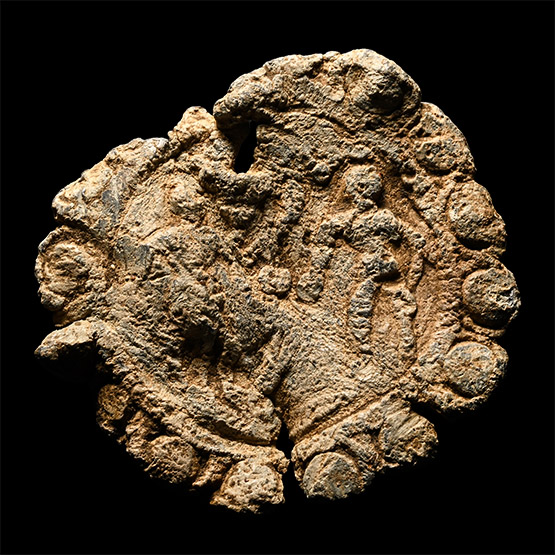
Roman Lead Roundel with Boxers
1st-4th century A.D.Sold for (Inc. bp): £33
Discoid mount with scrolled border, two standing figures at the centre, facing each other. 20 grams, 40 mm
From a retired Lincolnshire, UK, gentleman's collection, a long time member of the Pewter Society. -
.jpg)
Roman Banded Orange Agate Gemstone with Gryllus
2nd-3rd century A.D.Sold for (Inc. bp): £143
With an intaglio figure with a large head advancing left on bird legs, long beard and nose, wearing a curving helmet with a cockerel-head finial with drips falling from its nose; supplied with a museum-quality impression. 0.36 grams, 8.90 mm
From the private collection of a European gentleman (1942-2024), formed since the 1970s. -
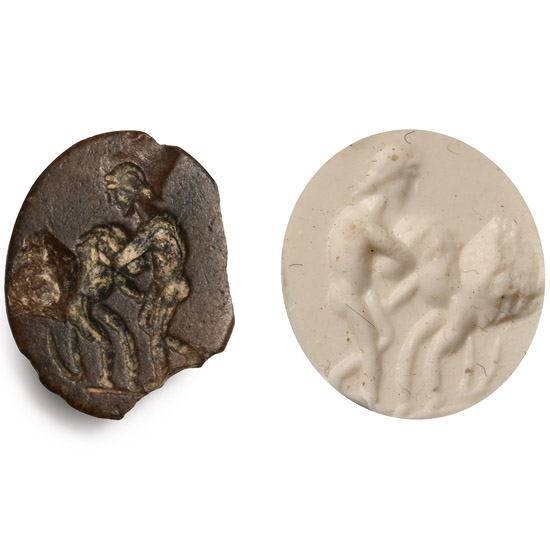
Roman Agate Gemstone with a Combat Scene with Gryphon
2nd-3rd century A.D.Sold for (Inc. bp): £91
With intaglio scene of a man and a winged beast in combat; inscribed to verso 'OωKA / PAKA'; supplied with a museum-quality impression. 0.44 grams, 12.71 mm
From the private collection of a European gentleman (1942-2024), formed since the 1970s.
