
Loading, please wait...
LOT 0416
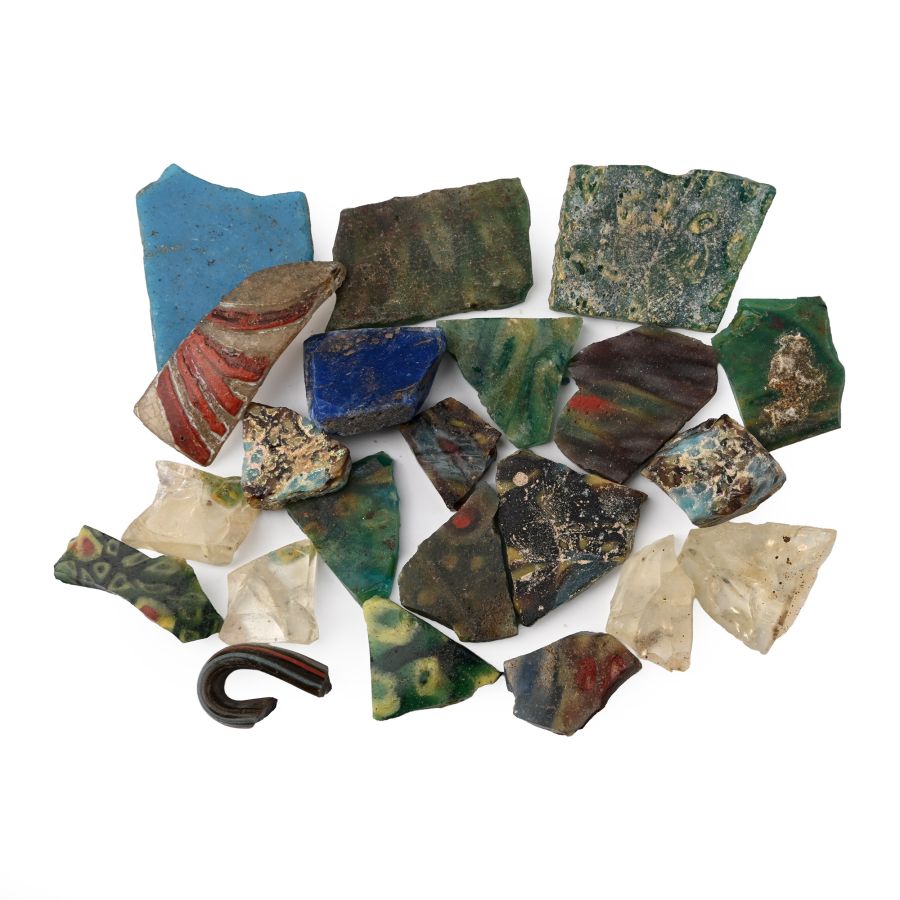
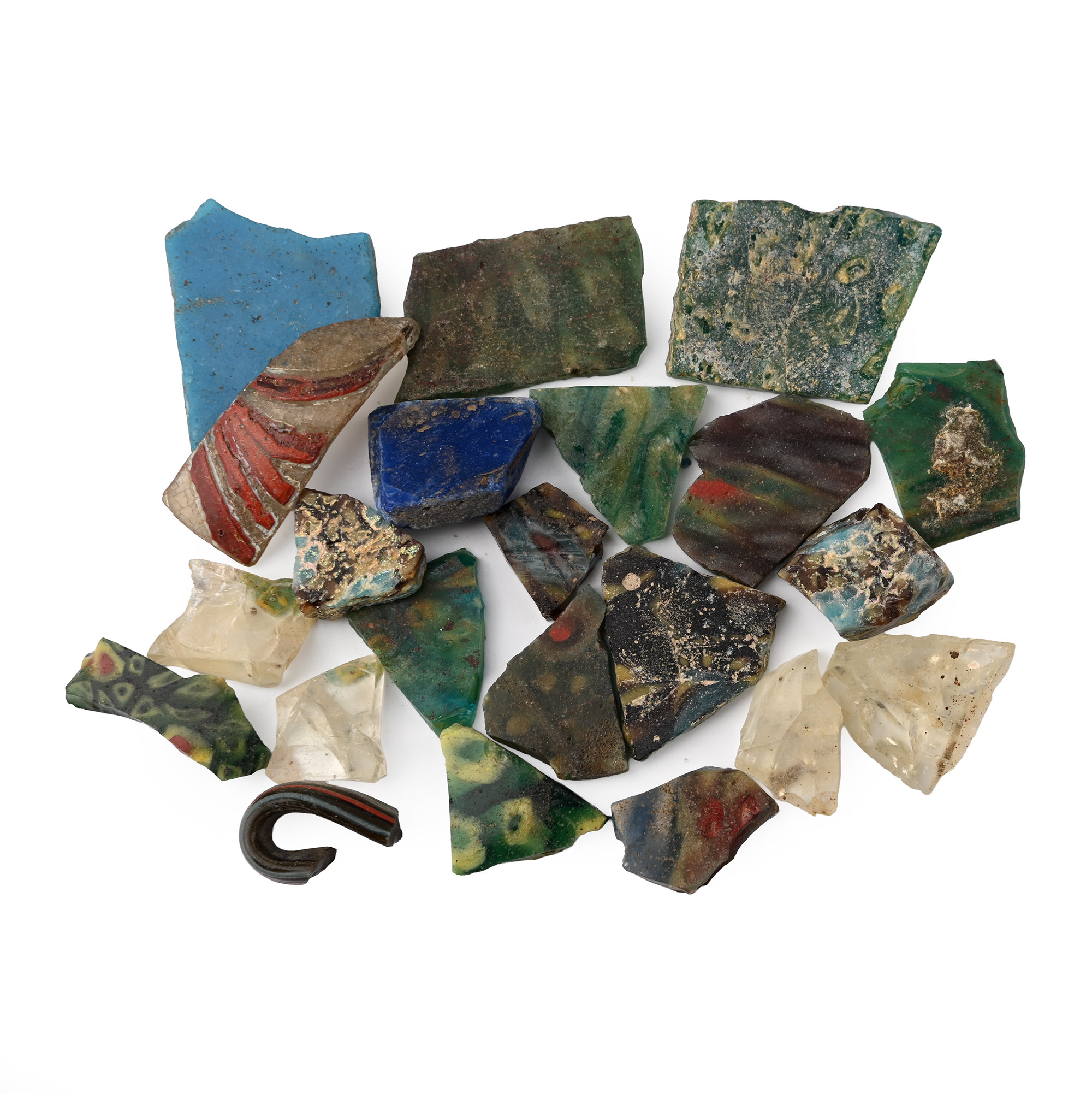
Roman and Egyptian Glass Fragment Collection
2ND CENTURY B.C.-1ST CENTURY A.D.
1/2 - 1 1/8 in. (26 grams total, 12-29 mm).
Comprising a mixed group of mosaic and other glass fragments. [22]
ProvenanceEx Gallery Mikazuki prior to 1984.
Property of a London, UK, gentleman.
This lot is accompanied by an illustrated lot declaration signed by the Head of the Antiquities Department, Dr Raffaele D'Amato.
TimeLine Auctions follows a vetting process to ensure the authenticity and legality of all items, reinforcing our commitment to integrity and responsible trading. Each antiquity, antique, and coin lot undergoes thorough examination by a vetting committee of at least ten external specialists, professional trade association members, scientists, and archaeologists: Our Vetting Process
AUCTIONS:
TimeLine is a leading auction house specialising in antiquities, ancient art, collectables, natural history, coins, medals, and books. Our auctions offer museums, collectors, historians, and enthusiasts the opportunity to acquire unique and historically significant pieces.
-
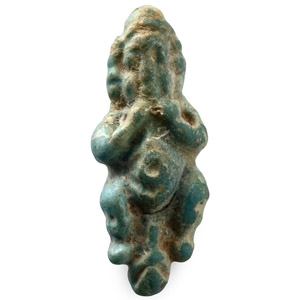
Egyptian Faience Phallic Figure Amulet
Ptolemaic Period, 332-30 B.C.Sold for (Inc. bp): £130
Blue glazed figure of a chubby dwarf with bent legs seated on emphasised phallus, both hands touching the chin, suspension loop to the reverse. 2.43 grams, 29 mm
From an early 20th century collection. This lot is accompanied by an illustrated lot declaration signed by the Head of the Antiquities Department, Dr Raffaele D'Amato. -
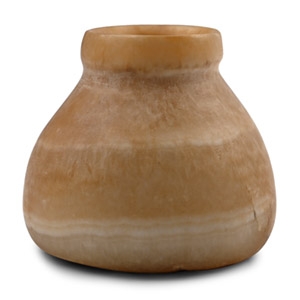
Egyptian Alabaster Cosmetic Jar
New Kingdom, 13th-11th century B.C.Sold for (Inc. bp): £221
Squat, globular vessel with a flat bottom and thick, carinated rim. 129 grams, 56 mm
From the private collection of a Canadian gentleman living in Essex, UK, formed since the 1920s-circa 1990. Property of an Essex lady until the late 1990s; thence by descent. From the private collection of an Essex gentleman since the late 1990s. This lot is accompanied by an illustrated lot declaration signed by the Head of the Antiquities Department, Dr Raffaele D'Amato.
Such vessels were used to hold cosmetics. The low shape and wide base prevented tipping when extracting the cosmetic with an applicator. -
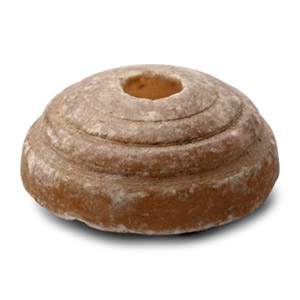
Phoenician Alabaster Spindle Whorl
1st millennium B.C.Sold for (Inc. bp): £52
Plano-convex in section with stepped profile to dome and underside. 16.52 grams, 32 mm
Found in Lebanon before 1980. From the private collection of Kenneth Machin (1936-2020), Buckinghamshire, UK; his collection of antiquities and natural history was formed since 1948; thence by descent. This lot is accompanied by an illustrated lot declaration signed by the Head of the Antiquities Department, Dr Raffaele D'Amato.
