
Loading, please wait...
LOT 0801
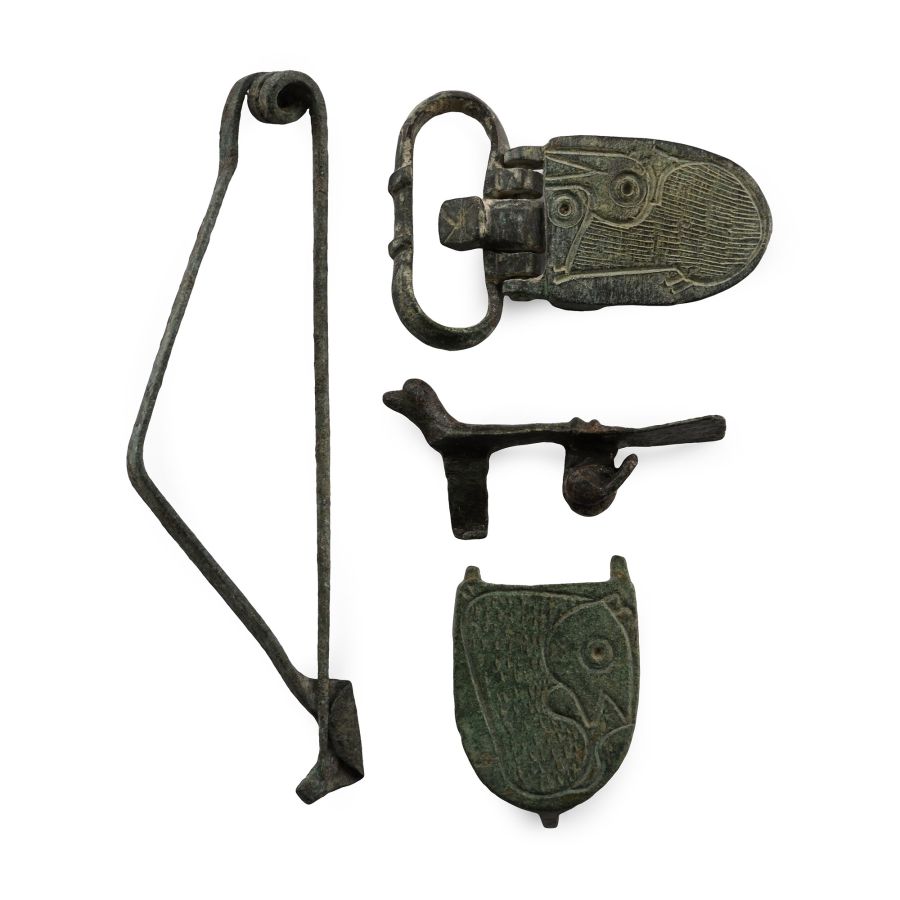
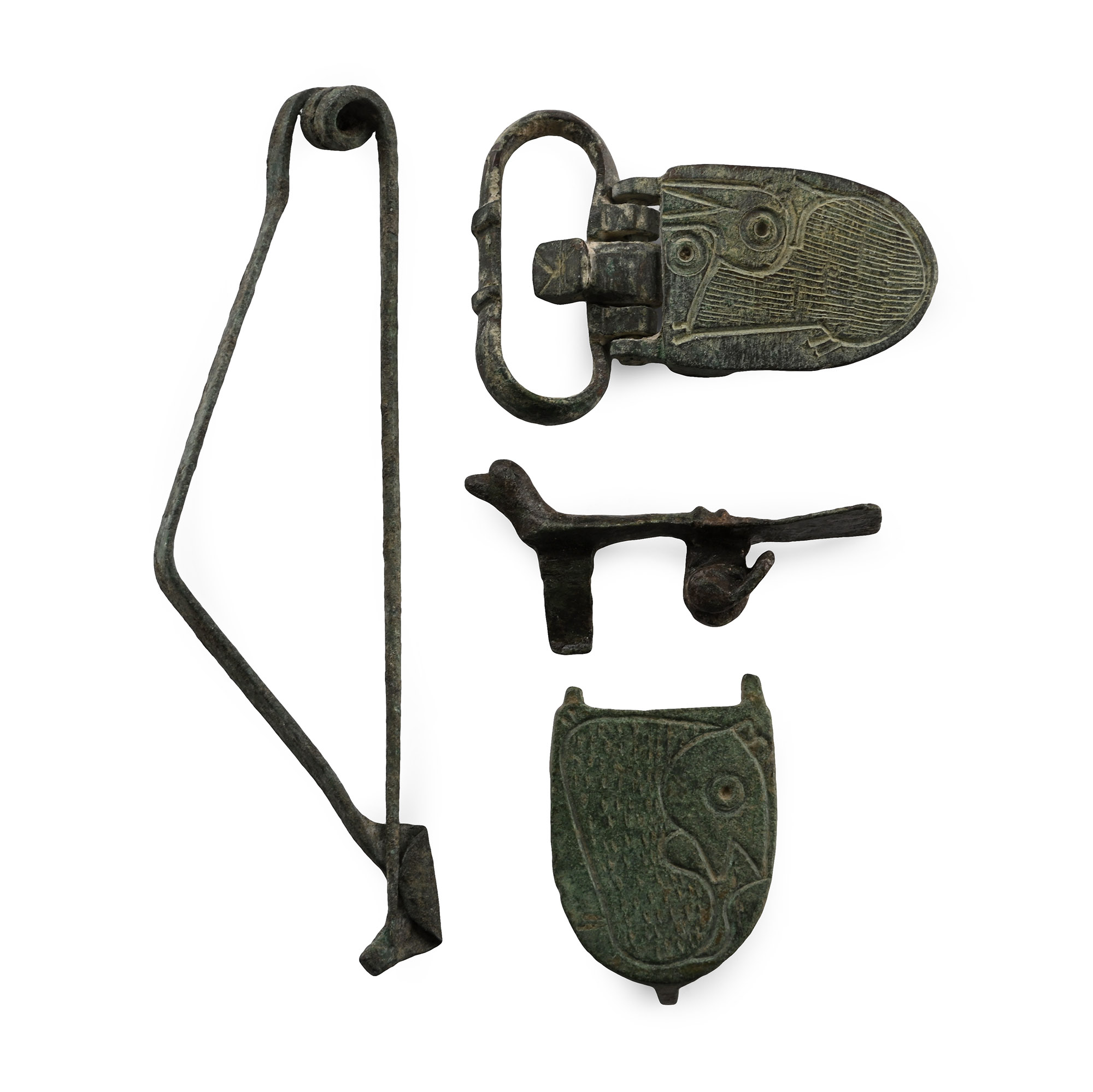
Roman and Byzantine Bronze Artefact Collection
3RD-6TH CENTURY A.D.
1 1/4 - 3 1/2 in. (43 grams total, 32-91 mm).
Comprising of a large bow brooch, small brooch formed as a bird with folded wings and wide expanding tail, two buckle plates with stylized zoomorphic creature. [4, No Reserve]
ProvenanceFrom the stock of a former UK antiquarian, acquired at trade fairs and from private collection formed in the 1980s-1990s.
Private collection, Europe.
TimeLine Auctions follows a vetting process to ensure the authenticity and legality of all items, reinforcing our commitment to integrity and responsible trading. Each antiquity, antique, and coin lot undergoes thorough examination by a vetting committee of at least ten external specialists, professional trade association members, scientists, and archaeologists: Our Vetting Process
AUCTIONS:
TimeLine is a leading auction house specialising in antiquities, ancient art, collectables, natural history, coins, medals, and books. Our auctions offer museums, collectors, historians, and enthusiasts the opportunity to acquire unique and historically significant pieces.
-
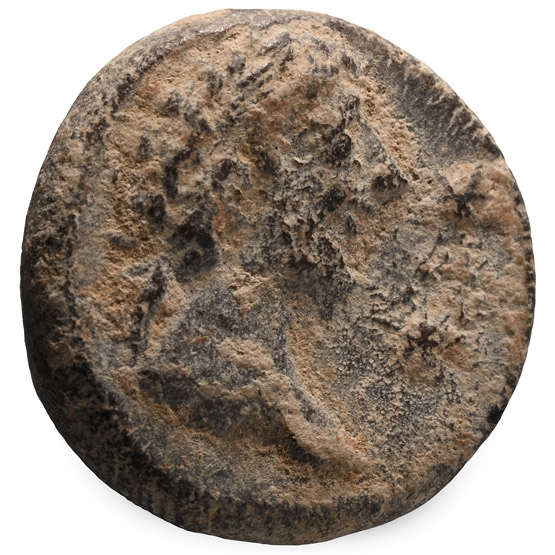
Roman Terracotta Tessera with Arabian Bust
Circa 1st-2nd century A.D.Sold for (Inc. bp): £13
Plano-convex in section with moulded profile bust to the flat face. 2.14 grams, 17 mm
Ex Abelita family collection, 1980s-2000s. -
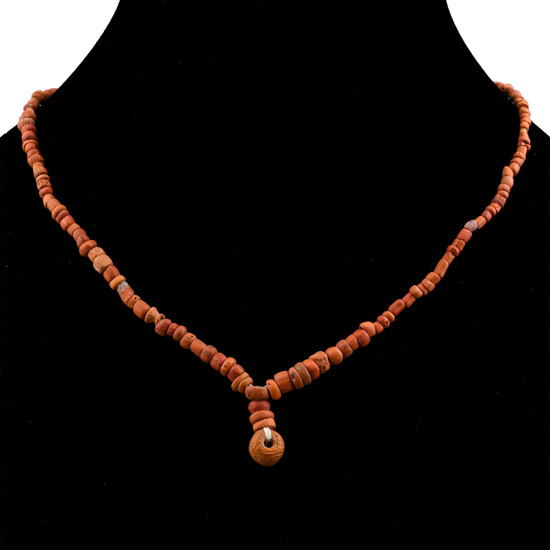
Roman and Other Red Glass Bead Necklace String
1st-4th century A.D. and laterSold for (Inc. bp): £208
Mixed group of gently graduating beads, large oblate bead as a central feature; restrung. 10.79 grams, 39 cm
From London, UK, gallery collection, 1990s. -
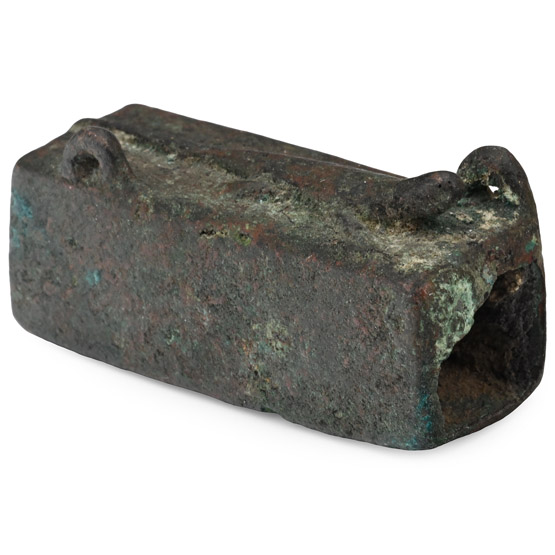
Roman Bronze Padlock Barrel with Lizard
43-410 A.D.Sold for (Inc. bp): £221
Hollow square in cross-section, with thin walls; terminals with copper-alloy plate soldered onto them; moulded lizard decoration to the upper face consisting of a low oval body tapering to a thin tail; head raised and short legs spread out from the body; small indentation either side of the head representing the eyes, linear engraved texture the body for scales; two perforated lugs at opposed corners. 29 grams, 48 mm
Found Gloucestershire, UK. From the collection of a late Gloucestershire, UK, collector. Accompanied by a copy of the British Museum's Portable Antiquities Scheme (PAS) report no.GLO-791057.
