
Loading, please wait...
LOT 0611
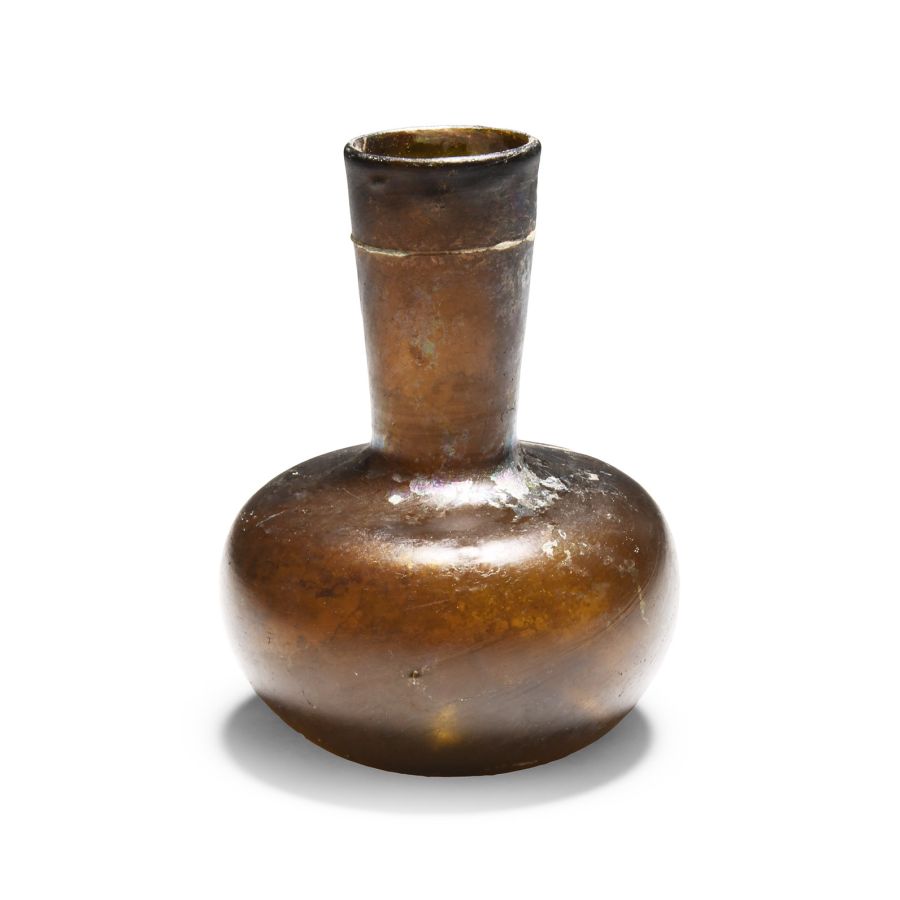
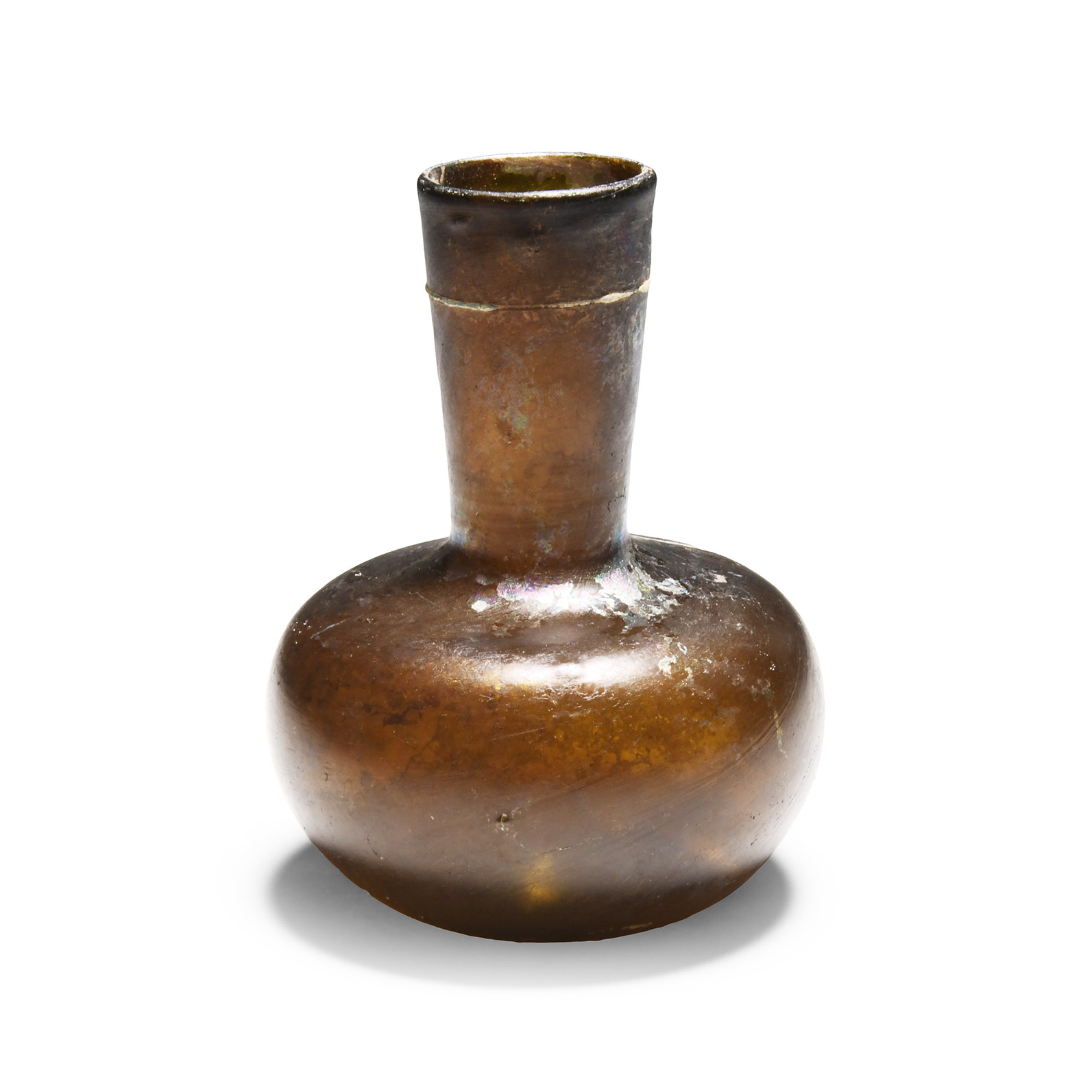
Roman Amber Glass Vase with Trail
CIRCA 2ND-3RD CENTURY A.D.
4 in. (59 grams, 10.2 cm high).
A squat piriform bottle, dimpled base, broad funicular neck with blue trail. [No Reserve]
ProvenanceAcquired 1970s-1996.
Property of a North American collector.
London collection, 2016.
TimeLine Auctions follows a vetting process to ensure the authenticity and legality of all items, reinforcing our commitment to integrity and responsible trading. Each antiquity, antique, and coin lot undergoes thorough examination by a vetting committee of at least ten external specialists, professional trade association members, scientists, and archaeologists: Our Vetting Process
AUCTIONS:
TimeLine is a leading auction house specialising in antiquities, ancient art, collectables, natural history, coins, medals, and books. Our auctions offer museums, collectors, historians, and enthusiasts the opportunity to acquire unique and historically significant pieces.
-
.jpg)
Sogdian Silver Goblet
7th century A.D.Estimate: £1,800 - 2,400 (+bp*)
Opening Bid: £900
The carinated body with concave upper and convex lower halves, pronounced rib around the equator, shallower ribbing decorating the lower body, slender collared stem and discoid foot. 265 grams, 13 cm high
Acquired on the London art market, 1980-1983.
In the treasure of Bulgar Khan Kuvrat various similar goblets were found, characterised by Greek letters. They were probably part of the booty captured to the Sassanians by the Roman Emperor Heraclius, then transformed in donativa for his ally the Khan Kuvrat. The form has parallels for a wide extension of territory, from the Avar Khaganate until China. -
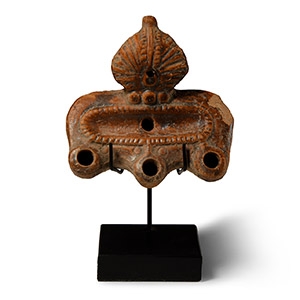
Roman Terracotta Triple-Spouted Lamp
Circa 2nd-1st millennium B.C.Sold for (Inc. bp): £598
An oblong vessel with three spouts and palmette reflector handle with pierced lug below to reverse; raised and notched discus; accompanied by a custom-made display stand. 209 grams total, 15 cm high including stand
From the collection of the German specialist Arno Jumpertz, Leverkusen, Germany, 1924-1984. Most of the collection was exhibited at Neus museum in 1985. -
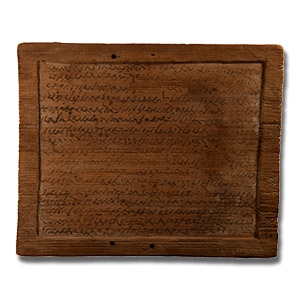
Roman Reused Inked Wooden Wax Tablet Relating to Sheep and Clothing
4th century A.D.Sold for (Inc. bp): £7,150
The shallow recessed panel displaying seventeen lines of hand-inked cursive text; reverse bearing twenty lines of hand-inked cursive text with a shallow rectangular vertical recess which once held wax seals; pierced twice on the upper and lower edges for attachment. 50 grams, 19.5 x 16 cm
From an important London collection since 1975.
Prof. Dr. Phil. Peter Rotenhoefer says: "The tablet is the second tabula of a testament consisting normally of three tablets (a tryptich). It contains in a highly formalistic legal language legacies for various persons (inter alia a Iulia) who receive certain items like e.g. sheep and clothes. 17 lines of cursive script on the first page, 20 lines on the rear."
