
Loading, please wait...
LOT 0147
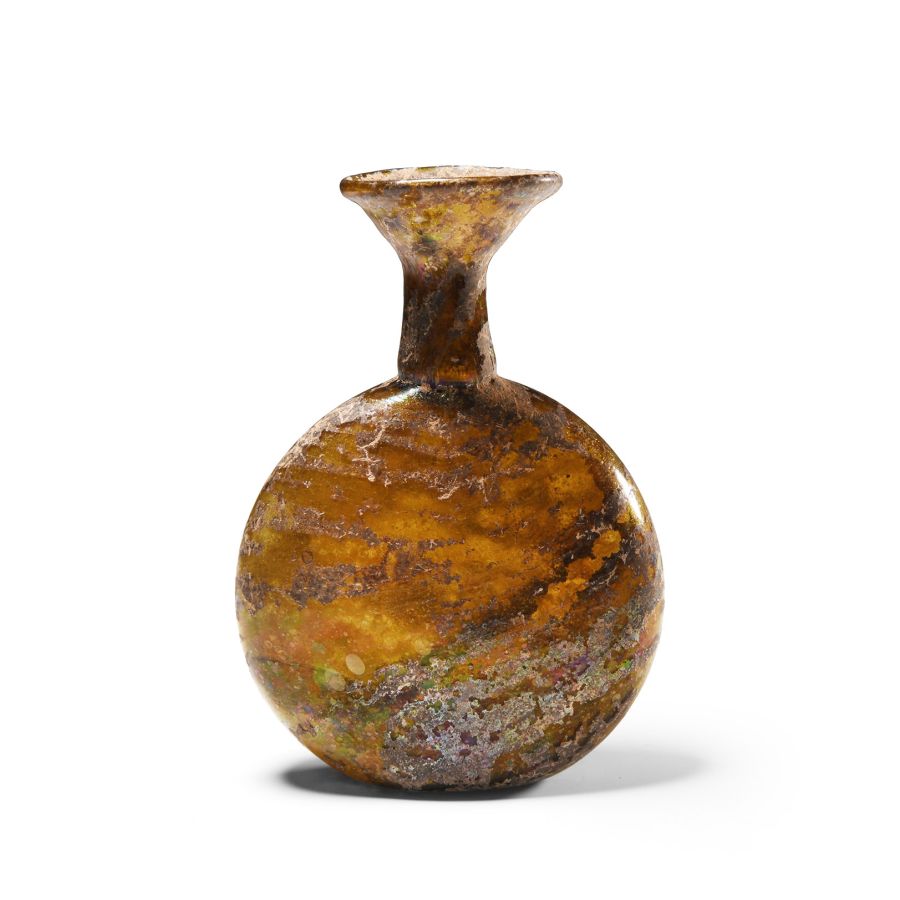
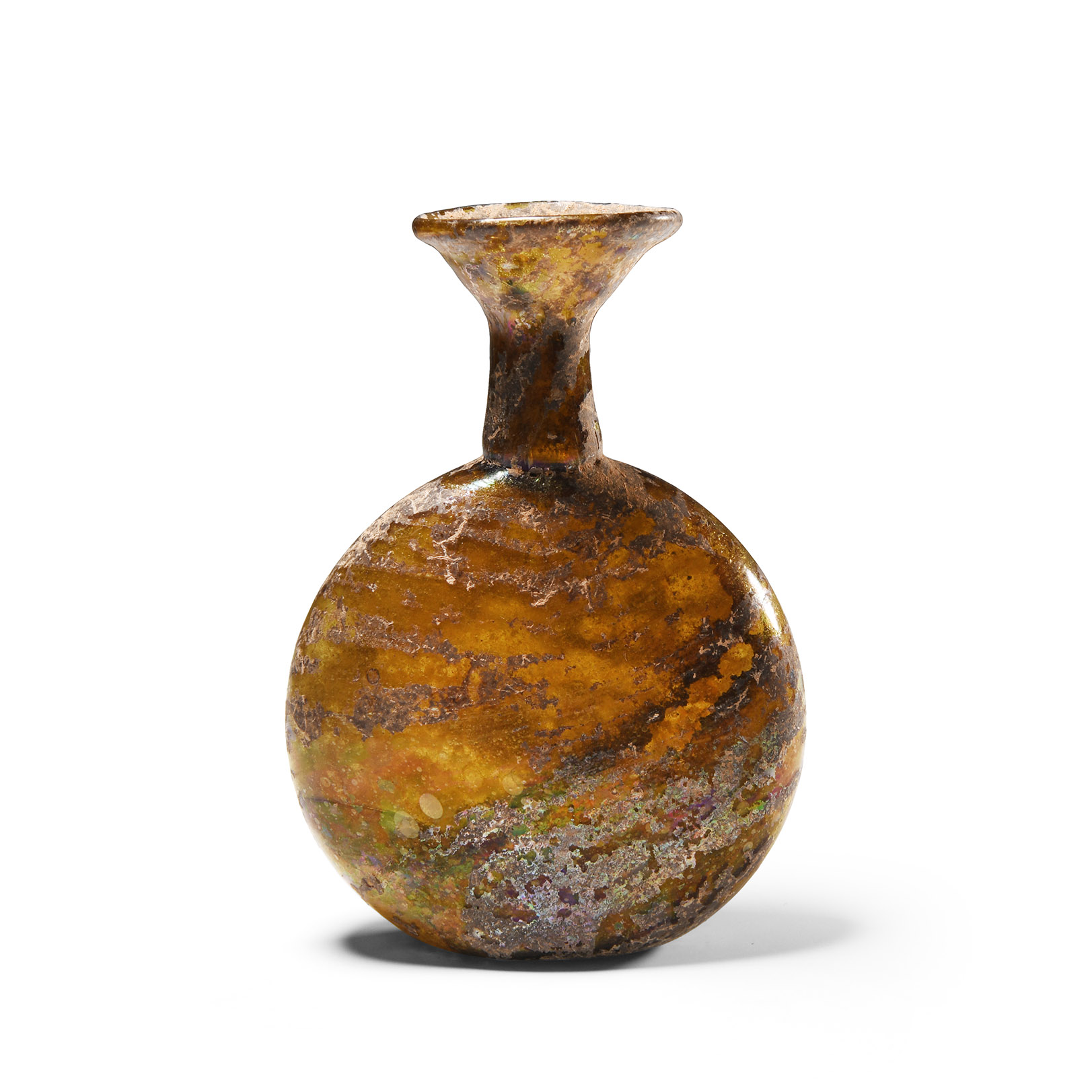
Roman Amber Glass Pilgrim's Flask
4TH-5TH CENTURY A.D.
6 in. (107 grams, 15.2 cm high).
With tubular neck and everted rim.
ProvenanceAcquired 1980-2015.
Ex Abelita family collection.
Cf. The Metropolitan Museum, New York, accession numbers 17.194.93 and 81.10.51, for similar.
Footnotes'At the moment the cross is brought for veneration .... they offer oil to be blessed in little flasks. When the mouth of one of the flasks touches the Wood of the Cross, the oil instantly bubbles over, and unless it is closed very quickly it all spills out.' (The Piacenza Pilgrim, v. 173, circa 570 AD).
CONDITIONTimeLine Auctions follows a vetting process to ensure the authenticity and legality of all items, reinforcing our commitment to integrity and responsible trading. Each antiquity, antique, and coin lot undergoes thorough examination by a vetting committee of at least ten external specialists, professional trade association members, scientists, and archaeologists: Our Vetting Process
AUCTIONS:
TimeLine is a leading auction house specialising in antiquities, ancient art, collectables, natural history, coins, medals, and books. Our auctions offer museums, collectors, historians, and enthusiasts the opportunity to acquire unique and historically significant pieces.
LOT 0147
Roman Amber Glass Pilgrim's Flask
Estimate £1,000 - 1,400€1,160 - 1,620 (for guidance only)$1,350 - 1,890 (for guidance only)
-
Roman Translucent Glass Flask
1st-2nd century A.D.Estimate: £100 - 140 (+bp*)
Opening Bid: £40
Bulbous body, cylindrical neck and everted rim. 39.3 grams, 12 cm high
Acquired 1980-2015. Ex Abelita family collection. -
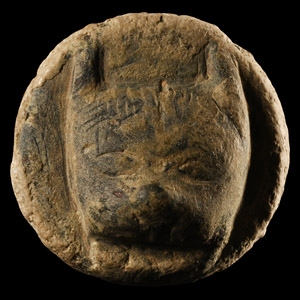
Roman Bronze Lion's Face Mount
1st-4th century A.D.Sold for (Inc. bp): £65
Modelled in the round with naturalistic detailing, ears upright. 23.4 grams, 27 mm
‘The Ancient Menagerie Collection’ formerly the property of a Cambridgeshire lady, collected since the 1990s and acquired from auctions and dealers throughout Europe and the USA, now ex London collection. -
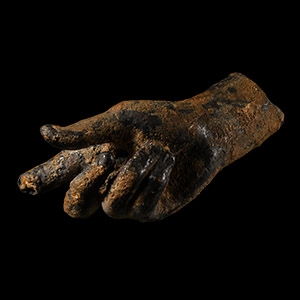
Roman Bronze Statue Right Hand
2nd-3rd century A.D.Sold for (Inc. bp): £390
Modelled in the round in a pointing gesture, with semi-naturalistic anatomical and nail detailing; hollow-formed with a piercing through the palm; tip of index finger lost in antiquity. 169 grams, 73 mm
Acquired on the UK art market, 1982-1989.
