
Loading, please wait...
LOT 0598
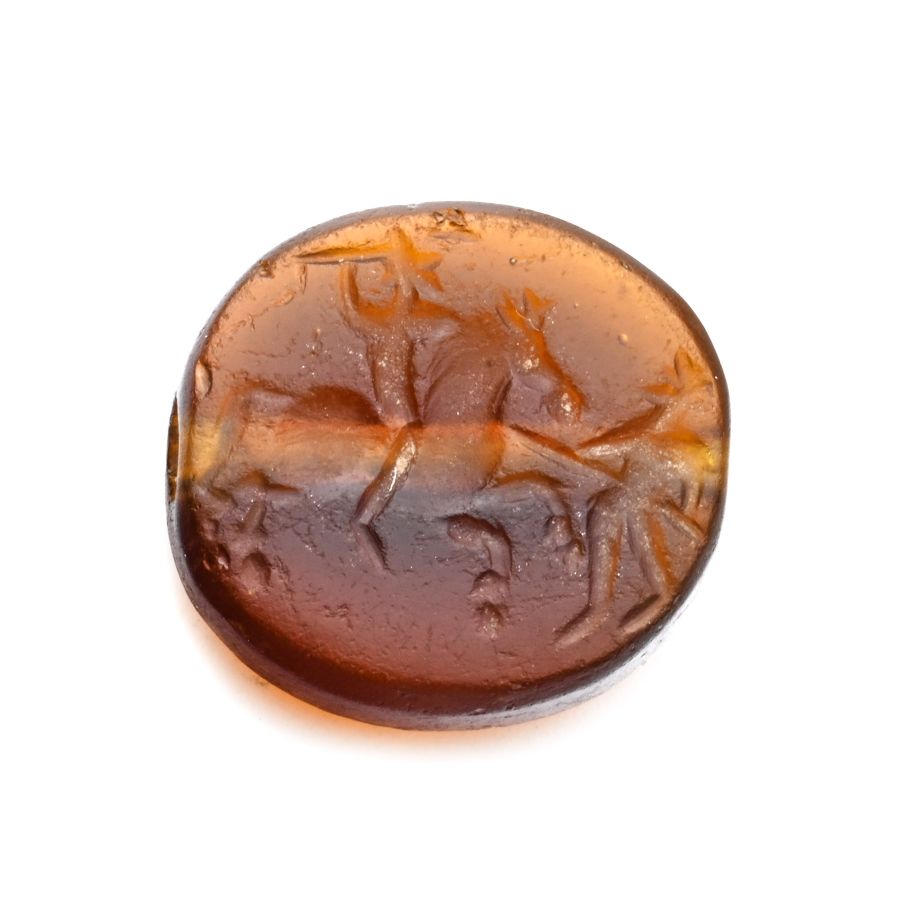
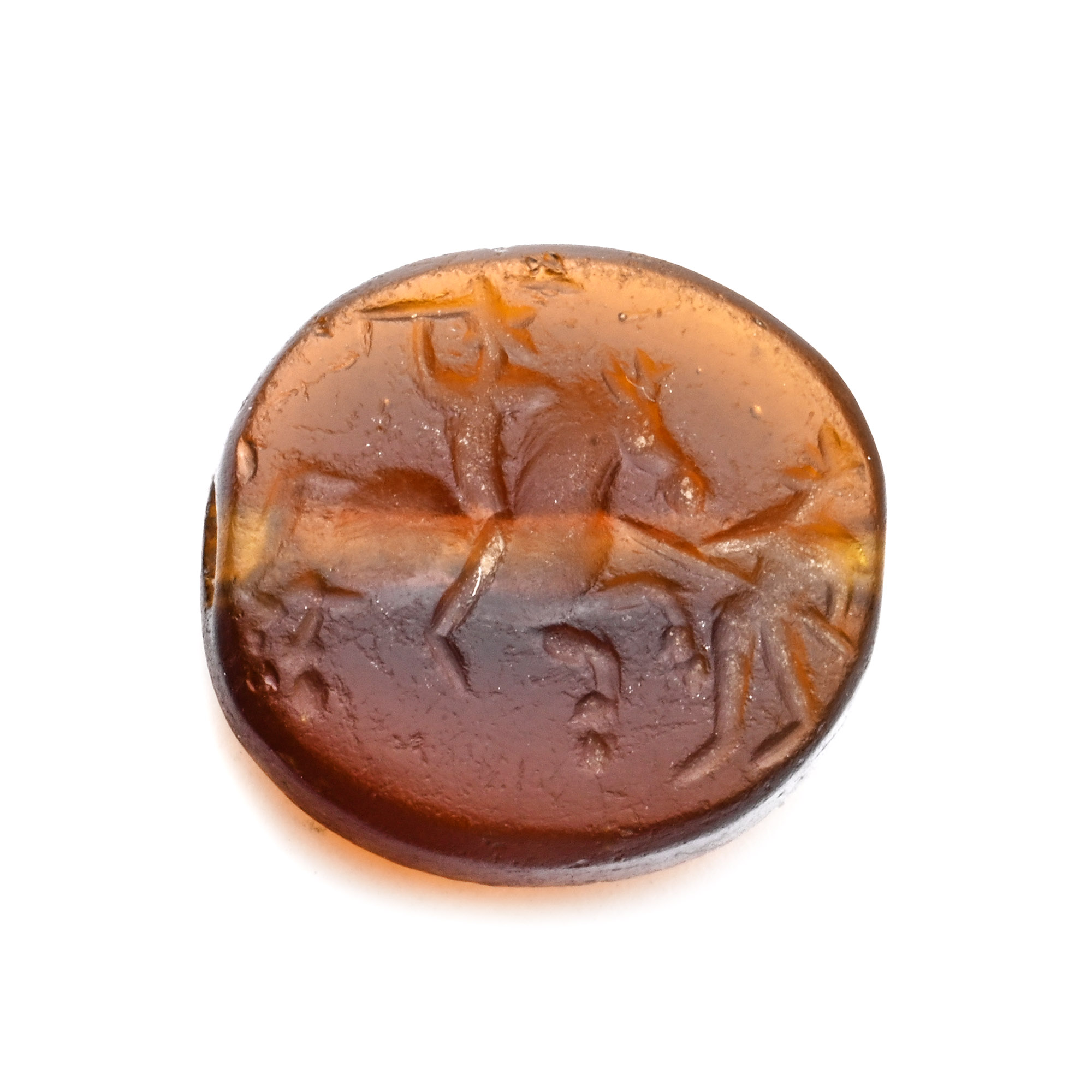
Roman Agate Gemstone with Rider Combat Scene
CIRCA 1ST CENTURY B.C.
5/8 in. (1.97 grams, 15 mm).
Plano-convex in section with incuse scene: rider advancing from left with sword in his raised hand, opposed standing figure with spear levelled at the horse's chest. [No Reserve]
ProvenanceProperty of a European gentleman, acquired from the estate of a London collector (formed before 2000).
CONDITIONTimeLine Auctions follows a vetting process to ensure the authenticity and legality of all items, reinforcing our commitment to integrity and responsible trading. Each antiquity, antique, and coin lot undergoes thorough examination by a vetting committee of at least ten external specialists, professional trade association members, scientists, and archaeologists: Our Vetting Process
AUCTIONS:
TimeLine is a leading auction house specialising in antiquities, ancient art, collectables, natural history, coins, medals, and books. Our auctions offer museums, collectors, historians, and enthusiasts the opportunity to acquire unique and historically significant pieces.
-
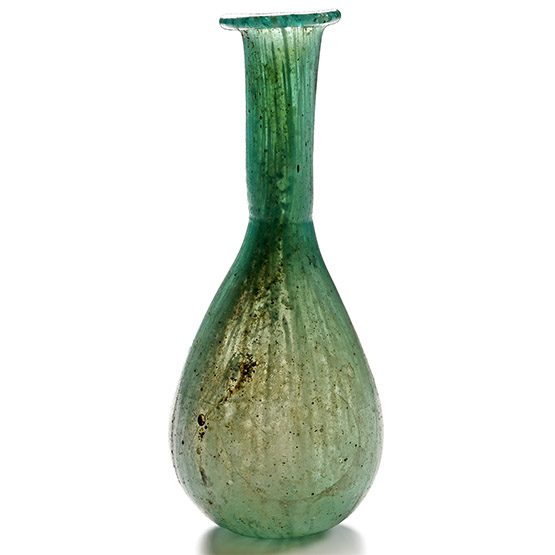
Roman Marbled Turquoise Glass Bottle
1st-3rd century A.D.Sold for (Inc. bp): £780
Comprising an iridescent piriform body, tapering tubular neck with pinched and everted rolled rim. 9.44 grams, 84 mm
Acquired on the European art market in 2001.
Indented toilet bottles with long necks are rather common. In Western provinces of the Roman Empire, they occur most frequently in and around the Rhineland. In the Eastern part of the Empire, find places include Crete, Cyprus, Anatolia, Syria and Egypt. -
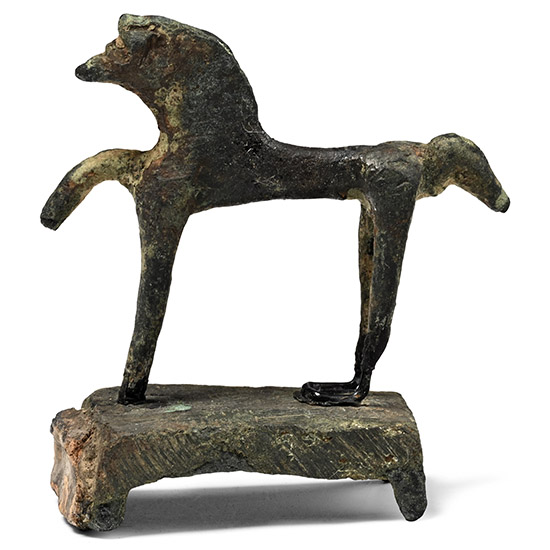
Roman Bronze Stepping Horse Statuette
2nd-4th century A.D.Sold for (Inc. bp): £65
Stylised figure of a horse in a dynamic pose with elongated body and legs, set on a rectangular footed base; likely a marriage. 35.5 grams, 52 mm
From the private collection of a European gentleman (1942-2024), formed since the 1970s. -
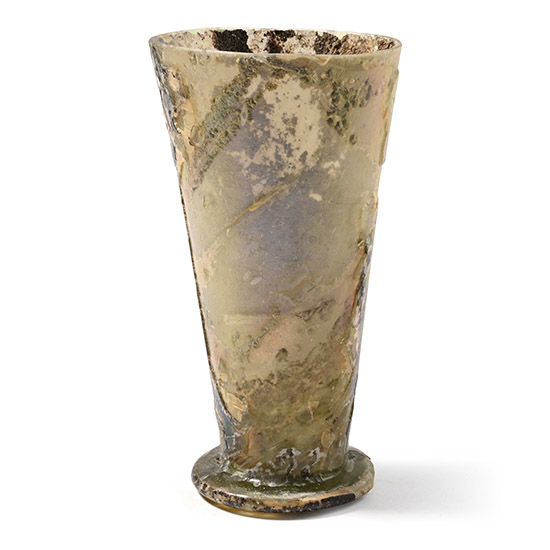
Roman Iridescent Glass Footed Beaker
2nd-3rd century A.D.Sold for (Inc. bp): £338
Comprising a conical body and a flaring foot with a rolled rim. 93 grams, 10.2 cm
Acquired in the 1990s from London dealerships and auction houses. From the Lonson collection.
