
Loading, please wait...


LOT 1285
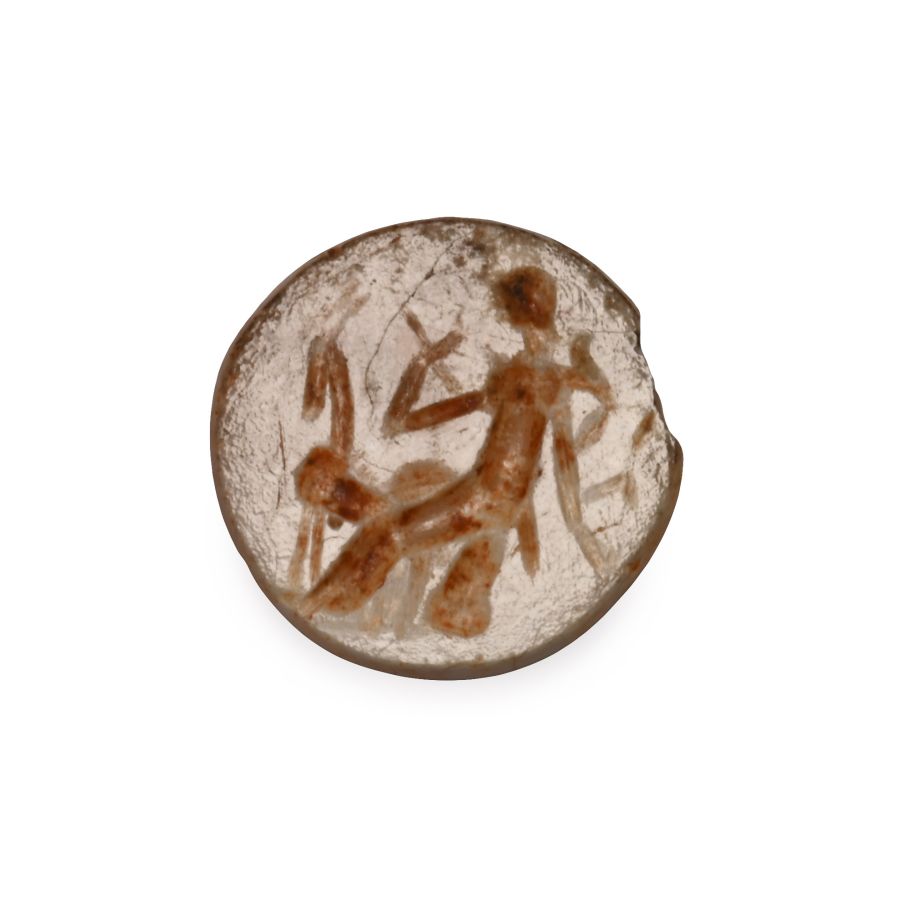
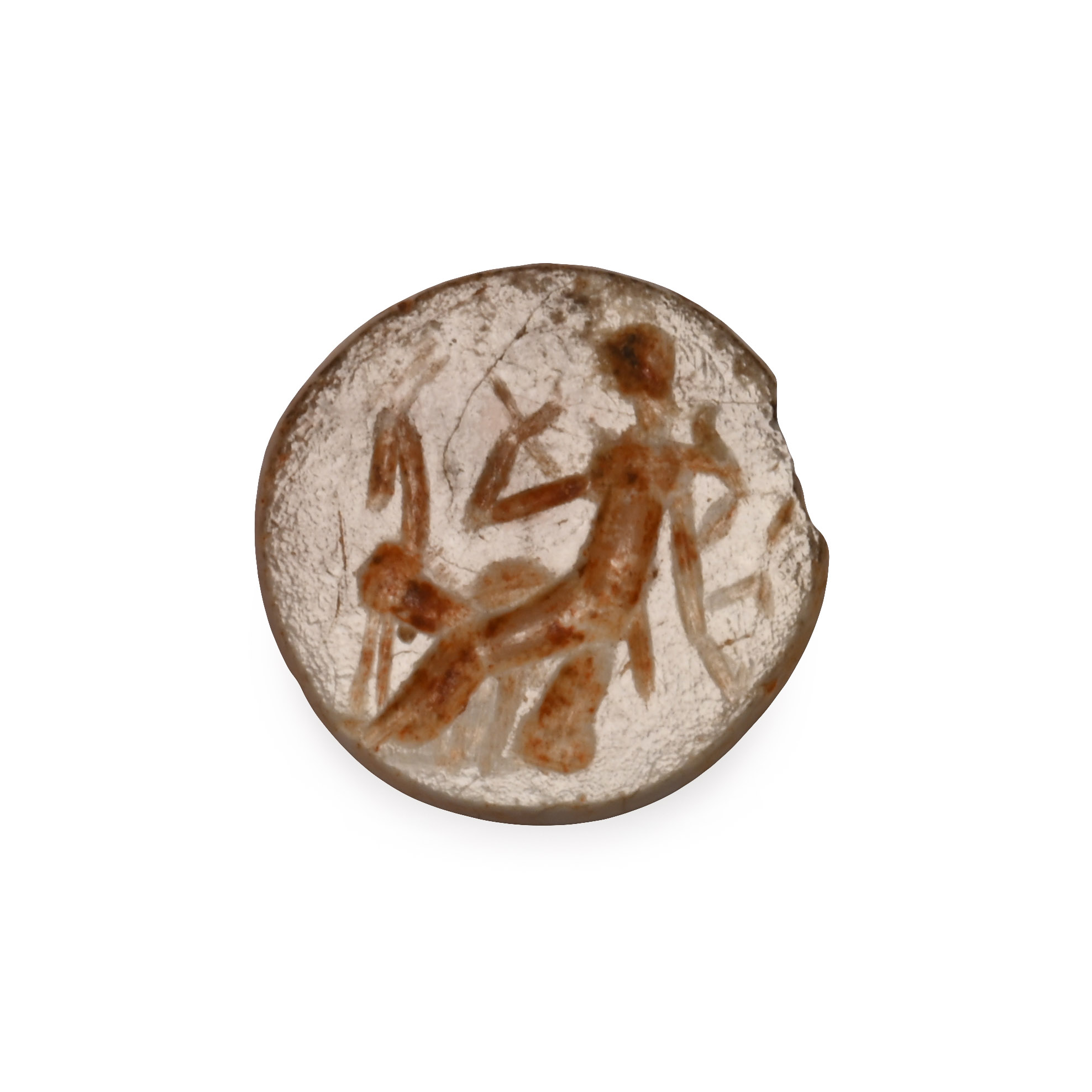
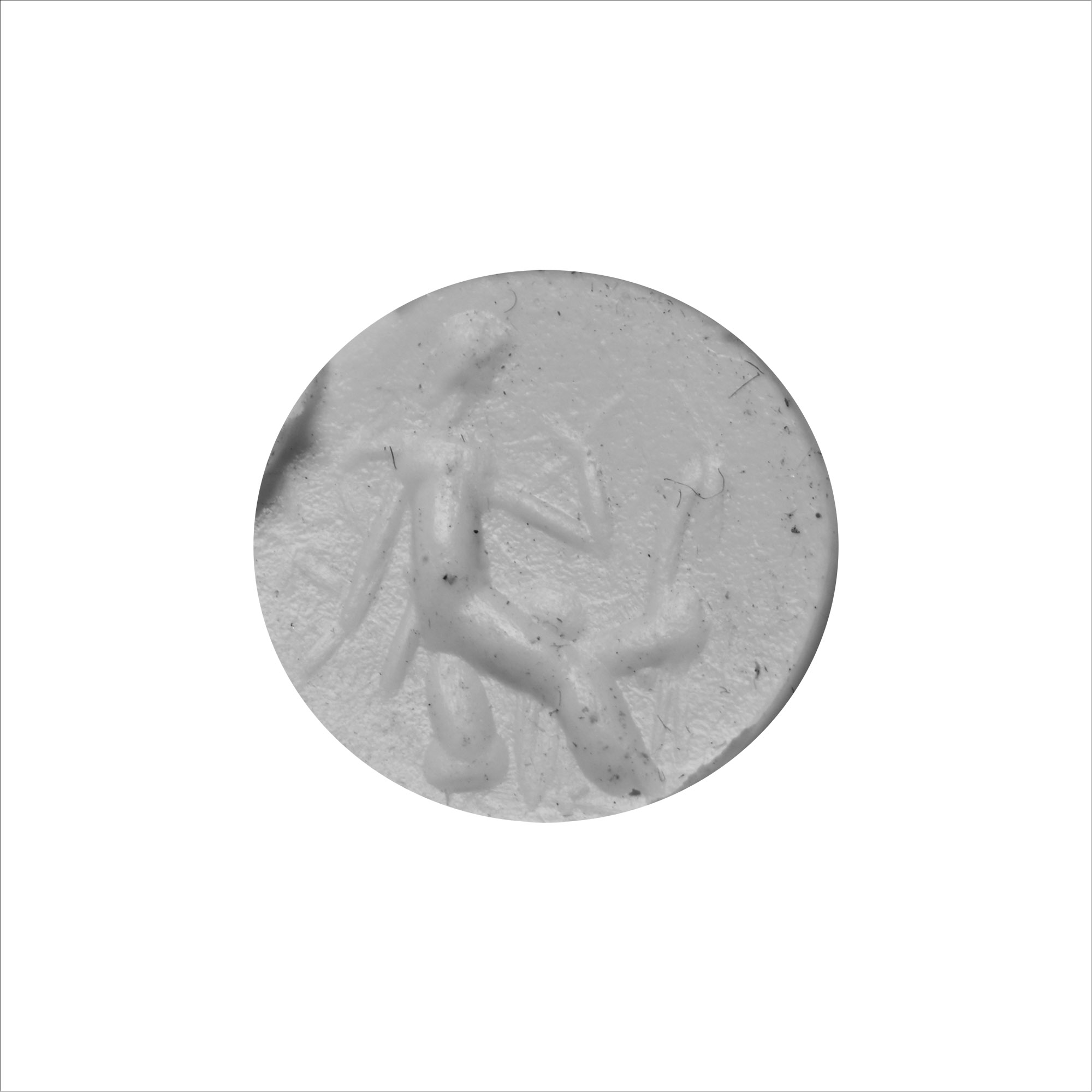
Roman Agate Gemstone with Nereid
1ST-2ND CENTURY A.D.
3/8 in. (0.42 grams, 11 mm).
Discoid type with intaglio representing a seated Nereid calming a horse emerging from the sea; supplied with an impression. [No Reserve]
ProvenanceFrom the private collection of a European gentleman (1942-2024), formed since the 1970s.
LiteratureCf. for the same iconography in Van den Bercken, B.J.L., Baan, V.C.P., Engraved Gems from Antiquity to Present, Leiden, 2017, p.10, fig.1.
CONDITIONTimeLine Auctions follows a vetting process to ensure the authenticity and legality of all items, reinforcing our commitment to integrity and responsible trading. Each antiquity, antique, and coin lot undergoes thorough examination by a vetting committee of at least ten external specialists, professional trade association members, scientists, and archaeologists: Our Vetting Process
AUCTIONS:
TimeLine is a leading auction house specialising in antiquities, ancient art, collectables, natural history, coins, medals, and books. Our auctions offer museums, collectors, historians, and enthusiasts the opportunity to acquire unique and historically significant pieces.
LOT 1285
Roman Agate Gemstone with Nereid
Estimate £80 - 100€93 - 116 (for guidance only)$108 - 135 (for guidance only)
Opening Bid
£5 (EUR 6; USD 7) +BP*
-
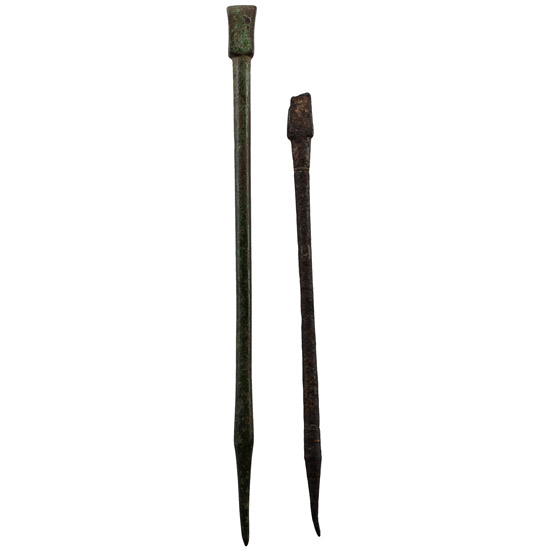
Roman Bronze Stylus Pair
Circa 1st-4th century A.D.Estimate: £60 - 80 (+bp*)
Opening Bid: £5
Each with a round-section body and a sharply pointed end, the other end flattened to form the eraser. 23.9 grams total, 11.2 -13.6 cm including stand
Found Reculver, Kent, UK. From the private collection of Peter Clayton, FCILIP, Dip, Arch, FSA, FRNS, Hemel Hempstead, Hertfordshire, UK; formed since the late 1950s. -
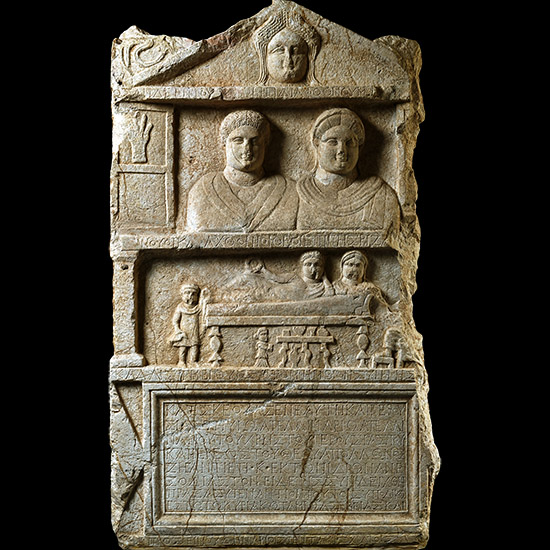
Monumental Roman Marble Funerary Stele to Senator Apellinarius and Kallisti
3rd century A.D.Estimate: £40,000 - 60,000 (+bp*)
Opening Bid: £22,222
An extremely large and imposing funerary stela, divided into three distinct sections, surmounted by a triangular pediment within which is presented the head of a female with long braided hair; below this there is the first panel, a rectangular frame inscribed at the top with Greek inscription (translation by R. Falkiner): 'AND AS…WE DISAGREE'; followed inside the frame by the facing portraits of Apellinarius and Kallisti depicted as equals, side-by-side, Apellinarius with wavy hair incised in stylised curls and wearing his toga over a simple tunic with a wide, v-shaped collar, and Kallisti shown as a commanding middle-aged matrona with the veil indicating married status falling from her voluminous hairstyle and draped around her shoulders; to the far left of the frame, a hand, carved in shallow relief within a square border; it follows another Greek inscription: 'GODS OF THE UNDERWORLD UPON THE EARTH ROOTED'; under it there is the second central panel representing, enclosed within bands of text, a conventional, stylised funerary scene in shallow relief, Apellinarius reclining on a high triclinium dining bed, wearing a heavily-draped toga supporting himself with his left hand, and holding a laurel wreath aloft in his right, Kallisti behind him in a similar pose with veil; to the far left a young man, dressed with a paenula, long trousers and closed calcei, holding a bird (dove?) in his right hand, possibly the couple's son, mourning his father and preparing to take his place as the male head of household; beneath the bed a small, highly stylised female slave wearing a peplos, her unveiled hair pulled into a bun at the nape of her neck, carrying a cup to the offering table; the following lower panel shows eight lines of Greek text, with a ninth incised on the frame below, keeping the following epigraphic cartridge, closed inside a tabula: 'KALLISTI (wife) OF BITHYS CONSTRUCTED THIS MONUMENT FOR HERSELF AND THE SENATOR (her son) APELLINARIUS SON OF APELLINARIUS THE WORTHY SENATOR AND PRIEST OF THE GOD APOLLO. HE LIVED TWENTY YEARS OUT OF HIS OWN MEANS AND WHO EVERYONE SAW NOT CAUSED PUBLIC EXPENSE, AND IF ANYONE IS CAUGHT DOING SOMETHING AGAINST (the grave)….MAY HE BE BROUGHT TO JUSTICE AND FINED 5000 DENARII FOR IMPIETY, AND PAYABLE TO THE IMPERIAL TREASURE'. 443 kg, 164 x 95 cm including stand
Very fine condition, some restoration.
Property of a London gentleman; formerly in a private collection since the early 1970s. Previously acquired on the London art market in 1970. Accompanied by an Art Loss Register certificate. Accompanied by an academic report by Dr Laura Proffitt and Dr Raffaele D’Amato. This lot has been checked against the Interpol Database of stolen works of art and is accompanied by search certificate no.10136-136699.
The funerary monument was commissioned by a woman named Kallisti (meaning in Greek the most beautiful), in honour of her deceased son Apellinarius, son of Apellinarius, with 20 years already in the rank of a senator (of Rome or of the local gerousia?) and priest of Apollo. The woman within the triangular pediment is probably Persephone, wife of Hades, and Queen of the Underworld, considering the dedication of the stela to the Gods of the Underworld. The disembodied hand on the left of the panel was almost certainly intended to have an apotropaic function, protecting the family from evil in this world and the next. This symbol can be traced as far back as ancient Mesopotamia and the Near East, and retains its meaning to this day in the form of the hamsa and 'hand of Fatima' motifs popular in the Middle East and Eastern Mediterranean. The bird in the hand of the young man could be a symbol of youth, vigour and attractiveness. However, we should not exclude another possibility, much more tragically realistic. The theme of a figure holding a bird, and especially a dove, is most common in the grave 'stelae' of Macedonia and the Balkans. It has been argued that it is an Ionian characteristic coming mostly from the Aegean islands. However, the presence of such a motif in a Cretan grave 'stele' still of the 7th century BC (Douitsi, 2017, fig.20) makes the matter more complicated as regards the origin of the theme. The presence of the bird in figure or multi-figured scenes in grave monuments is usual in tombstones from Attica, Boeotia and Thessaly during the 5th century BC, and it expands even further during the next century. Although scholars have given a chthonic essence to the presence of the bird, it is more probable that it signified the premature death of the deceased, and this topic continued in the Roman Age. The early death of a person was a horrible event that attracted attention and had to be pictured in the eternal grave monuments of antiquity. The plain presence of the bird inside the hands of the young person means that the bird refers to this person’s death and to nothing more. We should not forget that the bird used to be part of a child’s set of toys, proof of which we have in the 'stele of Xanthos' (Woysch-Meautis, 1982, pp.39-46). The female slave shown smaller than the offering table denotes the family's status and wealth, and the slave's lowly social status. Across the Roman Empire, following earlier Classical Greek conventions, it was considered a matter of prestige to display a slave on one’s funerary stela; the fact that the enslaved person was supposedly willing to mourn her master attested to the deceased’s generosity and clemency. -
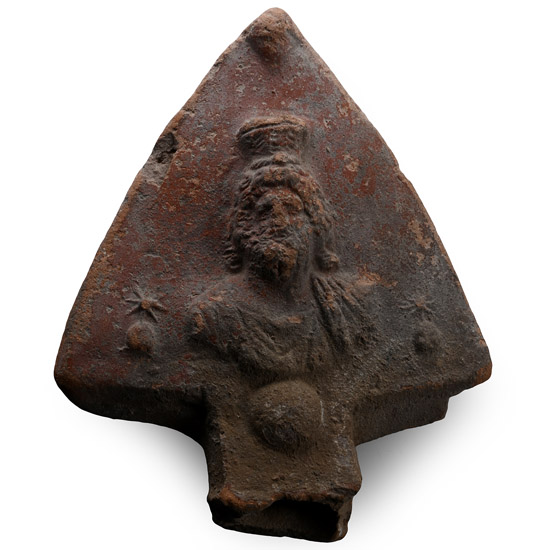
Roman Terracotta Lamp Handle with the Bust of the God Jupiter-Serapis
Circa 1st century A.D.Estimate: £40 - 60 (+bp*)
Opening Bid: £5
A large hollow-formed triangular handle from a lamp, with a low-relief bust of a bearded Jupiter-Serapis wearing a crown on a globe, a smaller globe with a star on each side. 152 grams, 11.8 cm
From the Puys-Aubert collection, March 1963, for 10 shillings. From the private collection of Peter Clayton, FCILIP, Dip, Arch, FSA, FRNS, Hemel Hempstead, Hertfordshire, UK; formed since the late 1950s. Accompanied by an old handwritten information card by Peter Clayton, collection no.100.
