
Loading, please wait...
LOT 0174
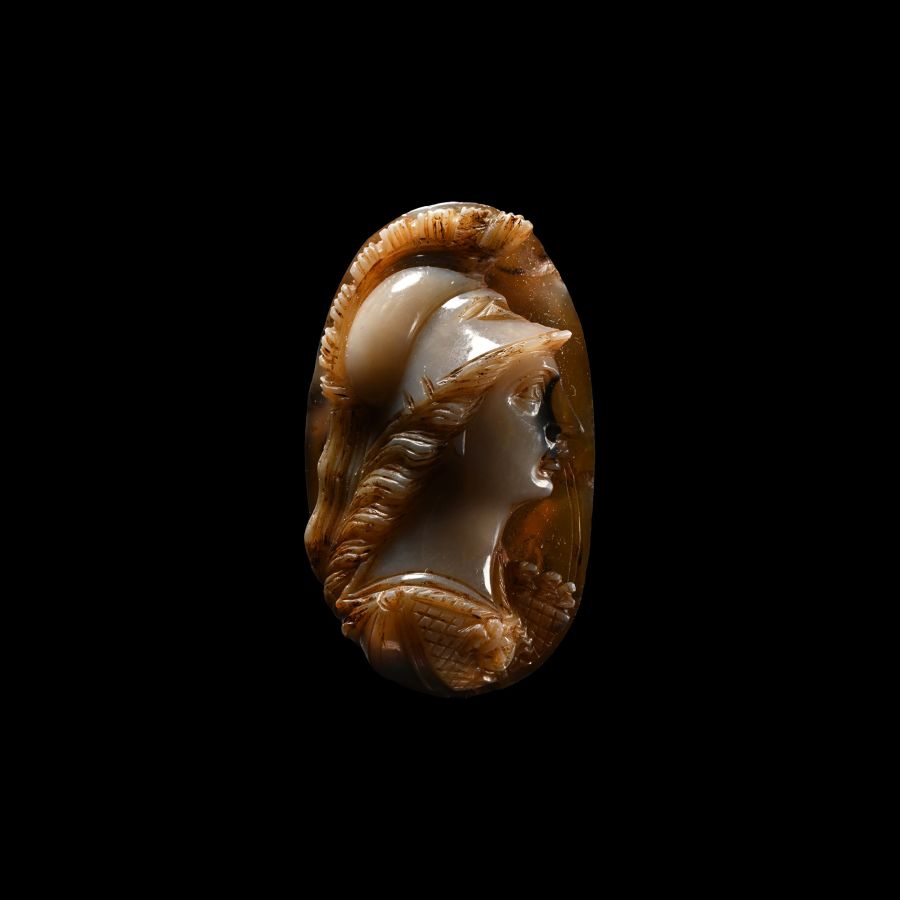
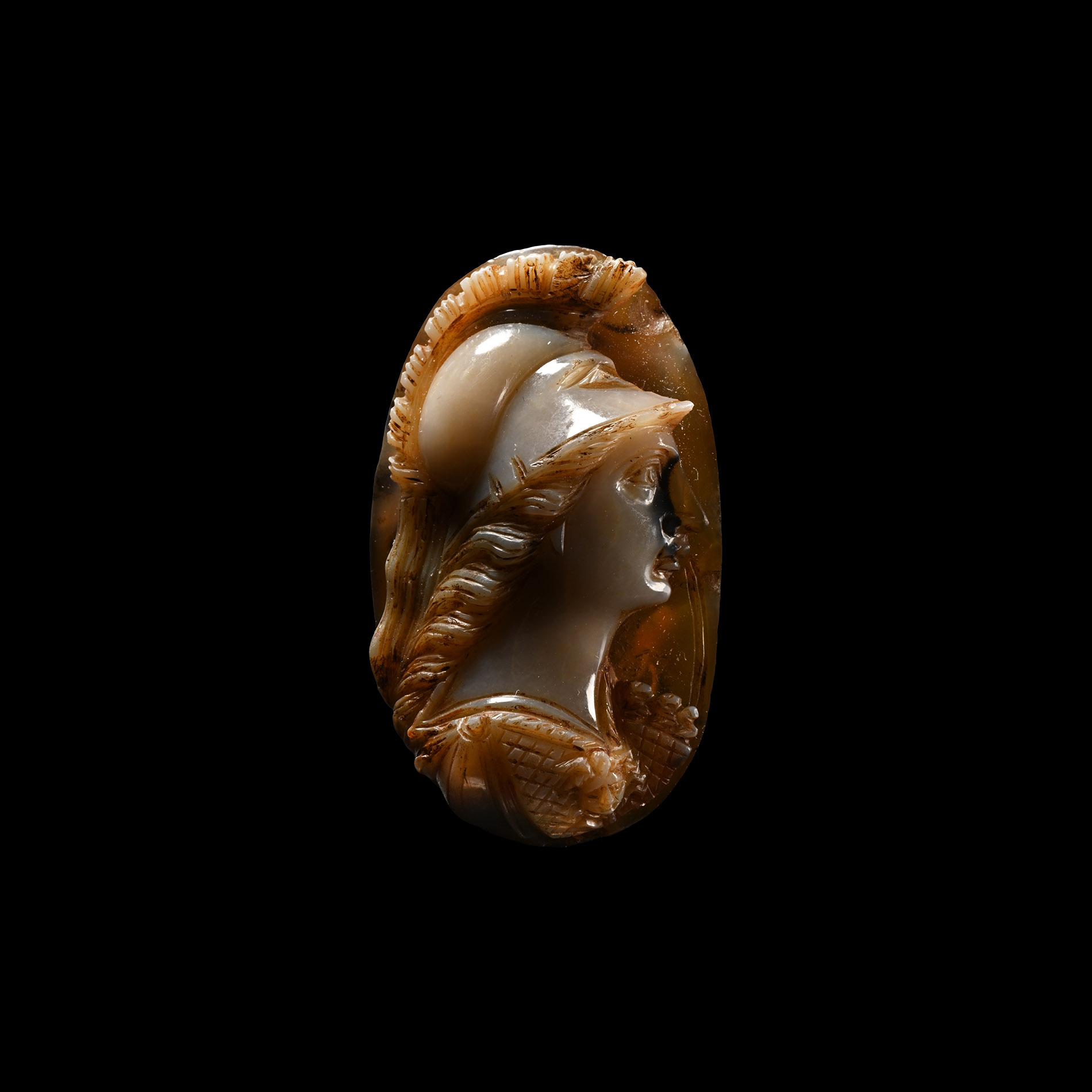
Roman Agate Cameo of Minerva
2ND-EARLY 3RD CENTURY A.D.
1 5/8 in. (19 grams, 42 mm).
With reserved classical profile female bust wearing a crested Corinthian helmet, and a stola fastened on the shoulder by a disc brooch, small mask (gorgoneion) to the breast; reverse degraded.
ProvenanceUK private collection, 1980s.
This lot has been checked against the Interpol Database of stolen works of art and is accompanied by search certificate no.11960-209860.
Cf. Spier, J., Ancient Gems and Finger rings, catalogue of the collections, the J. Paul Getty Museum, Malibu, 1992, no.451 (head of Minerva).
CONDITIONTimeLine Auctions follows a vetting process to ensure the authenticity and legality of all items, reinforcing our commitment to integrity and responsible trading. Each antiquity, antique, and coin lot undergoes thorough examination by a vetting committee of at least ten external specialists, professional trade association members, scientists, and archaeologists: Our Vetting Process
AUCTIONS:
TimeLine is a leading auction house specialising in antiquities, ancient art, collectables, natural history, coins, medals, and books. Our auctions offer museums, collectors, historians, and enthusiasts the opportunity to acquire unique and historically significant pieces.
-
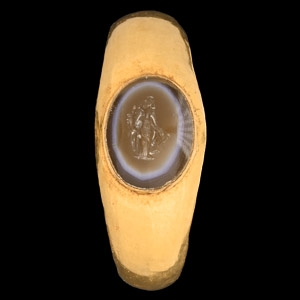
Roman Gold Ring with Fortuna Gemstone
1st-2nd century A.D.Estimate: £1,500 - 2,000 (‡+bp*)
Opening Bid: £750
Hollow-formed with inset banded agate cabochon, intaglio standing Fortuna. 2.22 grams, 21.90 mm overall, 15.21 mm internal diameter (approximate size British E 1/2, USA 2 1/2, Europe 3, Japan 3)
Acquired early 1990s. Ex private American collection; thence by descent. Private Swiss collection since 1998. This lot has been checked against the Interpol Database of stolen works of art and is accompanied by search certificate no.11619-199018. -
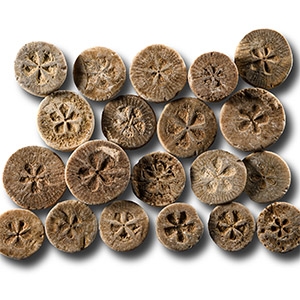
Roman Limestone Gaming Counter Group
1st-4th century A.D.Sold for (Inc. bp): £65
Twenty discoid limestone counters each with an incuse cinquefoil to both faces. 32 grams total, 13-17 mm
Private collection formed in the 1990s. Acquired from a central London gallery. Property of an Essex gentleman. -
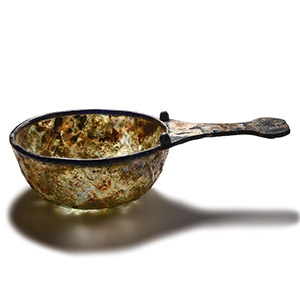
Roman Iridescent Pale Blue Glass Trulla
3rd-4th century A.D. or laterSold for (Inc. bp): £650
With an aqua-coloured hemispherical bowl and dark blue glass rim and handle with raised knops to the neck, the bowl with moulded lozengiform 'net' motif with kick-up to base surrounded by a moulded rosette; iridescent surfaces; handle repaired. 88 grams, 19 cm
Acquired early 1990s. Ex private American collection; thence by descent. Private collection since 1998.
