
Loading, please wait...
_900x900.jpg "Roman Agate Cameo of a Theatrical Mask")
_200x200.jpg "Roman Agate Cameo of a Theatrical Mask")
.jpg "Roman Agate Cameo of a Theatrical Mask")
LOT 0024
Roman Agate Cameo of a Theatrical Mask
1ST CENTURY A.D.
1/2 in. (1.07 grams, 13 mm).
Showing a New Comedy, 'Cook' type theatre mask with an open mouth; supplied with a museum-quality impression.
ProvenancePrivate English collection, formed between the late 1970s and early 1990s.
Private collection, London, UK.
TimeLine Auctions follows a vetting process to ensure the authenticity and legality of all items, reinforcing our commitment to integrity and responsible trading. Each antiquity, antique, and coin lot undergoes thorough examination by a vetting committee of at least ten external specialists, professional trade association members, scientists, and archaeologists: Our Vetting Process
AUCTIONS:
TimeLine is a leading auction house specialising in antiquities, ancient art, collectables, natural history, coins, medals, and books. Our auctions offer museums, collectors, historians, and enthusiasts the opportunity to acquire unique and historically significant pieces.
-
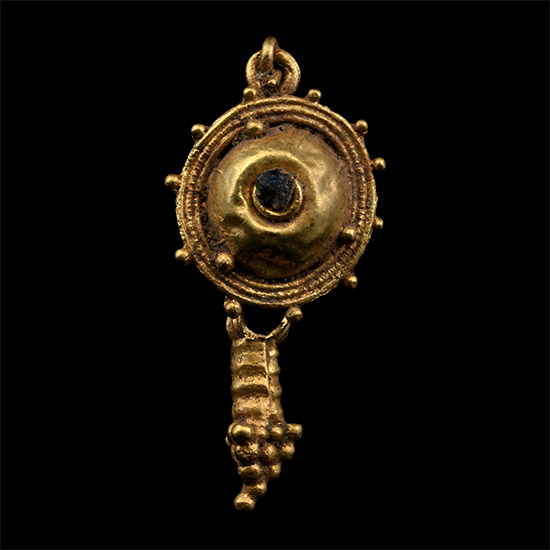
Roman Gold Earring
1st-4th century A.D.Sold for (Inc. bp): £312
Hollow-formed disc with radiating granules to the rim, filigree collar, dangle with granule cluster. 2.54 grams, 30 mm
Ex German art market, 2000s. Acquired from an EU collector living in London. From the collection of a Surrey, UK, gentleman. -
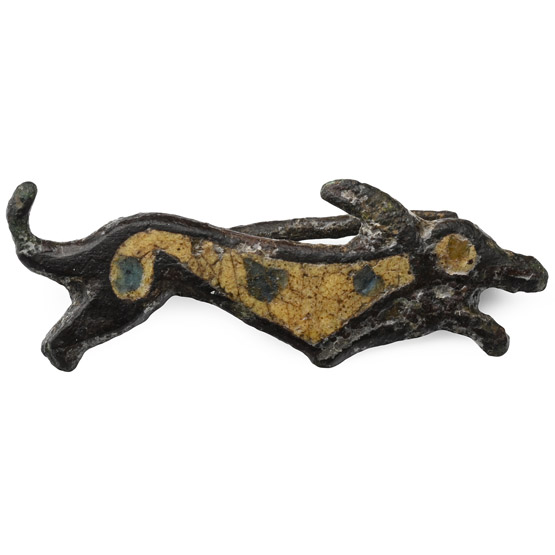
Roman Enamelled Dog Brooch
1st-3th century A.D.Sold for (Inc. bp): £390
Formed as a hound running right with panels to the eye, ear and flank to accept enamel; pin and catchplate to reverse. 4.23 grasms, 37 mm
Acquired on the UK art market. Private collection, England. -
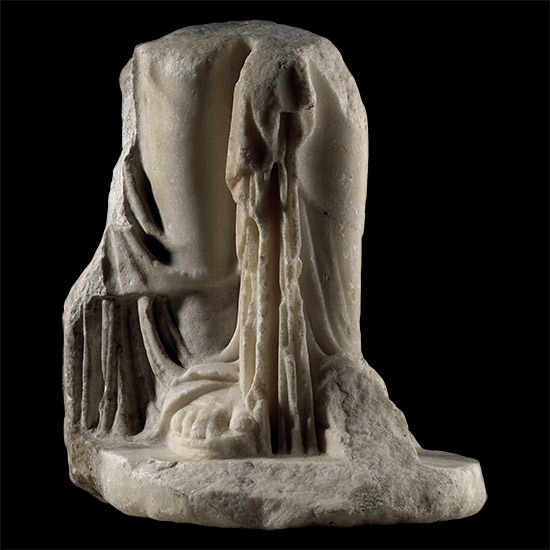
Large Lower Section of a Roman Marble Figure of the Goddess Isis
2nd century A.D.Sold for (Inc. bp): £5,000
Statue fragment of a woman or goddess, including floor-length robe and right foot with sandal; modelled standing with the foot slightly advanced, wearing sandals, chiton and himation. 66.65 kg, 50 cm
American private collection, acquired in the 1980s-1990s. Acquired on the American art market in 2016. with Sotheby's, London, 11 December 2020, no.88. This lot has been checked against the Interpol Database of stolen works of art and is accompanied by search certificate no.13078-249667.
Both the stance and folds of the himation suggest an Archaistic statue, perhaps the goddess Isis.
