
Loading, please wait...
LOT 1017
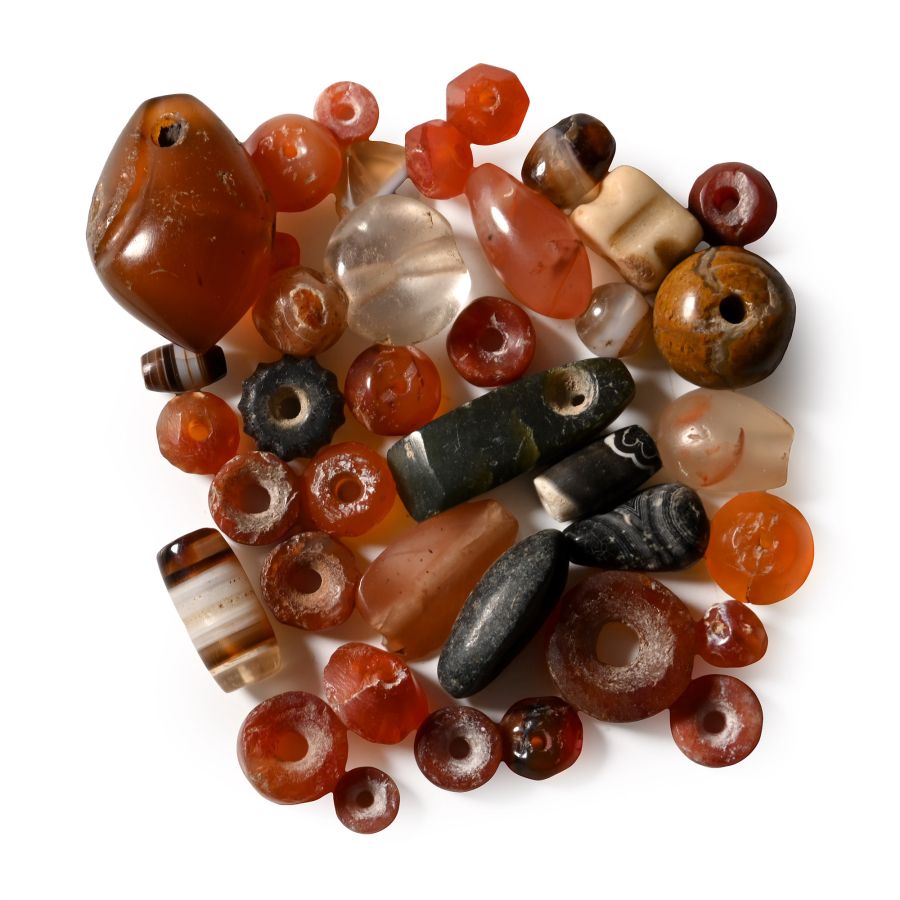
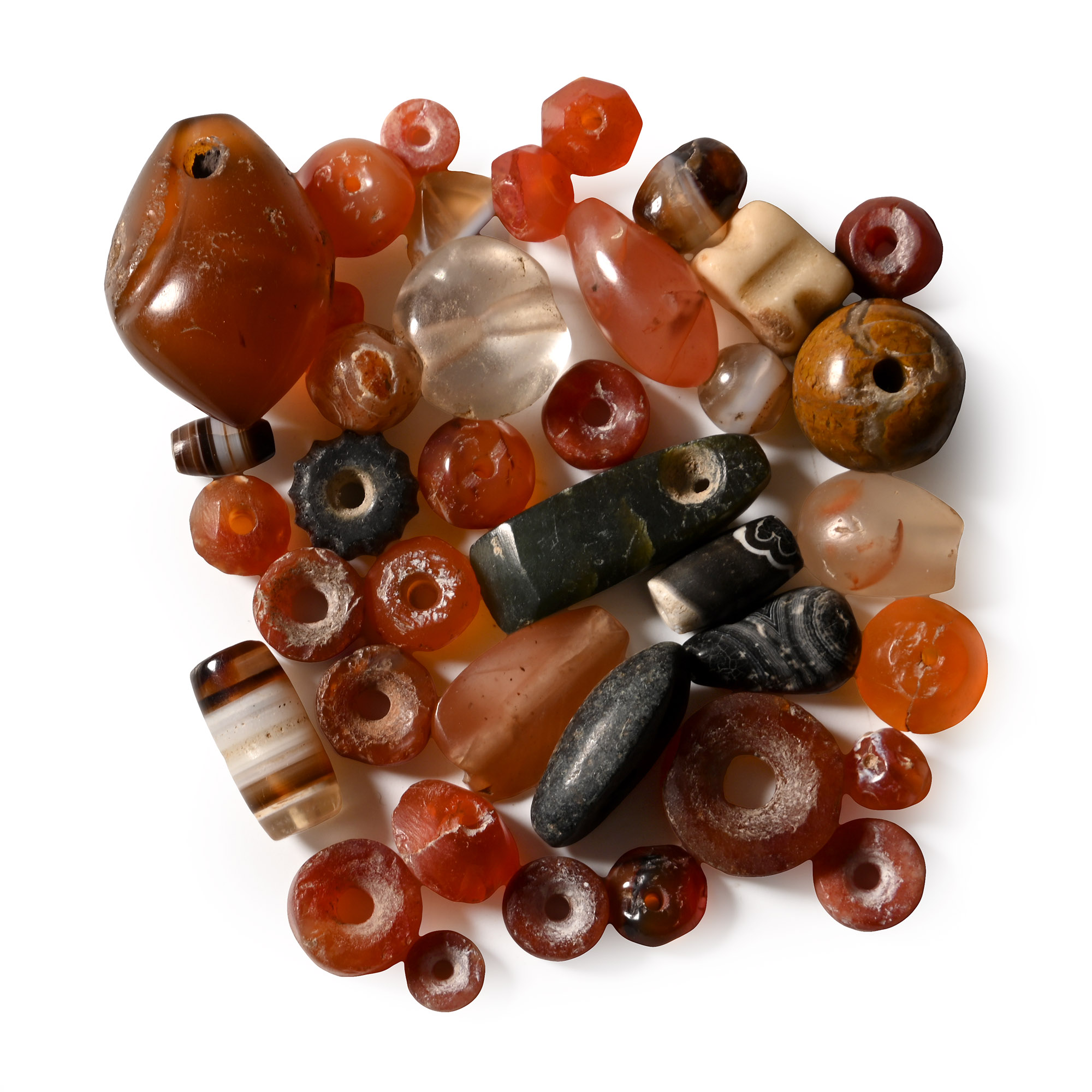
Roman Agate and Carnelian Bead and Pendant Collection
1ST-4TH CENTURY A.D. AND LATER
1/8 - 7/8 in. (29 grams total, 4-23 mm).
Including oblate, biconical, cylindrical, and other types, including a rock crystal bead. [39, No Reserve]
ProvenanceFrom the private collection of a European gentleman (1942-2024), formed since the 1970s.
LiteratureFor examples of similar Roman beads, see Then-Obluska, J., ‘Beads and pendants from the Hellenistic to early Byzantine Red Sea port of Berenike, Egypt, Seasons 2014 and 2015’ in Polish Archaeology in the Mediterranean, 27/1, 2018, pp.203–234, figs. 3a,4,5,6,7.
CONDITIONTimeLine Auctions follows a vetting process to ensure the authenticity and legality of all items, reinforcing our commitment to integrity and responsible trading. Each antiquity, antique, and coin lot undergoes thorough examination by a vetting committee of at least ten external specialists, professional trade association members, scientists, and archaeologists: Our Vetting Process
AUCTIONS:
TimeLine is a leading auction house specialising in antiquities, ancient art, collectables, natural history, coins, medals, and books. Our auctions offer museums, collectors, historians, and enthusiasts the opportunity to acquire unique and historically significant pieces.
-
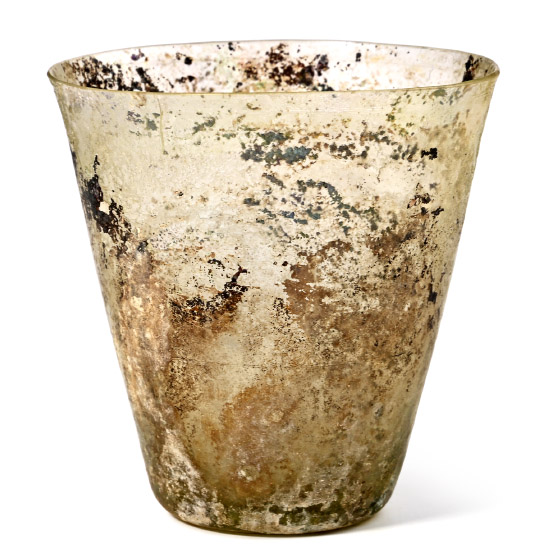
Roman Iridescent Glass Flared Kalathos
3rd-4th century A.D.Estimate: £300 - 400 (+bp*)
Opening Bid: £150
Conical body with a flat base. 67 grams, 79 mm
Acquired in the 1990s from London dealerships and auction houses. From the Lonson collection. -
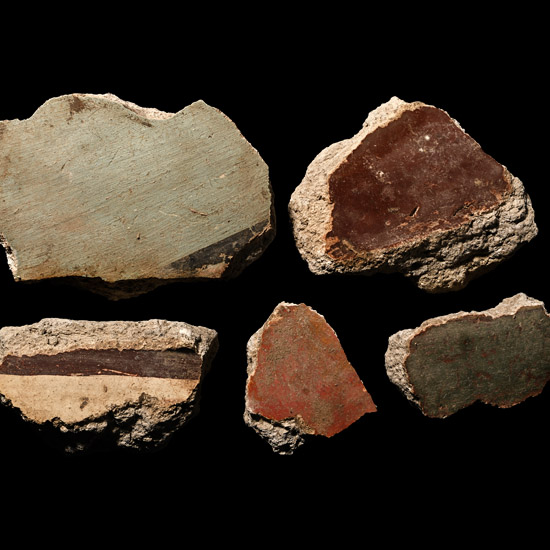
Roman Fresco Wall Plaster Collection
1st century A.D.Sold for (Inc. bp): £390
Fragments of wall plaster with rendered surface painted with mainly Pompeii red, pale blue, brown and white detailing; some with an impression of timber laths to the reverse. 1.46 kg total, 7.9-16 cm
Acquired in the 19th century. Ex Jeger collection, Switzerland. UK gallery, early 2000s.
These small fragments, for analogies with the fragments of Pompeii, seem to belong to the second style of Roman painting, red panels representing highlight and shadow, decorated with vegetal interlaces. A red grenade fillet probably framed some panels. A fragment shows alternate blue and red colours over a cream background, maybe pertinent to a socle. -
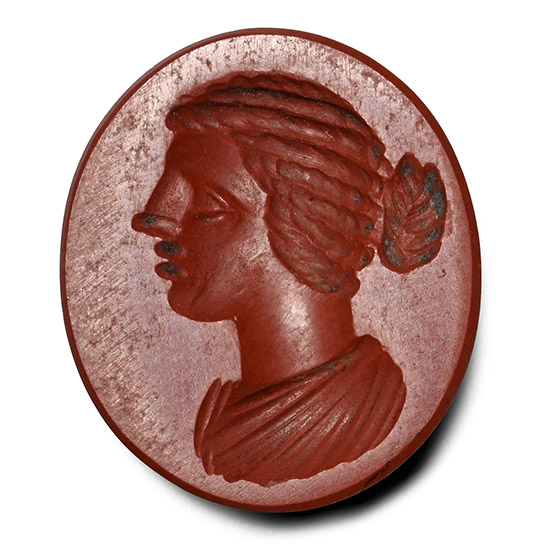
Roman Red Jasper Female Bust Intaglio
1st-2nd century A.D.Sold for (Inc. bp): £416
Oval intaglio with an incuse draped profile bust of a young female with her hair pulled into a chignon. 0.6 grams, 12 mm
Acquired on the UK art market. Private collection, Suffolk.
