
Loading, please wait...
LOT 2109
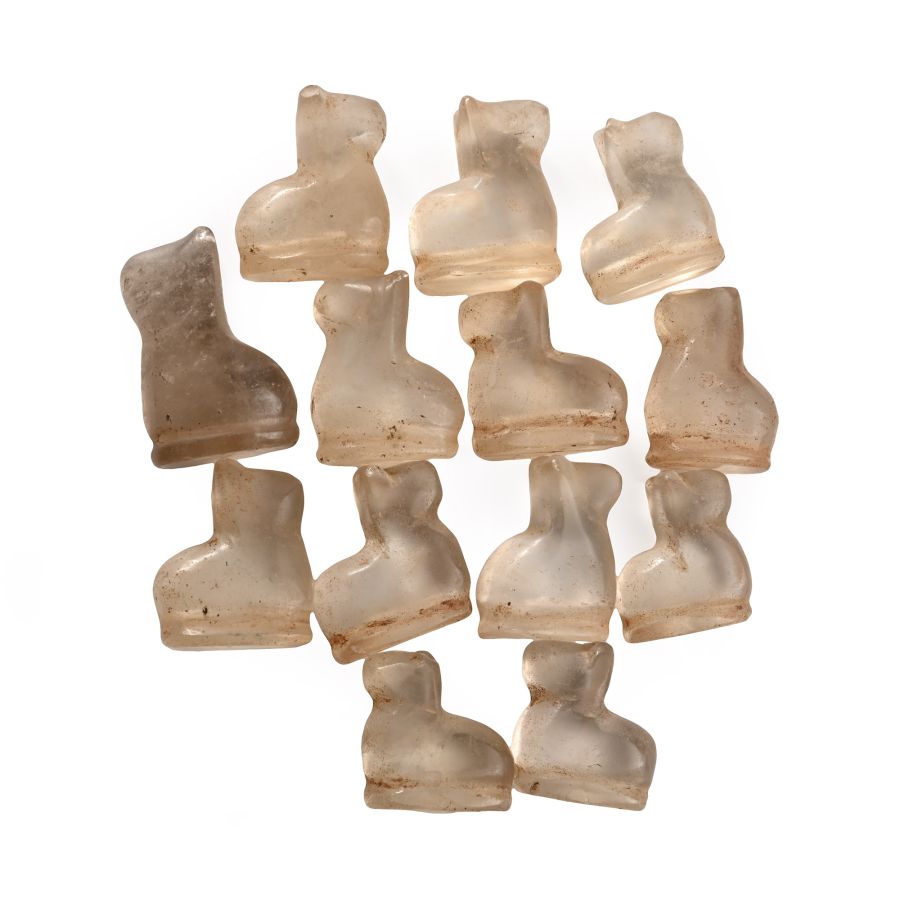
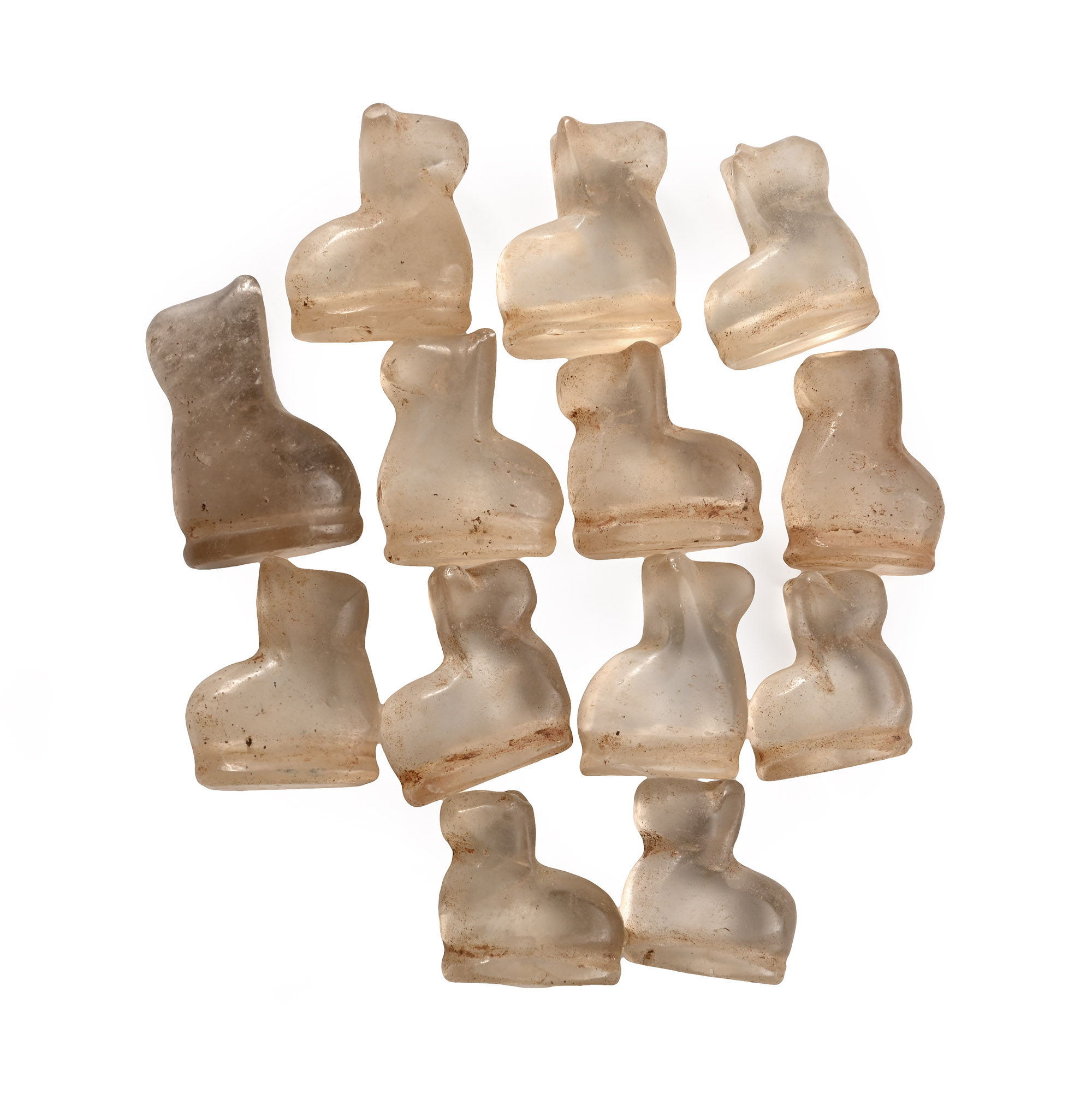
Rock Crystal Cat Amulet Set
20TH CENTURY A.D. OR EARLIER
3/4 - 1 in. (80.4 grams total, 20-27 mm).
Comprising thirteen cat amulets modelled in seated and reclining positions, each pierced for suspension. [13, No Reserve]
ProvenanceAcquired in the 1990s.
Ex London, UK, collection.
TimeLine Auctions follows a vetting process to ensure the authenticity and legality of all items, reinforcing our commitment to integrity and responsible trading. Each antiquity, antique, and coin lot undergoes thorough examination by a vetting committee of at least ten external specialists, professional trade association members, scientists, and archaeologists: Our Vetting Process
AUCTIONS:
TimeLine is a leading auction house specialising in antiquities, ancient art, collectables, natural history, coins, medals, and books. Our auctions offer museums, collectors, historians, and enthusiasts the opportunity to acquire unique and historically significant pieces.
-
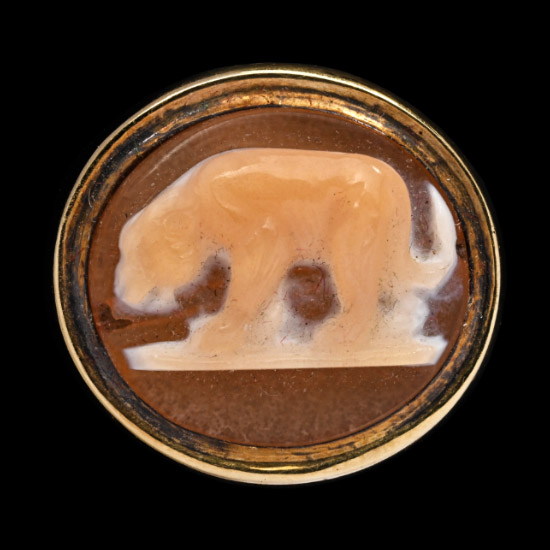
Renaissance Agate Cameo with Lioness in Gold Ring
Europe, 17th century A.D.Estimate: £2,000 - 3,000 (+bp*)
Opening Bid: £1,000
An orange agate came depicting a lioness on a baseline with its head lowered, the cameo drilled longitudinally and set in gold ring. 8.19 grams, 24.60 mm overall, 17.03 x 17.62 mm internal diameter (approximate size British N, USA 6 1/2, Europe 13.72, Japan 13)
Acquired on the European art market. This lot has been checked against the Interpol Database of stolen works of art and is accompanied by search certificate number no.13395-257958. -
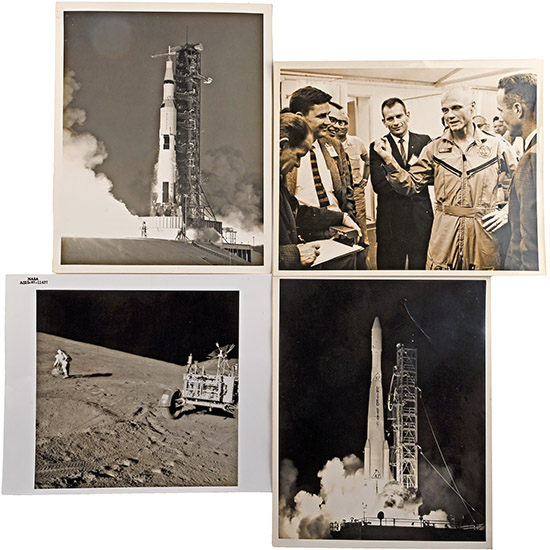
Original NASA Press Photograph Group
1962-1968 A.D.Sold for (Inc. bp): £85
Comprising: original photo print of an astronaut with press and others around him, endorsed 'NASA For Release: February 22, 1962. NASA Photo No. 62-MA6-119. Cape Canaveral, FLA. Astronaut John H. Glenn Jr after world orbital flight, surrounded by fellow Astronauts Donald K Slayton and M. Scott Carpenter'; rocket lifting off from launch pad, endorsed 'John F. Kennedy Space Center, National Aeronautics and Space Administration, Kennedy Space Center, Florida 32899. Photo Credit: NASA or National Aeronautics and Space Administration..... Photo No 126P-KSC-67P-122 For Release March 22, 1967 Kennedy Space Center, FLA -- A Delta launch vehicle carrying an Intelsat 11communications satellite lifted off at 20:30 EST from Cape Kennedy's Launch Complex 17. NASA launched the satellite for the 56-nation International Telecommunication Satellite Consortium. The new commercial communications satellite will be placed into a stationary orbit above the Atlantic Ocean and will relay telephone, television, teletype and facsimile transmissions between North America and Europe. It also will provide communications support for NASA's Apollo lunar landing program. Two previous Intelsat satellites linked the United States mainland with the Pacific, the new one joins Early Bird, the world's first commercial communications satellite over the Atlantic; Saturn V rocket ready for lift-off, endorsed 'John F. Kennedy Space Center, National Aeronautics and Space Administration, Kennedy Space Center, Florida 32899. Photo Credit: NASA or National Aeronautics and Space Administration.....107-KSC-68P-120 UNCL.4-4-68. NASA/SATURN. The National Aeronautics and Space Administration's second unmanned Apollo/Saturn V space vehicle was launched today at 7:00 AM EST from Kennedy Space Center's Complex 39. Saturn 502'; original print of an astronaut on the surface of the moon with Lunar Roving Vehicle in foreground, notation 'NASA AS15-85-11437' to top left, no endorsement. 71 grams total, 25 x 20.4 - 25.4 x 20.5 cm
Acquired on the UK art market. Property of a Harwich, UK, collector. -
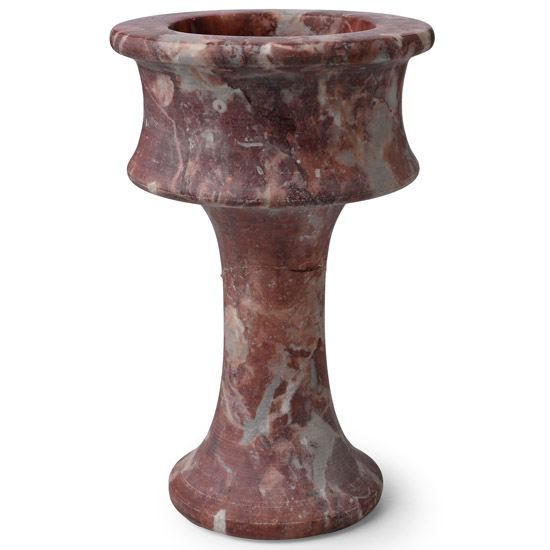
Bactrian Style Pink Stone Chalice
20th century A.D.Sold for (Inc. bp): £39
Formed as a chalice with a flared foot and a sturdy shank, bowl with a carinated profile and an everted rim. 3.3 kg, 24 cm high
From Maa Oriental Gallery, Bath, UK; and a West Country collection, 1990-2000.
