
Loading, please wait...
LOT 1816
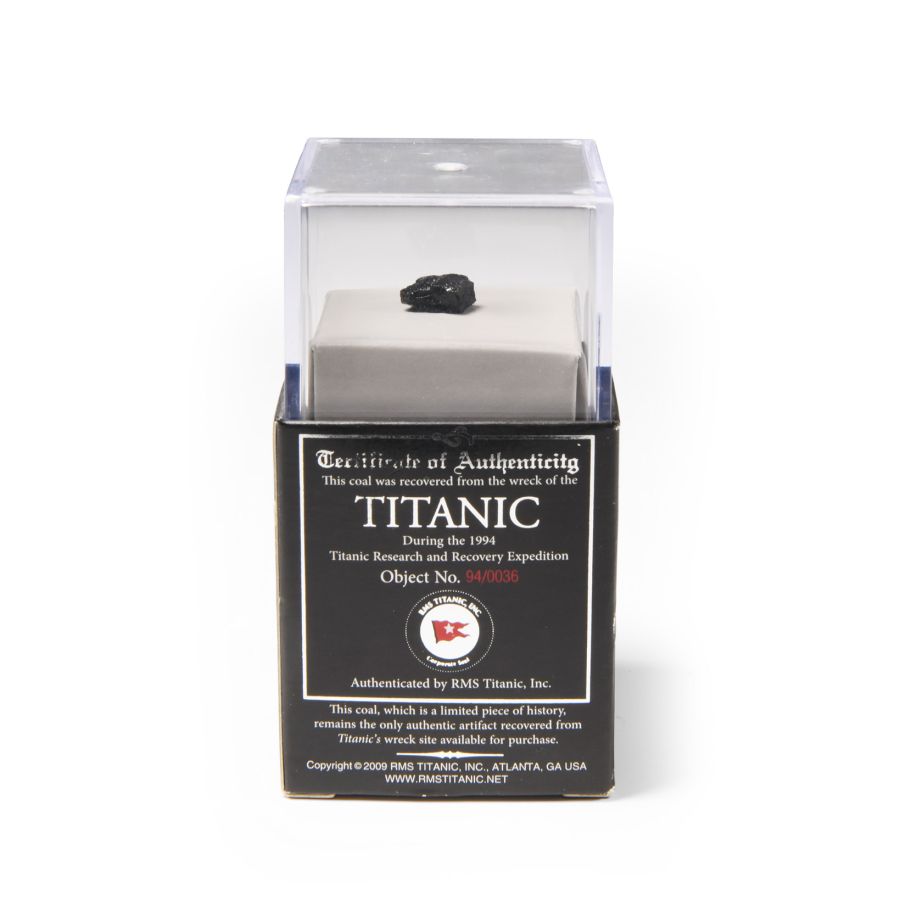
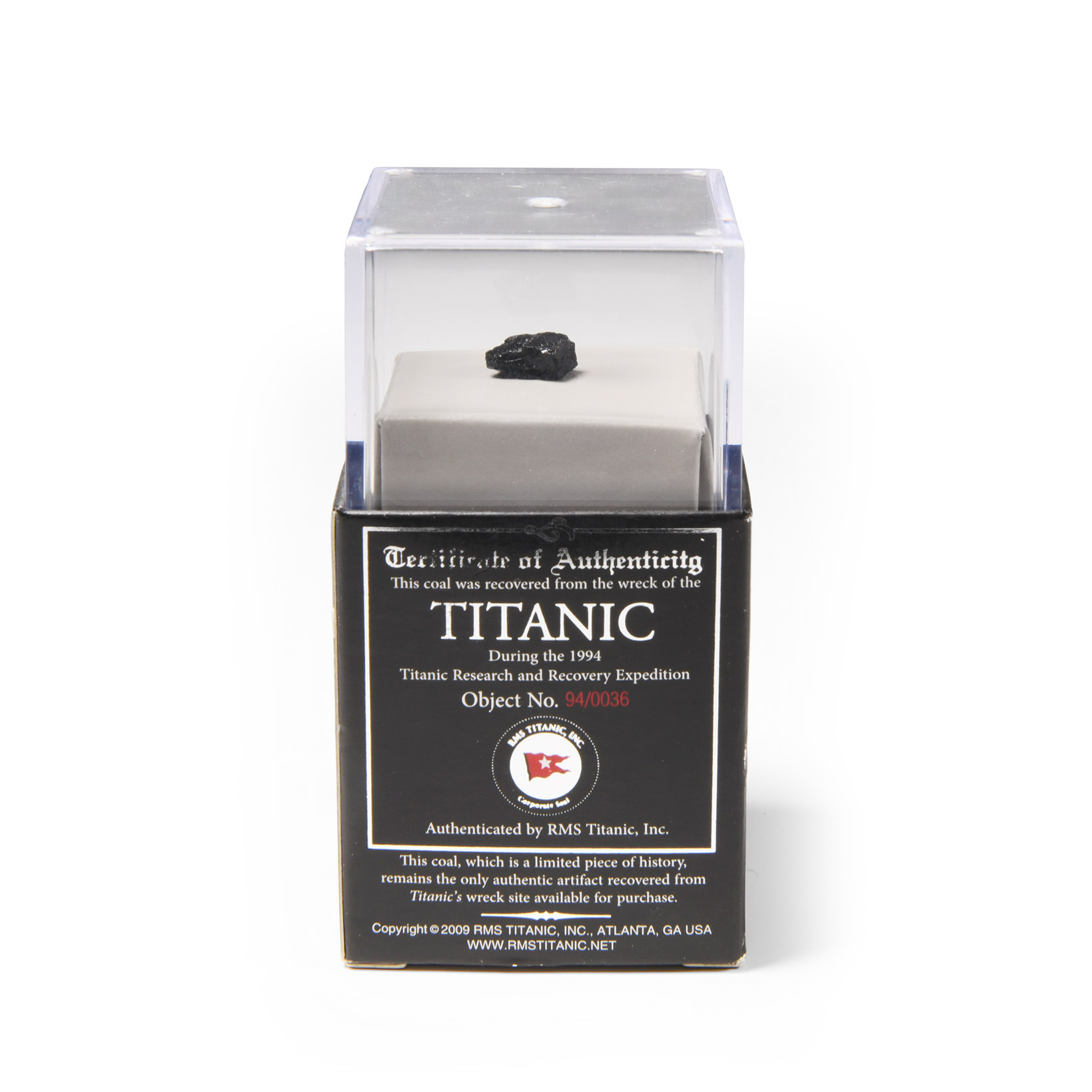
RMS Titanic Research and Recovery Expedition Coal
LAUNCHED 31 MAY 1911 A.D.
2 1/8 x 2 1/8 x 3 3/4 in. (46 grams total, 53 x 53 x 97 mm).
A small piece of coal recovered from the shipwreck site of RMS Titanic in 1994; in display case with object number 94/0036. [No Reserve]
ProvenanceEx USA art market.
From a Leicestershire, UK, collection.
Display contains a certificate of authenticity from RMS TITANIC Inc.
RMS Titanic was a British passenger liner, operated by the White Star Line, which famously sank with great loss of life in the North Atlantic Ocean on 15 April 1912 after striking an iceberg during her maiden voyage from Southampton, England, to New York City, United States.
CONDITIONTimeLine Auctions follows a vetting process to ensure the authenticity and legality of all items, reinforcing our commitment to integrity and responsible trading. Each antiquity, antique, and coin lot undergoes thorough examination by a vetting committee of at least ten external specialists, professional trade association members, scientists, and archaeologists: Our Vetting Process
AUCTIONS:
TimeLine is a leading auction house specialising in antiquities, ancient art, collectables, natural history, coins, medals, and books. Our auctions offer museums, collectors, historians, and enthusiasts the opportunity to acquire unique and historically significant pieces.
-
Tudor Lead Tax Seal
16th century A.D.Sold for (Inc. bp): £39
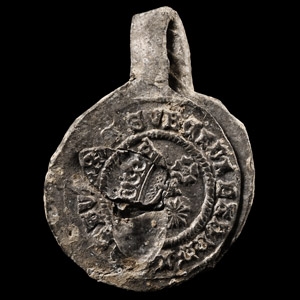
Discoid in plan with low-relief design of a crown above a sun, fleur-de-lis and rose, within ropework roundel, surrounding legend beginning 'SVB[SIDII PANNORVM]' 21 grams, 40 mm
Acquired on the UK market, 1990s. Property of a retired academic, believed to have been recovered from the Thames foreshore. -
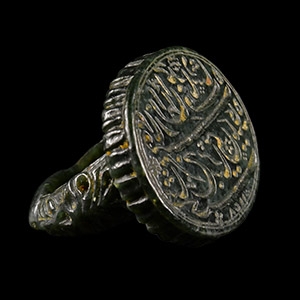
Large Moghul Calligraphic Jadeite Ring
Dated 1168 A.H.; 1754 A.D.Sold for (Inc. bp): £1,430
Featuring a carinated hoop with raised plaque to base and foliage around the body, large oval bezel with notched circumference, bearing a calligraphic inscription in Arabic over two lines. 19.85 grams, 34.34 mm overall, 21.59 mm internal diameter (approximate size British W 1/2, USA 11 1/4, Europe 25.66, Japan 24)
London collection since the 1980s. Property of a Canadian family. -
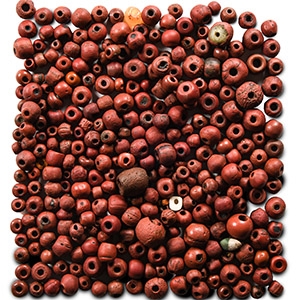
Roman Style Red Glass Necklace Bead Group
20th century A.D.Sold for (Inc. bp): £59
Comprising a group of near spherical dark red opaque glass beads of mixed sizes; each pierced for stringing and these beads believed to have been chemically cleaned. 111 grams total, 2-10 mm
UK gallery, early 2000s.
