
Loading, please wait...
LOT 1433
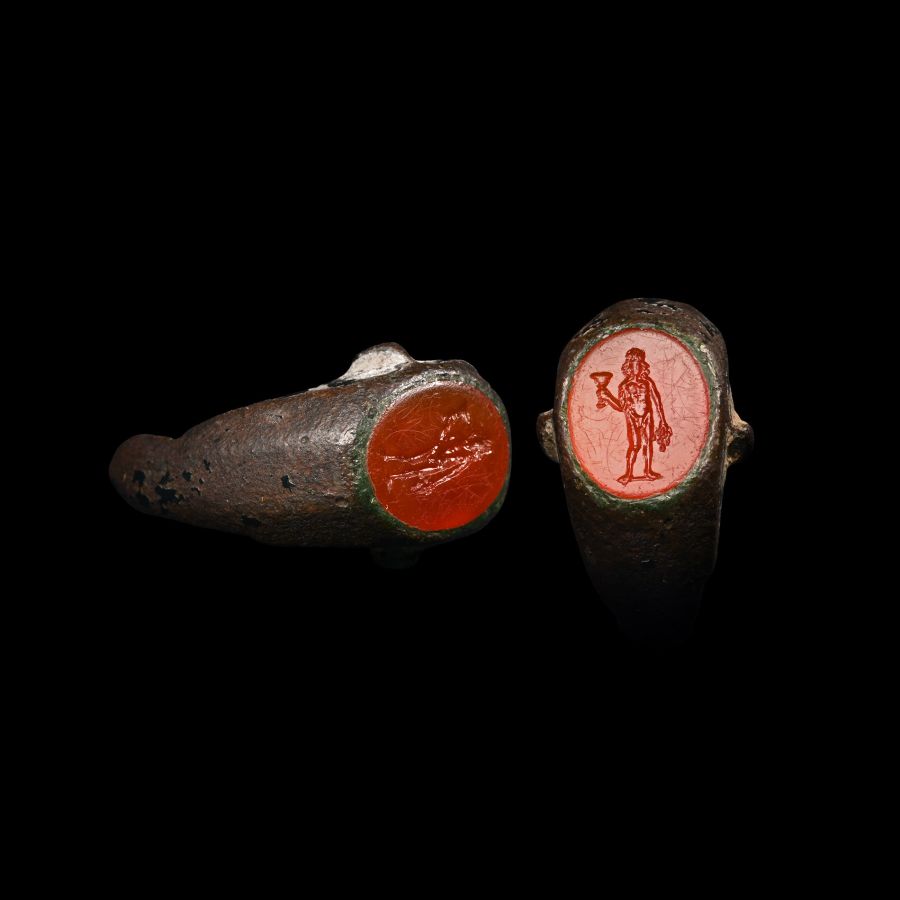
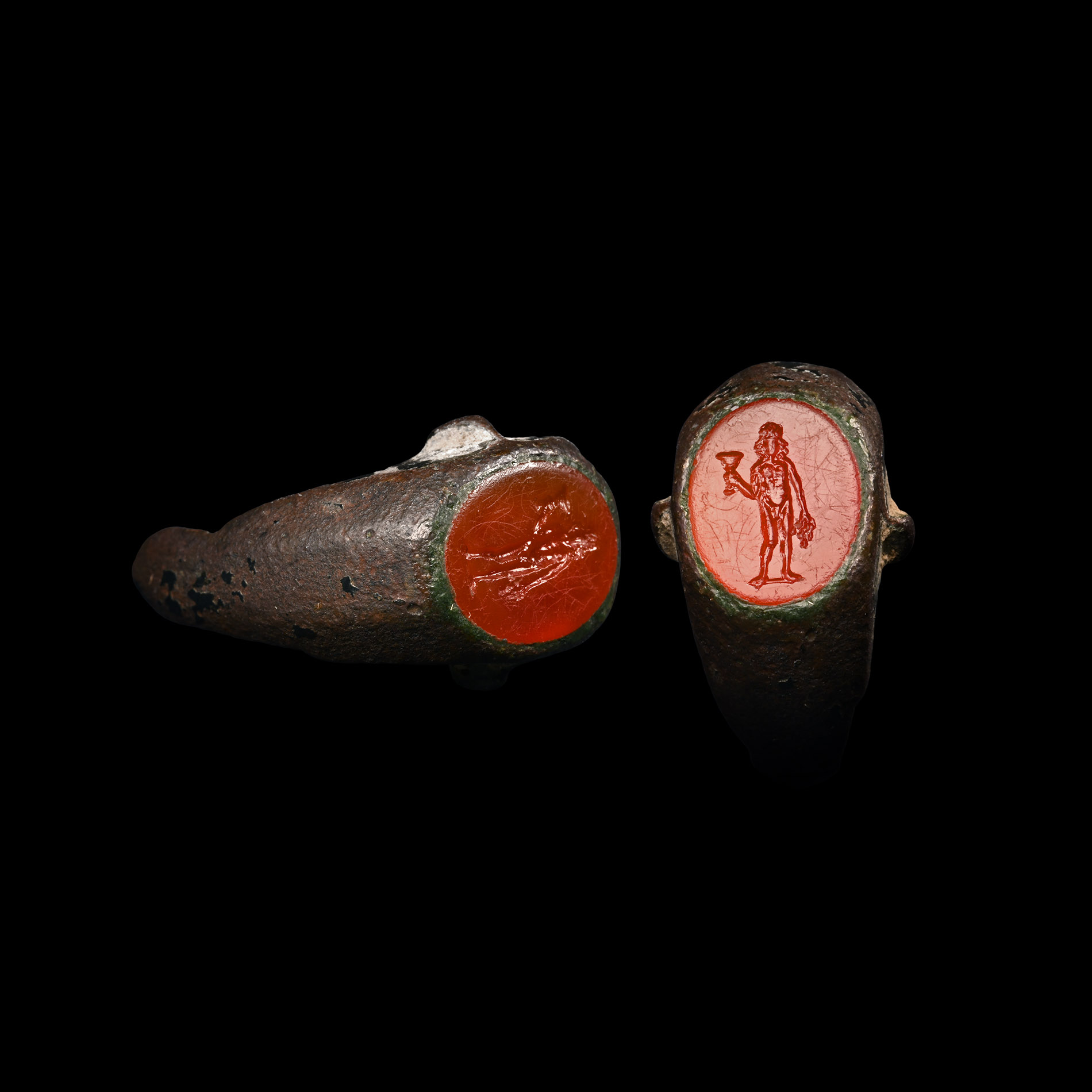
Ring with Standing Figure Gemstone
CIRCA 17TH CENTURY A.D.
1 in. (9.25 grams, 26.43 mm overall, 17.76 mm internal diameter (approximate size British O 1/2, USA 7 1/4, Europe 15.61, Japan 15)).
A copper-alloy ring with expanding arms and raised triangular knop to two faces, set with a carnelian intaglio gemstone engraved with a standing nude male figure holding a bunch of grapes and a goblet, possibly representing the god of wine.
ProvenanceAcquired in the late 1990s-2000.
Property of an East London gentleman.
TimeLine Auctions follows a vetting process to ensure the authenticity and legality of all items, reinforcing our commitment to integrity and responsible trading. Each antiquity, antique, and coin lot undergoes thorough examination by a vetting committee of at least ten external specialists, professional trade association members, scientists, and archaeologists: Our Vetting Process
AUCTIONS:
TimeLine is a leading auction house specialising in antiquities, ancient art, collectables, natural history, coins, medals, and books. Our auctions offer museums, collectors, historians, and enthusiasts the opportunity to acquire unique and historically significant pieces.
-
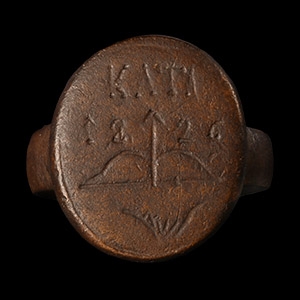
Post Medieval Ring with Bow and Arrow
1226 h. (1811 A.D.)Sold for (Inc. bp): £26
A copper-alloy ring composed of a broad hoop with slightly convex outer face, large oval-shaped bezel engraved with an archer's bow with nocked arrow, separating the numbers '12 / 26' and aimed towards the letters 'KΛTΛ'. 8.88 grams, 24.70 mm overall, 21.66 mm internal diameter (approximate size British V 1/2, USA 10 3/4, Europe 24.4, Japan 23)
Private collection formed since the 1940s. UK art market. Property of an Essex gentleman. -
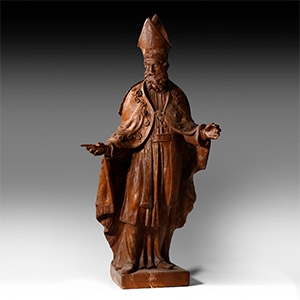
Post Medieval Statue of Saint Nicholas
16th-17th century A.D. or laterEstimate: £3,000 - 4,000 (+bp*)
Opening Bid: £1,500
A ceramic statue of St Nicholas standing in episcopal attire with stole and pallium, pectoral cross and mitre; his hands spread in a benevolent gesture, head turned slightly downwards; rosette and other detailing to the robes and headgear; integral rectangular base; repaired. 1.10 m high
English private collection. This lot has been checked against the Interpol Database of stolen works of art and is accompanied by search certificate number no.11675-199817. -
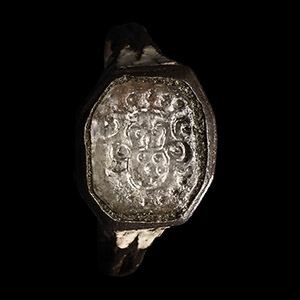
Tudor Period Ring with Armorial Intaglio
Circa 16th-17th century A.D.Sold for (Inc. bp): £72
A ring composed of a slender hoop with octagonal bezel, set with an armorial glass intaglio; remains of polychrome enamelled cells to the vertical faces of the bezel. 5.89 grams, 28.05 mm overall, 19.70 mm internal diameter (approximate size British T 1/2, USA 9 3/4, Europe 21.89, Japan 21)
Found Cambridgeshire in the 1990s.
