
Loading, please wait...
LOT 2022
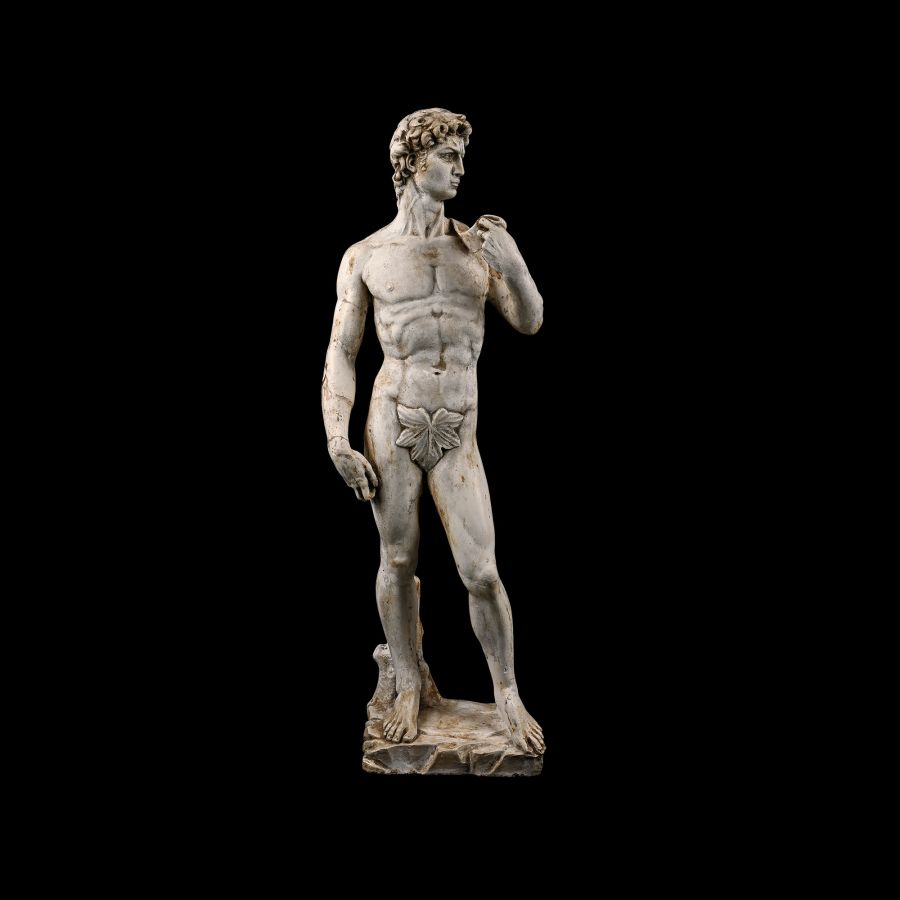
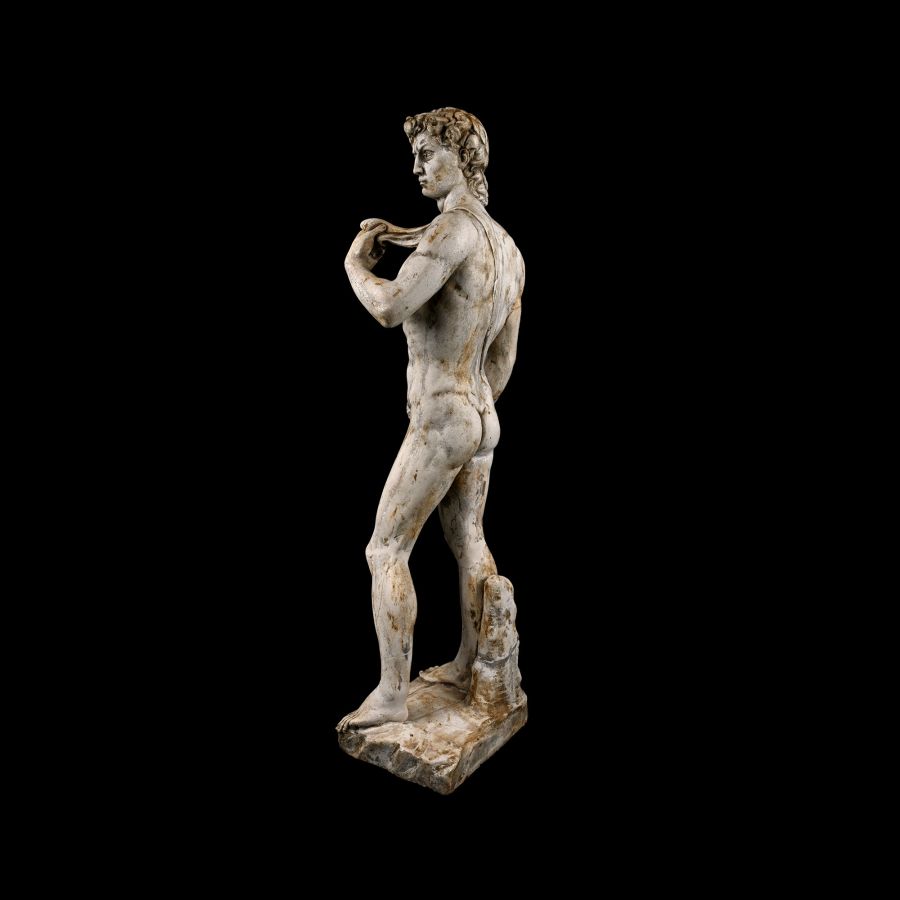
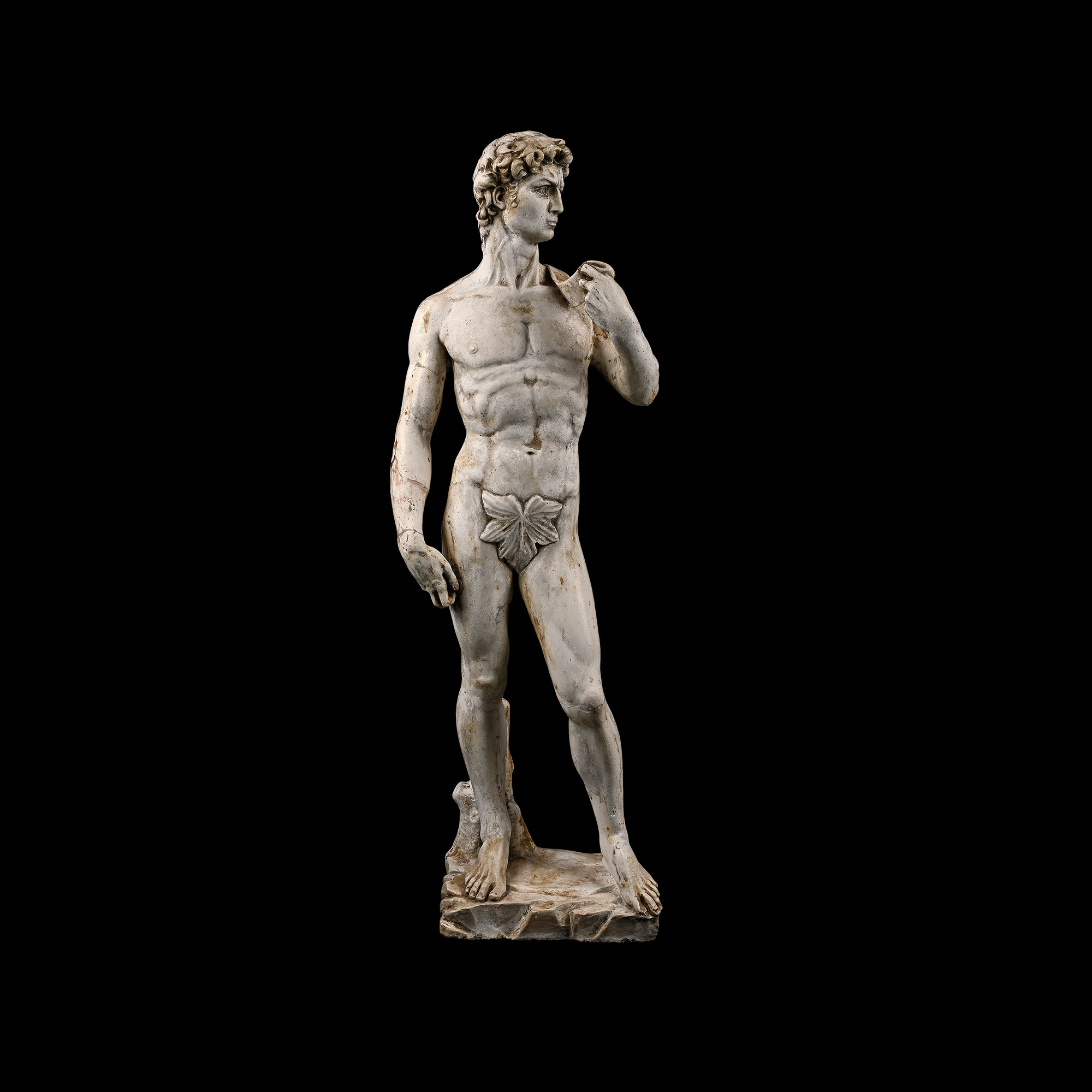
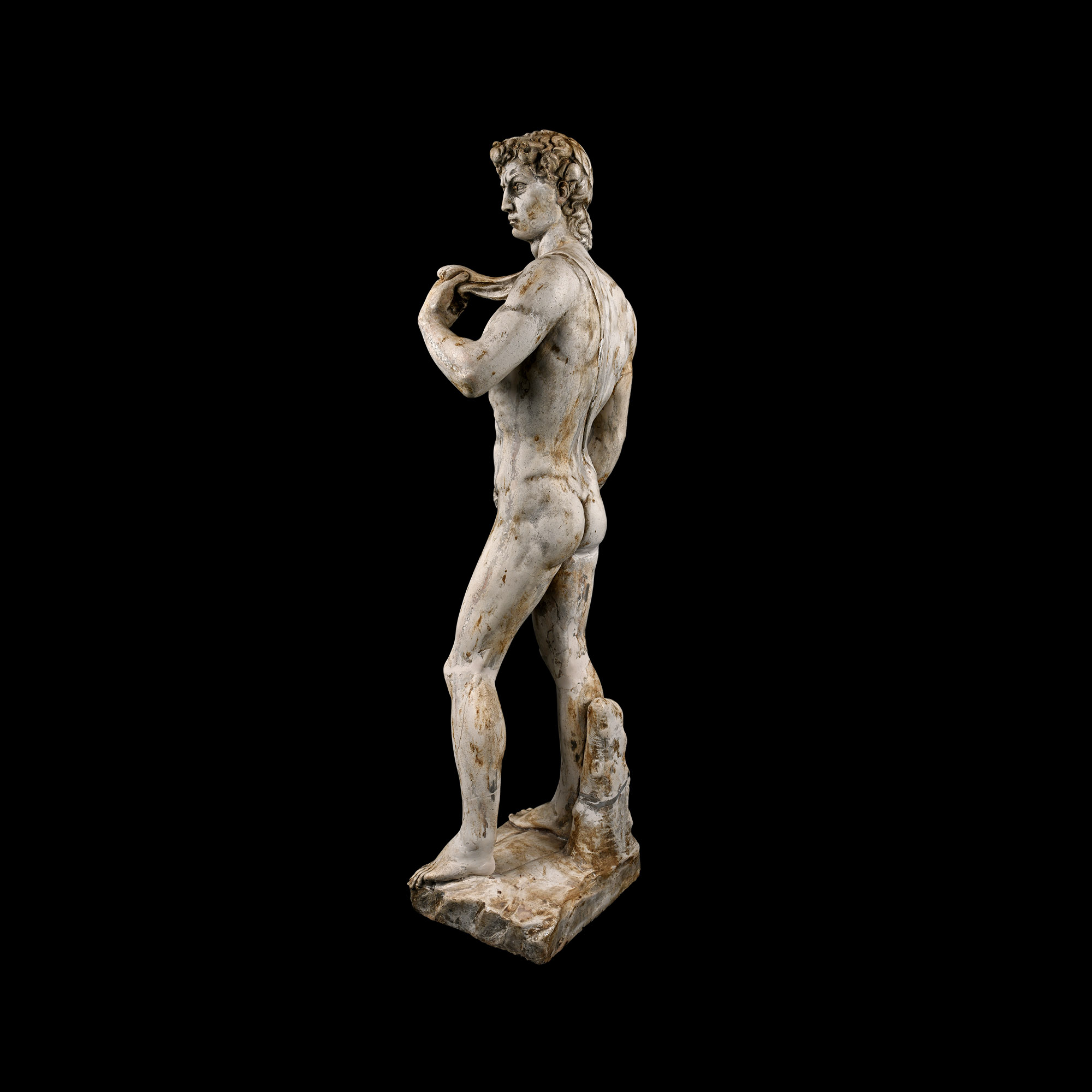
Replica of David Statue by Michelangelo
LATE 19TH-20TH CENTURY A.D.
32 1/2 in. (18.75 kg, 82.5 cm high).
A composition statue modelled after the Italian Renaissance masterpiece sculpted by Michelangelo, David depicted nude in a contrapposto position, carrying the weight on his right leg, holding the sling in his raised left hand, and the handle of the sling placed in his right hand, with a large ivy leaf covering his genitals; restored.
ProvenancePrivate collection, London.
FootnotesMichelangelo created the original sculpture between 1501 and 1504, and it was originally commissioned as one of a series of statues of twelve prophets. However, it was then placed in the public square in front of the Palazzo della Signoria.
CONDITIONTimeLine Auctions follows a vetting process to ensure the authenticity and legality of all items, reinforcing our commitment to integrity and responsible trading. Each antiquity, antique, and coin lot undergoes thorough examination by a vetting committee of at least ten external specialists, professional trade association members, scientists, and archaeologists: Our Vetting Process
AUCTIONS:
TimeLine is a leading auction house specialising in antiquities, ancient art, collectables, natural history, coins, medals, and books. Our auctions offer museums, collectors, historians, and enthusiasts the opportunity to acquire unique and historically significant pieces.
LOT 2022
Replica of David Statue by Michelangelo
Estimate £600 - 800€700 - 930 (for guidance only)$810 - 1,080 (for guidance only)
-
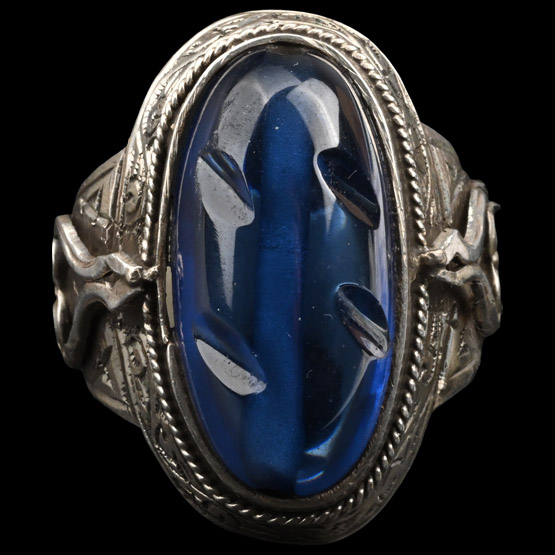
Silver-Coloured Metal Ring with Bead Gem
Late 20th-21st century A.D.Sold for (Inc. bp): £26
With broad hoop, applied scroll to each shoulder, filigree collar to the cell, inset ellipsoid cabochon with wheel-cut fluting. 20.18 grams, 33.67 mm overall, 23.08 mm internal diameter (approximate size British U 1/2, USA 10 1/4, Europe 23.15, Japan 22)
Private collection, UK. -
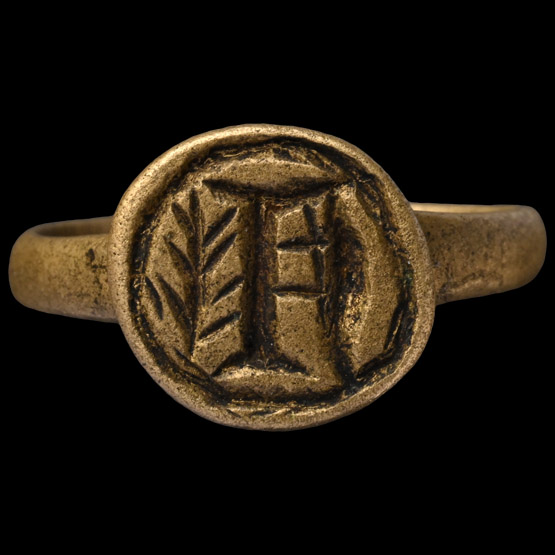
Large Stuart Period Bronze Signet Glove Ring with I for James between Branches
Early 17th century A.D.Sold for (Inc. bp): £59
D-section hoop and disc bezel with 'I' (or 'H') between fronds. 6.69 grams, 27.09 mm overall, 21.77 mm internal diameter (approximate size British X, USA 11 1/2, Europe 26.29, Japan 25)
From the collection of Dame Joan Evans (1893-1977), thence gifted during her lifetime to a gentleman collector friend from South East England.
Dame Joan Evans, DBE, FSA, FRHistS, enjoyed a long and distinguished career as an author and historian. She was appointed the president of the Society of Antiquaries in 1959, the first woman to hold this position, serving until 1964. From 1948 to 1951, Joan Evans served as President of the Royal Archaeological Institute. She received the Society’s gold medal in 1973. Joan Evans was honoured with a host of honorary degrees and fellowships, as well as fellowships of the Royal Historical Society and the Royal Society of Literature. She was a Chevalier of the Légion d’Honneur, and was appointed a Dame of the British Empire in 1976. She served as a trustee of both the London and the British museums, and as a member of the advisory council of the Victoria and Albert Museum. -
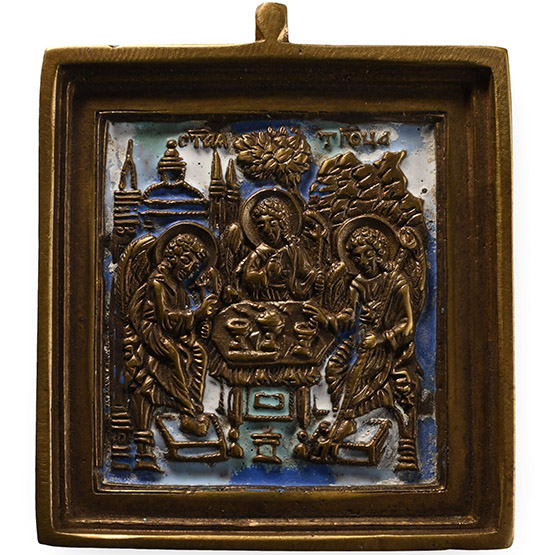
Russian Orthodox Enamelled Bronze Travel Icon with the Old Testament Trinity
19th century A.D.Sold for (Inc. bp): £117
Depicting the Holy Trinity, represented by three winged figures, each with a three-prong staff, sitting on stools around a table with three cups, trees and the outline of a cathedral behind. 67.5 grams, 62 mm
Acquired from Chris Martin-Zakheim, Iconastas, 5 Piccadilly Arcade, London SW1. From the private collection of a West London, UK, gentleman, formed since the early 2000s.
The subject is based on the traditional Russian interpretation of Genesis,18, in which three figures appear to Abraham at the oak tree of Mamre. The central figure is usually identified as Jesus Christ, while God the Father is on the right and the Holy Spirit on the left. The subject of the icon originated from a very famous 15th century painting by Andrei Rublev.
