
Loading, please wait...
LOT 0355
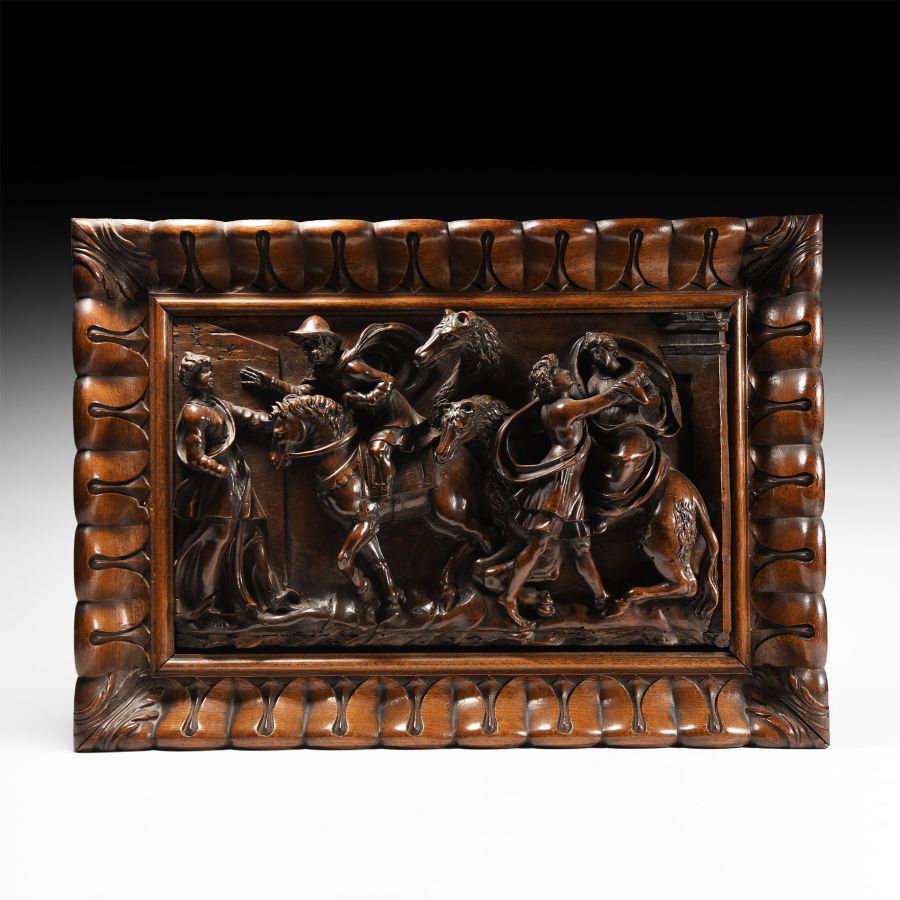
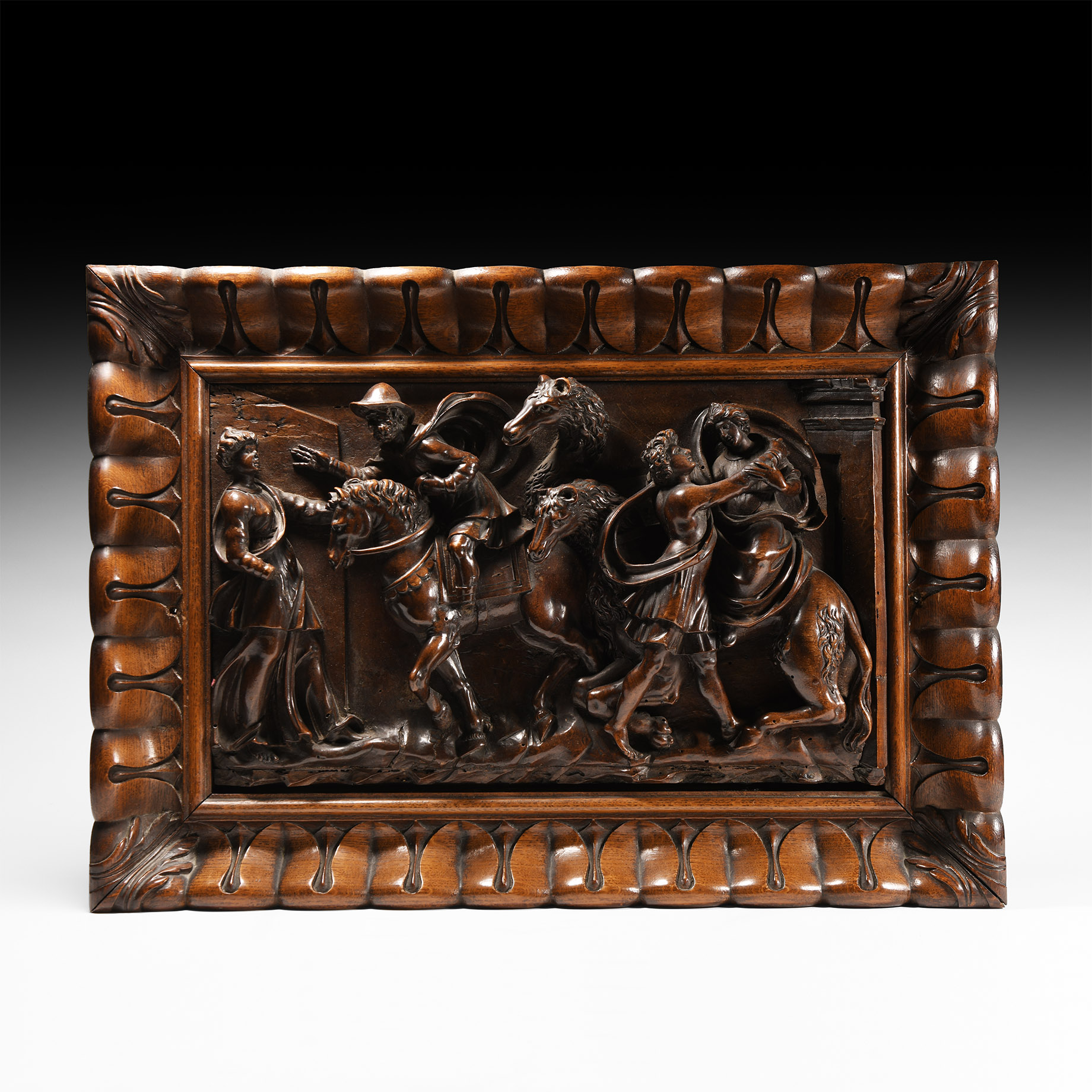
Renaissance Wooden Panel with Horse and Figures
ITALIAN, CIRCA 18TH CENTURY A.D.
21 1/2 x 15 1/8 in. (4 kg, 54.5 x 38.5 cm).
A carved wooden panel depicting a dynamic figural scene composed of mounted horse rider together with a rider mounted on a mythical creature with two heads, the body and hindlegs of a horse and head and forelegs of a lion or other creature, two standing figures beside them; egg-and-dart style frame with leaves to each corner.
ProvenanceEnglish private collection.
FootnotesThe timber shows some old insect flight holes and we are advised that this piece has been recently treated with Permethrin, as a precaution.
CONDITIONTimeLine Auctions follows a vetting process to ensure the authenticity and legality of all items, reinforcing our commitment to integrity and responsible trading. Each antiquity, antique, and coin lot undergoes thorough examination by a vetting committee of at least ten external specialists, professional trade association members, scientists, and archaeologists: Our Vetting Process
AUCTIONS:
TimeLine is a leading auction house specialising in antiquities, ancient art, collectables, natural history, coins, medals, and books. Our auctions offer museums, collectors, historians, and enthusiasts the opportunity to acquire unique and historically significant pieces.
LOT 0355
Renaissance Wooden Panel with Horse and Figures
Estimate £1,500 - 2,000€1,740 - 2,320 (for guidance only)$2,030 - 2,700 (for guidance only)
-
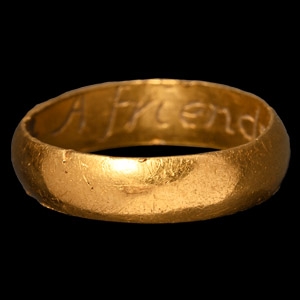
Post Medieval Gold 'A Friends Gift' Posy Ring
Circa 18th century A.D.Sold for (Inc. bp): £312
A gold posy ring with D-section band inscribed internally 'A friends gift' in lower case with initials 'I M' added after; with 'crown over T H' maker's punch. 1.94 grams, 15.23 mm overall, 12.85 mm internal diameter
Acquired on the UK antiques market between 1974-1985. Albert Ward collection, Essex, UK. -
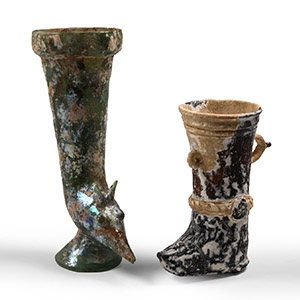
Roman Style Glass Vessel Group
20th century A.D.Sold for (Inc. bp): £46
A group of ancient Roman style glass vessels: a horn-shaped vessel with animal head base and conical foot, with iridescent surfaces; a boot-shaped vessel with anklet, flared neck and suspension loops. 206 grams total, 11.2-15.5 cm high
German collection formed before 2000. Ex private European collection. -
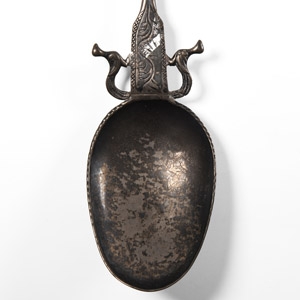
South American Silver Spoon Pin with Birds
18th-20th century A.D.Sold for (Inc. bp): £143
A large silver spoon composed of an ovoid bowl, rectangular neck with tapering upper sides and tapering round-section stem, the neck decorated with geometric and foliate motifs, flanked by a peacock on both sides with wing and tail feather detailing; repaired. 67 grams, 27 cm long
Acquired in 1988. UK private collection.
