
Loading, please wait...
LOT 2030
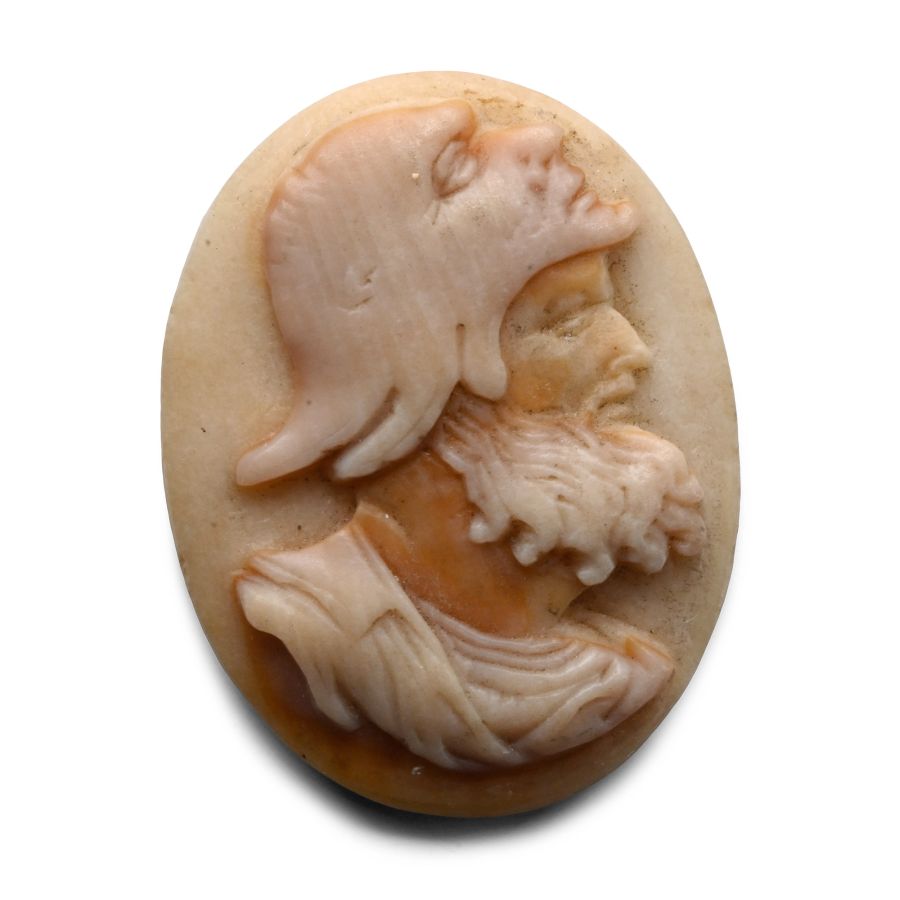
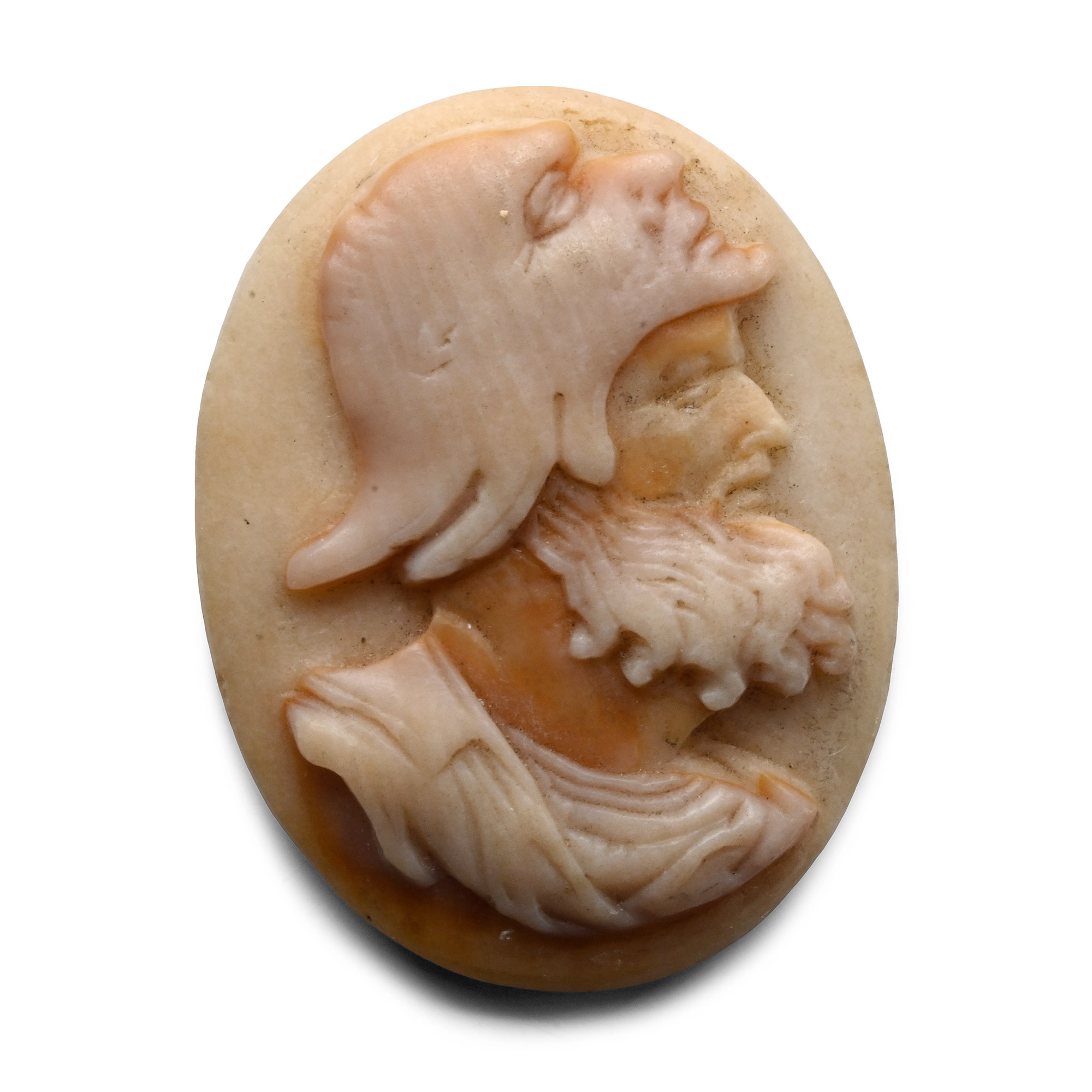
Renaissance Shell Cameo of a Helmetted Warrior
18TH CENTURY A.D.
1 in. (2.4 grams, 24 mm).
Oval cameo with a profile bust of a mature warrior with a long beard, wearing a draped tunic and a helmet with a face mask.
ProvenanceAcquired on the European art market.
CONDITIONTimeLine Auctions follows a vetting process to ensure the authenticity and legality of all items, reinforcing our commitment to integrity and responsible trading. Each antiquity, antique, and coin lot undergoes thorough examination by a vetting committee of at least ten external specialists, professional trade association members, scientists, and archaeologists: Our Vetting Process
AUCTIONS:
TimeLine is a leading auction house specialising in antiquities, ancient art, collectables, natural history, coins, medals, and books. Our auctions offer museums, collectors, historians, and enthusiasts the opportunity to acquire unique and historically significant pieces.
LOT 2030
Renaissance Shell Cameo of a Helmetted Warrior
Estimate £300 - 400€350 - 460 (for guidance only)$410 - 540 (for guidance only)
-
.jpg)
Renaissance Gold Fob Seal with Carnelian Gemstone of a Herm and Figures
16th-19th century A.D.Estimate: £1,000 - 1,400 (+bp*)
Opening Bid: £500
An oval intaglio finely engraved with a classical scene, at the centre a herm upon a plinth, flanked by two figures: the woman on the left wearing a gown with loose drapery falling across her arms, while the figure to the right is shown nude, the body scarcely veiled by a fine transparent cloth; at the far right a sacrificial altar surmounted by a lyre, introducing a musical or poetic dimension to the scene and emphasising its votive character; mounted in an ornate 18th-century French gold fob mount, pierced with scrolling foliate ornament and stamped with duty marks; supplied with a museum-quality impression. 6.60 grams, 25 mm
Acquired on the European art market.
The gem, cut in the 16th century, reflects the Renaissance revival of antique glyptic art, where Roman prototypes were carefully studied and reinterpreted with elegance and precision. The finely executed incision and harmonious arrangement of clothed and unclothed figures highlight the engraver’s technical mastery and antiquarian erudition. -
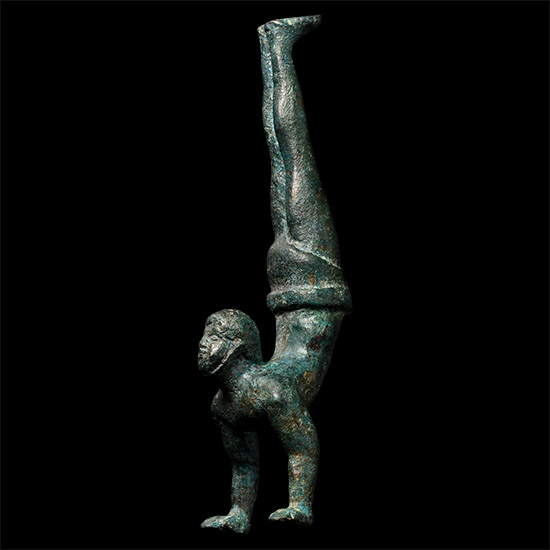
Roman Style Bronze Statuette of an Acrobat
20th century A.D.Sold for (Inc. bp): £143
Modelled in the round in delicately balanced pose resting on the hands; loincloth with waistband. 71.1 grams, 92 mm
Previously belonging to J Stewart, Mayfair, London, UK; acquired in the early 1980s. Property of a Middlesex gentleman. -
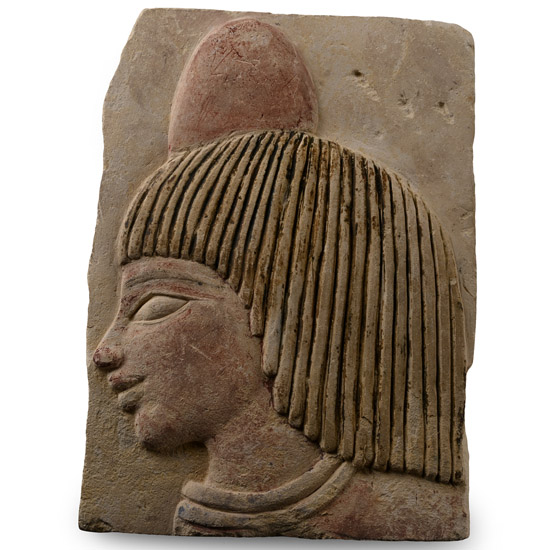
Egyptian Style Relief of a Young Female
20th century A.D.Sold for (Inc. bp): £46
Rectangular panel with a profile head of a female wearing a bag-wig and two collars around her neck. 1.04 kg, 18.2 cm
By repute ex Christie's, New York, 1996 and an old European collection. Private collection, London, UK.
