
Loading, please wait...
LOT 0354
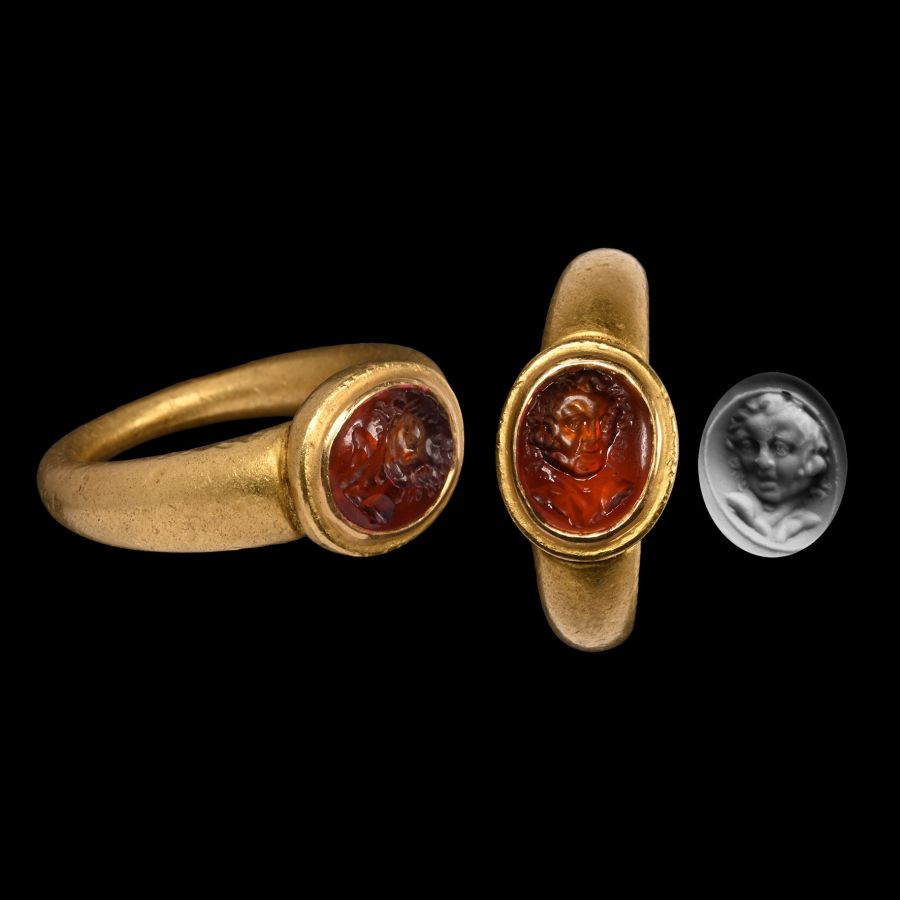
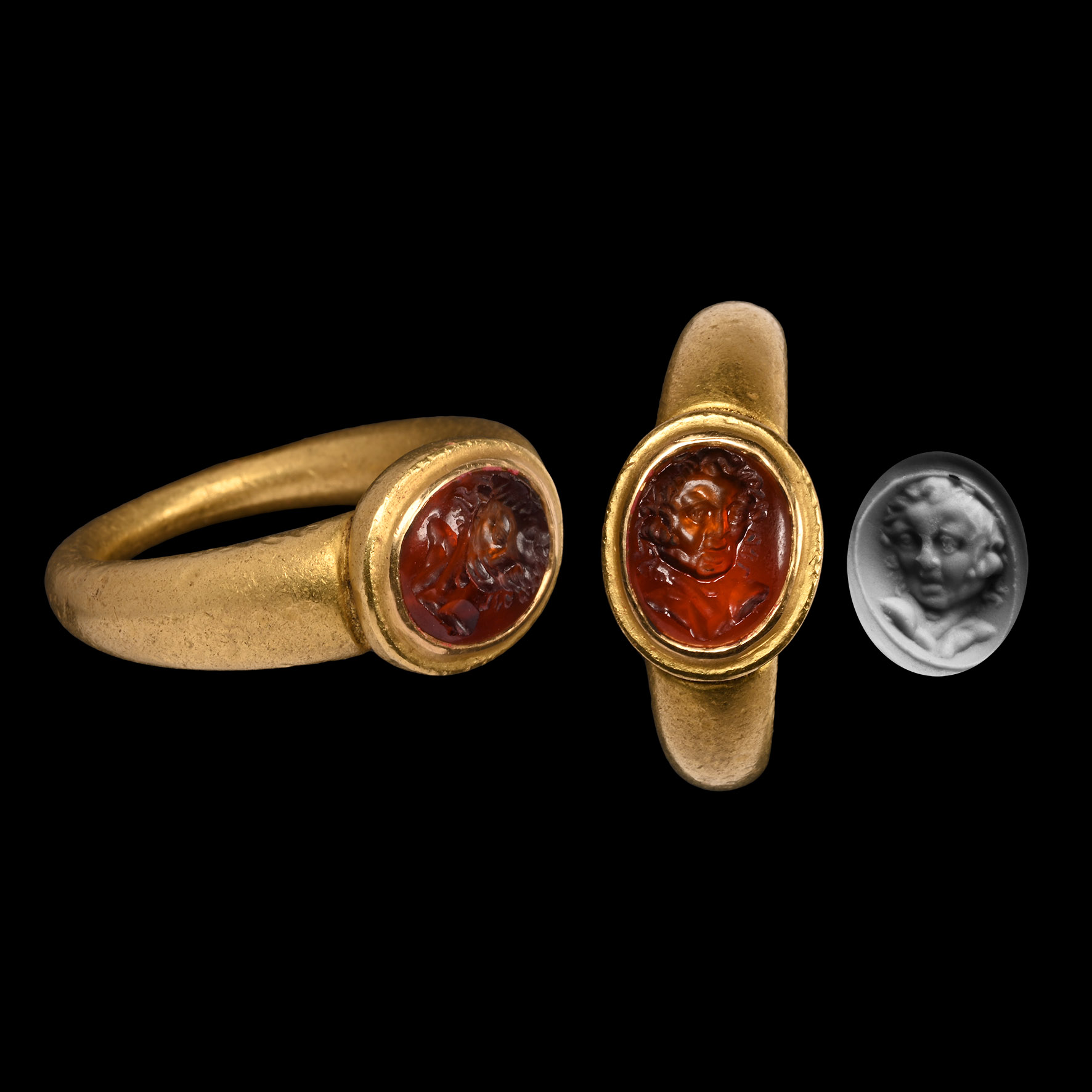
Renaissance Gold Ring with Young Satyr Gemstone
CIRCA 16TH CENTURY A.D. OR EARLIER
1 1/8 in. (20.22 grams, 28.60 mm overall, 18.96 mm internal diameter (approximate size British R 1/2, USA 8 3/4, Europe 19.38, Japan 18)).
With round-section shank and dished bezel, inset glass cabochon displaying a youthful male bust in three-quarter view, possibly Apollo.
ProvenanceAcquired in the 1980s on the London art market.
Ex Walsh collection.
This lot has been checked against the Interpol Database of stolen works of art and is accompanied by search certificate no.11906-207091.
TimeLine Auctions follows a vetting process to ensure the authenticity and legality of all items, reinforcing our commitment to integrity and responsible trading. Each antiquity, antique, and coin lot undergoes thorough examination by a vetting committee of at least ten external specialists, professional trade association members, scientists, and archaeologists: Our Vetting Process
AUCTIONS:
TimeLine is a leading auction house specialising in antiquities, ancient art, collectables, natural history, coins, medals, and books. Our auctions offer museums, collectors, historians, and enthusiasts the opportunity to acquire unique and historically significant pieces.
LOT 0354
Renaissance Gold Ring with Young Satyr Gemstone
Estimate £7,000 - 9,000€8,120 - 10,440 (for guidance only)$9,450 - 12,150 (for guidance only)
-
Medieval Silver Ring with Crosses
13th-16th century A.D.Sold for (Inc. bp): £117
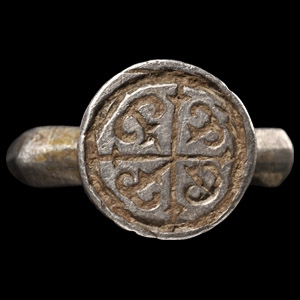
Composed of a carinated hoop with raised plaque and angled shoulders, circular bezel with fluting to the underside, the outer face engraved with a cross at centre, a flourish to each quarter. 3.73 grams, 21.89 mm overall, 14.84 mm internal diameter (approximate size British H, USA 3 3/4, Europe 6.18, Japan 6)
Ex old English collection. London art market, 1980s. -
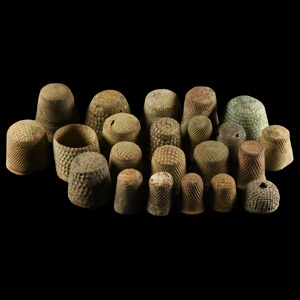
Medieval and Later Bronze Thimble Collection
Circa 15th-20th century A.D.Sold for (Inc. bp): £23
Composed of thimbles of various dates, types and sizes, including beehive and decorated examples. 77 grams total, 12-23 mm
Found Berkshire, UK. -
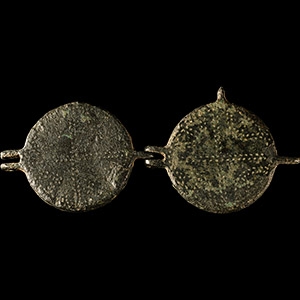
Medieval Bronze Pocket Folding Mirror Case
14th-15th century A.D.Sold for (Inc. bp): £85
With articulate rivet and loop for suspension, both discoid outer faces decorated with a pricked cross motif. 20 grams, 46 mm
Acquired on the UK market, 1990s. Property of a retired academic.
