
Loading, please wait...
LOT 0330
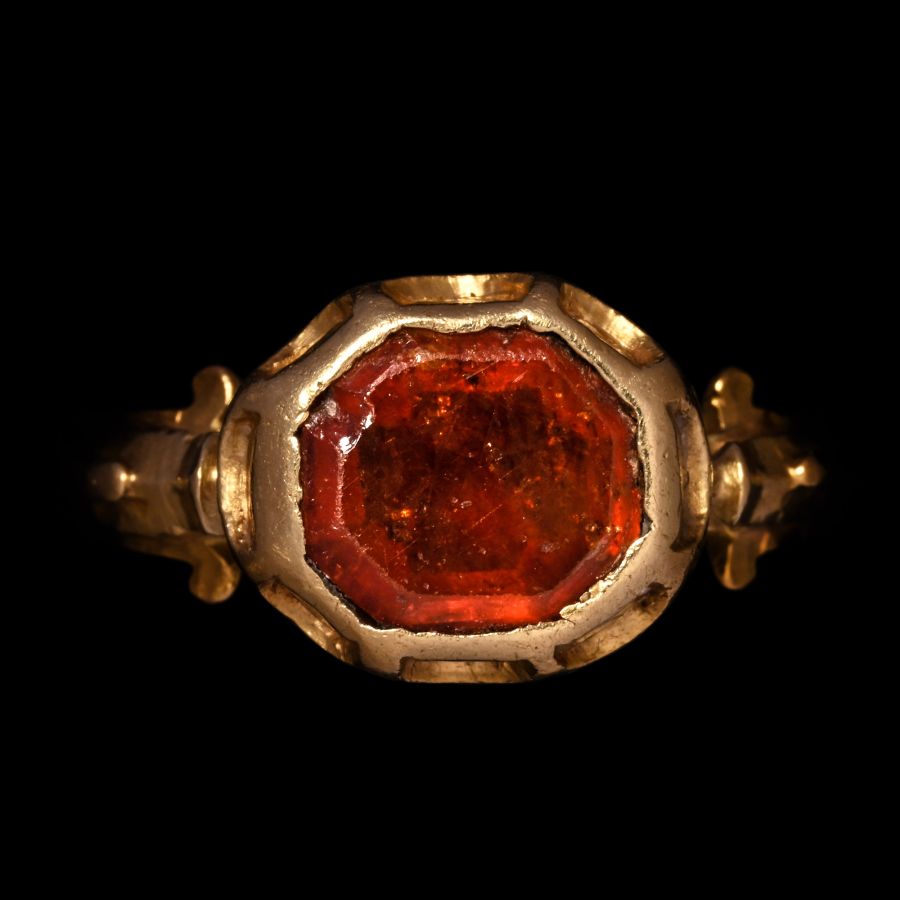
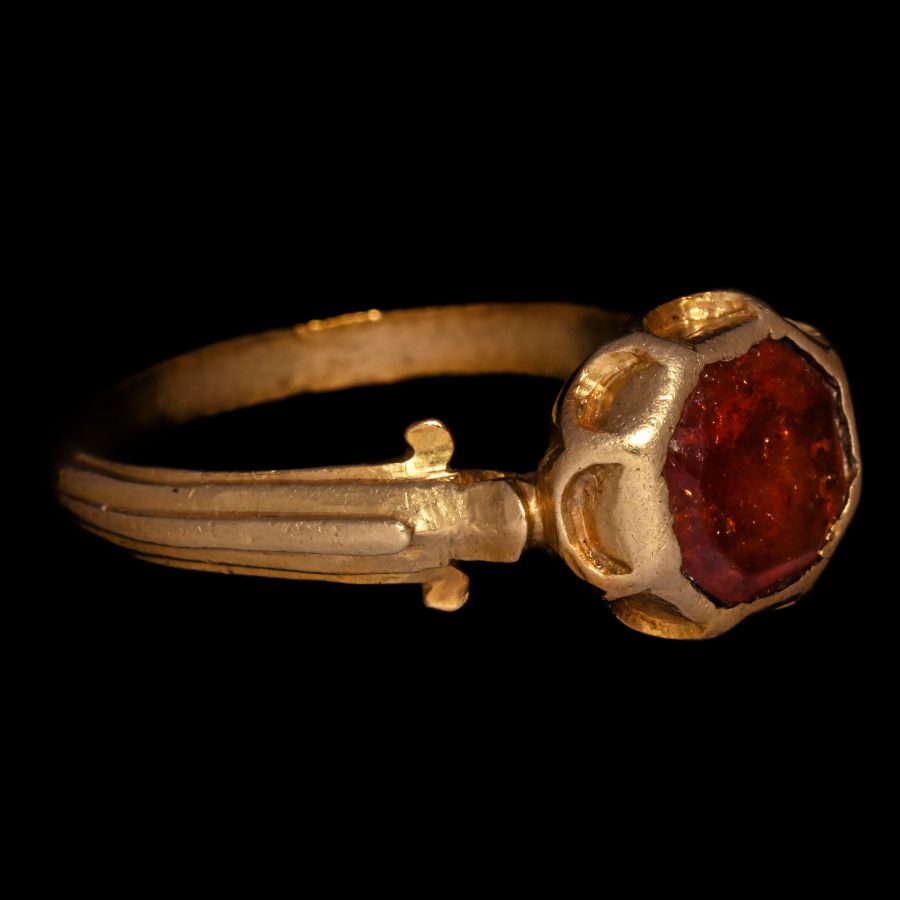
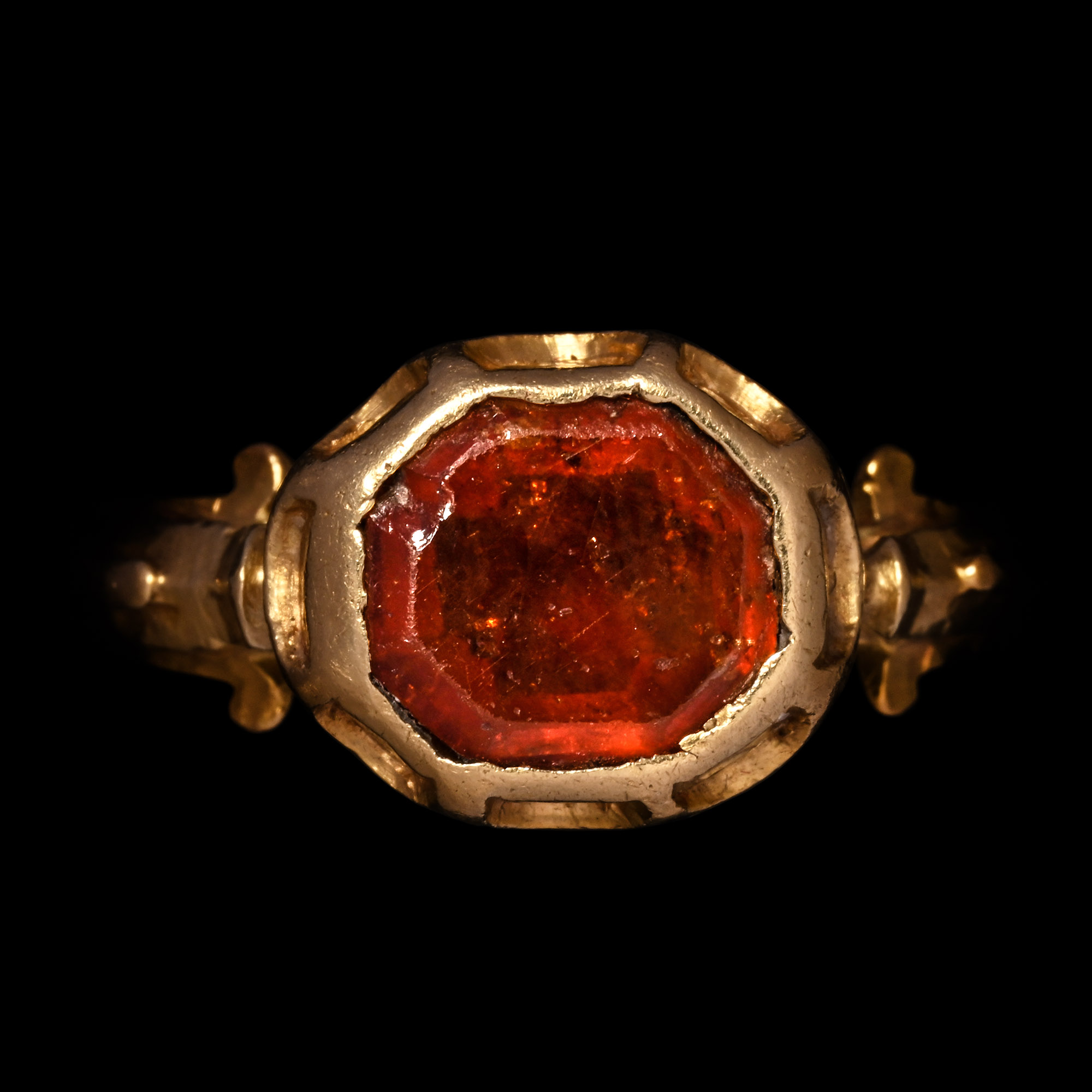
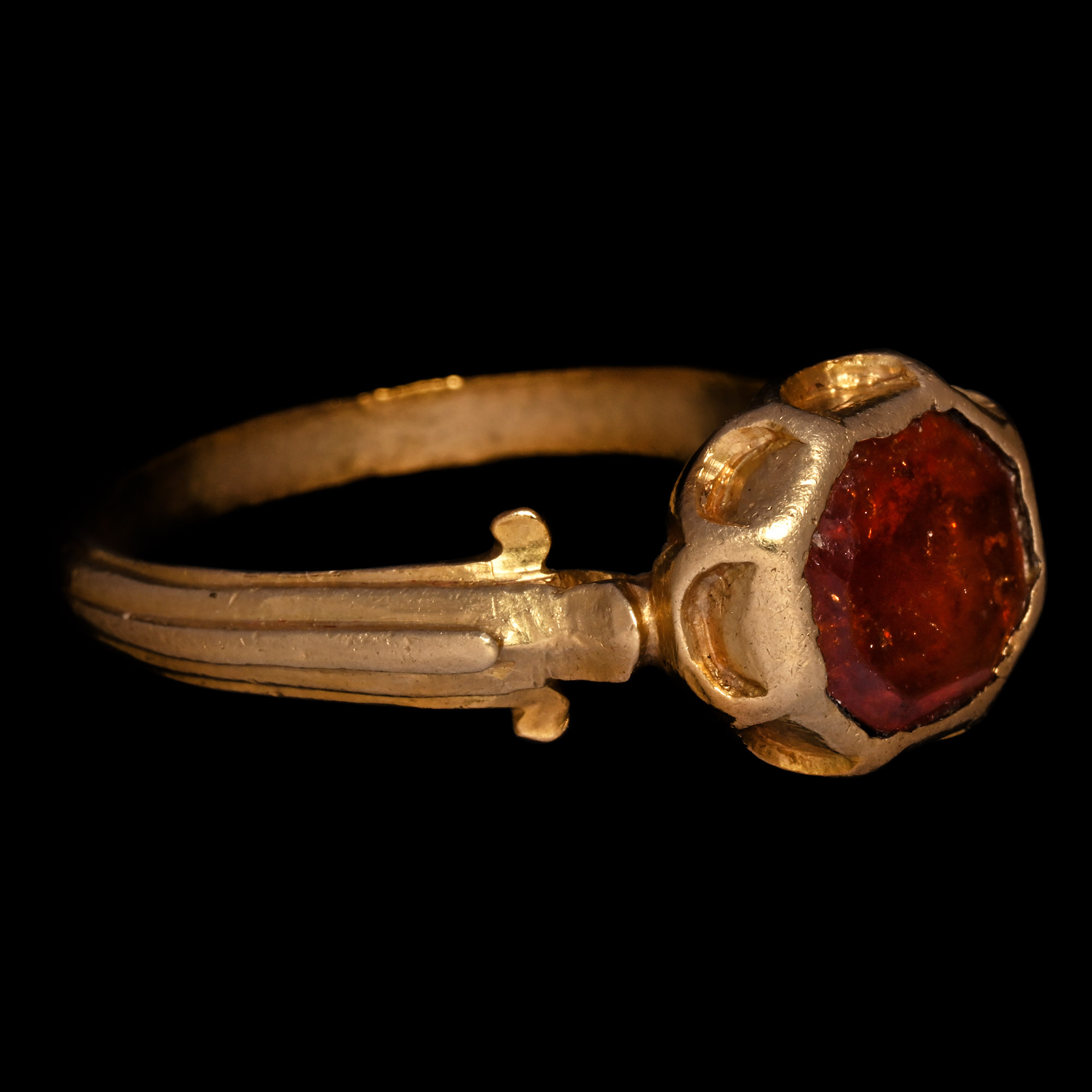
Renaissance Gold Ring with Table-Cut Hessonite Garnet
WESTERN EUROPE, 16TH CENTURY A.D.
1 in. (7.07 grams, 27.56 mm overall, 19.87 x 19.76 mm internal diameter (approximate size British U, USA 10, Europe 22.52, Japan 21)).
Tiered hoop and shoulders supporting a cup bezel with scallop detailing, inset with an octagonal cloison.
ProvenancePrivate collection, Europe.
Acquired on the English art market.
This lot has been checked against the Interpol Database of stolen works of art and is accompanied by a search certificate number no.13048-248385.
A similar example was offered by Sotheby’s, New Bond Street, European Sculpture and Works of Art, 4th December 2013, Lot 60, it is catalogued as: Finger Ring, gold, with a scalloped bezel set with an oval garnet. Probably Italian, late 16th/ early 17th century; see also Chadour, A.B., Rings. The Alice and Louis Koch Collection, volume I, Leeds, 1994, item 676, for type.
FootnotesParallels for the ring type are dated 16th century. A related finger ring is also available in the British Museum collection. The chalice-shaped workmanship of the bezel betrays a strong Italian influence in the workmanship of the ring section.
CONDITIONTimeLine Auctions follows a vetting process to ensure the authenticity and legality of all items, reinforcing our commitment to integrity and responsible trading. Each antiquity, antique, and coin lot undergoes thorough examination by a vetting committee of at least ten external specialists, professional trade association members, scientists, and archaeologists: Our Vetting Process
AUCTIONS:
TimeLine is a leading auction house specialising in antiquities, ancient art, collectables, natural history, coins, medals, and books. Our auctions offer museums, collectors, historians, and enthusiasts the opportunity to acquire unique and historically significant pieces.
LOT 0330
Renaissance Gold Ring with Table-Cut Hessonite Garnet
Sold for (Inc. bp): £3,380
-
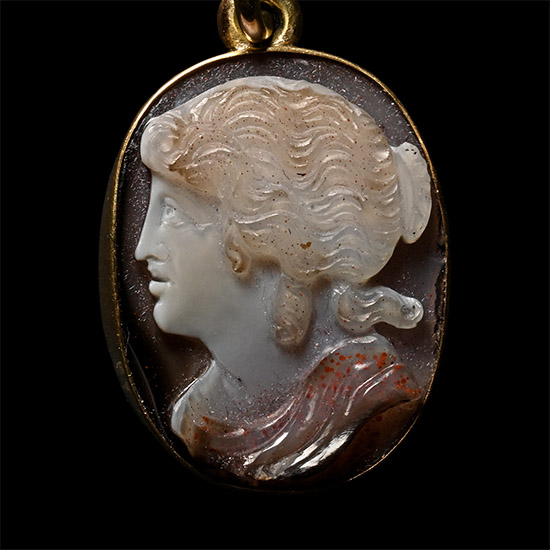
Post Medieval Agate Cameo of a Classical Muse in Gold Mount
Italy, 18th century A.D.Estimate: £700 - 900 (+bp*)
Opening Bid: £350
Gold cell with suspension loop, inset banded agate panel with reserved female profile bust with hair in a chignon. 7.8 grams, 38 mm
Private collection, Europe. Acquired on the English art market. -
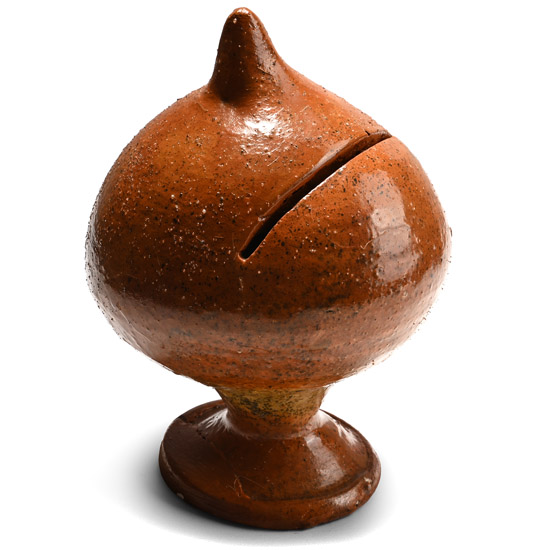
Post Medieval Brown Glazed Money Box
17th-18th century A.D.Sold for (Inc. bp): £59
Hand-thrown pot with bulbous body and a trumpet-shaped foot; a wide slit to the upper part of the body. 297 grams, 12.5 cm
Acquired on the UK art market. Property of a Kent, UK, lady collector. -
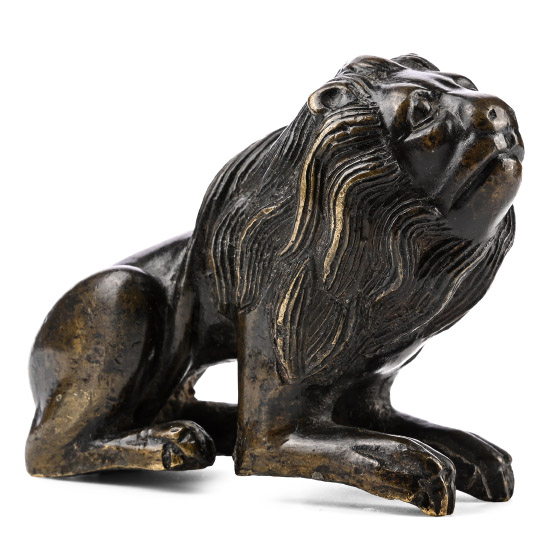
Nuremberg Brass Lion Statue
Germany, 16th century A.D.Estimate: £500 - 700 (+bp*)
Opening Bid: £250
Modelled in a half-seated pose, gazing upwards with compact body, broad forequarters, the mane rendered in long, parallel strands; the tail emerging from underneath the body and resting diagonally on top of the neck. 855 grams, 96 mm
Acquired on the European art market.
The treatment reflects the continuation of late Gothic conventions within German workshops, while also aligning with the more classicising tendencies found in North Italian bronze production of the period. The anatomical structure is simplified yet purposeful, characteristic of functional or cabinet bronzes produced across central Europe in the sixteenth century. Its scale and form correspond to small bronzes intended for Kunstkammer settings or as elements within larger composite objects such as inkstands or caskets, where the lion served as an emblem of vigilance, authority, and learned taste.
