
Loading, please wait...
LOT 0340
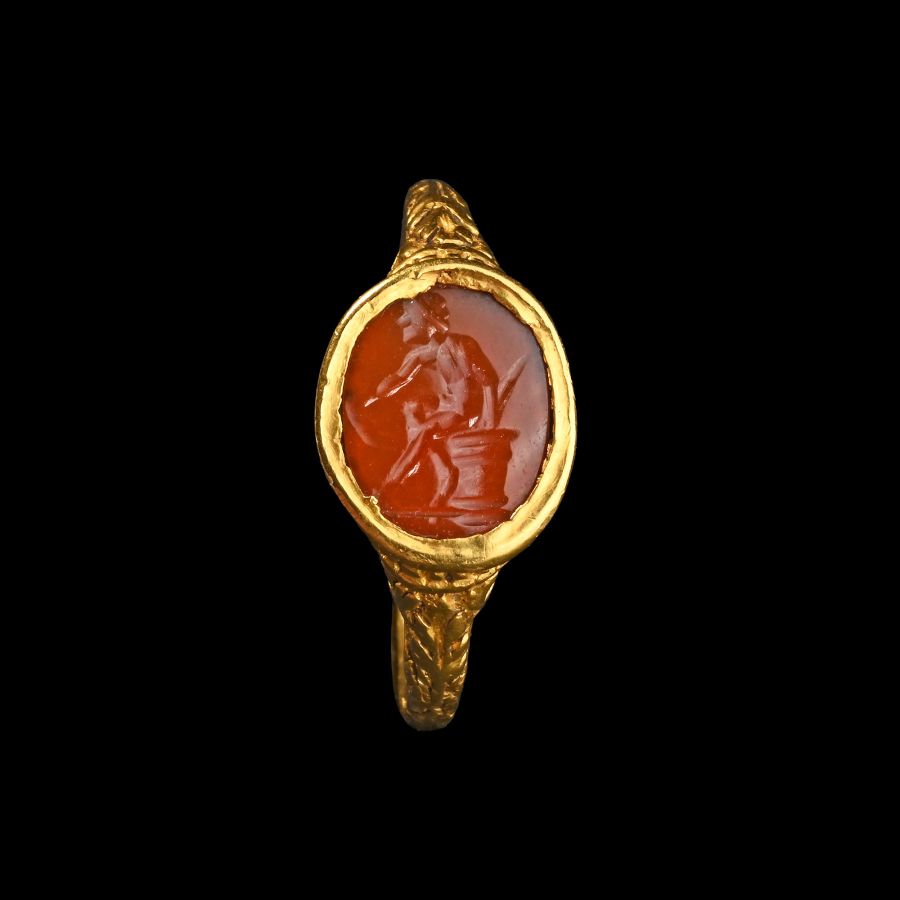
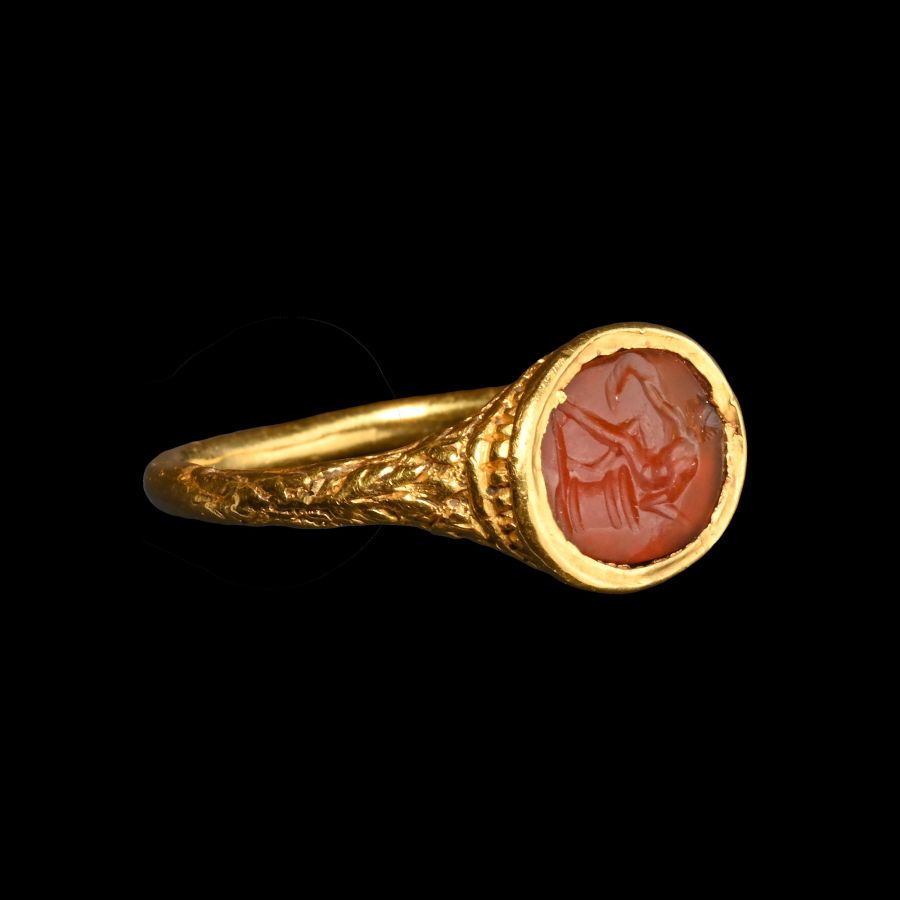
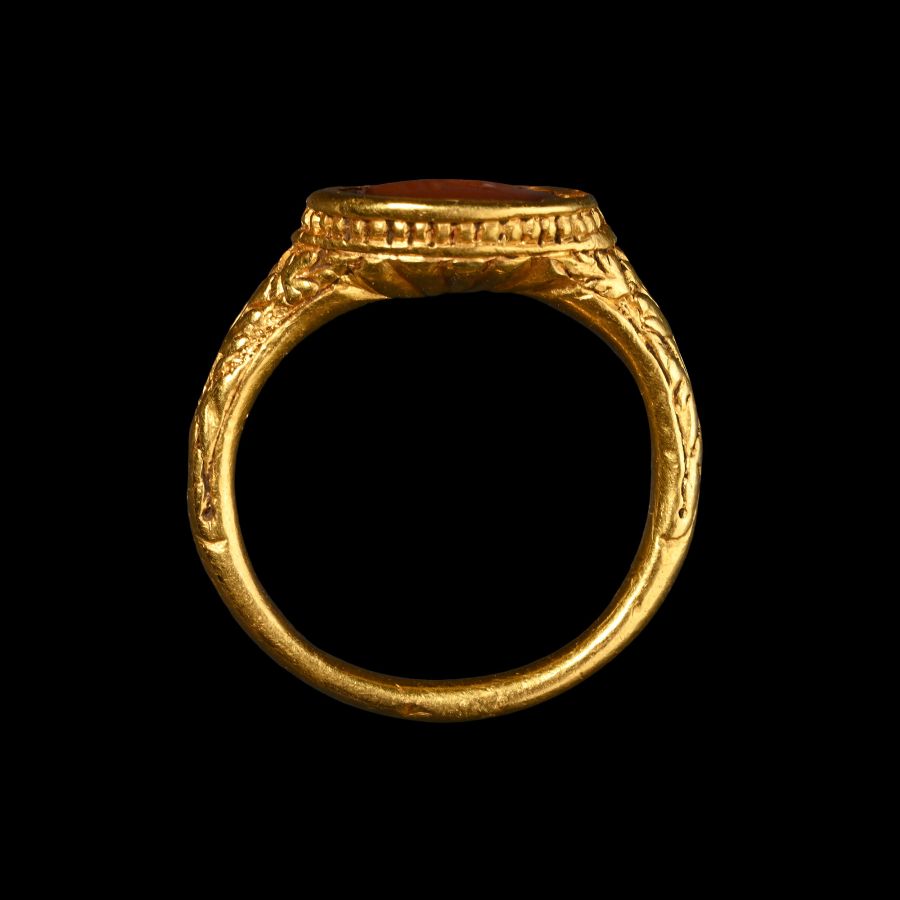
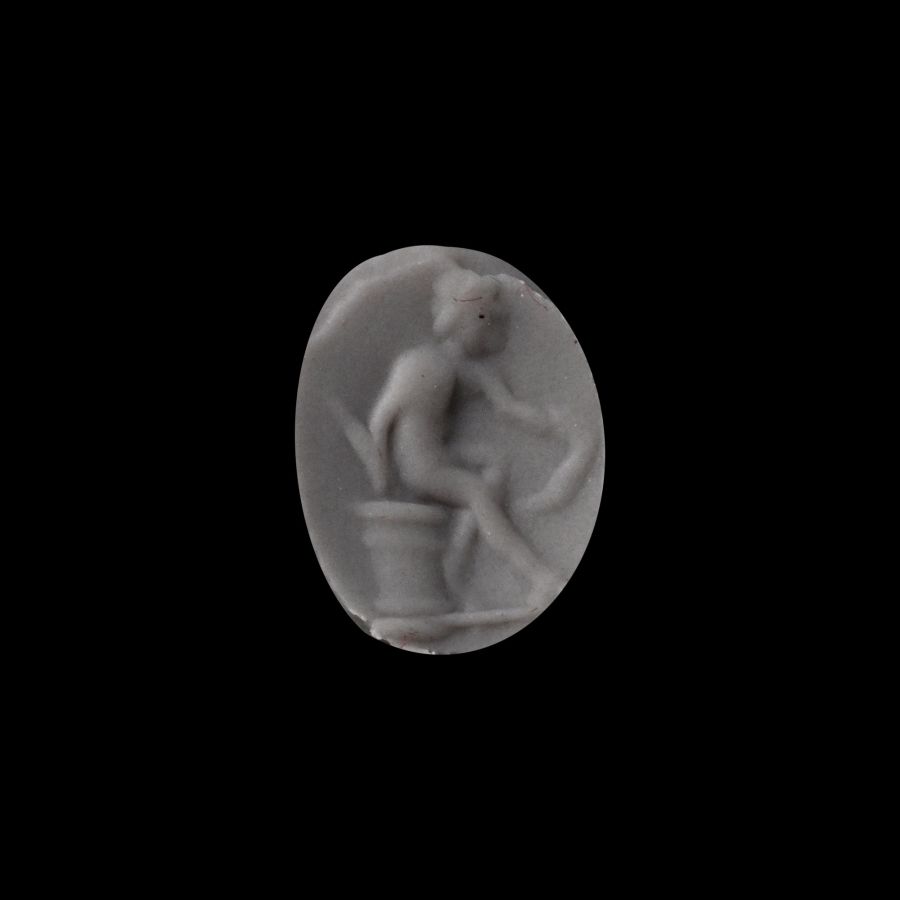
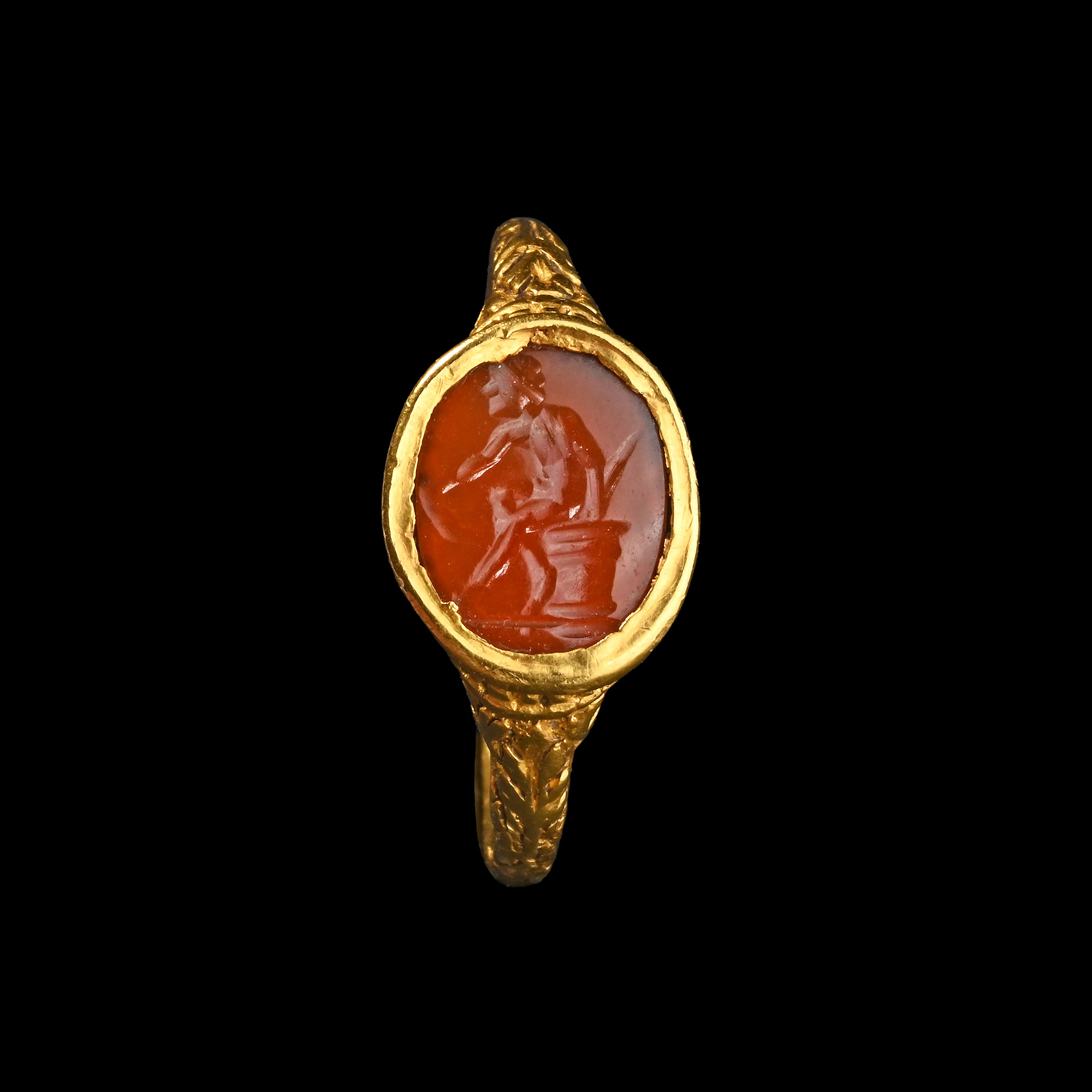
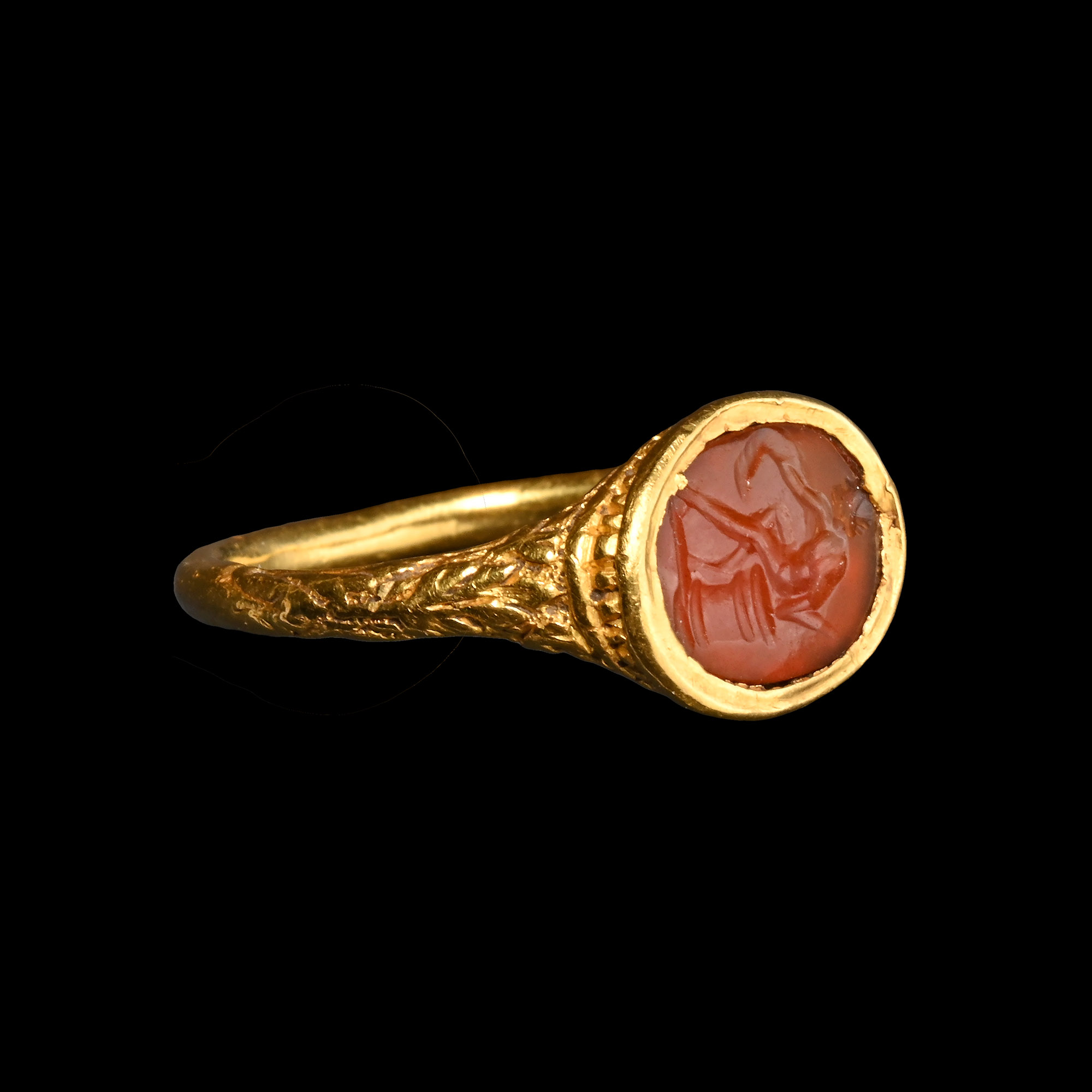
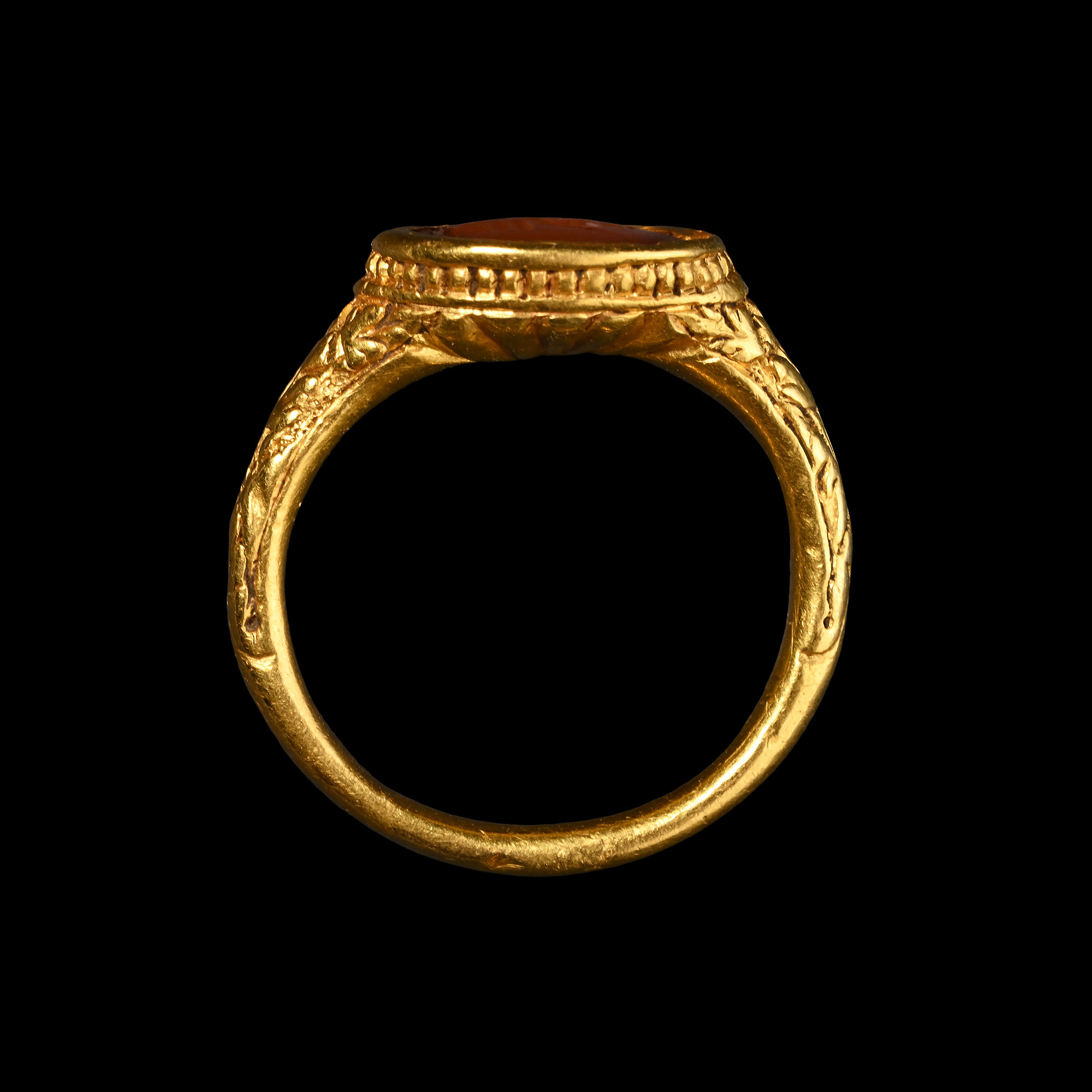
Renaissance Gold Ring with Carnelian Gemstone of a Resting Hero
WESTERN EUROPE, 16TH-EARLY 17TH CENTURY A.D.
1 in. (4.66 grams, 23.39 mm overall, 17.88 mm internal diameter (approximate size British O, USA 7, Europe 14.98, Japan 14)).
Comprising a round-section hoop with foliate decoration on the shoulders, oval setting with a beaded border and gadrooned underside, set with a
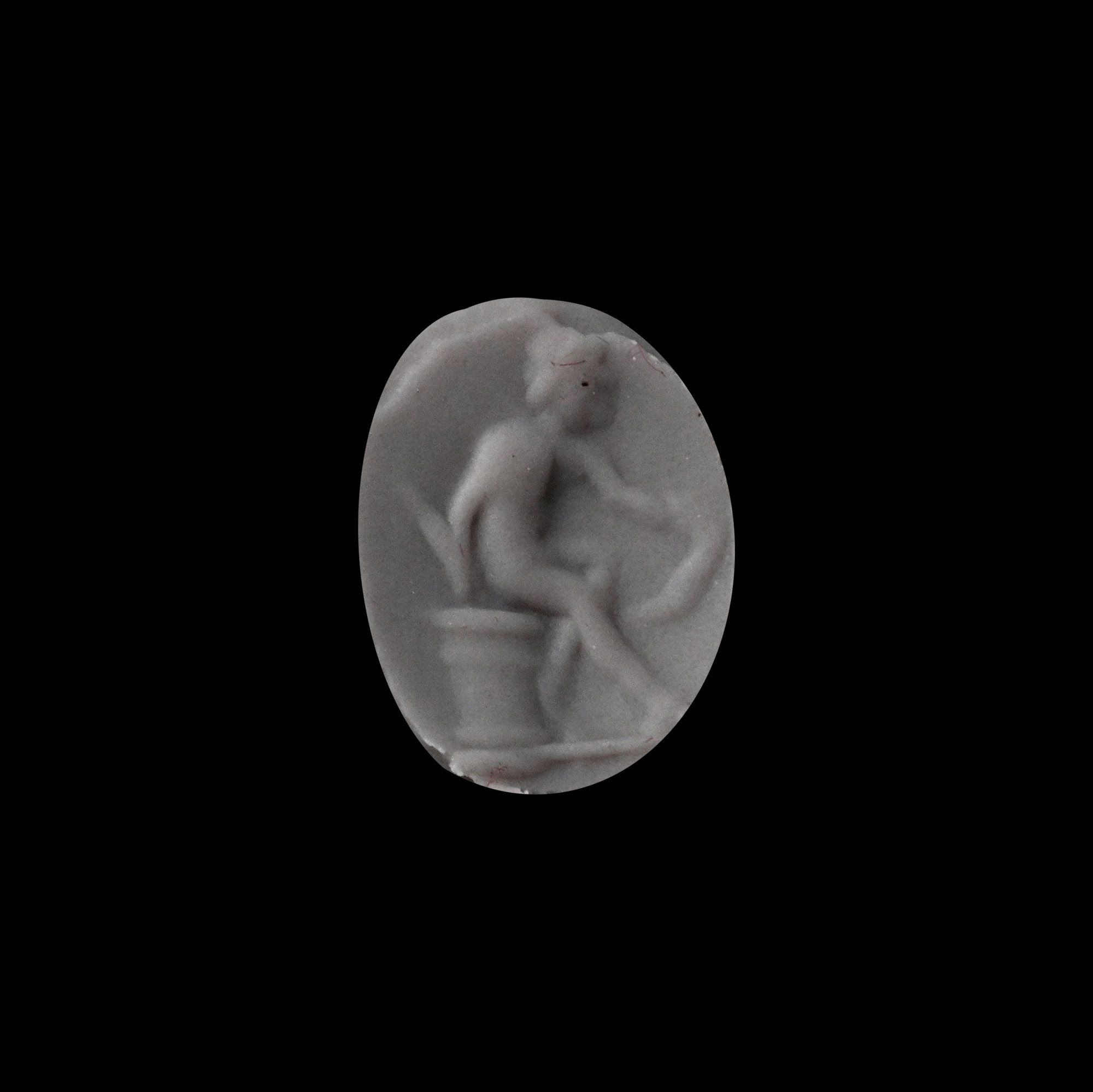
dark carnelian intaglio depicting a warrior hero, in heroic nudity, resting after the battle; such images usually referring to the god Ares or heroes like Achilles or Theseus; supplied with a museum-quality impression.
Acquired on the European art market.
This lot has been checked against the Interpol Database of stolen works of art and is accompanied by search certificate number no.13394-257950.
Cf. Chadour, A.B., Rings. The Alice and Louis Koch Collection, volume I, Leeds, 1994, items 658, 664, for type.
CONDITIONTimeLine Auctions follows a vetting process to ensure the authenticity and legality of all items, reinforcing our commitment to integrity and responsible trading. Each antiquity, antique, and coin lot undergoes thorough examination by a vetting committee of at least ten external specialists, professional trade association members, scientists, and archaeologists: Our Vetting Process
AUCTIONS:
TimeLine is a leading auction house specialising in antiquities, ancient art, collectables, natural history, coins, medals, and books. Our auctions offer museums, collectors, historians, and enthusiasts the opportunity to acquire unique and historically significant pieces.
LOT 0340
Renaissance Gold Ring with Carnelian Gemstone of a Resting Hero
Estimate £5,000 - 7,000€5,800 - 8,120 (for guidance only)$6,750 - 9,450 (for guidance only)
-
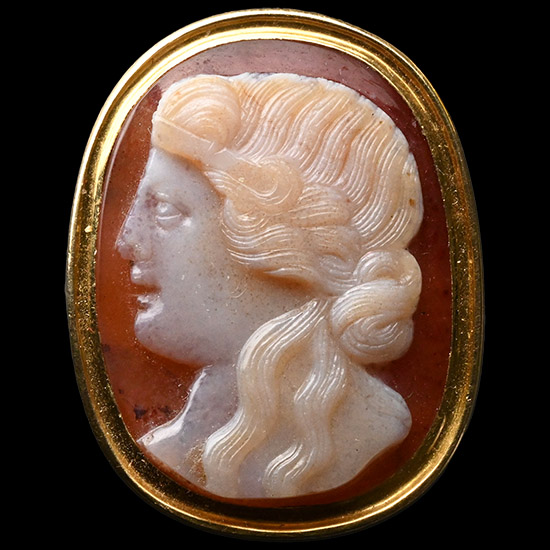
Georgian Gold Ring with Renaissance Cameo of a Muse
16th-18th century A.D.Estimate: £3,000 - 4,000 (+bp*)
Opening Bid: £1,500
Comprising a D-section hoop and a large fluted bezel set with a cameo depicting a female profile bust, her hair pulled to a chignon at the nape of her neck, with two loose strands elegantly resting on her shoulder. 11.70 grams, 27.74 mm overall, 18.38 mm internal diameter (approximate size British P, USA 7 1/2, Europe 16.23, Japan 15)
Acquired on the European art market. This lot has been checked against the Interpol Database of stolen works of art and is accompanied by search certificate number no.13319-257965.
This refined bust captures the timeless elegance of ancient iconography: delicate profile turned to the left, hair held by a chignon and diadem allowing the locks to escape and forming braids. The cameo is Italian and dates to the 16th century, the ring is 18th century. -
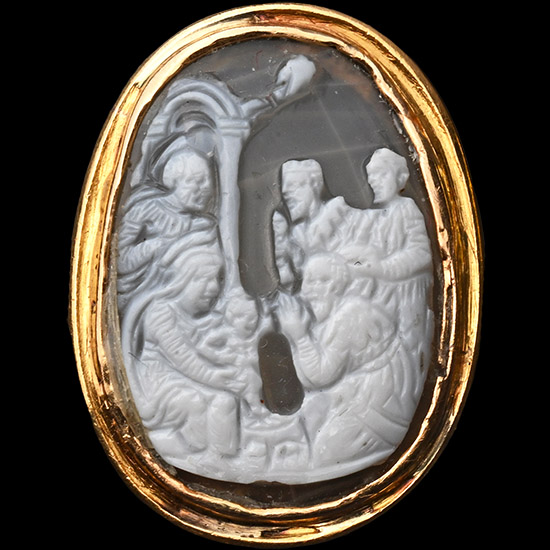
Post Medieval Gold Ring with Sardonyx Cameo with Adoration of the Magi
Italy, 15th century A.D.Estimate: £5,000 - 7,000 (+bp*)
Opening Bid: £2,500
Featuring a finely carved sardonyx cameo illustrating the Nativity, with the Virgin Mary extending the Christ Child toward the three Magi bearing gifts, while Joseph stands beside her; the family shown emerging from an arched doorway, beneath the Star of Bethlehem; set in a 19th-century high-carat gold mount, probably English in origin. 4.62 grams, 21.88 mm overall, 18.25 mm internal diameter (approximate size British Q, USA 8, Europe 17.49, Japan 16)
Acquired on the European art market. This lot has been checked against the Interpol Database of stolen works of art and is accompanied by search certificate number no.13334-258013.
The scene is staged horizontally, with the Holy Family at one end and the Magi and their entourage proceeding towards it, essentially unfolding in the foreground in a sort of procession, one behind the other. This was the standard image, although in the Italian School of Renaissance the same scene was often modified according to the vision of Botticelli, who put at the centre the Holy Family. -
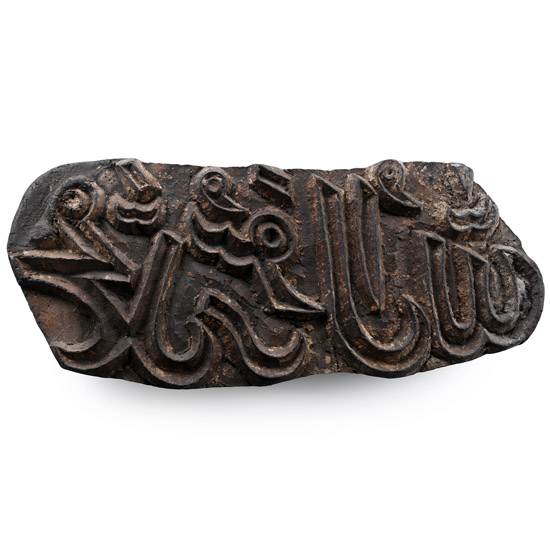
Wooden Bread Stamp with 'Mohammed Prophet of God' Inscription
Early 19th century A.D.Estimate: £400 - 600 (+bp*)
Opening Bid: £222
Subrectangular in plan with rounded ends, applied handle to reverse with modern hanger; high-relief calligraphic text. 865 grams, 32 cm
London, UK, collection.
