
Loading, please wait...
LOT 1590
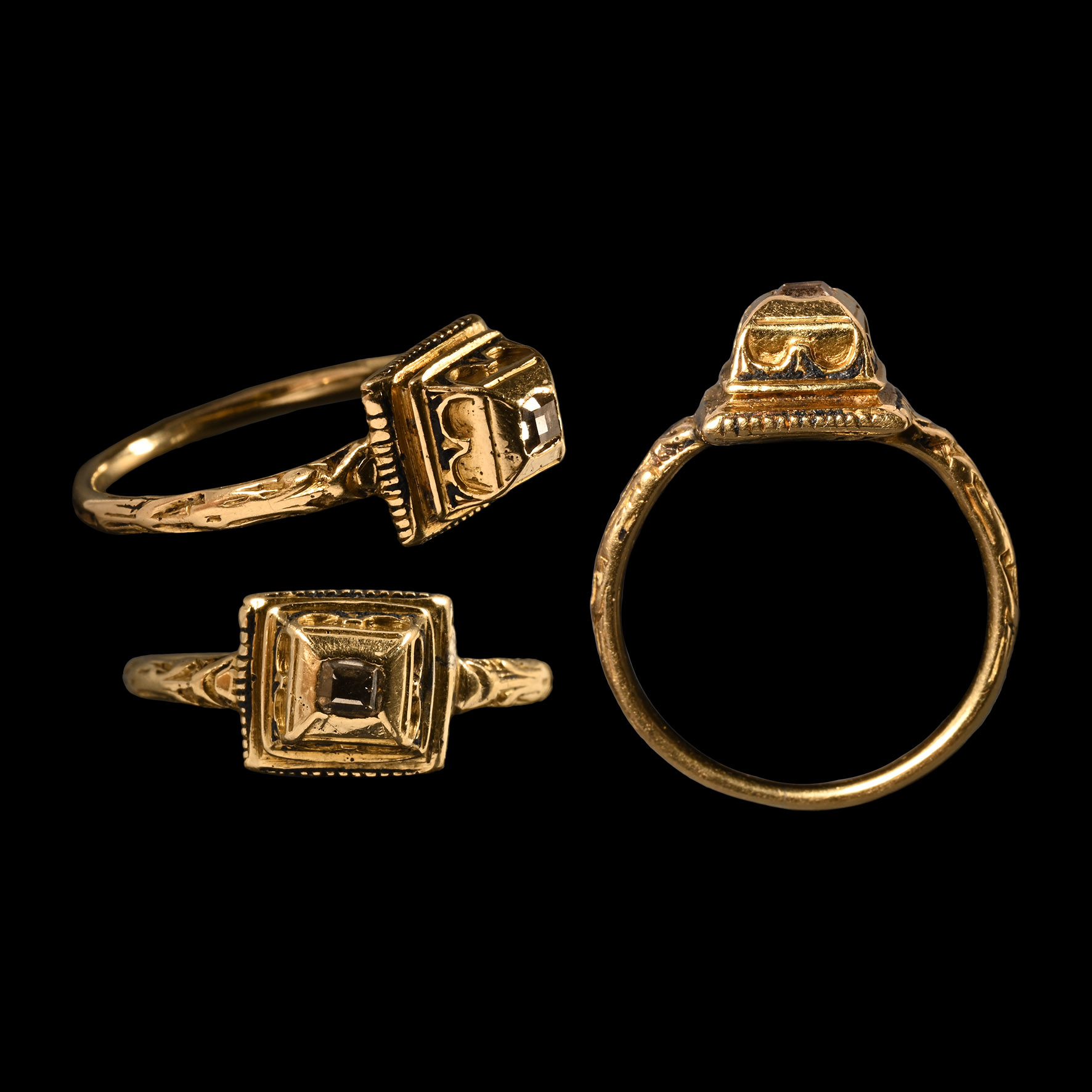
Renaissance Gold Ring with a High-Quality Facetted Diamond
16TH CENTURY A.D.
7/8 in. (2.44 grams, 22.59 mm overall, 15.44 mm internal diameter (approximate size British J, USA 4 3/4, Europe 8.69, Japan 8)).
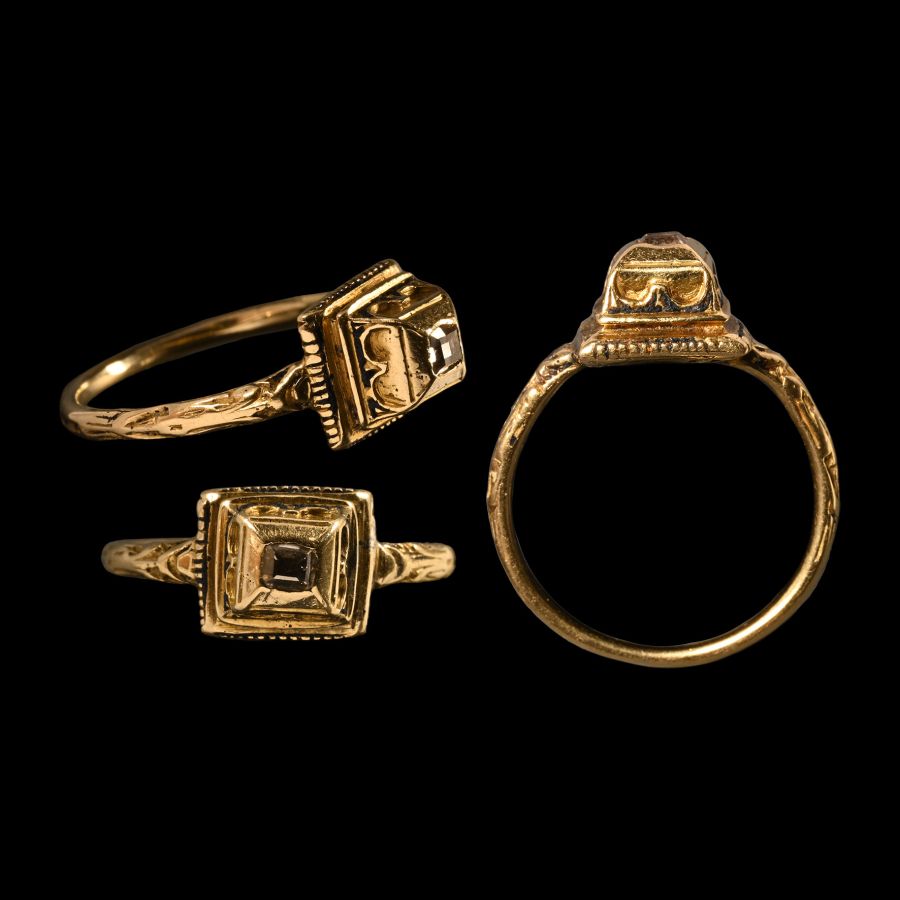
Composed of a slender hoop with ornamental shoulders, scallops and pellets to the oblong box bezel, set with a cut and polished diamond; traces of black enamel remaining to the lower half and base of the bezel; the diamond believed to be: VS 1, colour H.
ProvenanceFrom an early 20th century family collection.
Acquired by a London gentleman in the 1930s, thence by descent.
From the private collection of a Kent, UK, lady.
This lot has been checked against the Interpol Database of stolen works of art and is accompanied by search certificate no.11910-206607.
Cf. The V&A Museum, accession number 731-1902, for a similar ring dated 16th century.
CONDITIONTimeLine Auctions follows a vetting process to ensure the authenticity and legality of all items, reinforcing our commitment to integrity and responsible trading. Each antiquity, antique, and coin lot undergoes thorough examination by a vetting committee of at least ten external specialists, professional trade association members, scientists, and archaeologists: Our Vetting Process
AUCTIONS:
TimeLine is a leading auction house specialising in antiquities, ancient art, collectables, natural history, coins, medals, and books. Our auctions offer museums, collectors, historians, and enthusiasts the opportunity to acquire unique and historically significant pieces.
LOT 1590
Renaissance Gold Ring with a High-Quality Facetted Diamond
Sold for (Inc. bp): £3,900
-
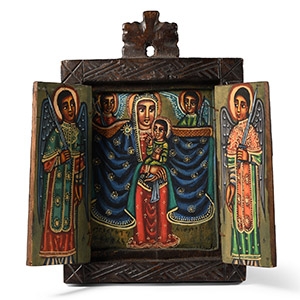
Ethiopian Wooden Painted Triptych Icon
20th century A.D.Sold for (Inc. bp): £59
With hand-painted scenes to the inner faces, the central panel with nimbate Mary holding Jesus, the child making a blessing sign with his right hand and holding a book in his left; Mary's blue himation enveloping a pair of archangels behind her, each holding a sword and having their wing extended to form a protective arch over the mother and child, text to the field; both doors with a painted archangel holding a sword and cross-topped staff. 389 grams, 27 x 18.2 cm
Acquired in South Africa in 2001. Property of a Nottinghamshire gentleman. -
.jpg)
Egyptian Style Figurine and Plaque Collection
19th-20th century A.D.Sold for (Inc. bp): £65
Comprising three ancient Egyptian style artefacts after the antique: a copper-alloy sphinx statuette; a stone lion statuette; a cartonnage fragment with textile to the outer face and printed friezes applied to the interior. 970 grams total, 11-14.5 cm
Acquired from a private UK collection in the late 1990s. Private collection of Mr T.H., Norfolk, UK. -
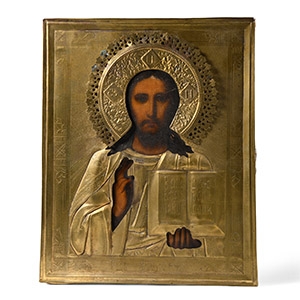
Russian Orthodox Painted Icon with Gilt Brass Oklad
19th century A.D.Sold for (Inc. bp): £124
Painted on wood with a brass oklad covering all but the Christ's face and hands; the Christ making a blessing sign with his right hand and holding an open book in his left; openwork applied halo with 'OѾH'. 475 grams, 22.4 x 18 cm
Acquired from Derby Antiques Fair, in 2002. Property of a Nottinghamshire gentleman.
