
Loading, please wait...
LOT 0392
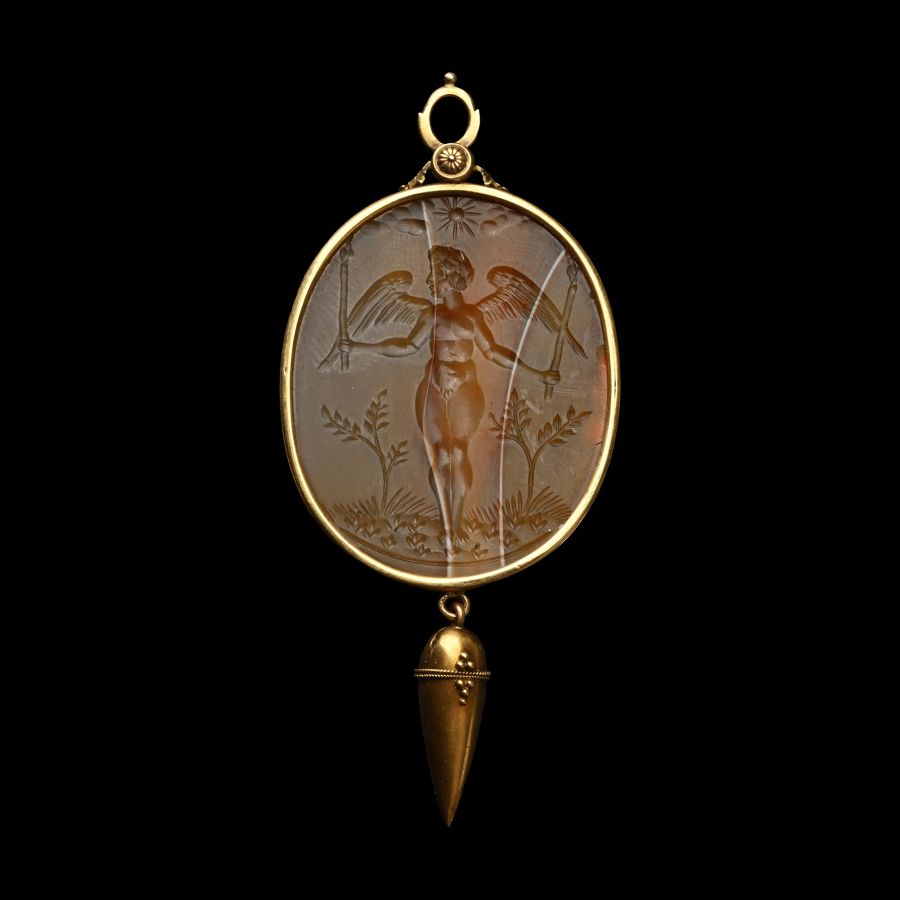
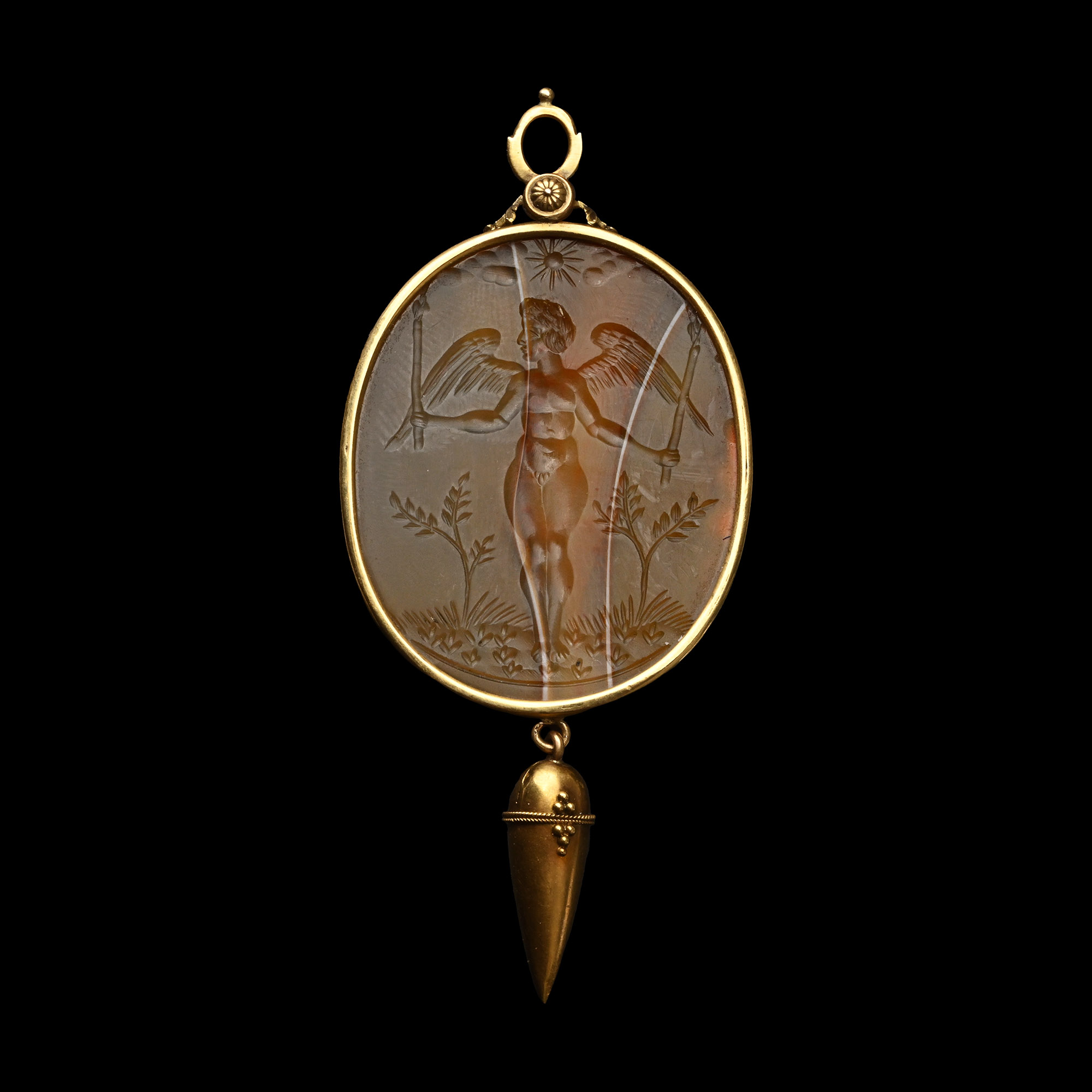
Renaissance Gold Pendant with Agate Gemstone of Cupid
ITALY, LATE 16TH-EARLY 17TH CENTURY A.D.
3 in. (13.53 grams, 75 mm).
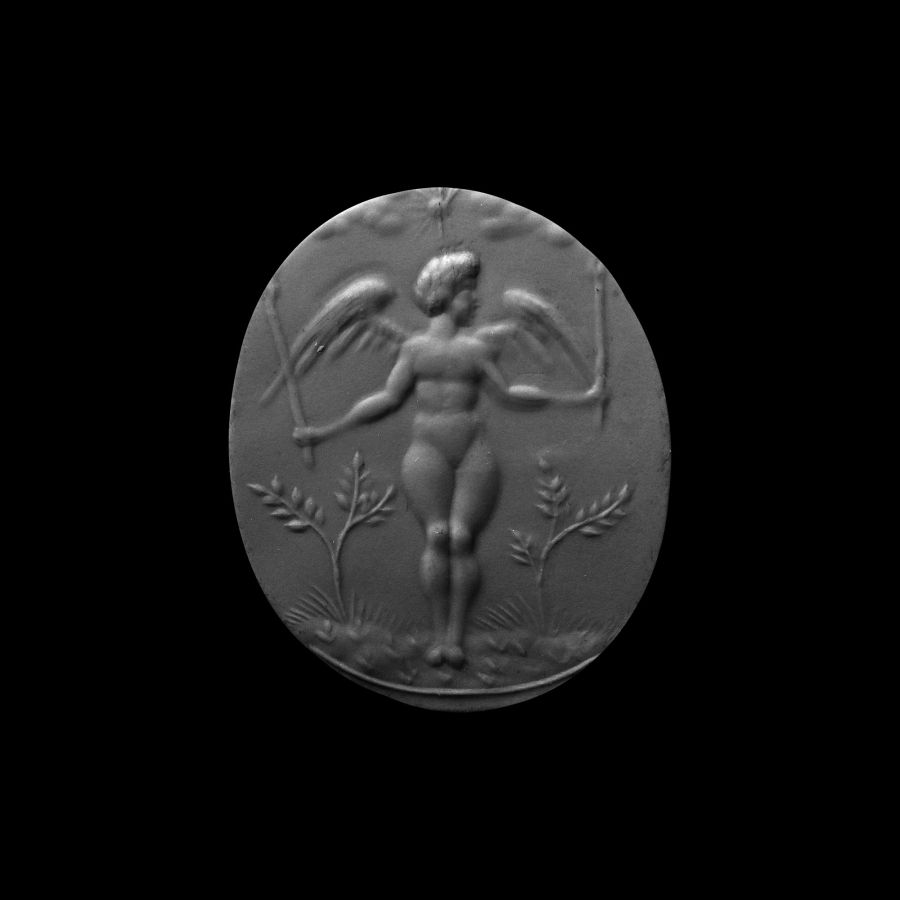
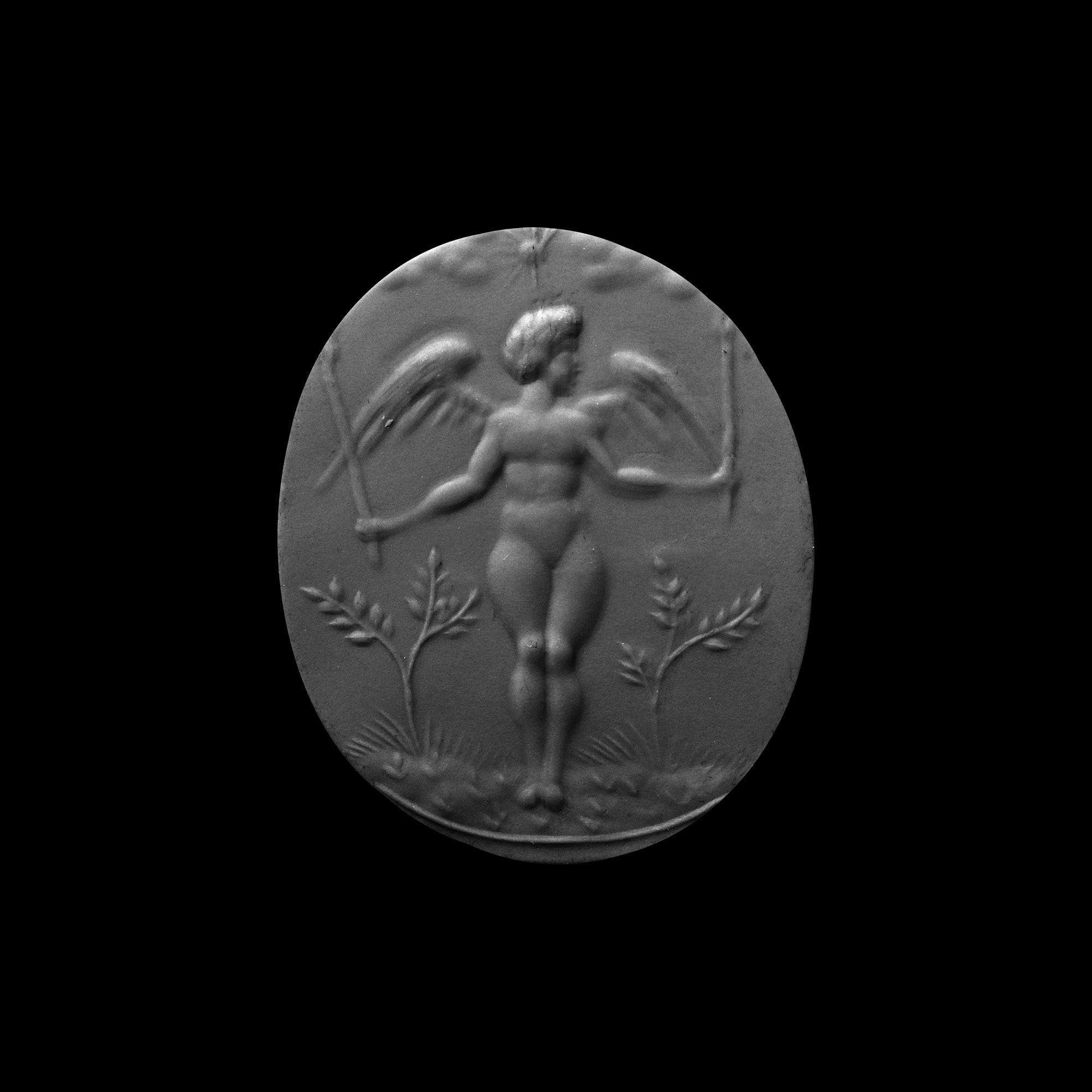
Cupid shown standing amid the vegetation, his wings and arms spread and holding two short staffs in his hands, clouds and the sun above; set in a gold frame with a conical pendant drop below; supplied with a museum-quality impression.
ProvenanceAcquired on the European art market.
This lot has been checked against the Interpol Database of stolen works of art and is accompanied by search certificate number no.13341-257981.
Cf. two similar examples in the British Museum, bequeathed by Sir Hans Sloane in 1753, museum nos.SLBCameos.4 & SLBCameos.138; AG Wien III, 2703.
FootnotesThe cameo shows a Cupid in the same style as the one in the British Museum Sloane collection. Cupid was a very popular motif in 17th-century Italian artistic production. The presence of Cupid on the cameo implies amorous attachment, or sometimes, amorous conflict. The cameo shows a sophisticated atmosphere, relayed in the brown and grey colours.
CONDITIONTimeLine Auctions follows a vetting process to ensure the authenticity and legality of all items, reinforcing our commitment to integrity and responsible trading. Each antiquity, antique, and coin lot undergoes thorough examination by a vetting committee of at least ten external specialists, professional trade association members, scientists, and archaeologists: Our Vetting Process
AUCTIONS:
TimeLine is a leading auction house specialising in antiquities, ancient art, collectables, natural history, coins, medals, and books. Our auctions offer museums, collectors, historians, and enthusiasts the opportunity to acquire unique and historically significant pieces.
LOT 0392
Renaissance Gold Pendant with Agate Gemstone of Cupid
Sold for (Inc. bp): £3,640
-
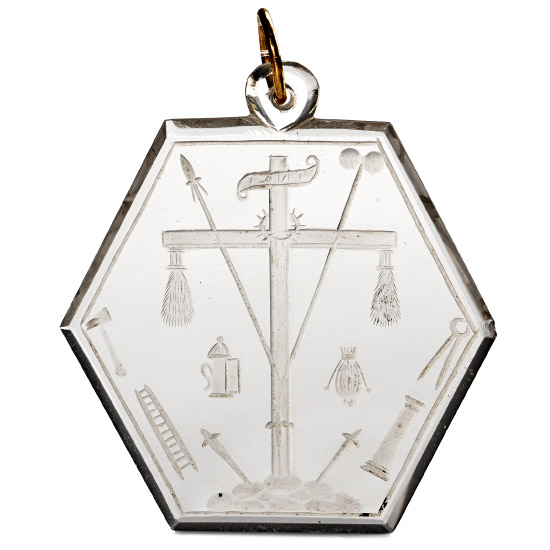
Large Rock Crystal Pendant with Cross
Italy, 17th century A.D.Sold for (Inc. bp): £3,900
Transparent hexagonal slice of polished rock crystal engraved with the Arma Christi, instruments of the passion, relating to the crucifixion of Christ. 32.3 grams, 84 mm
Acquired on the European art market. -
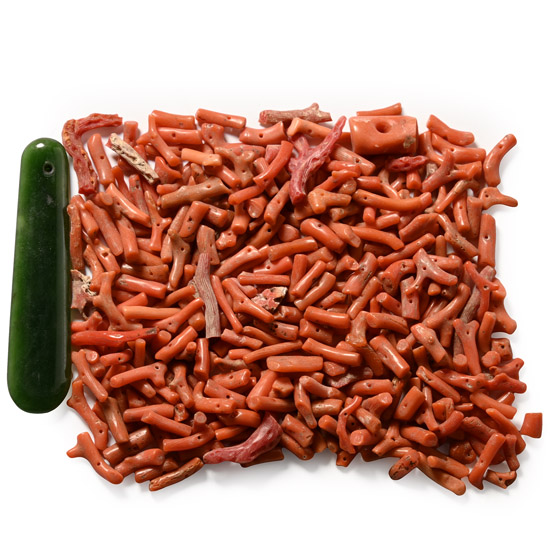
Coral Bead Collection with Nephrite Pendant
20th century A.D.Sold for (Inc. bp): £52
Comprising a large quantity of drilled coral branch beads and a spatulate green nephrite jade pendant. 66 grams total, 5-60 mm
Acquired on the European art market. -
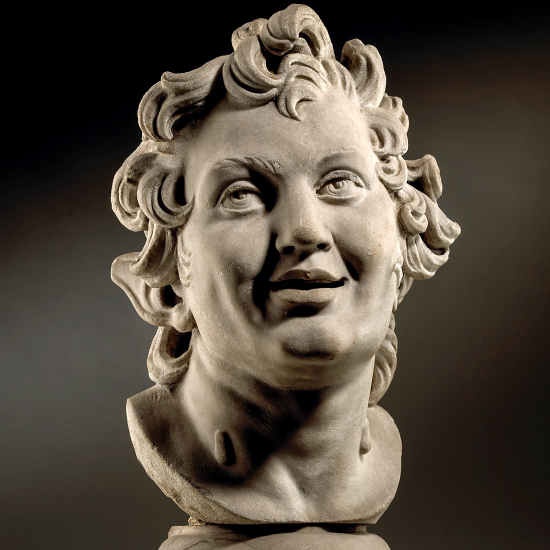
Life-Size Stone Head of a Centaur
18th century A.D.Sold for (Inc. bp): £3,640
Carved in the round bust depicting a faun or centaur with a youthful face; the hair falling in exuberant curls over the goat-like ears, the mouth parted in laughter, the eyes set beneath a stern brow; on an integral pedestal base with repair to reverse. 21.4 kg, 45 cm high
Private collection, UK. This lot has been checked against the Interpol Database of stolen works of art and is accompanied by search certificate number no.13392-259012.
Monumental marble centaurs were excavated together at Hadrian's Villa in December 1736. Pope Clement XIII secured them for the Capitoline Museum, where they remain to this day. Bronze reproductions of the famous centaurs were very much in vogue amongst the Grand Tour travellers of the 18th century.
