
Loading, please wait...
LOT 1535
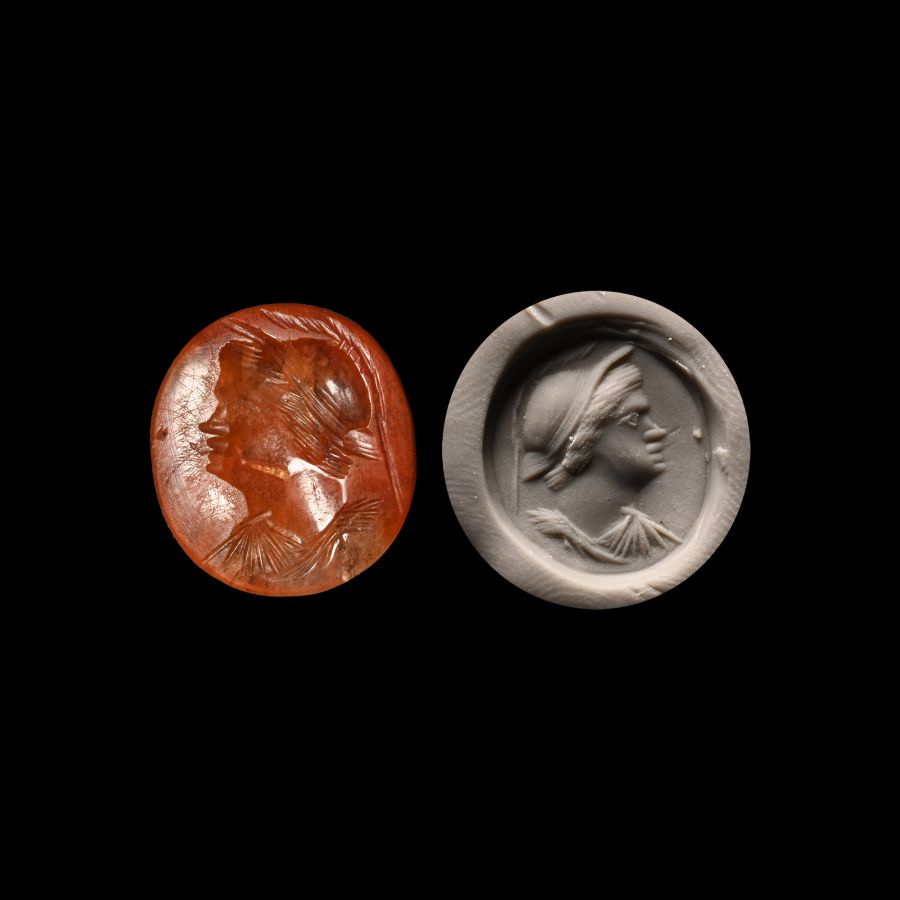
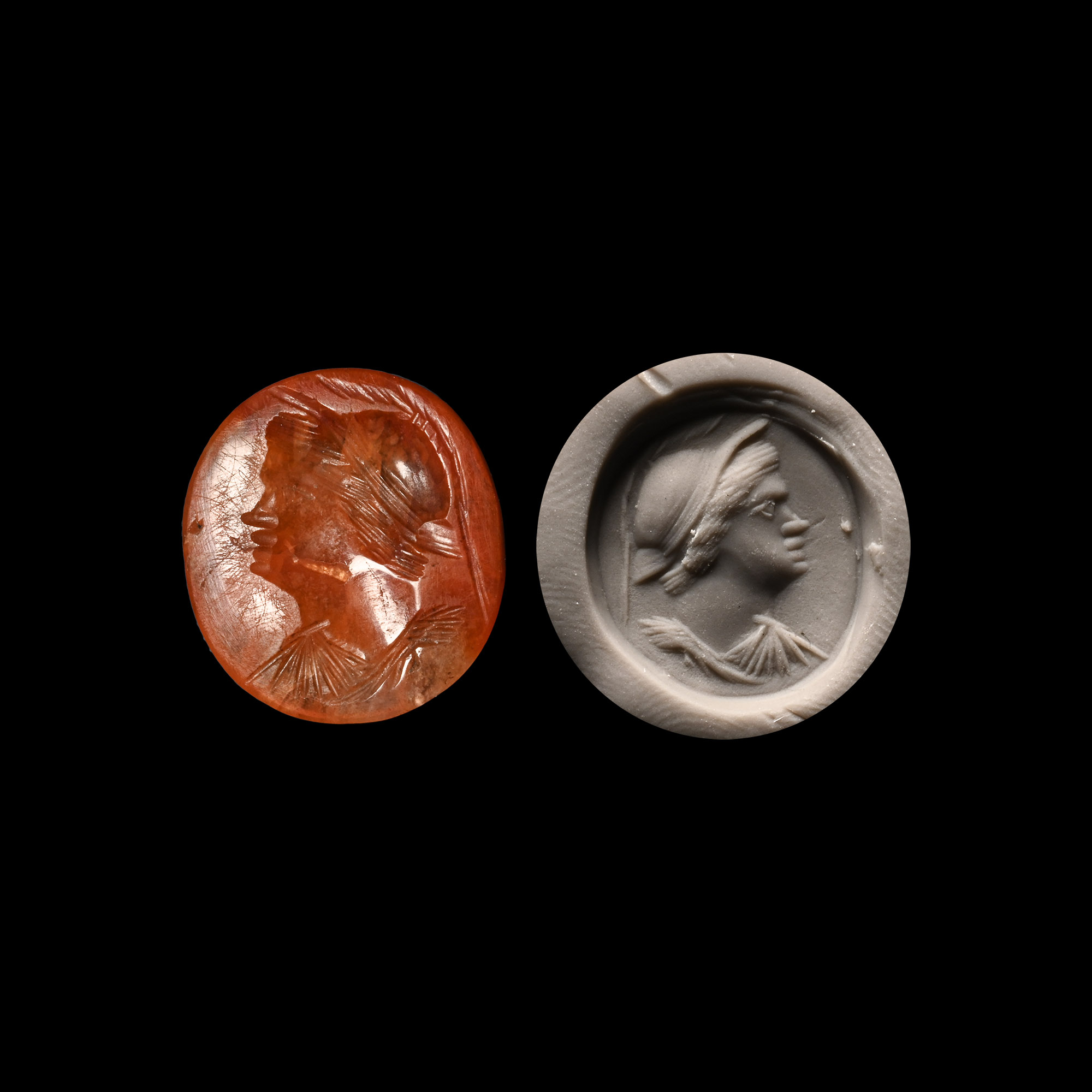
Renaissance Gemstone with Mercury
CIRCA 1600 A.D.
1/2 in. (0.78 grams, 14 mm).
Carnelian with intaglio profile bust of Mercury wearing the petasos traveller's hat; supplied with a museum-quality impression.
ProvenanceFrom the collection of a Swiss gentleman formed in Europe from 1970-1980s; thence by descent from the family in London.
CONDITIONTimeLine Auctions follows a vetting process to ensure the authenticity and legality of all items, reinforcing our commitment to integrity and responsible trading. Each antiquity, antique, and coin lot undergoes thorough examination by a vetting committee of at least ten external specialists, professional trade association members, scientists, and archaeologists: Our Vetting Process
AUCTIONS:
TimeLine is a leading auction house specialising in antiquities, ancient art, collectables, natural history, coins, medals, and books. Our auctions offer museums, collectors, historians, and enthusiasts the opportunity to acquire unique and historically significant pieces.
LOT 1535
Renaissance Gemstone with Mercury
Estimate £500 - 700€580 - 810 (for guidance only)$680 - 950 (for guidance only)
-
.jpg)
Post Medieval Ornate Ceramic Statue Base
17th-18th century A.D.Sold for (Inc. bp): £117
Hollow formed with rectangular body, the front modelled with volute scrolls enclosing a rounded face, possibly depicting a putto. 1.6 kg, 13 cm high
Acquired 1950s-1960s. Private UK collection of Joseph Duncan Steel, Southampton, UK. Property of an East Sussex, UK, gentleman. -
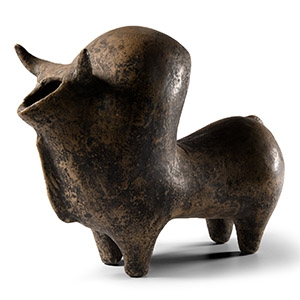
Anatolian Style Terracotta Rhyton
20th century A.D.Sold for (Inc. bp): £845
Modelled in the round, a zebu with characteristic hump to the shoulders, pouring spout on the head flanked by horns. 474 grams, 21.5 cm wide
From the celebrated personal collection of art formed by the famous anthropologist, artist, and television presenter Desmond Morris. Desmond Morris, author of The Naked Ape, Manwatching, The Naked Eye, and countless other books concerning human and animal behaviour, a professional zoologist, surrealist artist, lecture and television celebrity. -
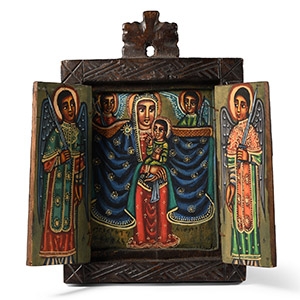
Ethiopian Wooden Painted Triptych Icon
20th century A.D.Sold for (Inc. bp): £59
With hand-painted scenes to the inner faces, the central panel with nimbate Mary holding Jesus, the child making a blessing sign with his right hand and holding a book in his left; Mary's blue himation enveloping a pair of archangels behind her, each holding a sword and having their wing extended to form a protective arch over the mother and child, text to the field; both doors with a painted archangel holding a sword and cross-topped staff. 389 grams, 27 x 18.2 cm
Acquired in South Africa in 2001. Property of a Nottinghamshire gentleman.
