
Loading, please wait...


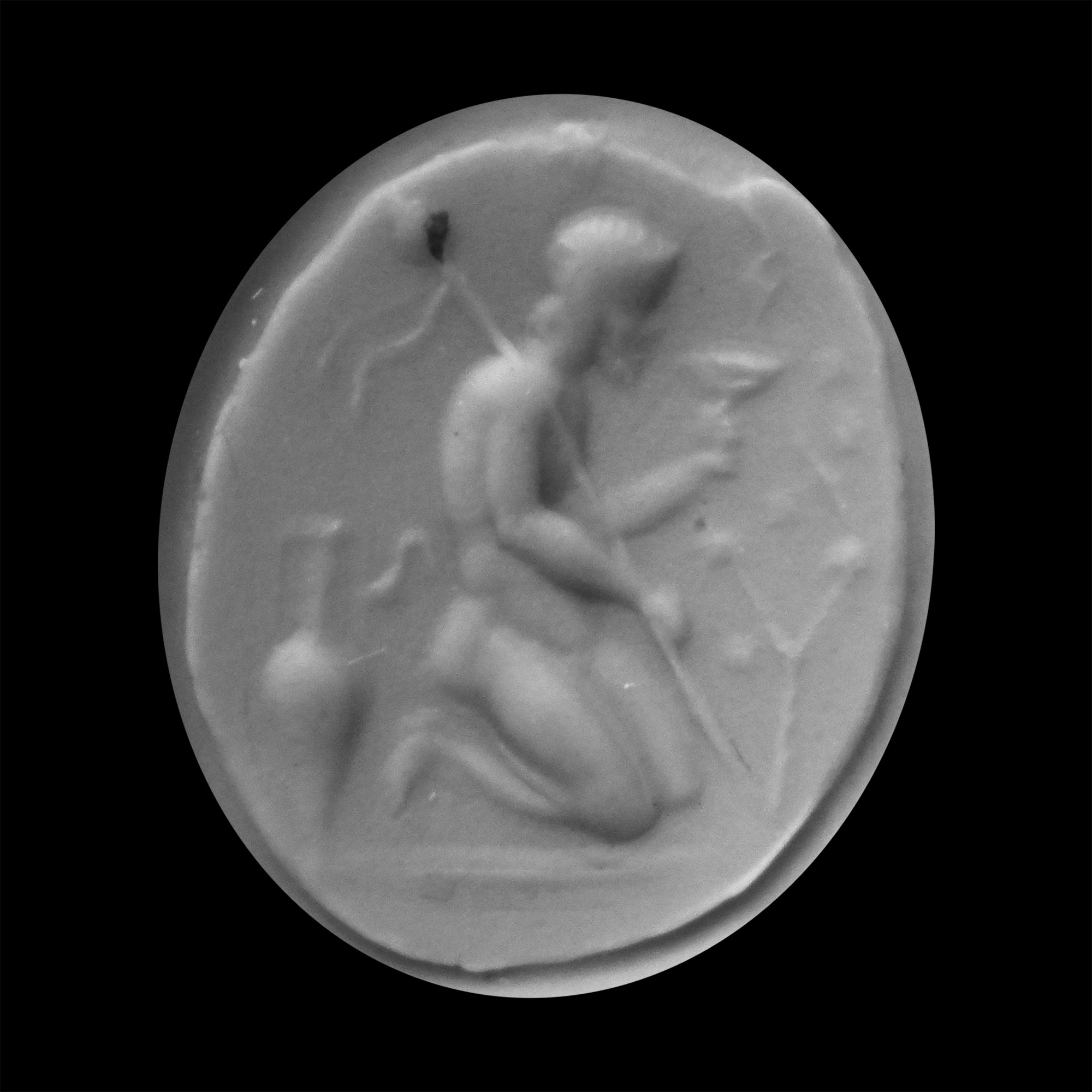
LOT 0342
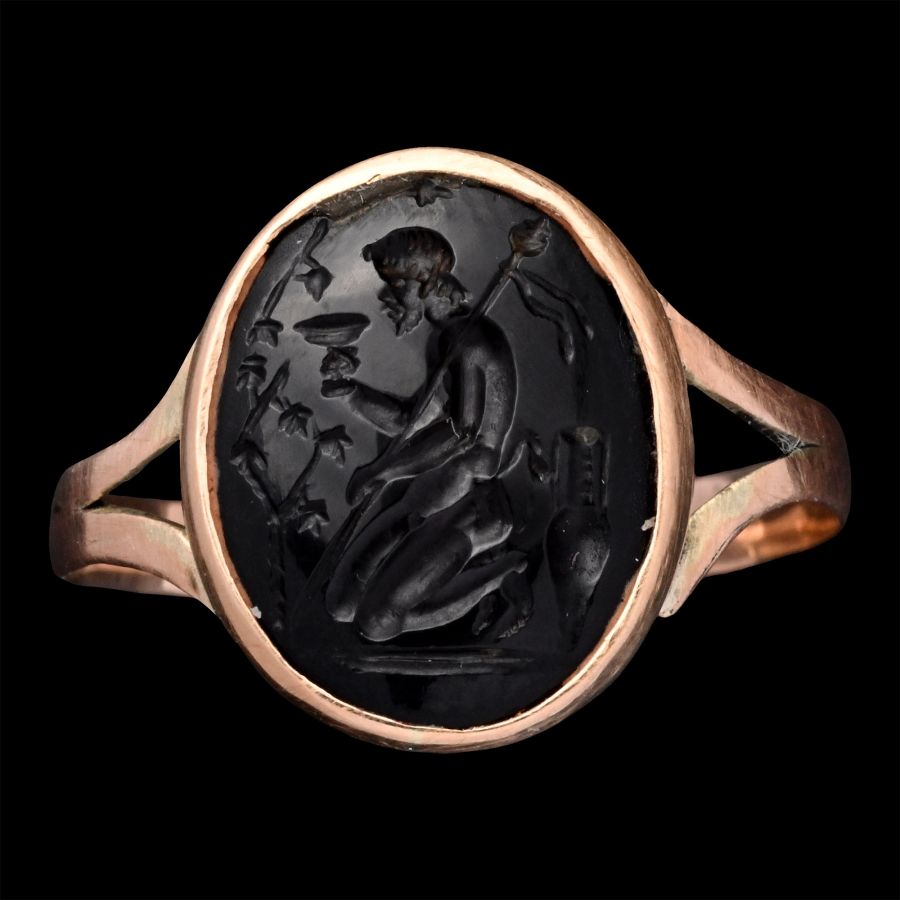
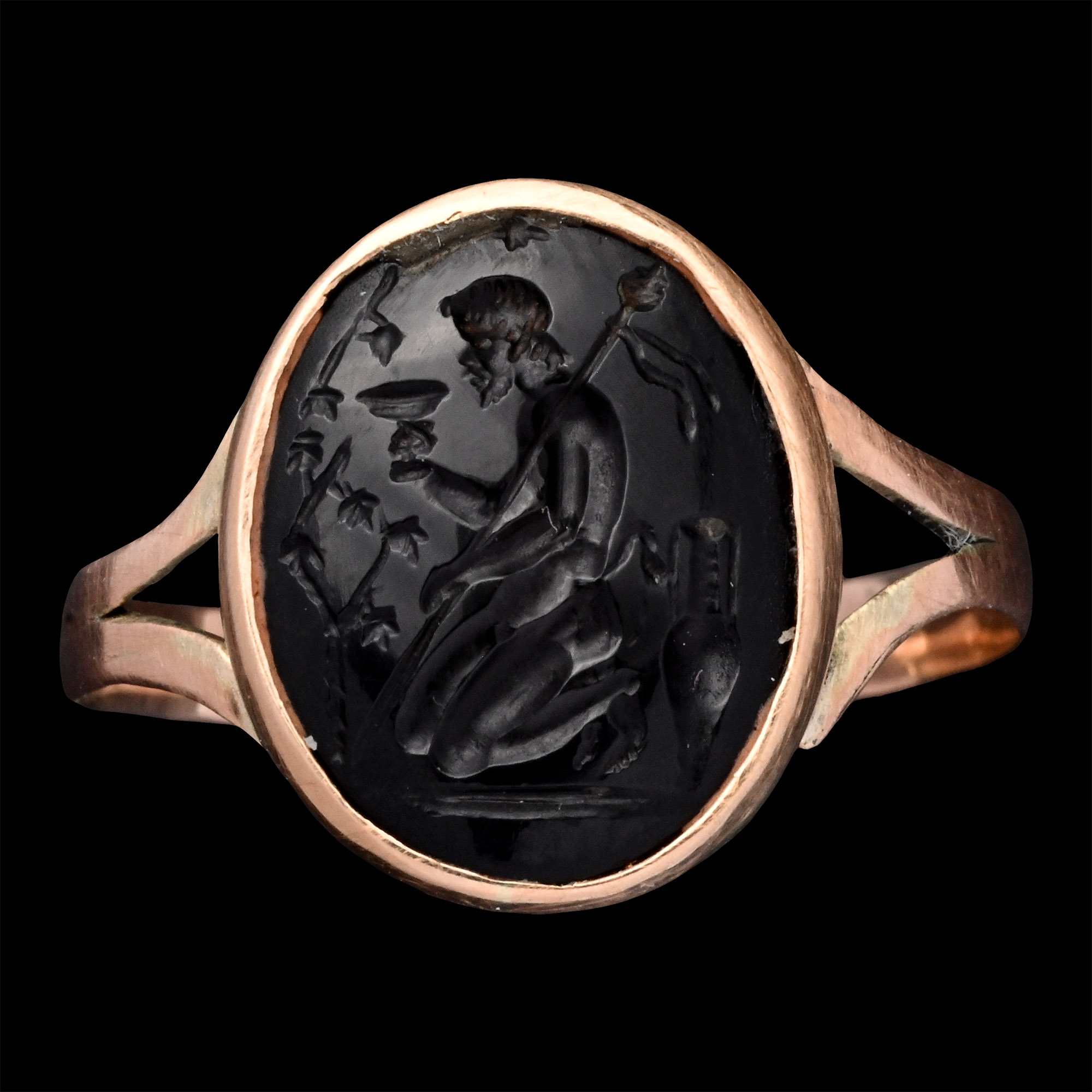
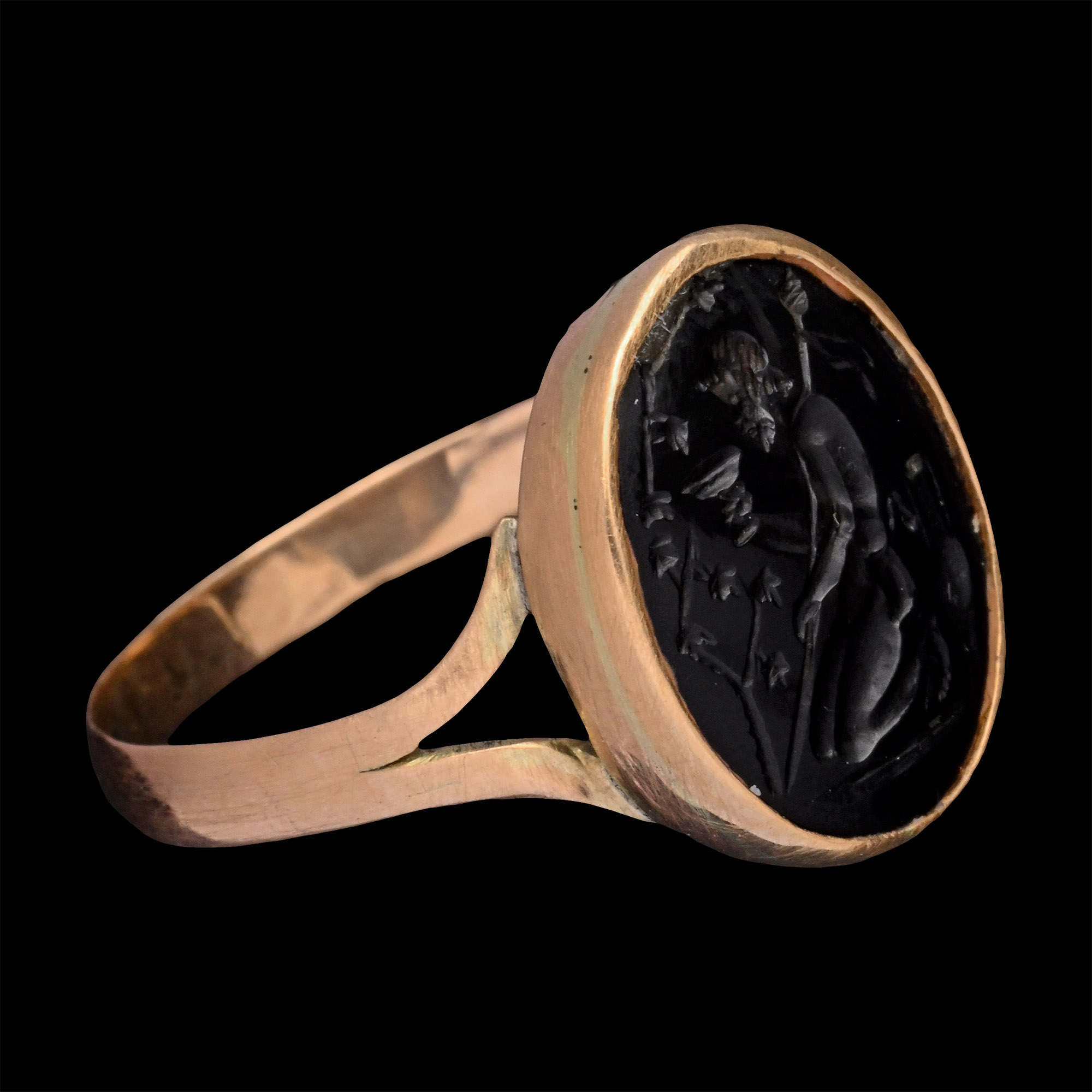
Renaissance Gemstone with Kneeling Satyr Drinking from a Goblet in Gold Ring
19TH CENTURY A.D.
7/8 in. (2.51 grams, 22.29 mm overall, 19.70 mm internal diameter (approximate size British R 1/2, USA 8 3/4, Europe 19.38, Japan 18)).
Black stone intaglio featuring a kneeling satyr before a grapevine, holding a large goblet in his right hand and a thyrsus in the crook of his left arm, a wine amphora behind him; set in a gold ring; supplied with a museum-quality impression.
ProvenanceAcquired on the European art market.
CONDITIONTimeLine Auctions follows a vetting process to ensure the authenticity and legality of all items, reinforcing our commitment to integrity and responsible trading. Each antiquity, antique, and coin lot undergoes thorough examination by a vetting committee of at least ten external specialists, professional trade association members, scientists, and archaeologists: Our Vetting Process
AUCTIONS:
TimeLine is a leading auction house specialising in antiquities, ancient art, collectables, natural history, coins, medals, and books. Our auctions offer museums, collectors, historians, and enthusiasts the opportunity to acquire unique and historically significant pieces.
LOT 0342
Renaissance Gemstone with Kneeling Satyr Drinking from a Goblet in Gold Ring
Estimate £1,200 - 1,700€1,390 - 1,970 (for guidance only)$1,620 - 2,300 (for guidance only)
-
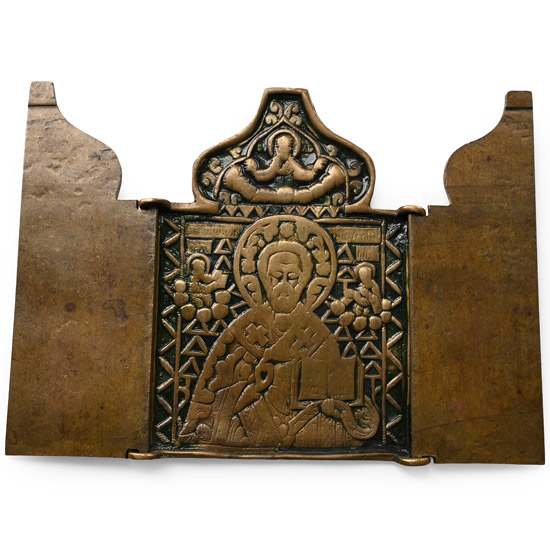
Russian Orthodox Enamelled Bronze Icon with St. Nicholas
19th century A.D.Sold for (Inc. bp): £65
Travel icon with hinged doors, featuring Saint Nicholas with a book in his left hand and making the gesture of blessing with his right, dressed as a bishop with a sticharion, covered by an omophorion, and surmounted by an epitrachelion embroidered with crosses; the saint flanked by Jesus and Virgin Mary, Christ holding the gospel, Mary holding the bishop’s epitrachelion. 163 grams, 10.2 cm
Ex P. Chapman collection, 1980s-1990s. -
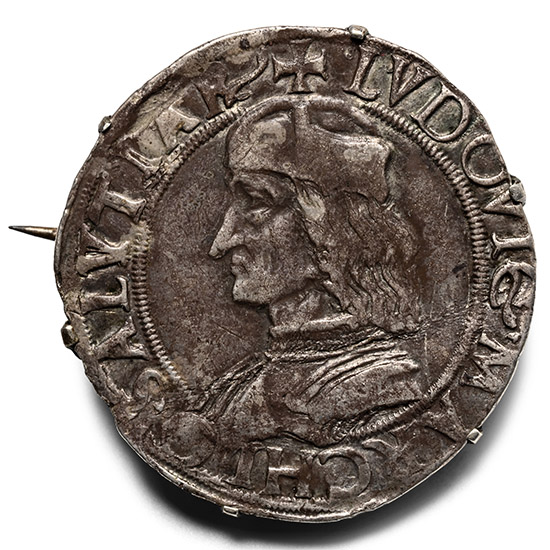
Italy. Marquisate of Saluzzo, Ludovico II Silver Issue in Later Silver Brooch.
AD 1475-1504. Carmagnola mint.Sold for (Inc. bp): £312
☩ LVDOVICVS · MARCHIO · SALVTIAR, bust to left wearing barrette. 6.05 grams, 30 mm
Very Fine. Set in a later brooch frame.
Acquired on the European art market. -
.jpg)
Cylinder Seal Electrotype Group
Late 19th-early 20th century A.D.Sold for (Inc. bp): £91
Of academic interest, copper coated lead seal impressions taken from cylinder seals, containing various different motifs. 231 grams total, 27-47 mm
Possibly made by the British Museum. From a West Country, UK, private collection.
