
Loading, please wait...
LOT 2136
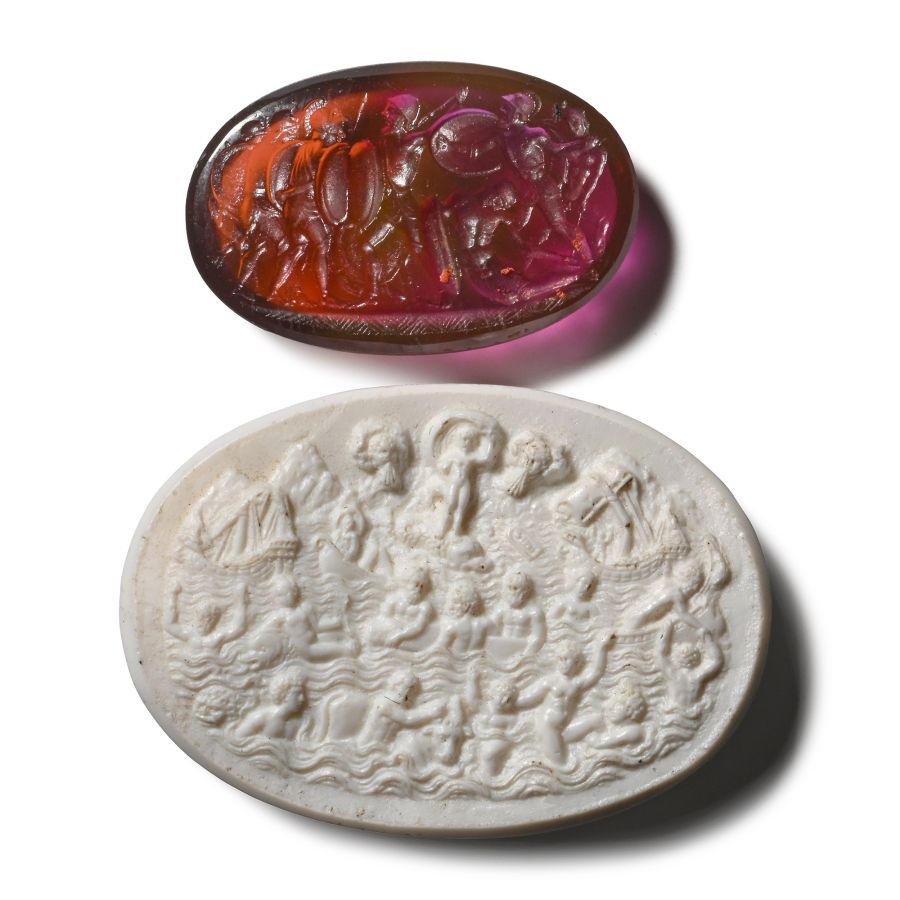
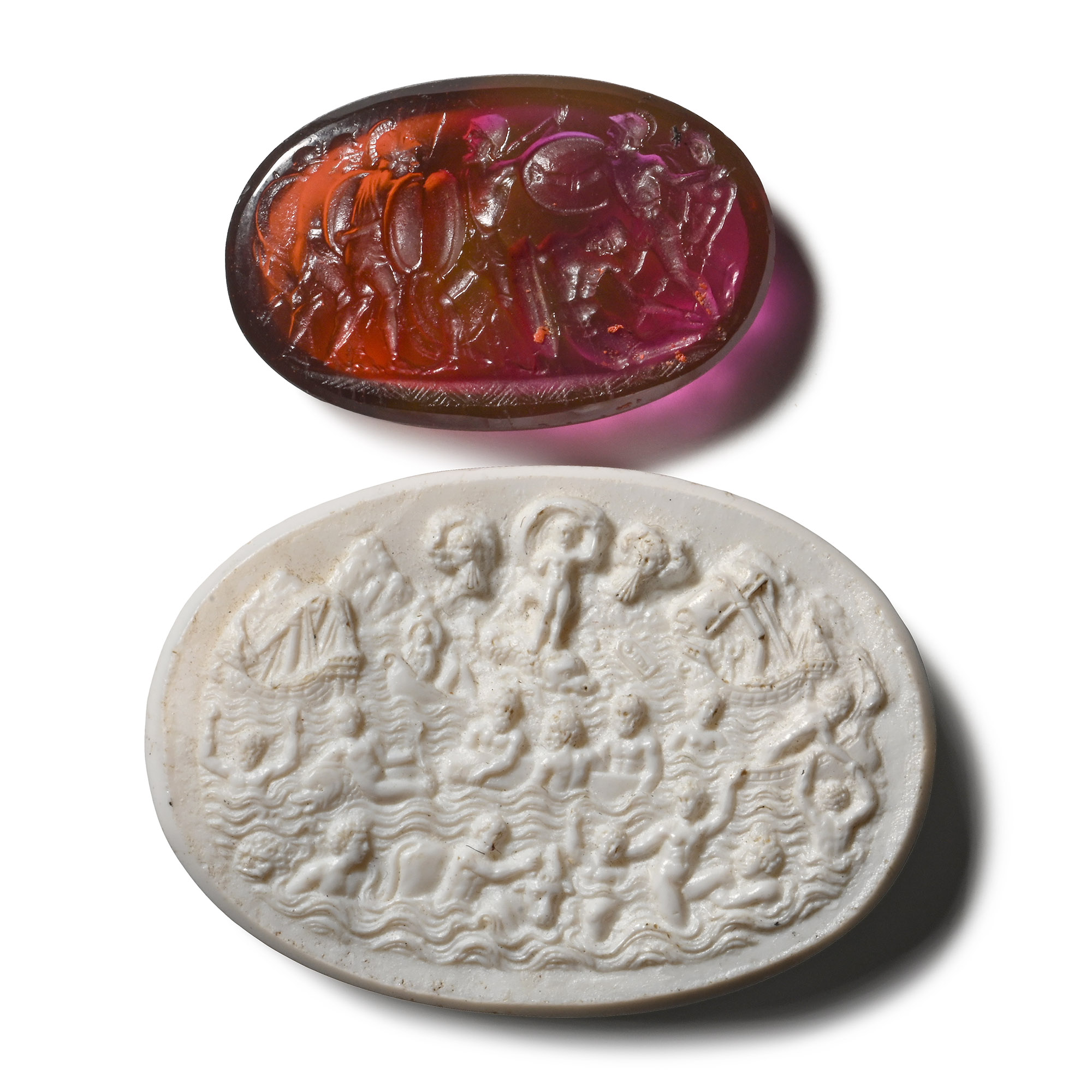
Renaissance Gemstone and Impression Group
18TH CENTURY A.D.
1 - 1 3/8 in. (17.76 grams total, 24-35 mm).
Comprising: a two-tone oval glass intaglio showing a classical fighting scene; an impression of an intaglio showing a scene after a battle at sea with men in water and ships with broken masts. [2, No Reserve]
ProvenanceAcquired on the European art market.
CONDITIONTimeLine Auctions follows a vetting process to ensure the authenticity and legality of all items, reinforcing our commitment to integrity and responsible trading. Each antiquity, antique, and coin lot undergoes thorough examination by a vetting committee of at least ten external specialists, professional trade association members, scientists, and archaeologists: Our Vetting Process
AUCTIONS:
TimeLine is a leading auction house specialising in antiquities, ancient art, collectables, natural history, coins, medals, and books. Our auctions offer museums, collectors, historians, and enthusiasts the opportunity to acquire unique and historically significant pieces.
LOT 2136
Renaissance Gemstone and Impression Group
Estimate £200 - 300€230 - 350 (for guidance only)$270 - 410 (for guidance only)
-
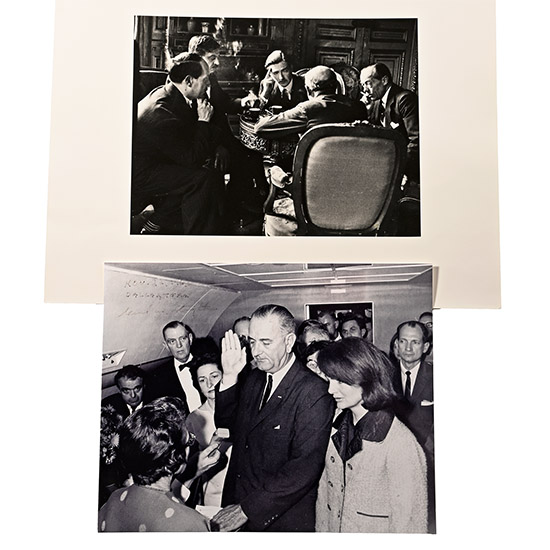
Anthony Eden, Pierre Laval, Francois Piétri, and Henri Berenger meeting by Lucian Aigner; Cecil Stoughton, Lyndon B Johnson being sworn in as president after the assassination of J.F.K.
1935-2008 A.D.Sold for (Inc. bp): £39
Lucian Aigner silver gelatin print, 1935, photographer stamp verso, Anthony Eden, Pierre Laval, Francois Piétri, and Henri Berenger meeting; Cecil Stoughton, Lyndon B Johnson being sworn in as president after the assassination of J.F.K. in 1963, printed 2008, signed recto. 64 grams total, 25.5 x 20.2 - 35.3 x 28 cm
Acquired on the UK art market. Property of a Harwich, UK, collector. -
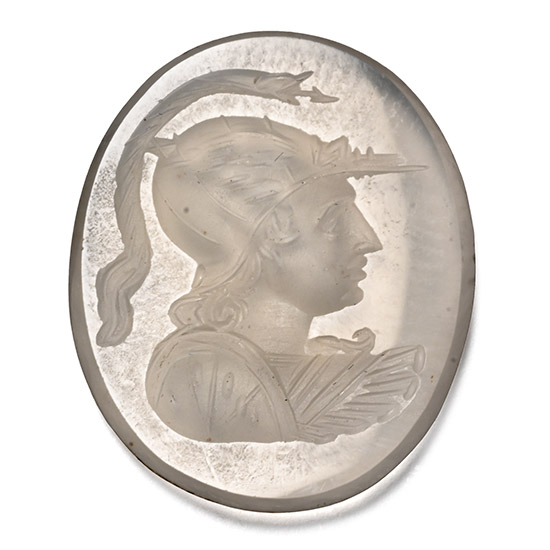
Chalcedony Gemstone with Helmeted Bust
18th century A.D.Sold for (Inc. bp): £85
Translucent intaglio showing a bust facing right with a corner of a round shield covering the shoulder, wearing a crested helmet with a snake-head finial. 1.04 grams, 19 mm
UK private collection, acquired on the English art market in the 2000s. -
.jpg)
Post Medieval Portrait Cameo Collection
18th-19th century A.D.Sold for (Inc. bp): £390
Comprising: malachite cameo with a profile bust of a clean-shaven man wearing an ivy leaf wreath; a domed amethyst-coloured glass intaglio with a deeply engraved bust of a young maiden, inscribed 'C. BROWN F.T.' below; a domed glass intaglio with nimbate Jesus making a blessing gesture. 40 grams total, 29-36 mm
Acquired on the European art market.
