
Loading, please wait...
LOT 0350
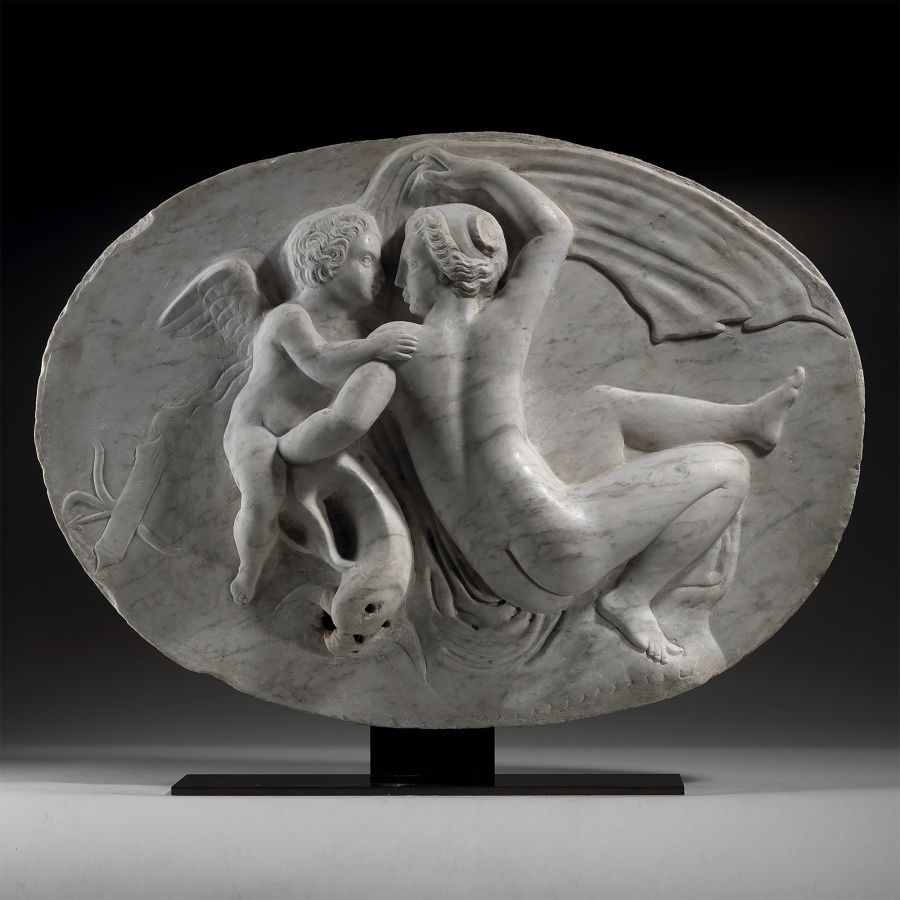
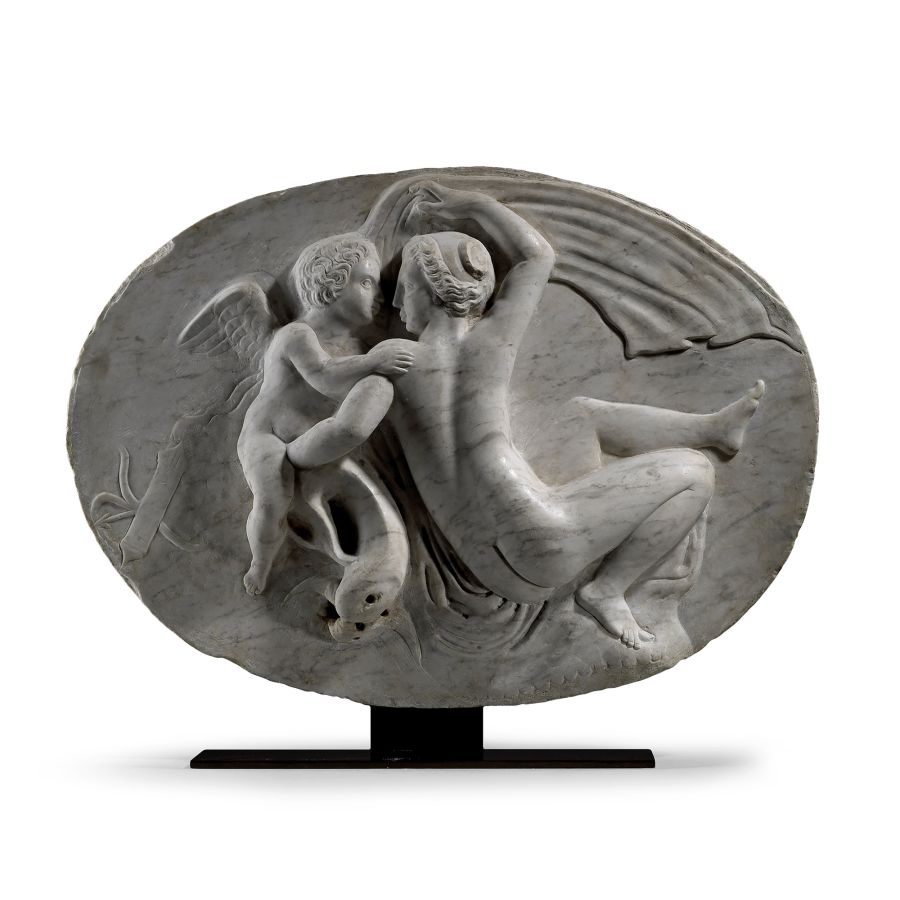
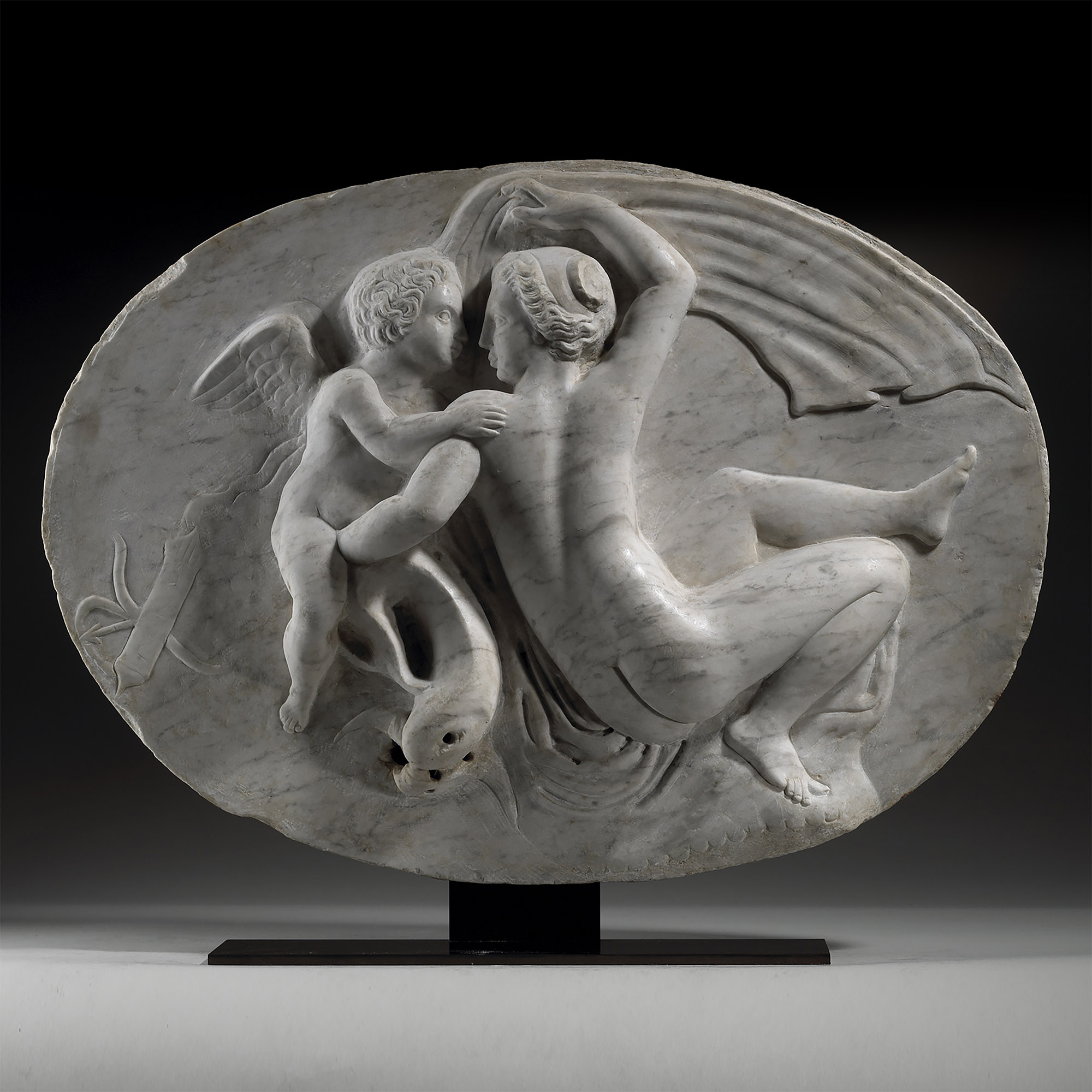
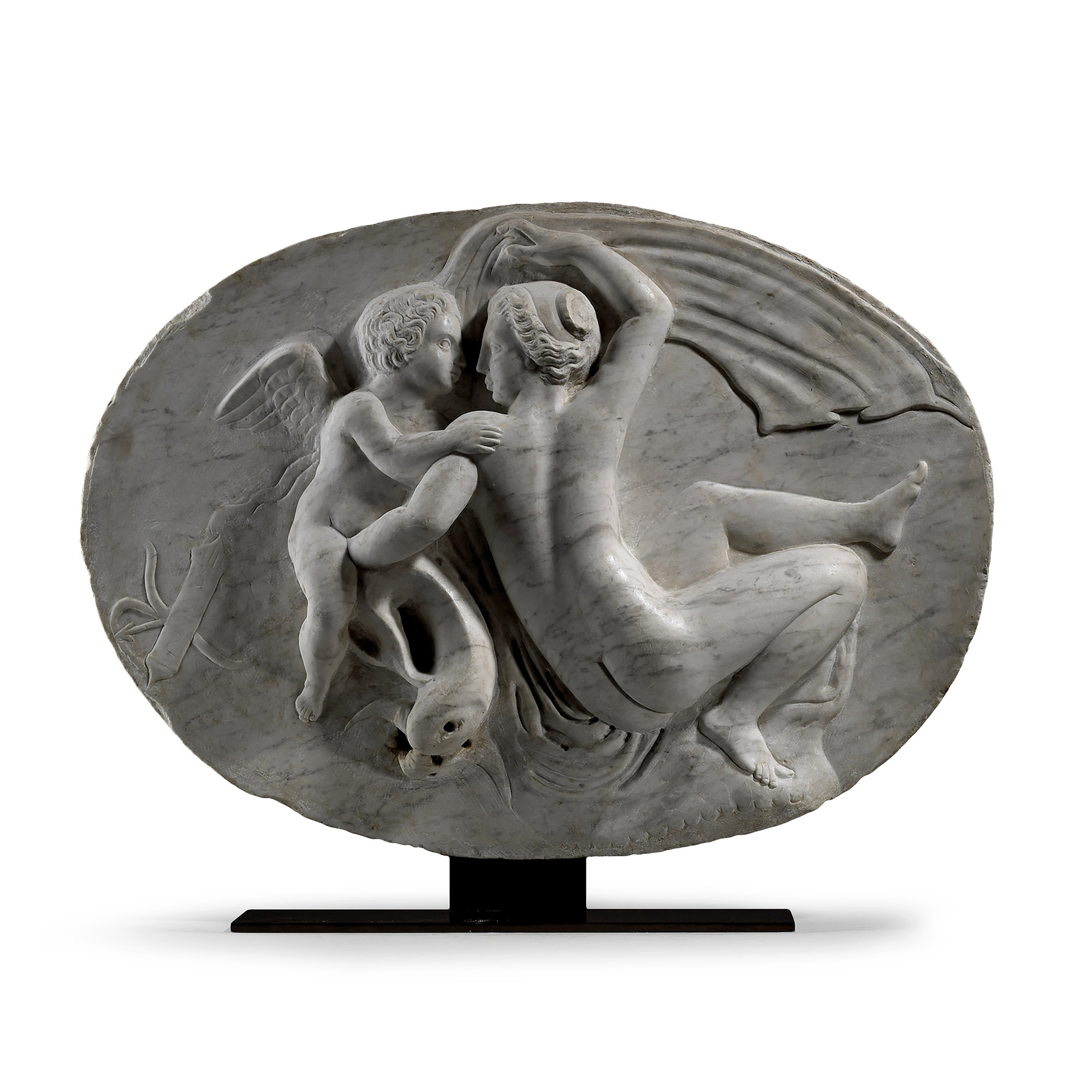
Renaissance Fontainebleau Marble Plaque with Psyche Revived by Eros's Kiss
FRANCE, 16TH CENTURY A.D.
25 in. (33.5 kg total including stand, 63 cm wide).
Ellipsoid plaque with carved high-relief scene depicting Psyche crouching with left leg extended, her right arm raised to support a veil, head turned towards Eros, left arm passing between the legs of Eros, standing nude with wings spread to kiss Psyche, his bow and quiver cast aside in the field.
ProvenancePrivate collection, UK.
This lot has been checked against the Interpol Database of stolen works of art and is accompanied by search certificate number no.13396-259009.
TimeLine Auctions follows a vetting process to ensure the authenticity and legality of all items, reinforcing our commitment to integrity and responsible trading. Each antiquity, antique, and coin lot undergoes thorough examination by a vetting committee of at least ten external specialists, professional trade association members, scientists, and archaeologists: Our Vetting Process
AUCTIONS:
TimeLine is a leading auction house specialising in antiquities, ancient art, collectables, natural history, coins, medals, and books. Our auctions offer museums, collectors, historians, and enthusiasts the opportunity to acquire unique and historically significant pieces.
LOT 0350
Renaissance Fontainebleau Marble Plaque with Psyche Revived by Eros's Kiss
Sold for (Inc. bp): £3,380
-
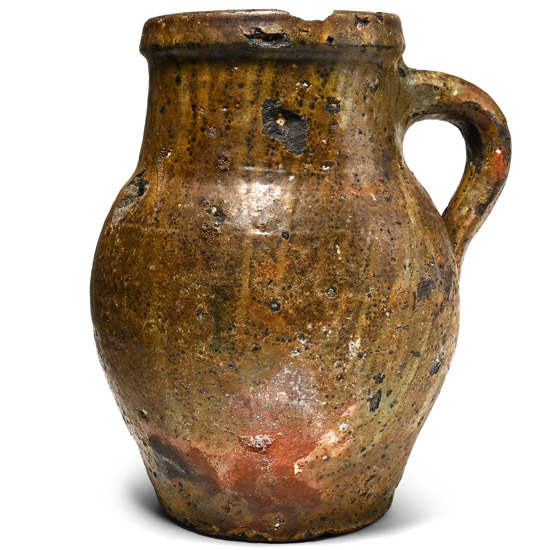
Tudor Period Green Glazed Pitcher
Late 16th century A.D.Sold for (Inc. bp): £52
Comprising a bulbous body and thickened rim, single handle to the rear; collector's label 'Simon Bendall Collection C157' on the base. 1.09 kg, 17.5 cm
From the private collection of Simon Bendall, collection reference number C157. Property of a Kent, UK, lady collector. -
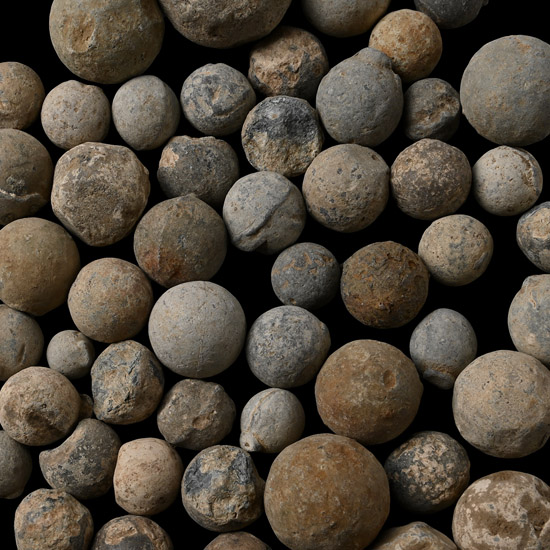
Post Medieval Lead Musket Ball Group
Circa 17th-18th century A.D.Sold for (Inc. bp): £20
Group of spherical shots, including some with sprues, and some impacted examples. 675 grams total, 7-22 mm
Found Suffolk, UK. Property of a Suffolk, UK, gentleman. -
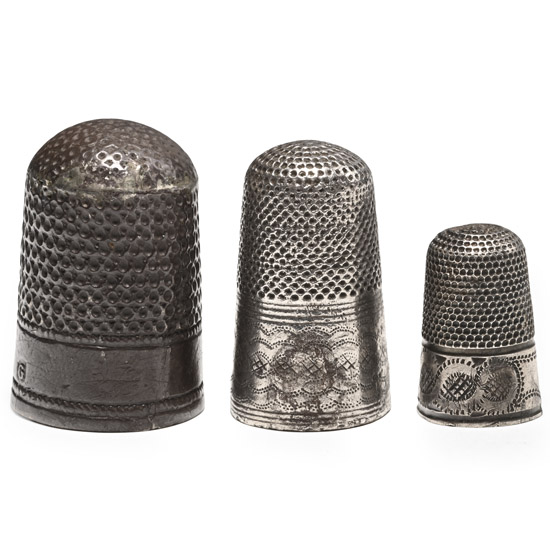
Post Medieval Silver Thimble Group
Circa 18th-19th century A.D.Sold for (Inc. bp): £78
Comprising three thimbles: the largest with a plain band stamped with 'G' and engraved with initials '*D*I*'; the second largest with a decorative band on the lower edge with a plain shield; the smallest with a decorative band to the lower edge resembling pinecones, and a plain shield. 11.15 grams total, 16-26 mm
Acquired on the UK art market. Property of a Lancashire, UK, collector.
