
Loading, please wait...
_900x900.jpg "Renaissance Carnelian 'Michelangelo's Seal' Gemstone")
_200x200.jpg "Renaissance Carnelian 'Michelangelo's Seal' Gemstone")
.jpg "Renaissance Carnelian 'Michelangelo's Seal' Gemstone")
LOT 0377
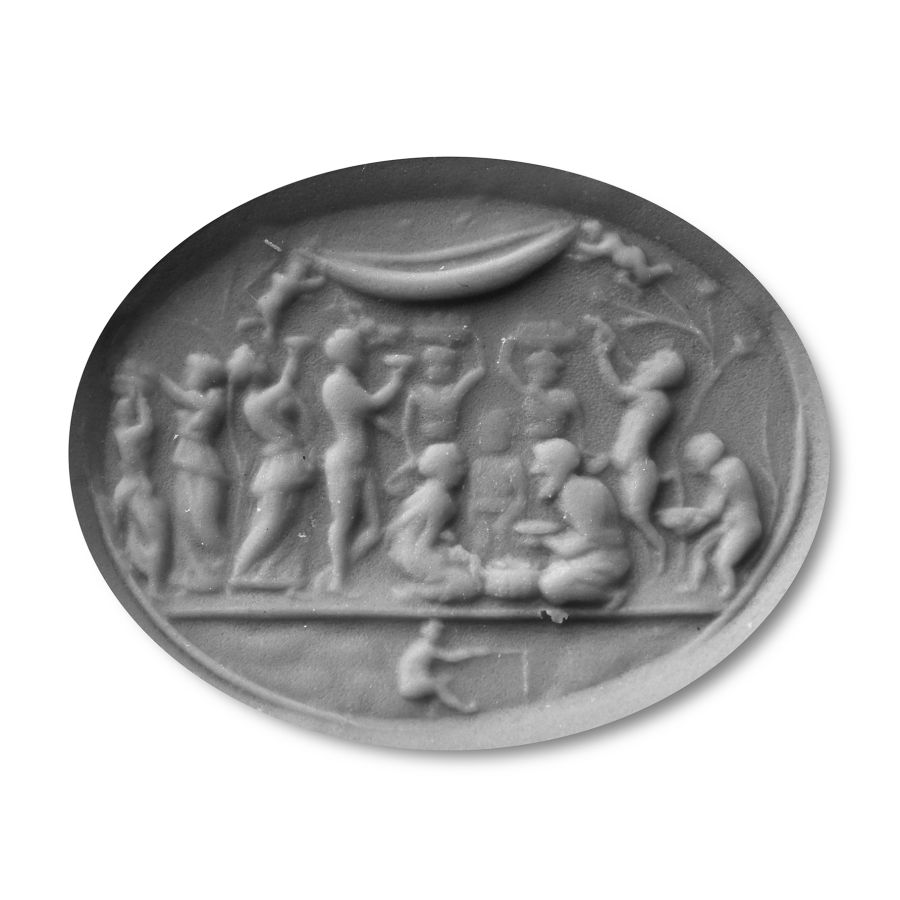
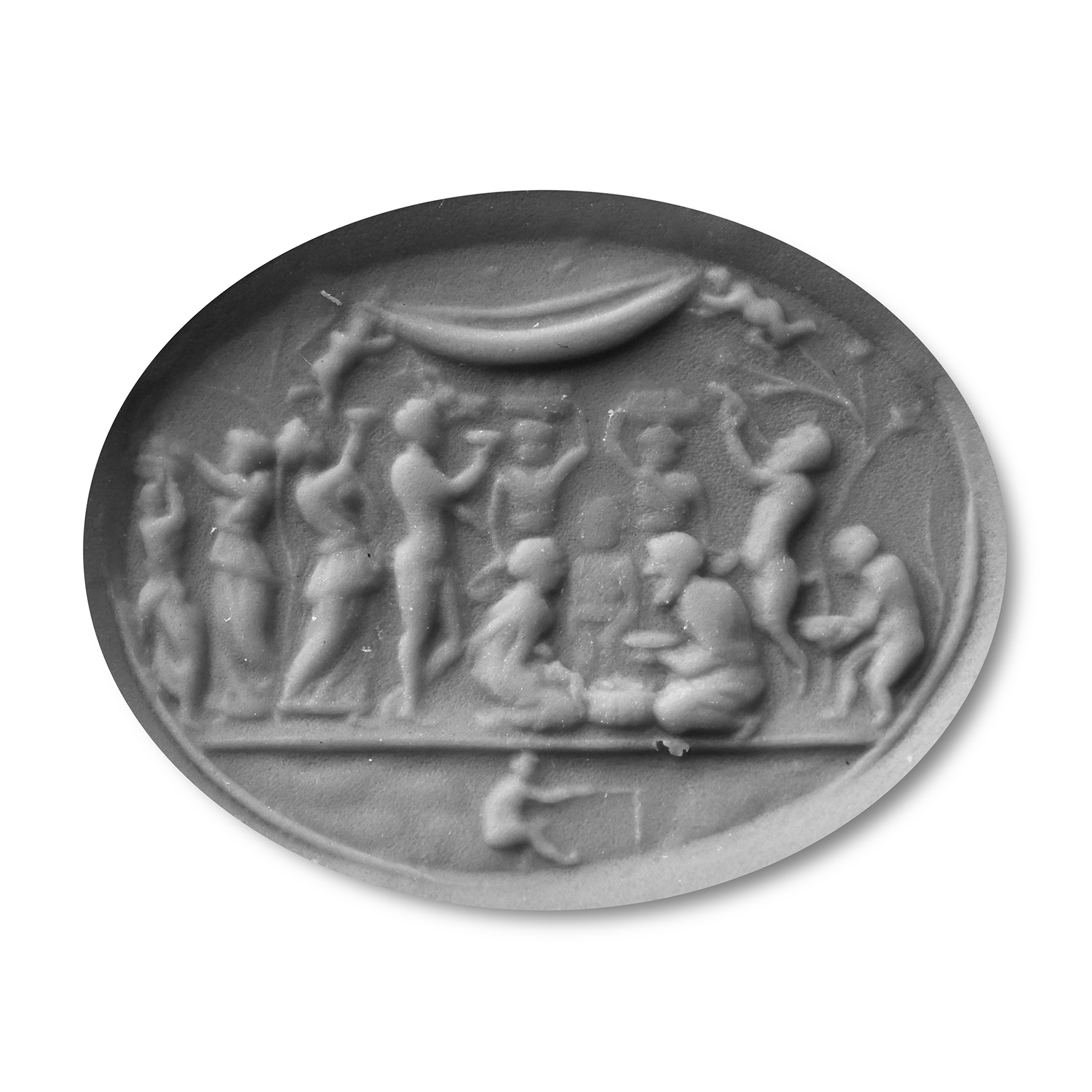
Renaissance Carnelian 'Michelangelo's Seal' Gemstone
18TH CENTURY A.D.
7/8 in. (1.21 grams, 21 mm).
Vibrant orange carnelian intaglio depicting a lively Bacchic scene with satyrs, wine-bearers and other participants beneath a canopy supported by two flying Cupids; below in the exergue, a small figure of a fisherman, fishing with a hook on the sea shore; supplied with a museum-quality impression.
ProvenanceAcquired on the European art market.
LiteratureCf. The British Museum, London, museum no.1978,1002.1205, for a brooch with a similar resin cameo; see also Brose, K.M., Applied Arts or Ancient Sculpture? A Renaissance Gem in the Census Database, online article, retrieved July 22 2026.
FootnotesThe original 'Seal of Michelangelo' is a famous engraved carnelian gem, acquired by King Louis XIV in 1670. It is now housed in the Bibliothèque nationale de France. Long thought to be an ancient Greek masterpiece, and a subject of debate and controversy, it was subsequently identified by scholars as a Renaissance work by Pier Maria Serbaldi da Pescia.
CONDITIONTimeLine Auctions follows a vetting process to ensure the authenticity and legality of all items, reinforcing our commitment to integrity and responsible trading. Each antiquity, antique, and coin lot undergoes thorough examination by a vetting committee of at least ten external specialists, professional trade association members, scientists, and archaeologists: Our Vetting Process
AUCTIONS:
TimeLine is a leading auction house specialising in antiquities, ancient art, collectables, natural history, coins, medals, and books. Our auctions offer museums, collectors, historians, and enthusiasts the opportunity to acquire unique and historically significant pieces.
-
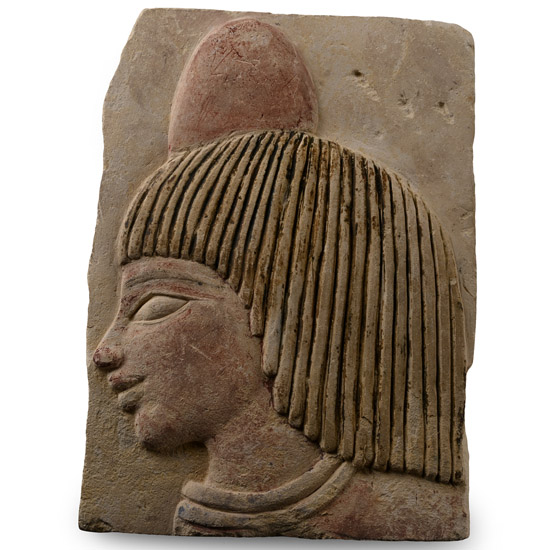
Egyptian Style Relief of a Young Female
20th century A.D.Sold for (Inc. bp): £46
Rectangular panel with a profile head of a female wearing a bag-wig and two collars around her neck. 1.04 kg, 18.2 cm
By repute ex Christie's, New York, 1996 and an old European collection. Private collection, London, UK. -
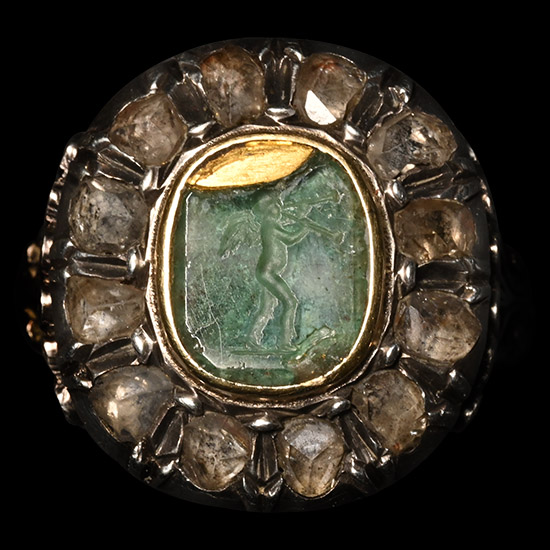
Diamond Locket Ring Set with Emerald Intaglio of Amor, God of Love, Playing Diaulos
Late 19th century A.D.Sold for (Inc. bp): £3,380
Comprising a segmented hoop with scroll-shaped shoulders, a hinged oval bezel with a secret compartment, and a bezel decorated with twelve cut diamonds around a central green stone intaglio of a winged Amor standing on a prora playing a diaulos. 5.82 grams, 23.60 mm overall, 16.50 mm internal diameter (approximate size British L 1/2, USA 6, Europe 11.87, Japan 11)
Private collection, Europe. Acquired on the English art market. -
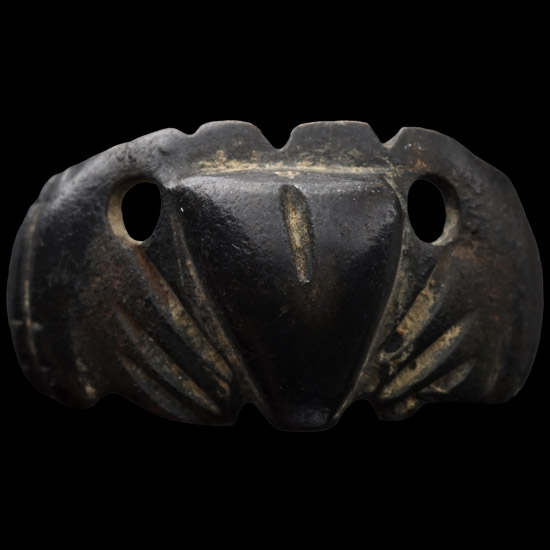
Stuart Period Bronze Hands Holding Heart Ring
17th century A.D.Sold for (Inc. bp): £111
Claddagh ring with a tapering hoop, the bezel with two hands holding a raised heart. 3.71 grams, 21.00 mm overall, 16.15 mm internal diameter (approximate size British K, USA 5 1/4, Europe 9.95, Japan 9)
From the private collection of Graham Slater (1927-2024), Cambridge, UK; formed 1980s-1990s.
