Loading, please wait...

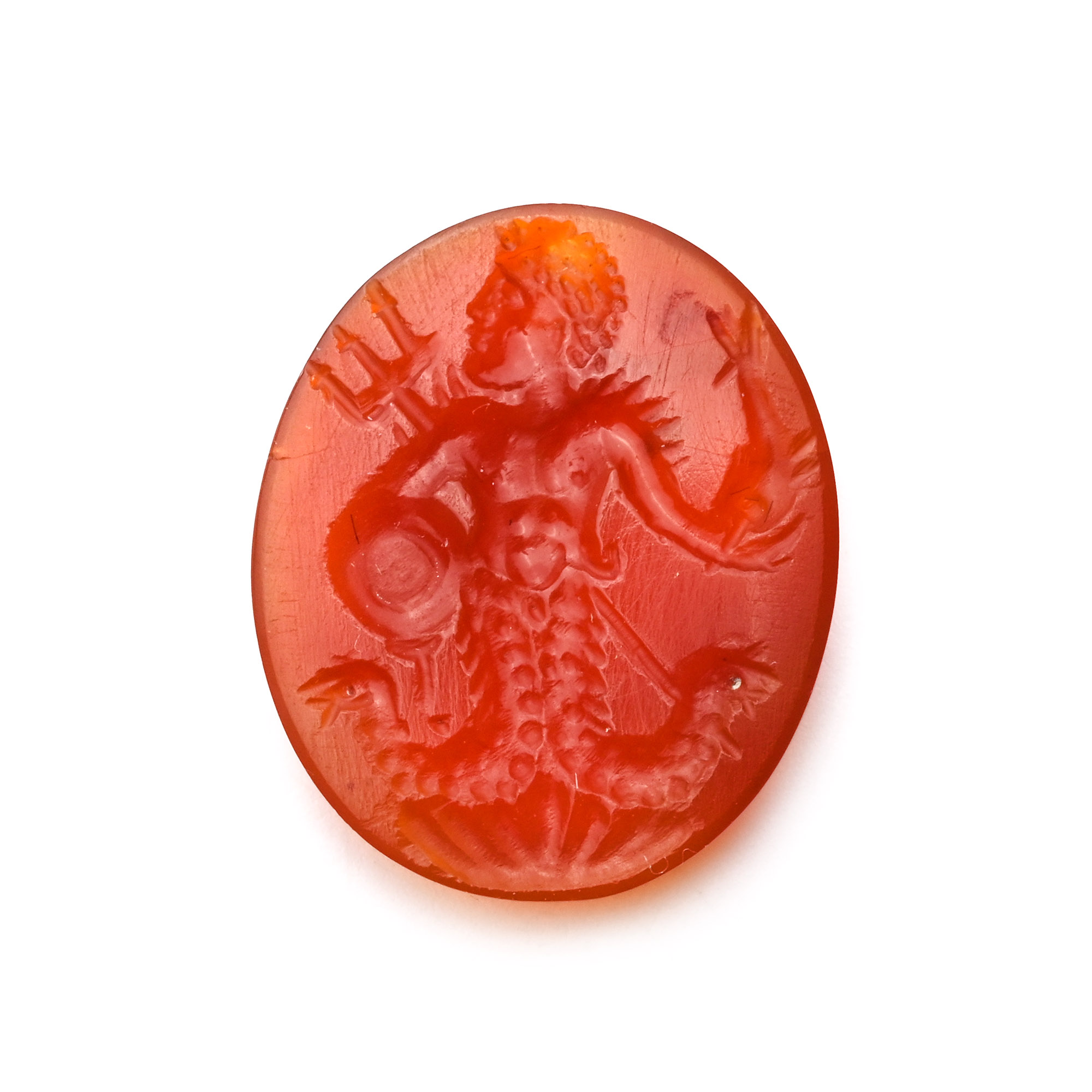
Renaissance Carnelian Gemstone with Roman God Neptune Renaissance Carnelian Gemstone with Roman God Neptune Renaissance Carnelian Gemstone with Roman God Neptune Renaissance Carnelian Gemstone with Roman God Neptune Renaissance Carnelian Gemstone with Roman God Neptune Renaissance Carnelian Gemstone with Roman God Neptune
Use mousewheel to zoom in and out, click to enlarge
Details

LOT 0396

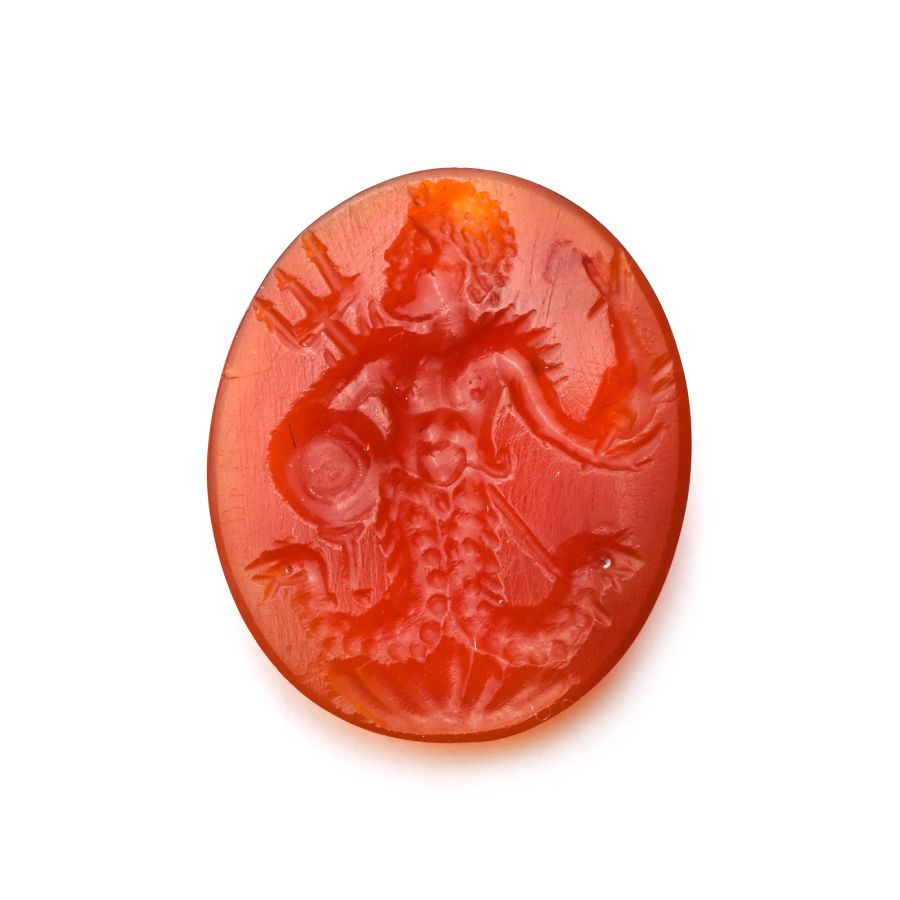
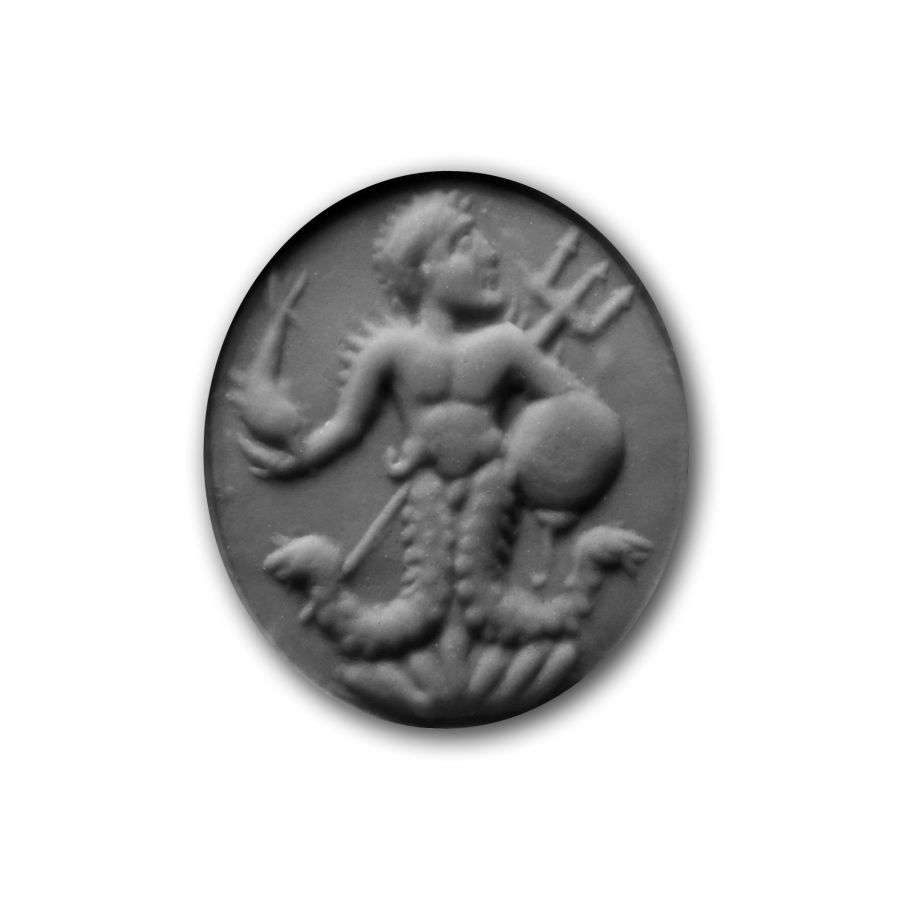
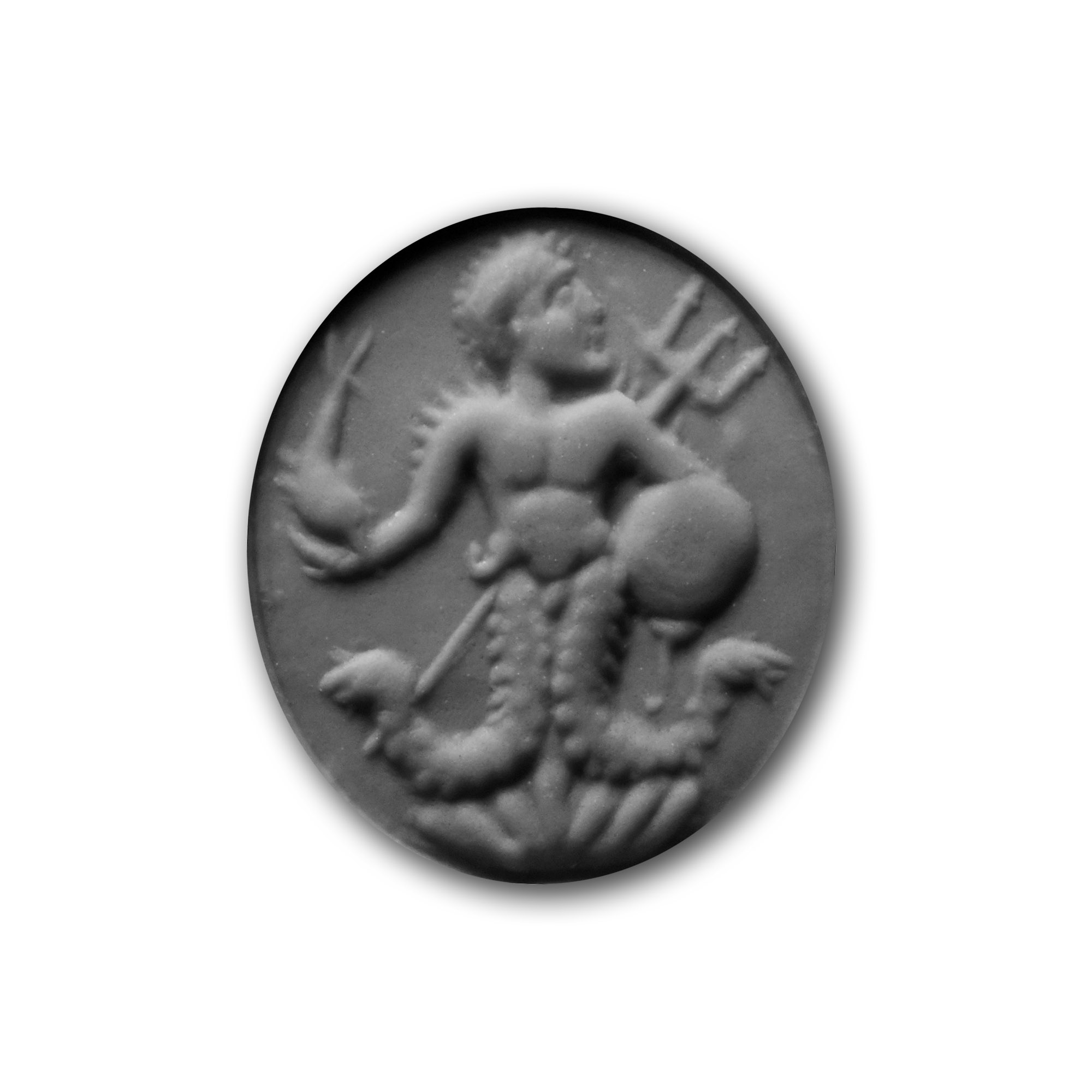
Renaissance Carnelian Gemstone with Roman God Neptune

16TH-17TH CENTURY A.D.

5/8 in. (0.89 grams, 16 mm).

With incuse anguipedal Neptune holding a trident and with a dolphin; supplied with a museum-quality impression.

Provenance

Acquired on the European art market.
Private collection, England.

CONDITION
VETTING:

TimeLine Auctions follows a vetting process to ensure the authenticity and legality of all items, reinforcing our commitment to integrity and responsible trading. Each antiquity, antique, and coin lot undergoes thorough examination by a vetting committee of at least ten external specialists, professional trade association members, scientists, and archaeologists: Our Vetting Process


AUCTIONS:

TimeLine is a leading auction house specialising in antiquities, ancient art, collectables, natural history, coins, medals, and books. Our auctions offer museums, collectors, historians, and enthusiasts the opportunity to acquire unique and historically significant pieces.

Live Bidding

LOT 0396

Renaissance Carnelian Gemstone with Roman God Neptune

Estimate £500 - 700€580 - 810 (for guidance only)$680 - 950 (for guidance only)

Print page

RELATED LOTS
  • Very Large Glazed Bellarmine Witchs Bottle with Contents
    Very Large Glazed Bellarmine Witch's Bottle with Contents
    Late 16th-early 17th century A.D.

    Sold for (Inc. bp): £9,750

    Vessel of squat spherical form with a broad cylindrical neck, strap handle and foot with rolled rim, bearded face (Bartmann 'mask') and other detailing; with original contents comprising: eight iron clout nails with square-section shank and domed head; three similar with flat head; base metal dress pin with hollow-formed spherical head; similar with biconvex head; fragment of coarse-woven textile with five pins in situ; thirteen unassociated pins. 1.7 kg total, bottle: 26.5 cm


    From the private collection of a London, UK, gentleman.

    Witch bottles were a response to the common belief in witchcraft, which was feared in the Puritan culture of those times. The process involved heating the victim’s urine in a bottle, mixed with human hair and metal nails and pins, sometimes inserted into a cloth panel representing the victim's heart. The bottle was then either buried under the hearth of a house (East Anglian tradition) or thrown into a river (London tradition). The heating of the bottle was supposed to transfer to the body of the witch who had caused the victim to be afflicted.

    Lot Details

  • German Military Pin and Badge Collection
    German Military Pin and Badge Collection
    20th century A.D.

    Sold for (Inc. bp): £26

    Including 'Deutscher Flotenverein', two-headed eagle and other designs. 64 grams total, 18-62 mm


    From the private collection of author and historian Dr DeWitt Bailey, one of the global authorities on the confederate army in the US civil war; thence by descent to his grandson.

    Lot Details

  • Russian Orthodox Enamelled Bronze Travel Icon with Saint Julyttas and Her Son Cyricus
    Russian Orthodox Enamelled Bronze Travel Icon with Saint Julyttas and Her Son Cyricus
    19th century A.D.

    Sold for (Inc. bp): £208

    With polychrome enamel in green, blue and yellow, framed by a square border with pointed doom, representing Saint Julyttas and her son Cyricus, surrounded by Saints; on the top, Christ Pantokrator, nimbate, making the gesture of blessing and holding a Gospel, seated upon a cloud and surrounded by Cyrillic letters 'ΙC ΧΡ' (Jesus Christ); Cyrillic inscriptions above some of the saints. 325 grams, 13.5 cm


    Acquired from Chris Martin-Zakheim, Iconastas, 5 Piccadilly Arcade, London SW1. From the private collection of a West London, UK, gentleman, formed since the early 2000s.

    Made of bronze with brightly coloured enamels, this icon was intended for private devotion, often carried by pilgrims and Orthodox believers for spiritual protection. St. Julyttas and her son Cyricus (Ки́рик и Иули́тта), among the most venerated figures in Russian tradition, are depicted in the centre, surrounded by other saints, a symbol of the communion of the righteous.

    Lot Details

Stay up-to-date with the latest from TimeLine Auctions by joining our mailing list