
Loading, please wait...
LOT 1962
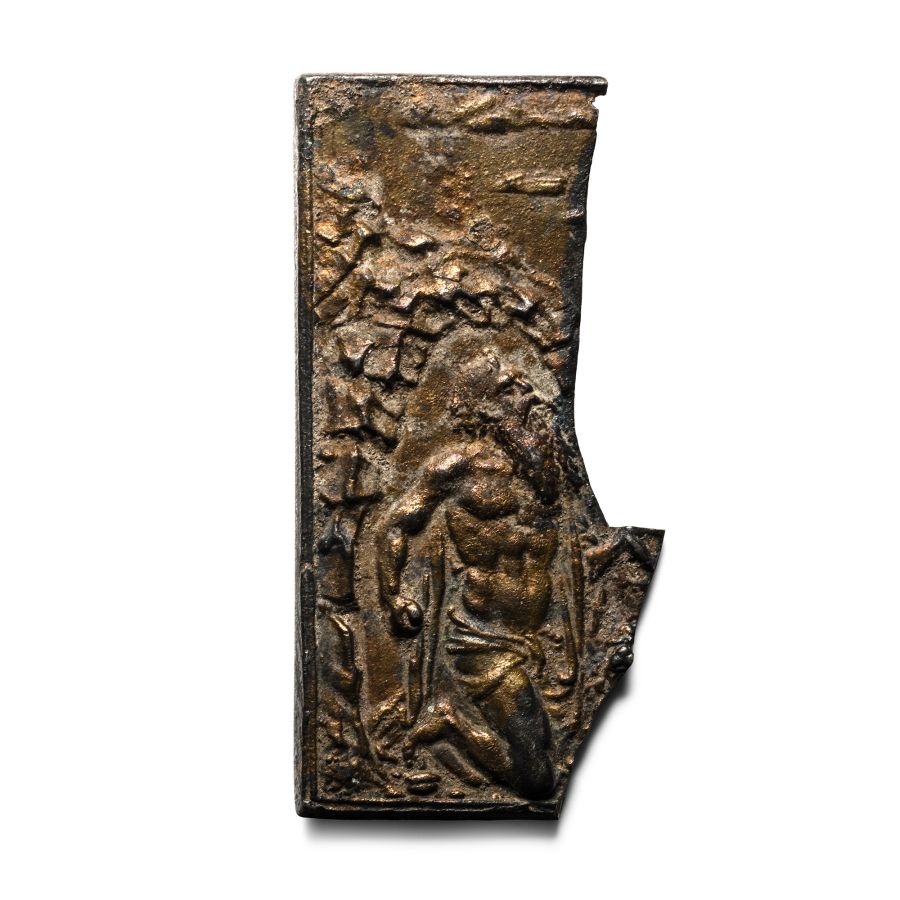
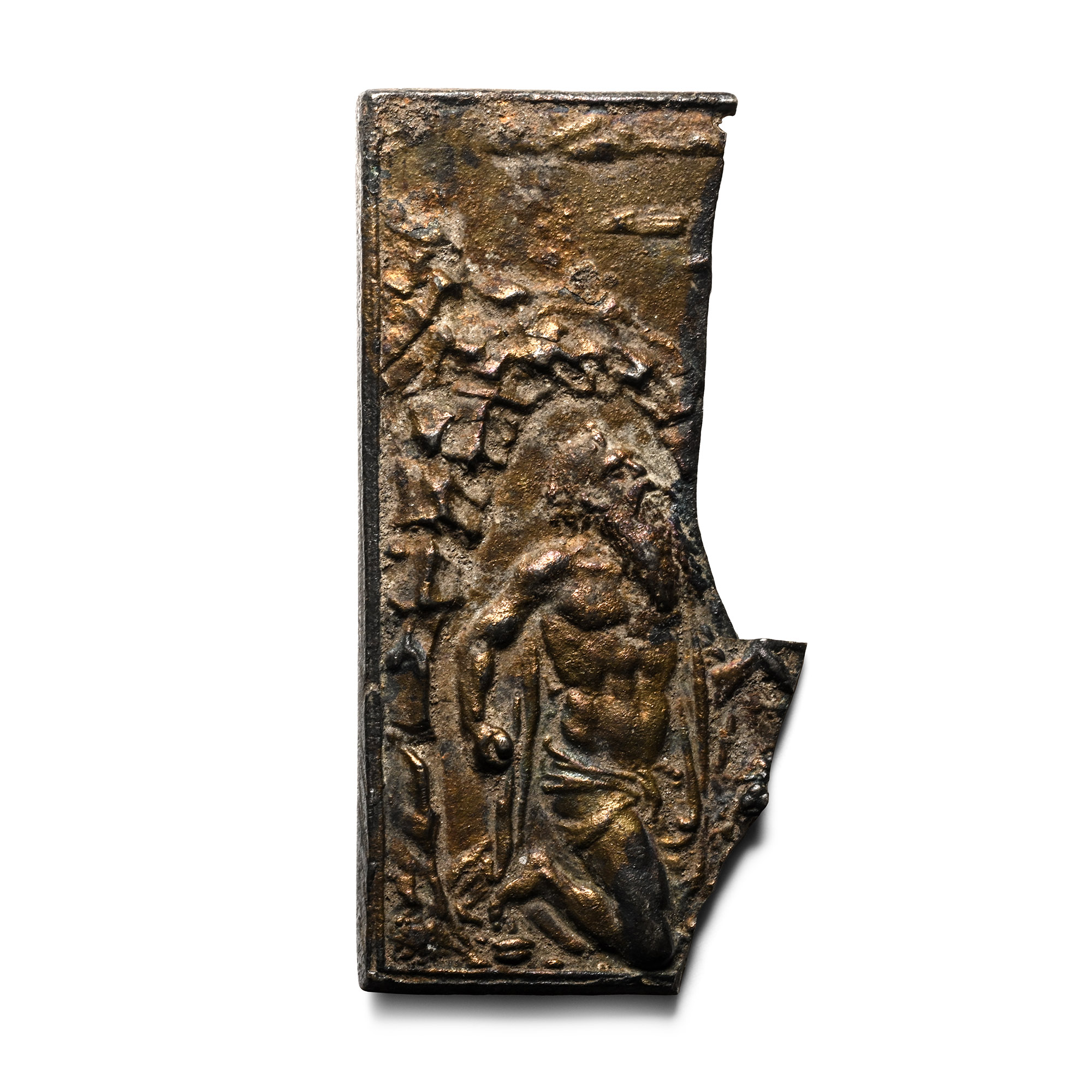
Renaissance Bronze Saint Jerome Plaque Fragment
LATE 15TH-EARLY 16TH CENTURY A.D.
3 in. (37.3 grams, 77.48 mm).
Plaque fragment with low-relief scene, kneeling Saint Jerome in a cave with one hand stretched out. [No Reserve]
ProvenanceFrom the private collection of a European gentleman (1942-2024), formed since the 1970s.
LiteratureCf. National Art Gallery accession no.1957.14.302.
CONDITIONTimeLine Auctions follows a vetting process to ensure the authenticity and legality of all items, reinforcing our commitment to integrity and responsible trading. Each antiquity, antique, and coin lot undergoes thorough examination by a vetting committee of at least ten external specialists, professional trade association members, scientists, and archaeologists: Our Vetting Process
AUCTIONS:
TimeLine is a leading auction house specialising in antiquities, ancient art, collectables, natural history, coins, medals, and books. Our auctions offer museums, collectors, historians, and enthusiasts the opportunity to acquire unique and historically significant pieces.
-
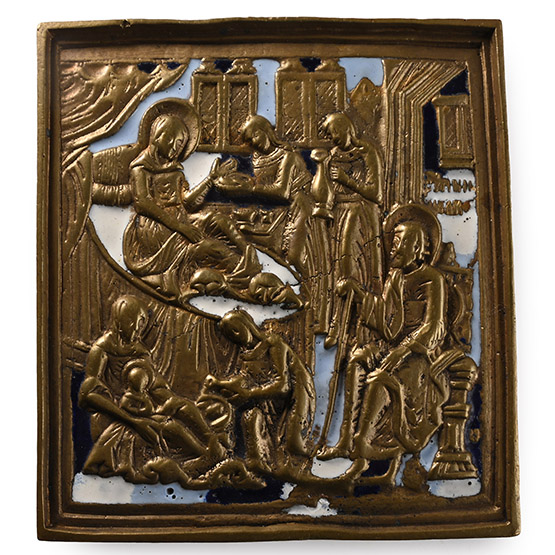
Russian Orthodox Enamelled Bronze Travel Icon with the Birth of the Virgin
19th century A.D.Sold for (Inc. bp): £494
Presenting an architectural setting with figures in two chambers framed with cornices, columns and furnitures; the upper chamber showing Saint Anna in birthing bed with two attendants; the lower room with two attendants bathing an infant; on the right Saint Joachim seated upon a cathedra; Old Slavonic inscription reciting ‘The birth of the most holy mother of God’. 230 grams, 98 mm
Acquired from Chris Martin-Zakheim, Iconastas, 5 Piccadilly Arcade, London SW1. From the private collection of a West London, UK, gentleman, formed since the early 2000s.
According to the Protoevangelium of James, Mary's parents were called Anna and Joachim and conceived Mary at a late age. -
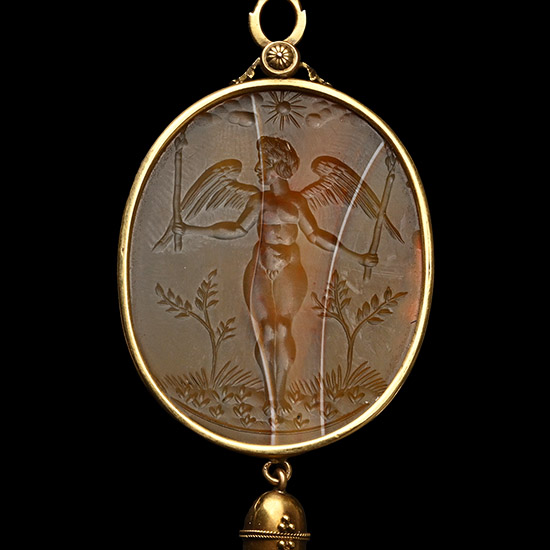
Renaissance Gold Pendant with Agate Gemstone of Cupid
Italy, late 16th-early 17th century A.D.Sold for (Inc. bp): £3,640
Cupid shown standing amid the vegetation, his wings and arms spread and holding two short staffs in his hands, clouds and the sun above; set in a gold frame with a conical pendant drop below; supplied with a museum-quality impression. 13.53 grams, 75 mm
Acquired on the European art market. This lot has been checked against the Interpol Database of stolen works of art and is accompanied by search certificate number no.13341-257981.
The cameo shows a Cupid in the same style as the one in the British Museum Sloane collection. Cupid was a very popular motif in 17th-century Italian artistic production. The presence of Cupid on the cameo implies amorous attachment, or sometimes, amorous conflict. The cameo shows a sophisticated atmosphere, relayed in the brown and grey colours. -
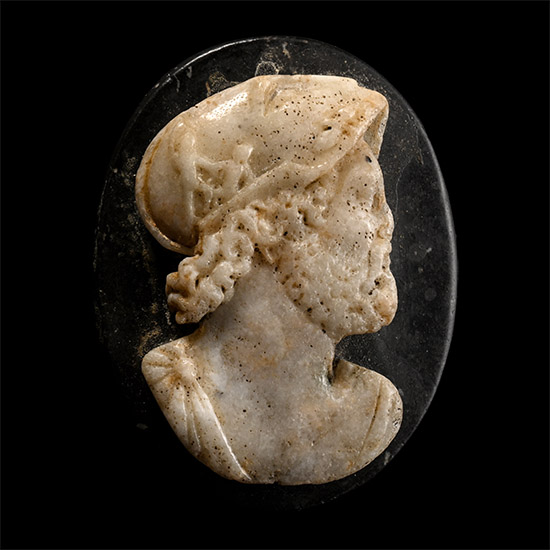
Grand Tour Stone Cameo with Bust of Ajax
18th century A.D.Sold for (Inc. bp): £338
Large oval cameo with profile bust of the Greek hero Ajax, shown bearded and with his helmet pushed up exposing his face. 27.3 grams, 48 mm
UK private collection, acquired on the French art market in the 2000s.
Ajax is recorded in The Iliad as ‘the best man among the Thracians, being both brave and of great stature’. He was one of the strongest warriors for the Achaeans, second only to his cousin Achilles. His epic duel with Hector is detailed in the seventh book of the famed poem by Homer.
