
Loading, please wait...
LOT 0363
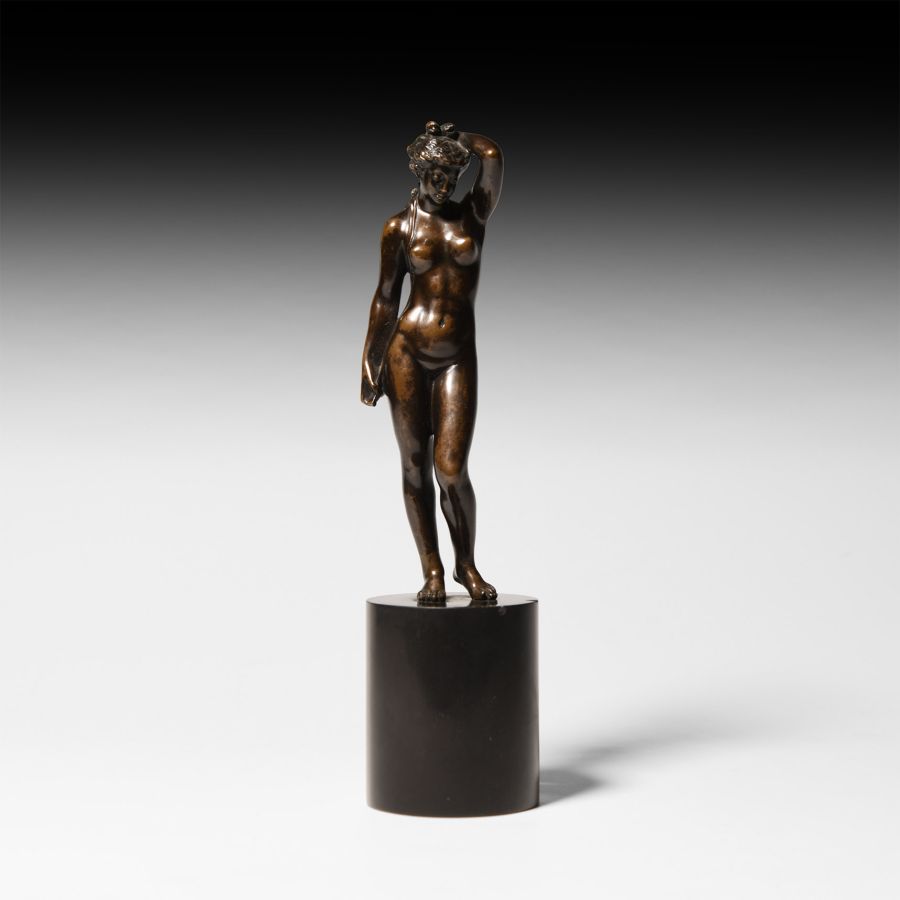
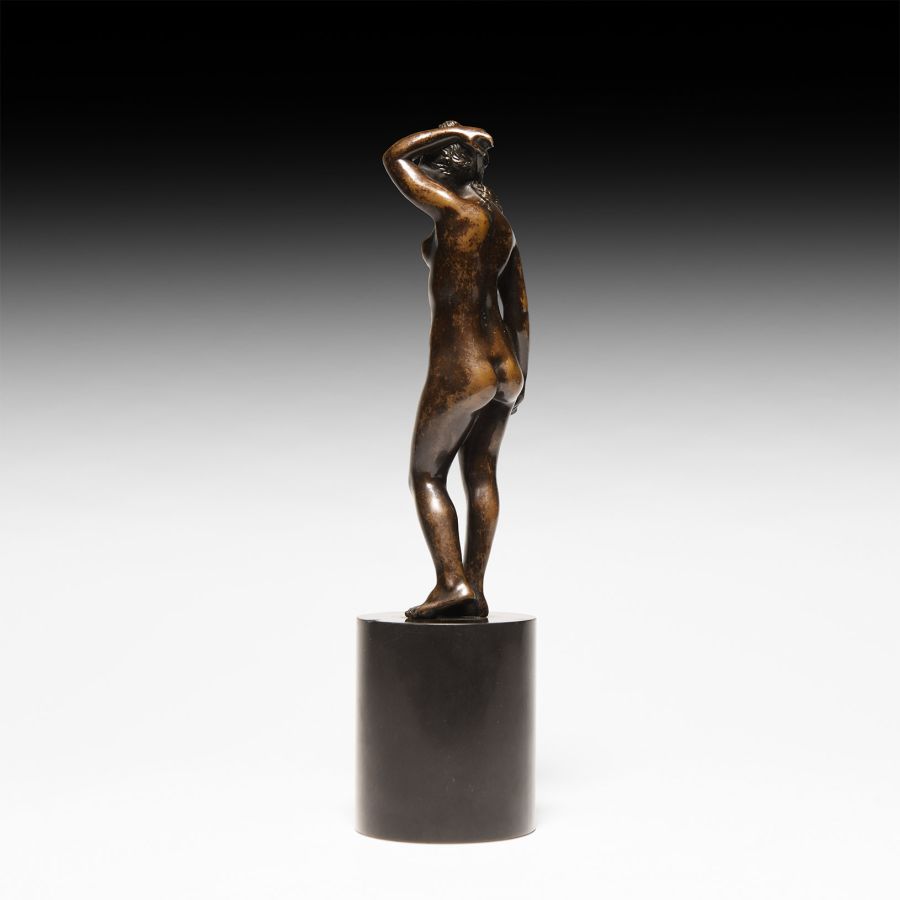
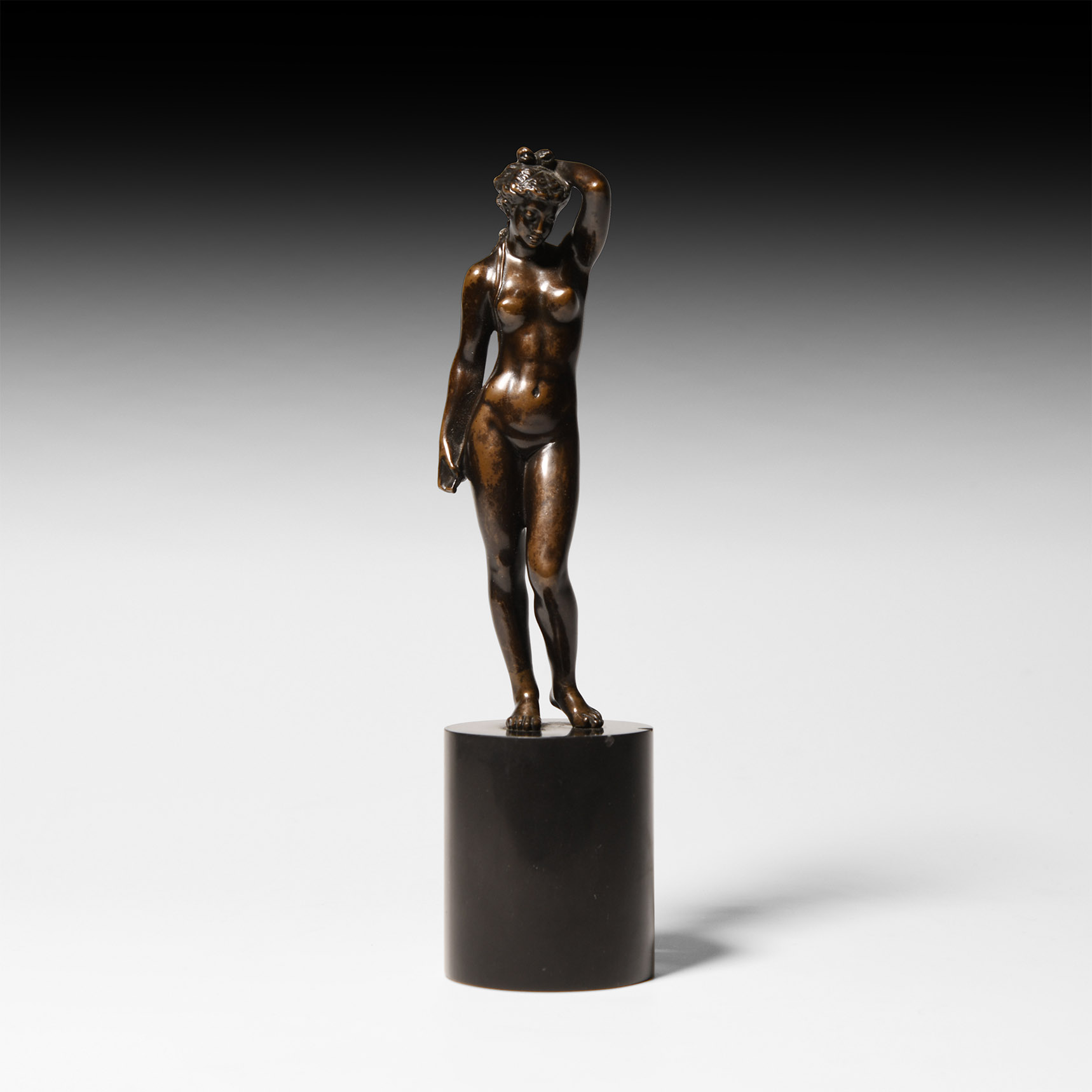
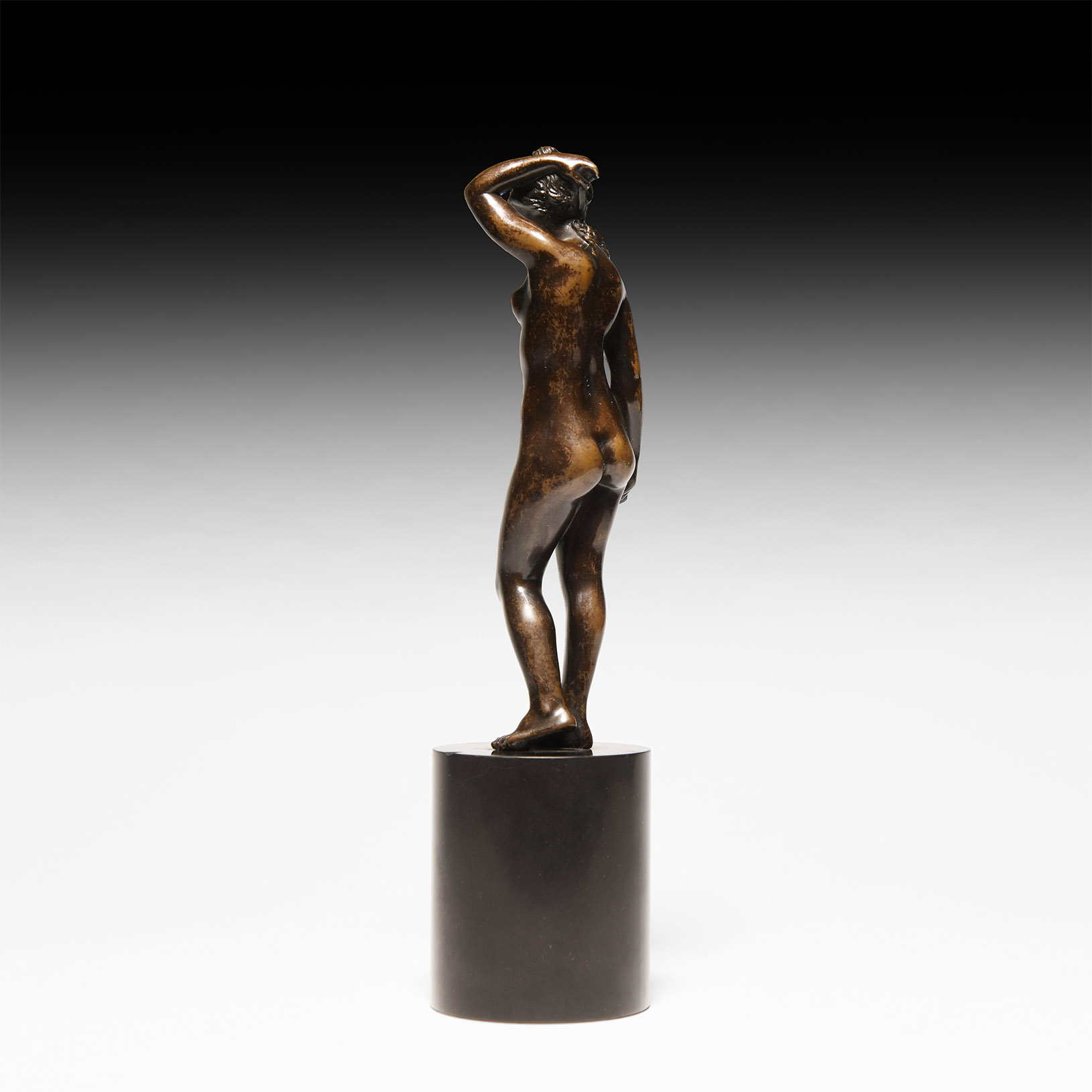
Renaissance Bronze Female Figure
16TH-17TH CENTURY A.D. OR EARLIER
8 in. (754 grams, 20.5 cm high).
A naturalistic bronze female figure modelled standing contrapposto, nude, looking down towards her feet, one arm reaching over her head towards her neck, the other resting by her side, her weight placed on her right leg, hair tied into an elaborate bun with a ribbon, short ringlets falling down her nape and the end of the ribbon cascading over her shoulder, along the side of her right breast and down to her thigh, where she is holding the end; mounted on a custom-made display base.
ProvenanceEnglish private collection.
FootnotesWith stylistic similarities to work by Giovanni Bologna; possibly Italian or Northern European.
CONDITIONTimeLine Auctions follows a vetting process to ensure the authenticity and legality of all items, reinforcing our commitment to integrity and responsible trading. Each antiquity, antique, and coin lot undergoes thorough examination by a vetting committee of at least ten external specialists, professional trade association members, scientists, and archaeologists: Our Vetting Process
AUCTIONS:
TimeLine is a leading auction house specialising in antiquities, ancient art, collectables, natural history, coins, medals, and books. Our auctions offer museums, collectors, historians, and enthusiasts the opportunity to acquire unique and historically significant pieces.
-
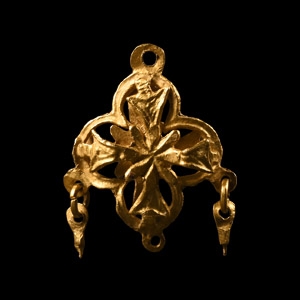
Elizabethan Gold Cross Pendant
16th-early 17th century A.D.Sold for (Inc. bp): £910
A gold bifacial cruciform pendant comprising: outer frame of four lobes confining a cross moline with saltire to the centre, pierced lug to three arms each with a gold dangle, fourth with larger pierced tab for suspension. 1.59 grams, 21 mm
Acquired 1980-2015. Ex Abelita family collection. -
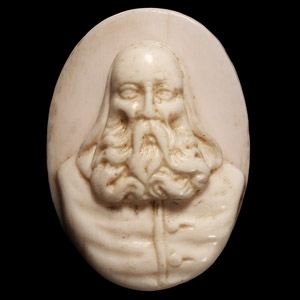
Shell Cameo of a Wealthy Merchant
18th-19th century A.D.Estimate: £120 - 170 (+bp*)
Opening Bid: £60
A carved shell facing bust of a bearded male with long hair, probably a German merchant. 3.04 grams, 23 mm
Acquired from Artermide Aste, auction 39E, lot 426. From the collection of G.M.R.H., London, UK. -
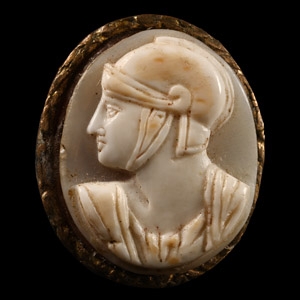
Cameo with Bust of a Roman Soldier
19th century A.D.Sold for (Inc. bp): £33
A shell cameo portraying the draped and cuirassed bust of a Roman soldier facing left, wearing a helmet; attached to an agate backed gilt copper-alloy setting. 4.97 grams, 24 mm
Acquired 1960s-1990s. From the late Alison Barker collection, a retired London barrister.
