
Loading, please wait...
LOT 0359
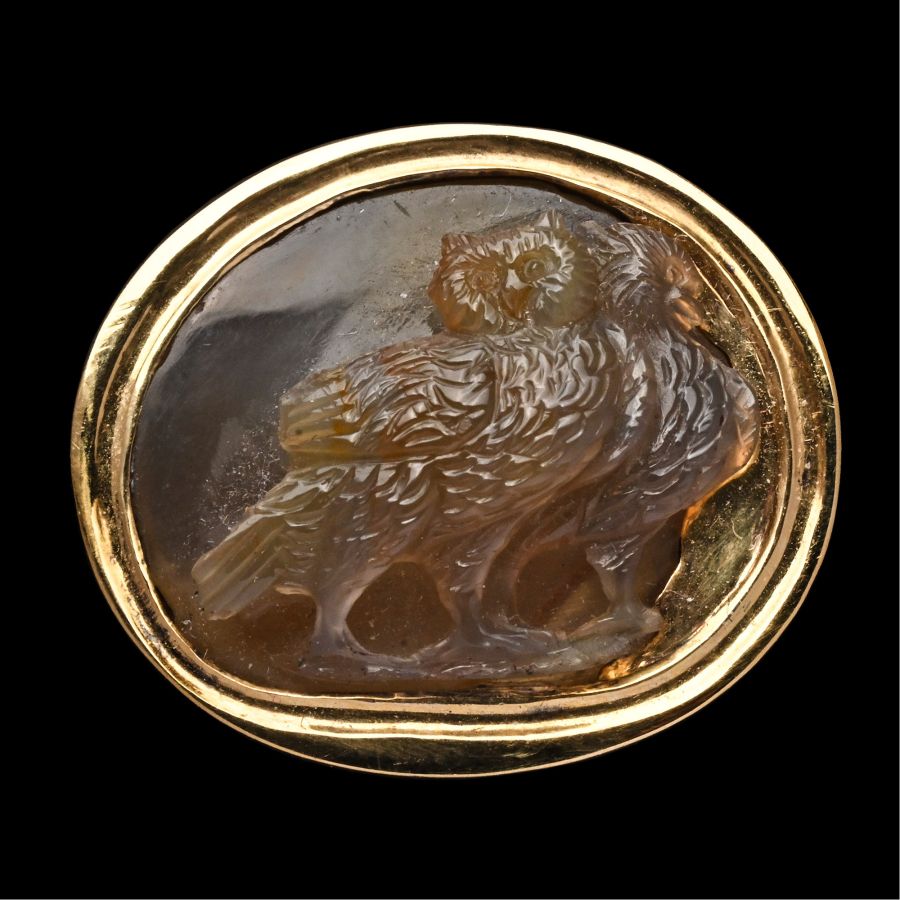
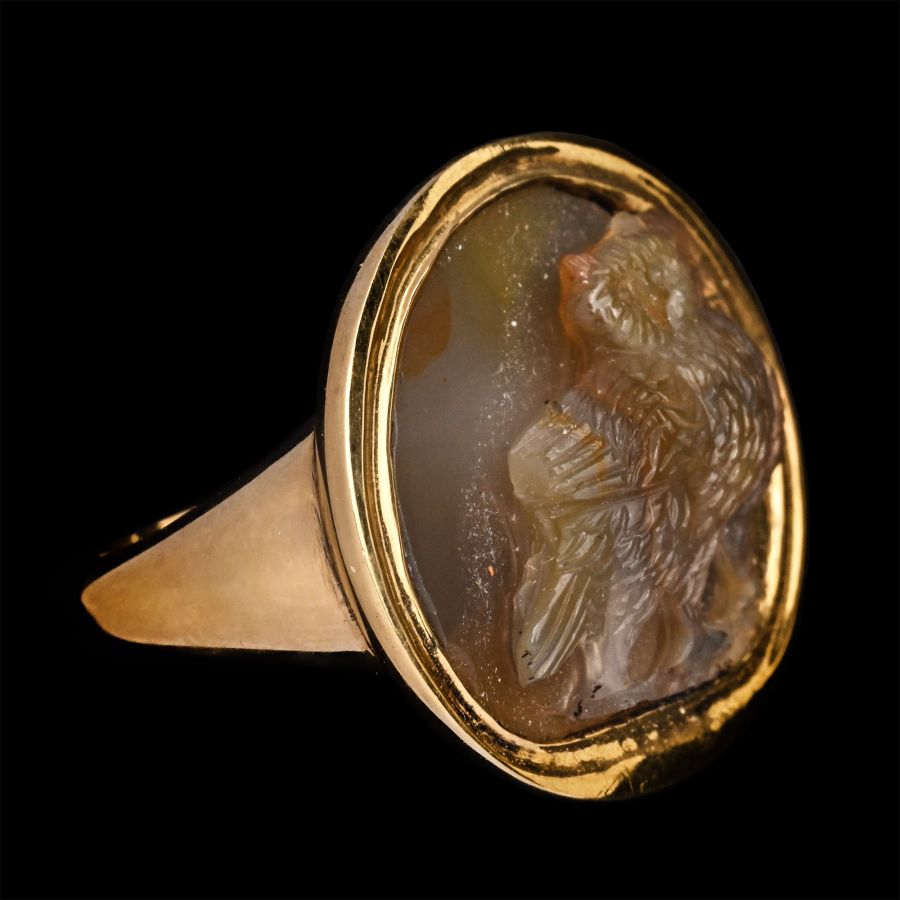
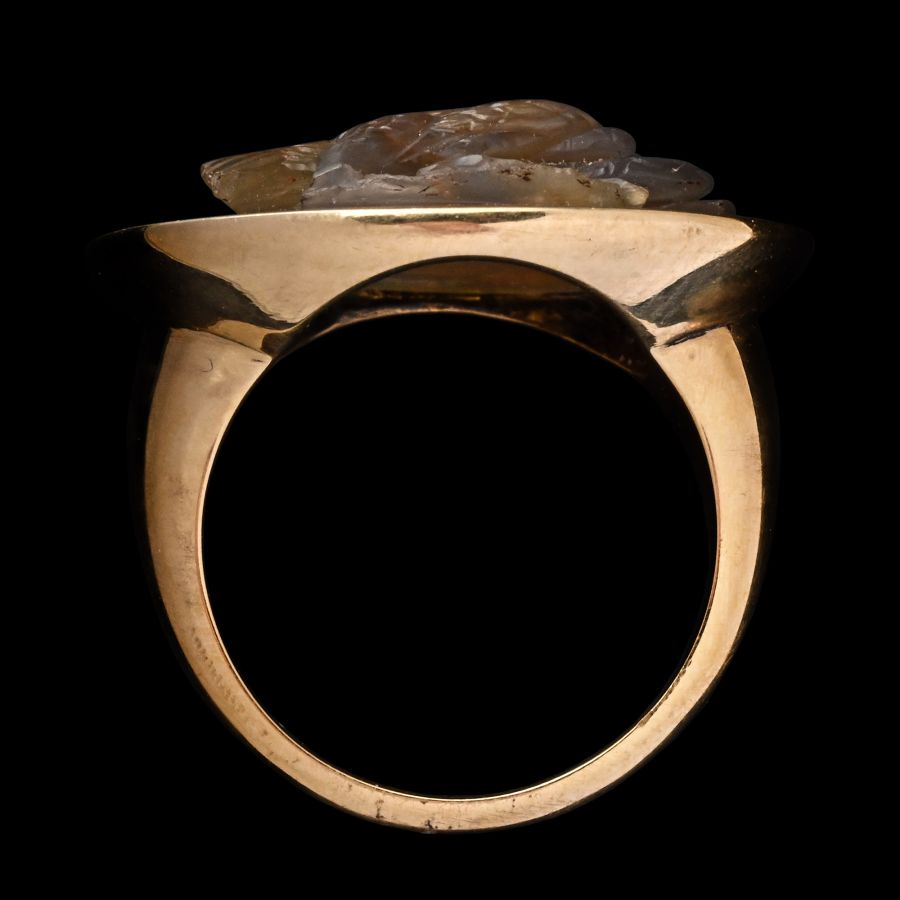
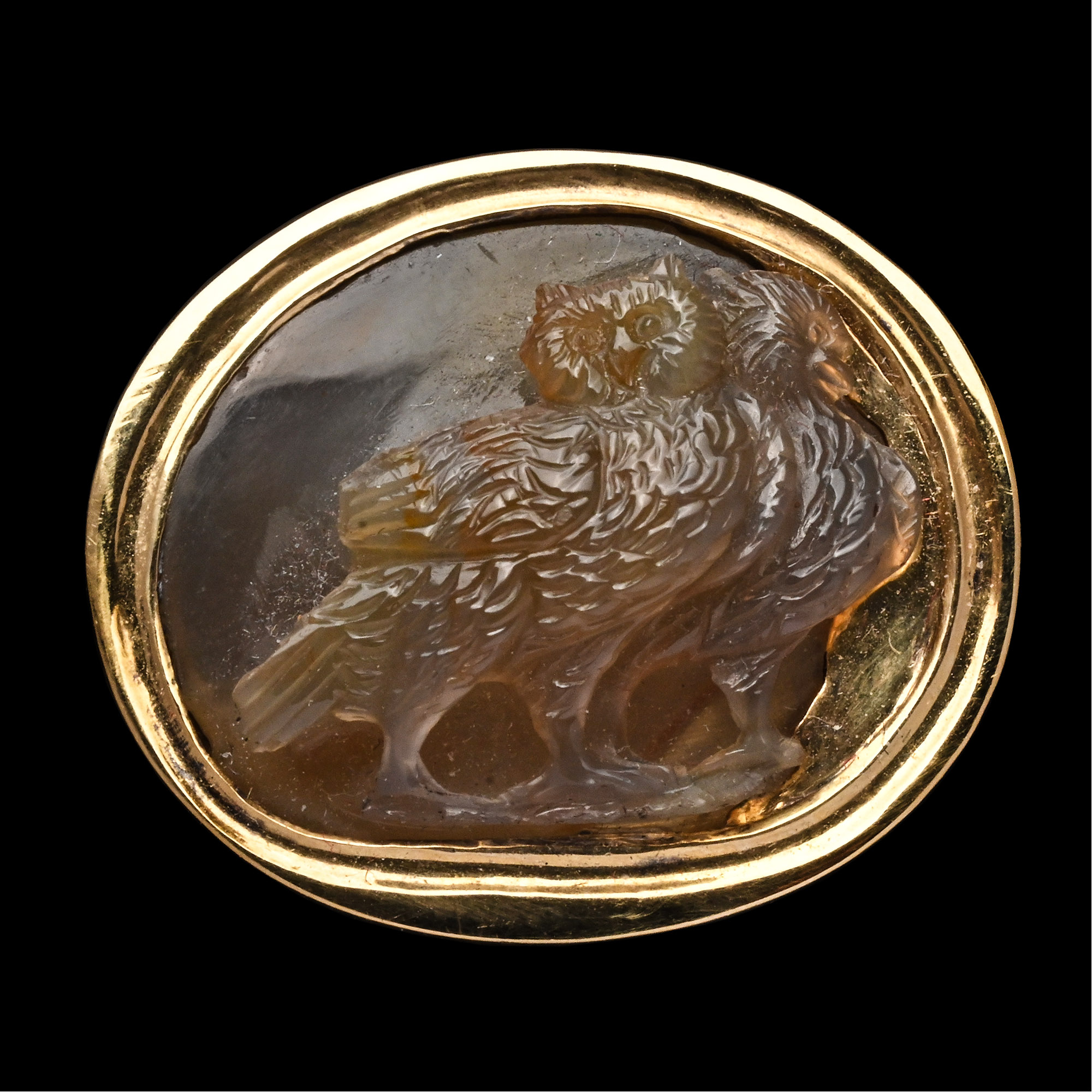
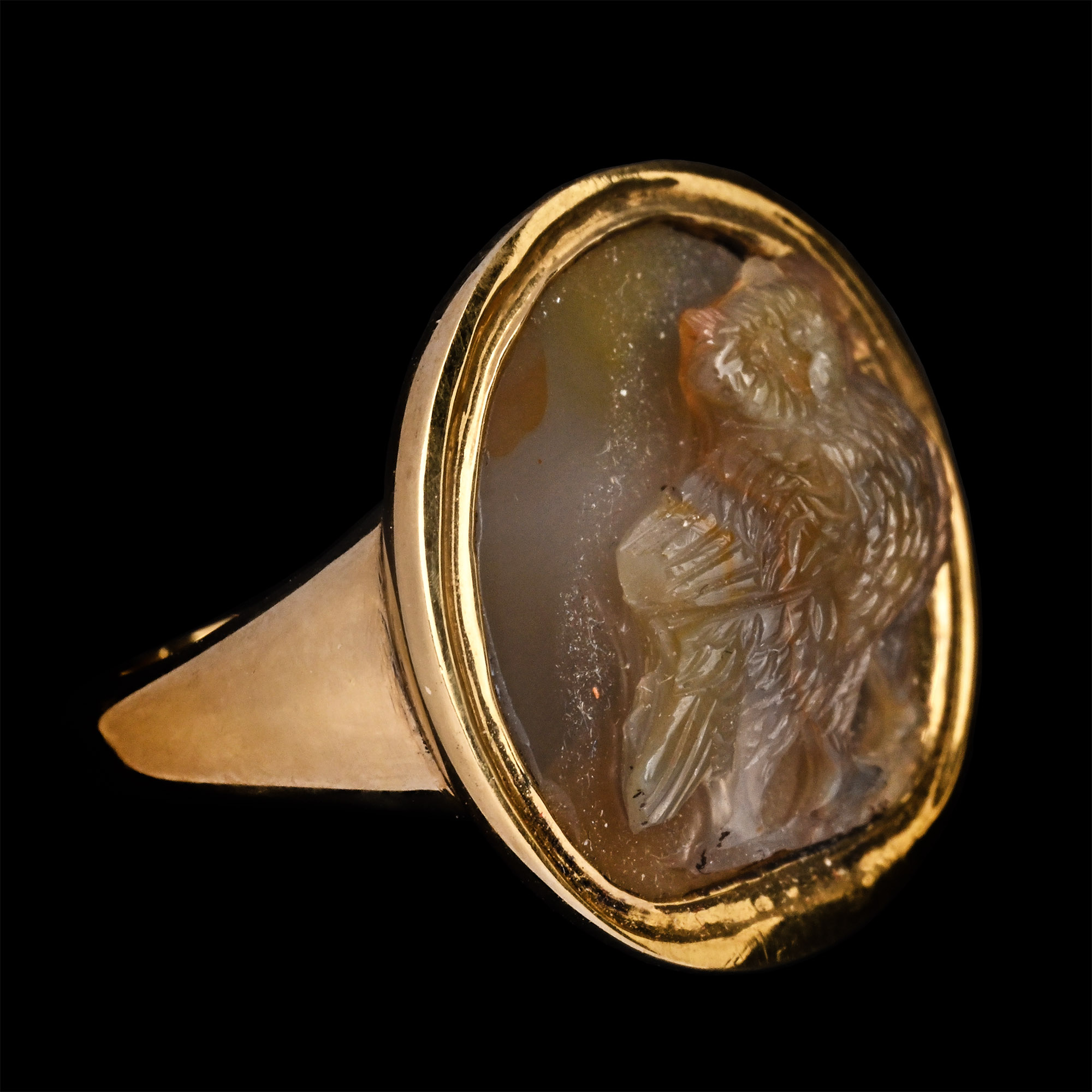
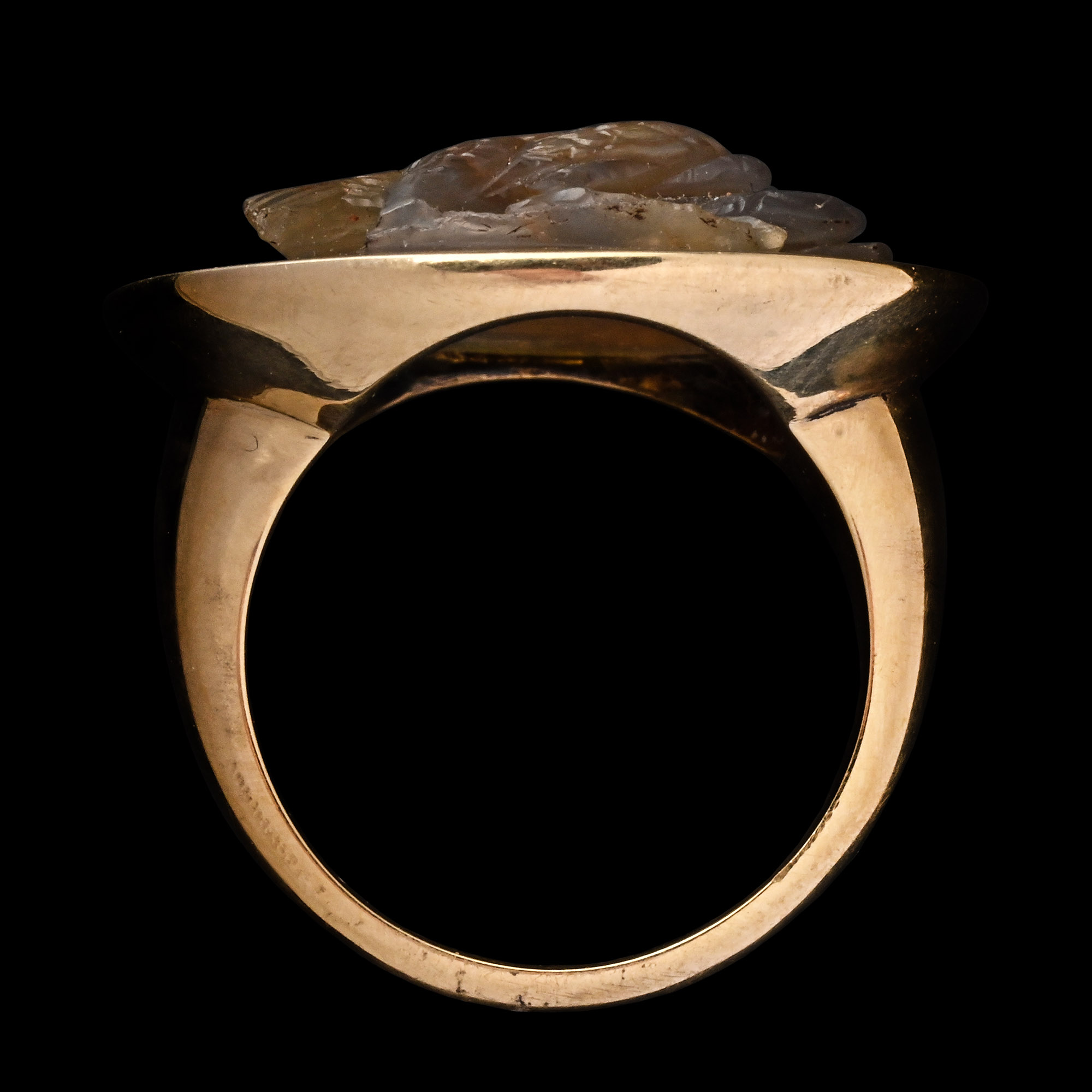
Renaissance Agate Cameo of Two Owls in Gold Ring
ITALY, 17TH CENTURY A.D.
1 in. (12.74 grams, 24.90 mm overall, 17.00 mm internal diameter (approximate size British M 1/2, USA 6 1/4, Europe 13.09, Japan 12)).
Comprising a D-section hoop expanding towards the open-backed setting set with a large brown agate intaglio modelled as two conjoined standing owls, the one at the front facing, and the other looking to the right, intricate feather and facial details, the cameo with a loss on the right-hand side, with the ring incorporating a fine gold repair.
ProvenanceAcquired on the European art market.
This lot has been checked against the Interpol Database of stolen works of art and is accompanied by search certificate number no.13318-257961.
See Sotheby’s Bond Street, 06 December 2016, Old Master Sculpture and Works of Art Including Highlights from the Reinhold Hofstätter Collection, London, 2016, lot 62, for similar.
FootnotesEven in the Italian Renaissance, the owl, an ancient symbol of the goddess Athena, symbolised wisdom. The owl was also a symbol of the night and death, as is so eloquently illustrated in the 17th-century painting Vanité à la chouette in the Musée des Beaux-Arts de Dijon, which depicts an owl sitting on a human skull next to an extinguished candle.
CONDITIONTimeLine Auctions follows a vetting process to ensure the authenticity and legality of all items, reinforcing our commitment to integrity and responsible trading. Each antiquity, antique, and coin lot undergoes thorough examination by a vetting committee of at least ten external specialists, professional trade association members, scientists, and archaeologists: Our Vetting Process
AUCTIONS:
TimeLine is a leading auction house specialising in antiquities, ancient art, collectables, natural history, coins, medals, and books. Our auctions offer museums, collectors, historians, and enthusiasts the opportunity to acquire unique and historically significant pieces.
-
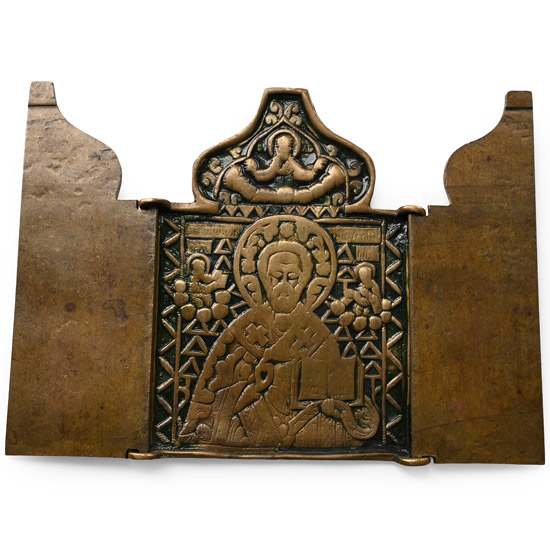
Russian Orthodox Enamelled Bronze Icon with St. Nicholas
19th century A.D.Sold for (Inc. bp): £65
Travel icon with hinged doors, featuring Saint Nicholas with a book in his left hand and making the gesture of blessing with his right, dressed as a bishop with a sticharion, covered by an omophorion, and surmounted by an epitrachelion embroidered with crosses; the saint flanked by Jesus and Virgin Mary, Christ holding the gospel, Mary holding the bishop’s epitrachelion. 163 grams, 10.2 cm
Ex P. Chapman collection, 1980s-1990s. -
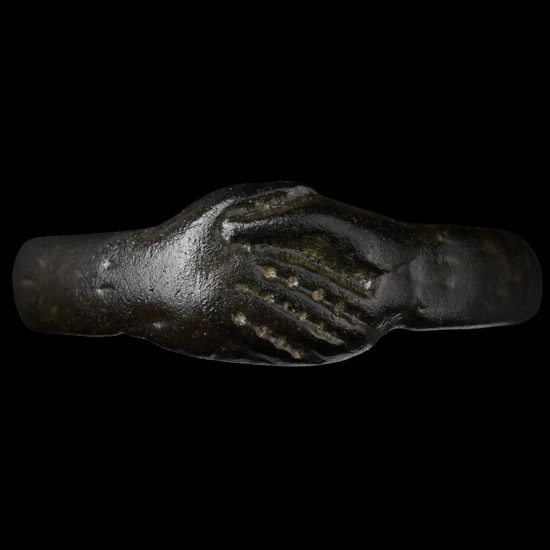
Stuart Period Clasped Hands Ring
Circa 17th century A.D.Sold for (Inc. bp): £59
Comprising a slender hoop with two clasping hands. 2.41 grams, 21.62 mm overall, 18.40 mm internal diameter (approximate size British Q, USA 8, Europe 17.49, Japan 16)
Ex German art market, 2000s. Acquired from an EU collector living in London. From the collection of a Surrey, UK, gentleman. -
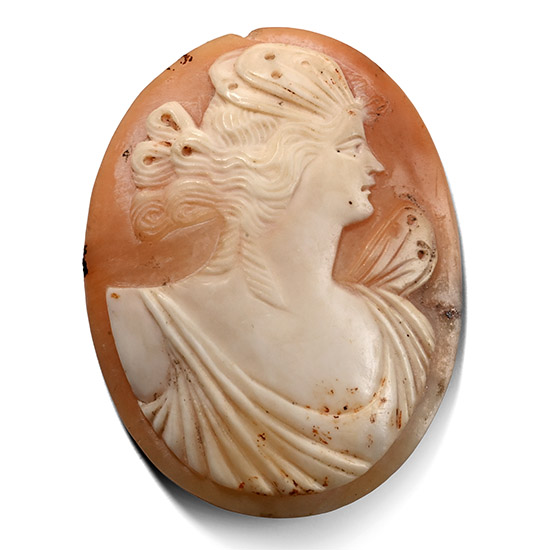
Post Classical Shell Cameo of a Lady
Circa 19th century A.D.Sold for (Inc. bp): £26
Convex cameo with a profile bust of a lady with coiffed hair. 4 grams, 35 mm
Acquired on UK art market. Property of a Middlesex gentleman.
