
Loading, please wait...
LOT 0387
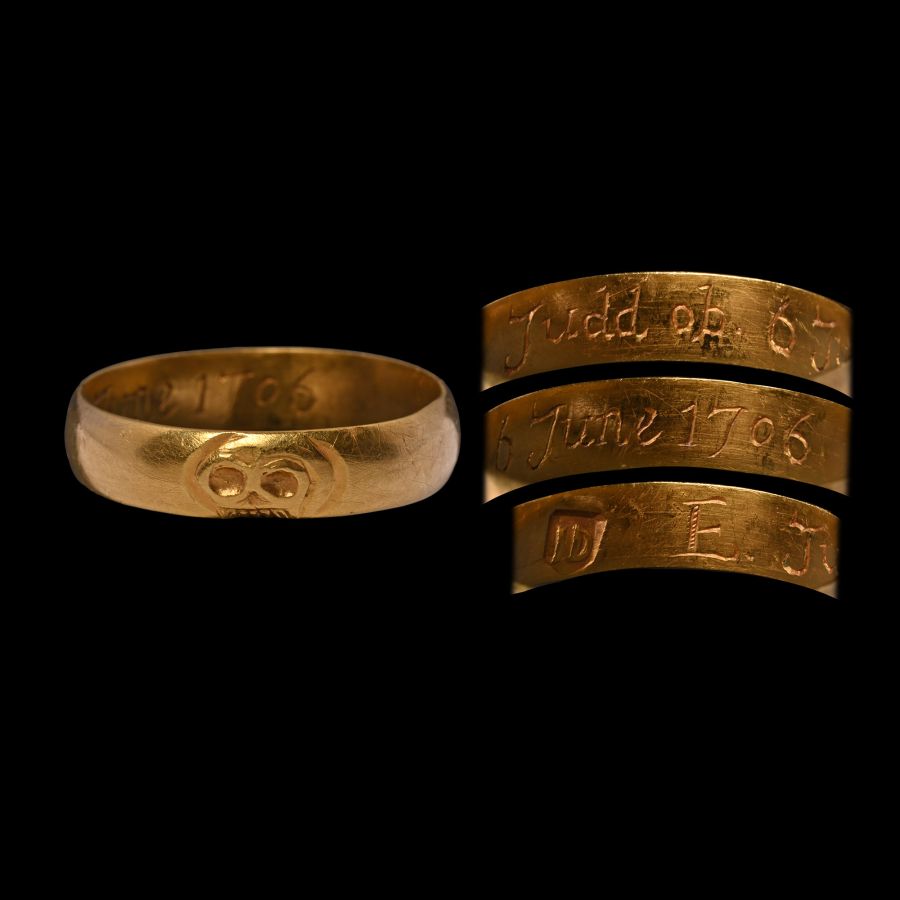
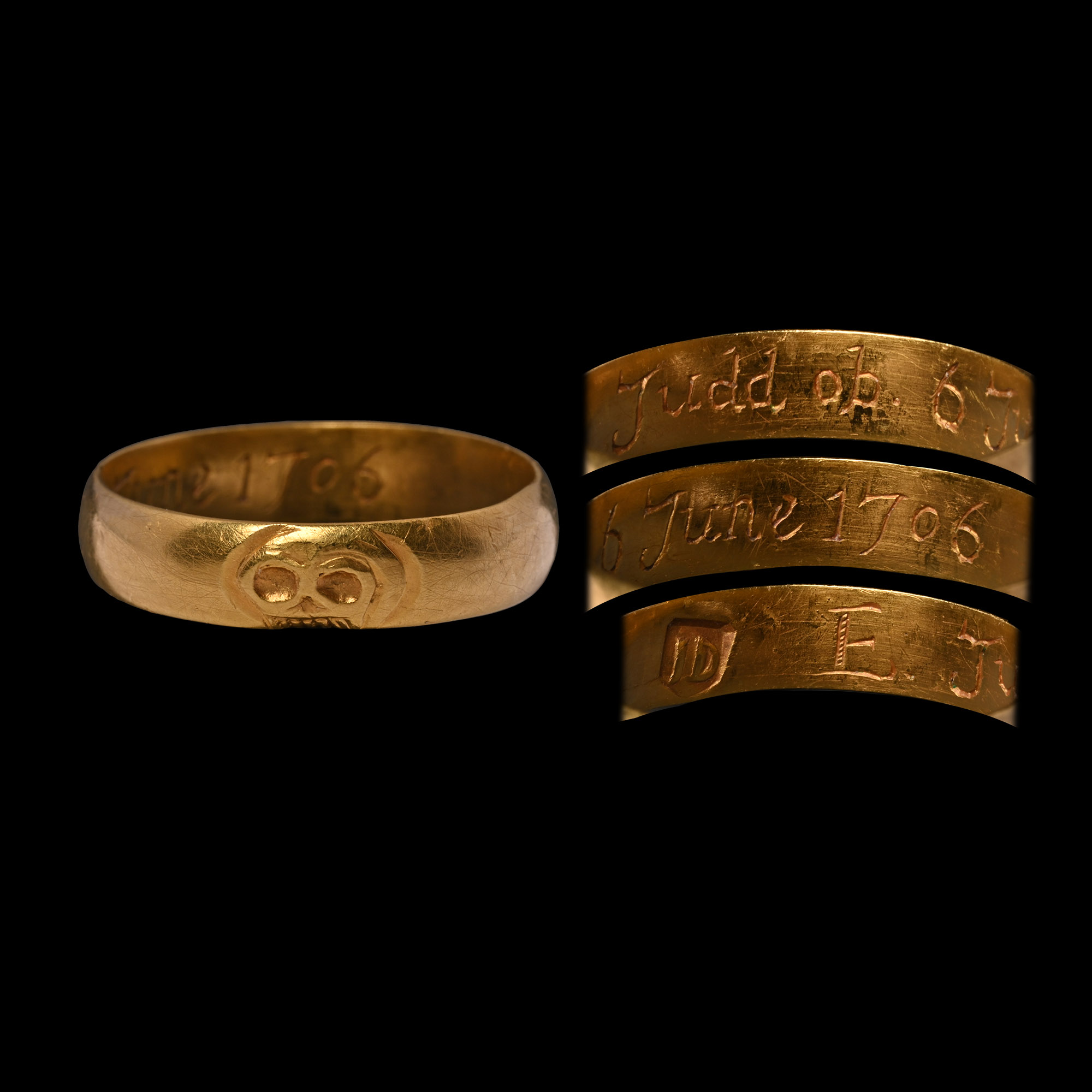
Queen Anne Engraved Gold Memento Mori Skull Ring
DATED 1706 A.D.
3/4 in. (4.30 grams, 20.77 mm overall, 18.03 mm internal diameter (approximate size British P 1/2, USA 7 3/4, Europe 16.86, Japan 16)).
With stylised skull to the outer face, engraved to the inner face 'E. Judd ob. 6 June 1706 and maker's mark 'ID' for Josiah Daniel, London goldsmith of the early 18th century.
ProvenanceAcquired on the UK art market.
Property of an East Sussex collector.
This lot is accompanied by an illustrated lot declaration signed by the Head of the Antiquities Department, Dr Raffaele D’Amato.
TimeLine Auctions follows a vetting process to ensure the authenticity and legality of all items, reinforcing our commitment to integrity and responsible trading. Each antiquity, antique, and coin lot undergoes thorough examination by a vetting committee of at least ten external specialists, professional trade association members, scientists, and archaeologists: Our Vetting Process
AUCTIONS:
TimeLine is a leading auction house specialising in antiquities, ancient art, collectables, natural history, coins, medals, and books. Our auctions offer museums, collectors, historians, and enthusiasts the opportunity to acquire unique and historically significant pieces.
-
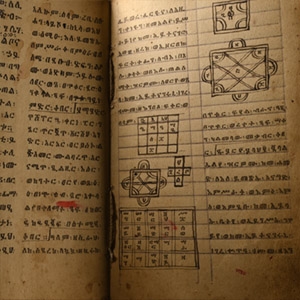
Ethiopian Vellum Manuscript of Talismanic Texts
19th-20th century A.D.Sold for (Inc. bp): £910
Comprising forty bound leaves written in Amharic, featuring 'spectacle scripts', small drawings of the Christ's passion, Salomon's seal, Moses' snakes and Patriarchal staff, and other drawings of a double-headed serpent; preserved in the original pouch with bindings. 168 grams, 16.3 x 10.5 cm
From a Brighton bookseller, circa 2000. This lot is accompanied by an illustrated lot declaration signed by the Head of the Antiquities Department, Dr Raffaele D’Amato.
This particular object is sometimes referred to as a talisman or amulet, and also known as a ketãb (document) or metshaf (book). It was used in Ethiopia by priests and common people, not only intended for reading but also for providing protection. It was worn with a rope around the neck or shoulders of the owner. -
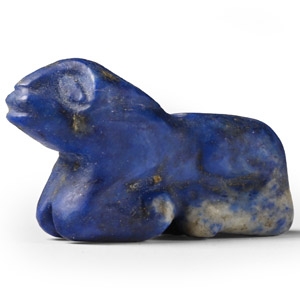
Bactrian Style Sodalite Sheep Amulet
20th century A.D.Sold for (Inc. bp): £39
Modelled in the round laying down with the legs tucked beneath the body, and long ears resting along the neck; pierced vertically through the back. 11.4 grams, 34 mm
Ex London, UK, collection, 1990s. -
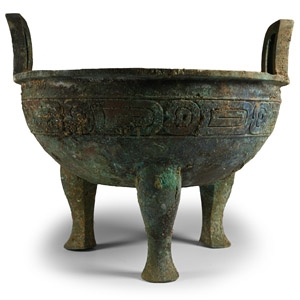
Chinese Archaic Style Bronze Vessel
20th century A.D.Sold for (Inc. bp): £286
With dish-shaped profile to the body, three radiating stub legs, scooped square handles to the everted rim; low-relief cloud pattern ornament; after the antique. 3.15 kg, 30.5 cm wide
From a London, UK, collection. This lot is accompanied by an illustrated lot declaration signed by the Head of the Antiquities Department, Dr Raffaele D’Amato.
