
Loading, please wait...
LOT 2080
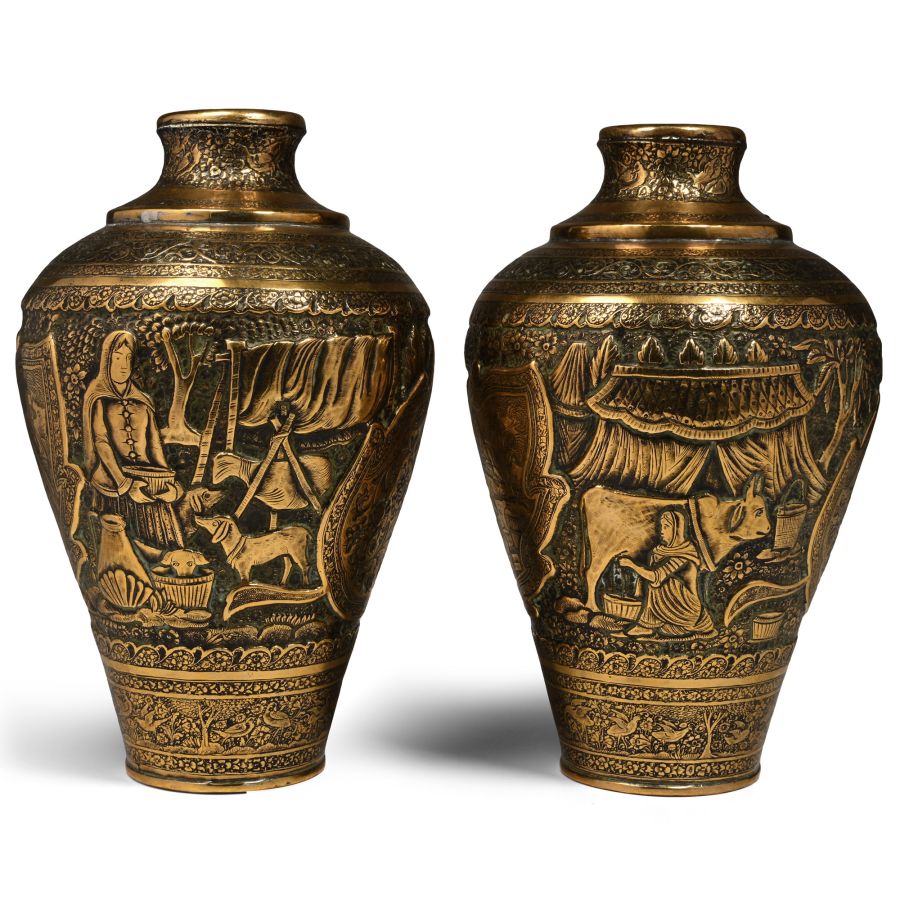
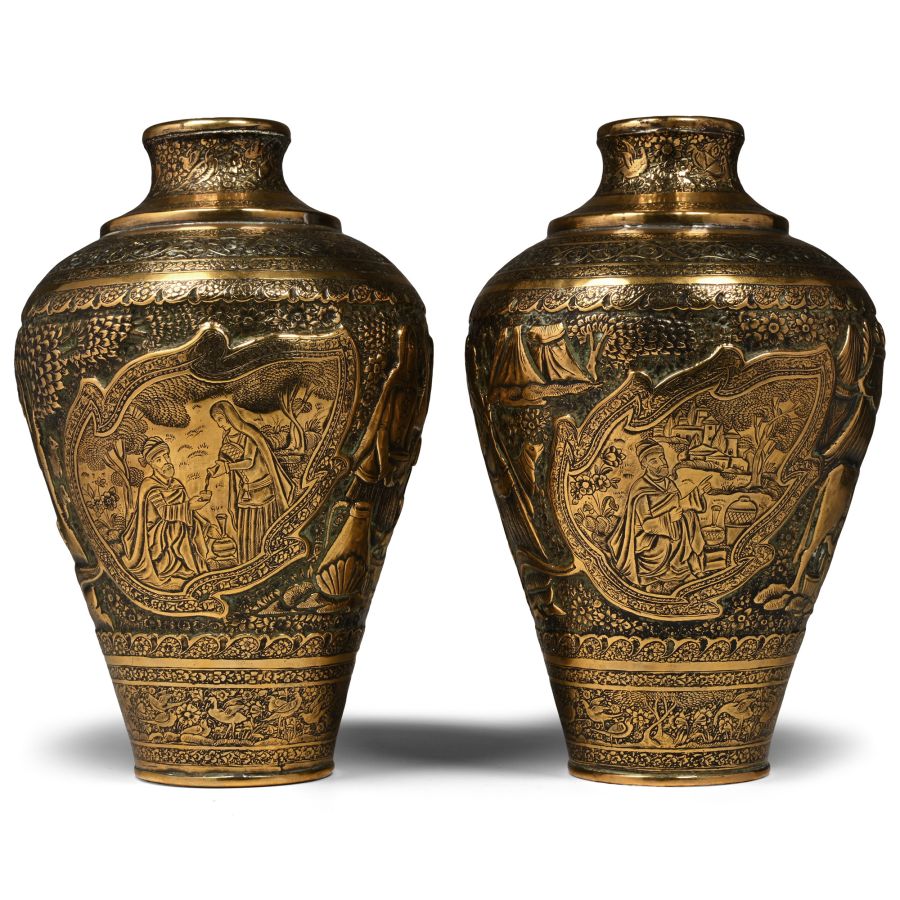
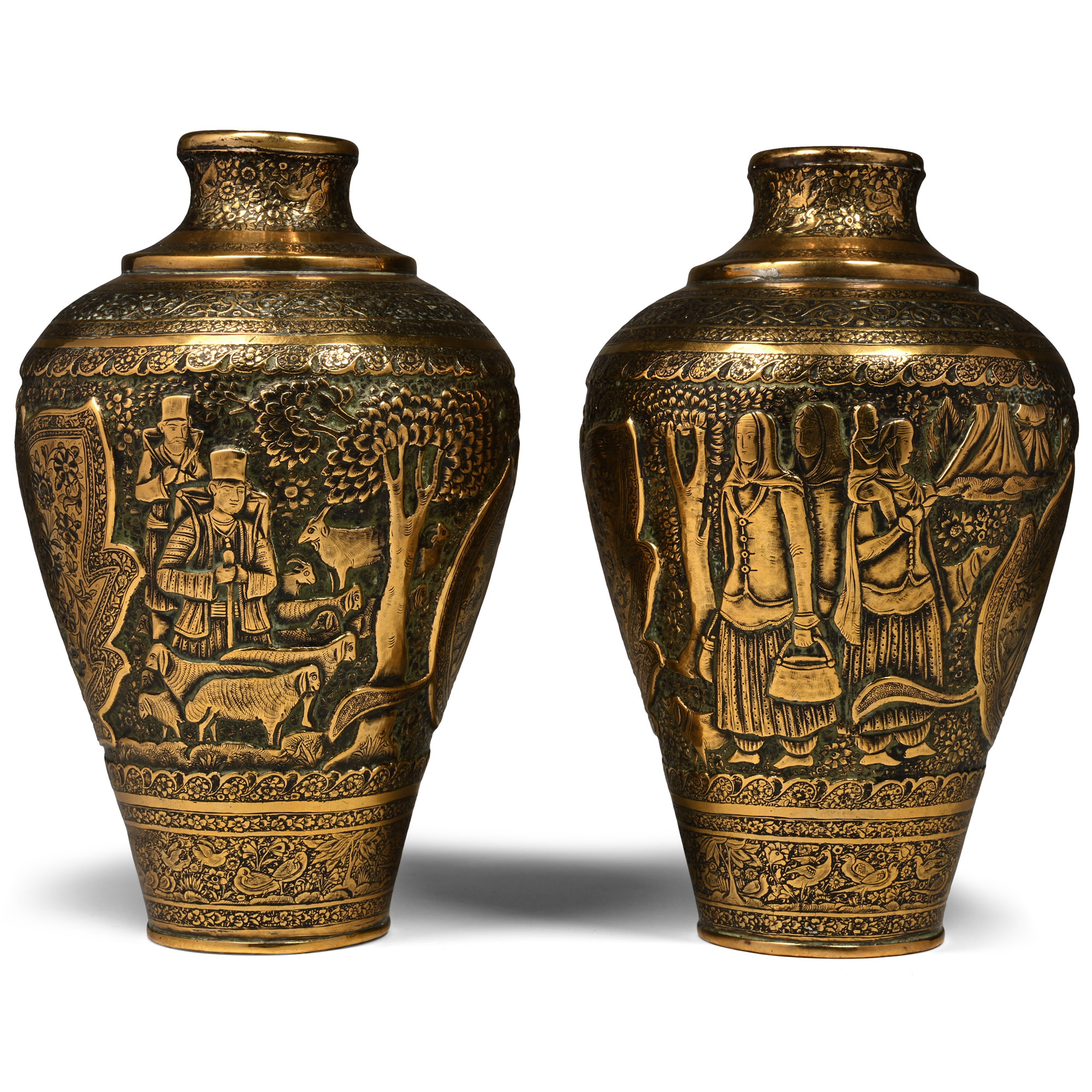
Qajar Hammered Brass Vessel Pair
ISFAHAN, LATE 19TH-EARLY 20TH CENTURY A.D.
7 1/2 in. (707 grams total, 19 cm each).
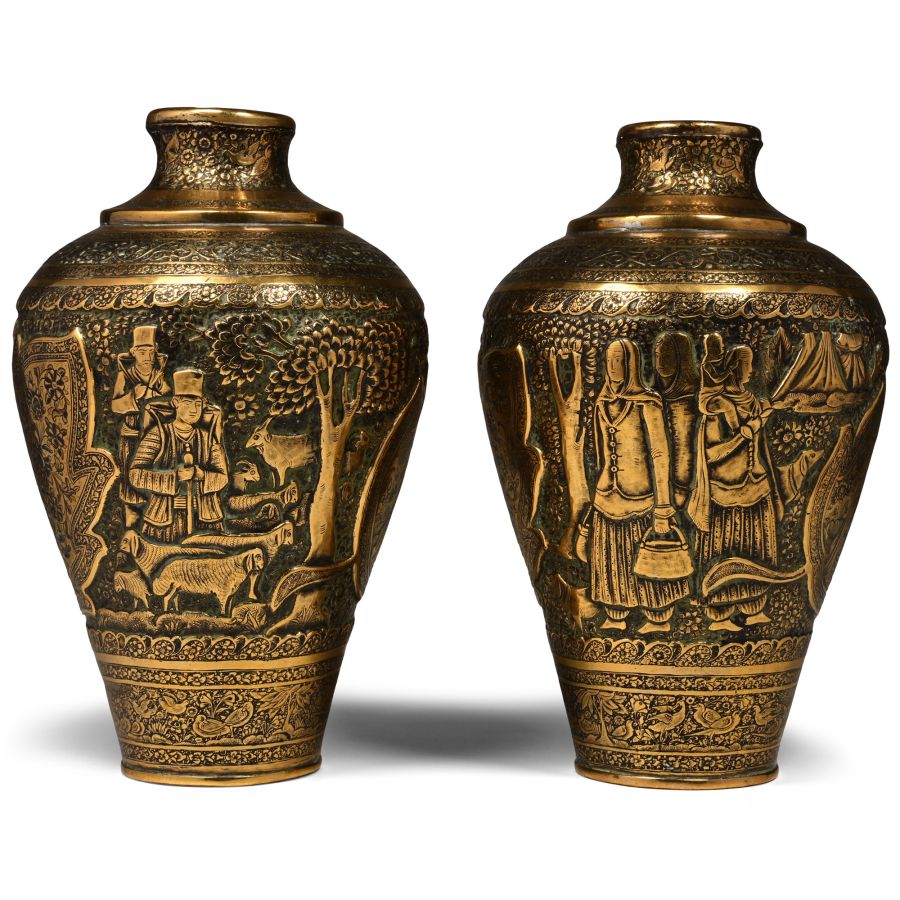
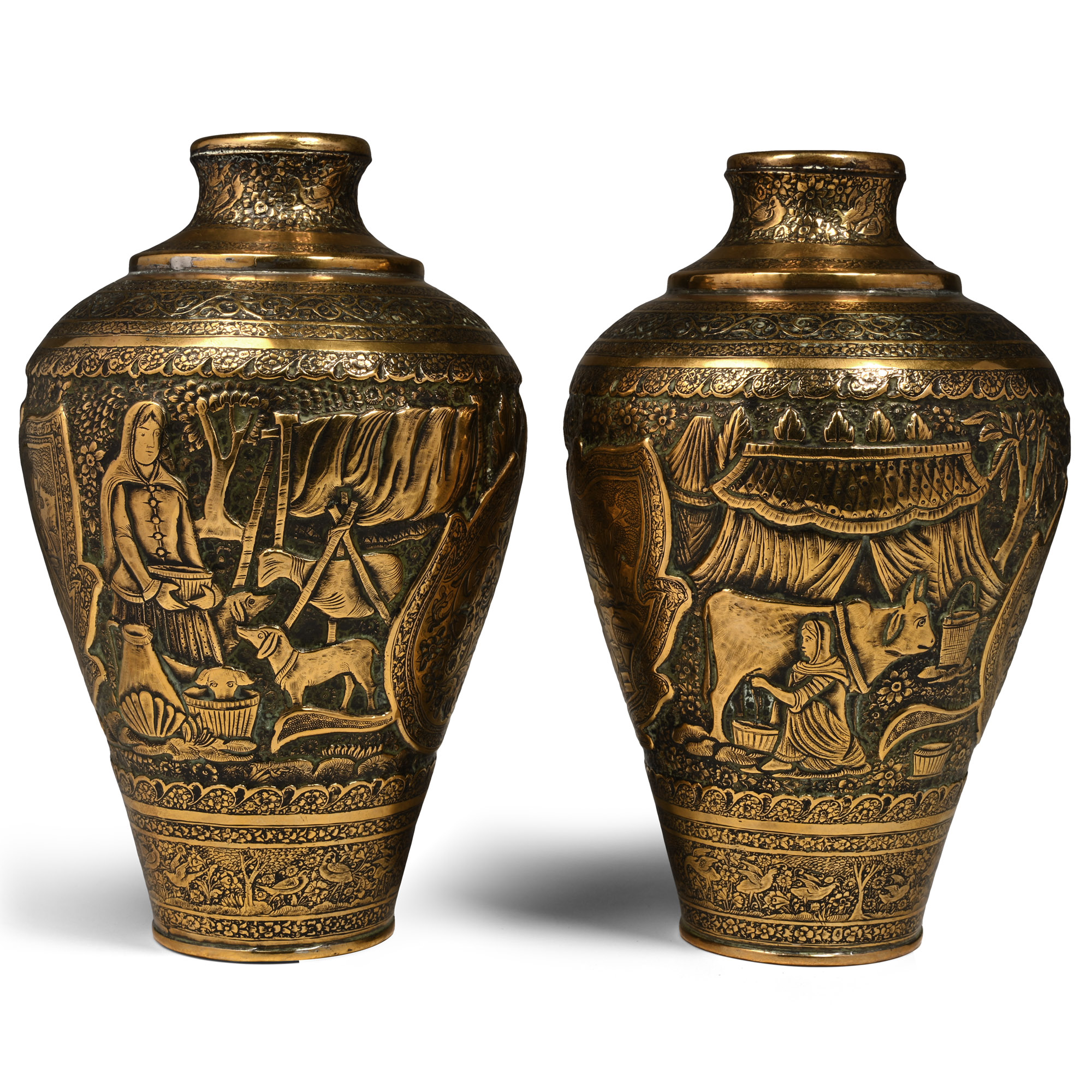
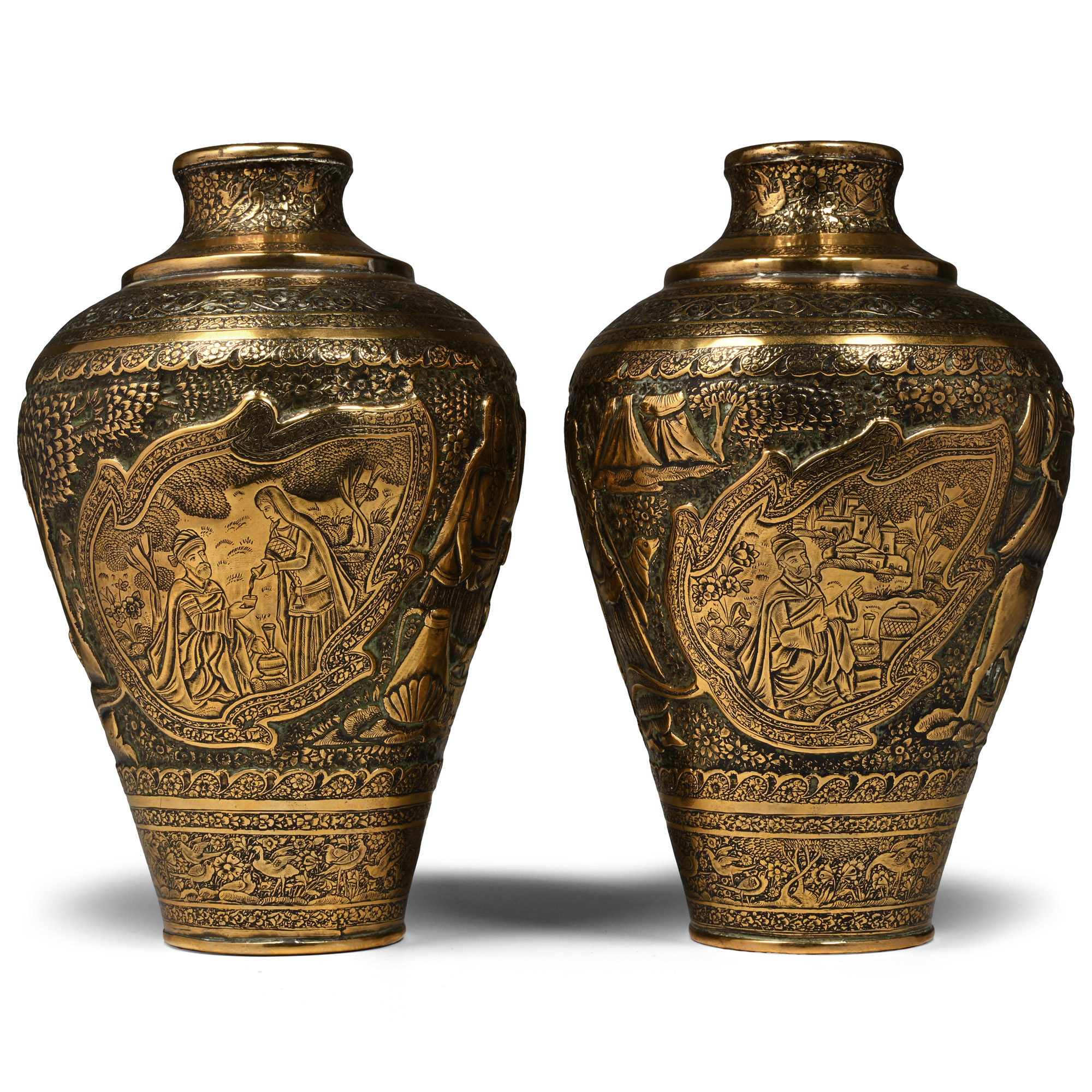
Each a piriform vase with narrow foot, deep rounded shoulder, carinated neck and rounded mouth; bands of horizontal scrolled tendril and rosette ornament; figural scene to each sidewall: A, shepherds and flock in a landscape and a woman setting out vessels from which the animals drink, with inset foliate panel depicting a courtly lady filling the cup of a crouching nobleman; B, women and children in a woodland scene carrying milk in pails and milking a cow, inset foliate panel with a traveller seated outside a settlement.
Provenancewith a London, UK gallery 1971-early 2000s.
This lot is accompanied by an illustrated lot declaration signed by the Head of the Antiquities Department, Dr Raffaele D’Amato.
TimeLine Auctions follows a vetting process to ensure the authenticity and legality of all items, reinforcing our commitment to integrity and responsible trading. Each antiquity, antique, and coin lot undergoes thorough examination by a vetting committee of at least ten external specialists, professional trade association members, scientists, and archaeologists: Our Vetting Process
AUCTIONS:
TimeLine is a leading auction house specialising in antiquities, ancient art, collectables, natural history, coins, medals, and books. Our auctions offer museums, collectors, historians, and enthusiasts the opportunity to acquire unique and historically significant pieces.
LOT 2080
Qajar Hammered Brass Vessel Pair
Estimate £400 - 600€460 - 700 (for guidance only)$540 - 810 (for guidance only)
-
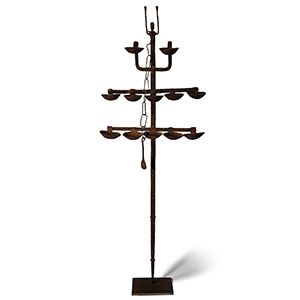
Dogon Iron Multiple Oil Lamp Stand
Circa 19th century A.D.Estimate: £600 - 800 (+bp*)
Opening Bid: £300
Iron flat-section shaft with three tiered cross-bars, the two lowest each with five iron lamp-bowls to the forward face; above, a U-shaped bar with a lamp bowl at each upper end; top of the shaft developing to an anthropomorphic torso with ellipsoid head and two narrow arms raised vertically; chain around the neck with hand-forged extinguishing spoon; mounted on a square base; Dogon, Mali, workmanship. 6.25 kg total, 132 cm including stand
From the private collection of Dr Hans-Joachim Koloss, Berlin, Germany, 1975-2002. Gorny & Mosch, Munich, Germany, auction 279, no.410. Accompanied by a copy of the Gorny & Mosch invoice and illustrated catalogue listing. Accompanied by a copy of the German cultural export licence. This lot is accompanied by an illustrated lot declaration signed by the Head of the Antiquities Department, Dr Raffaele D’Amato.
The figure is probably a Nommo a primordial ancestral spirit in Dogon cosmogony. A Nommo is usually considered to be amphibious, hermaphroditic and fish-like depicted in Dogon art with a humanoid upper torso, and a fish-like lower torso and tail. -
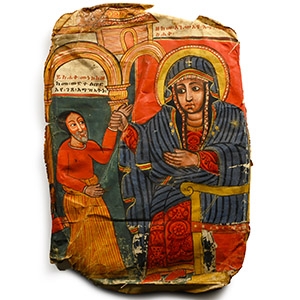
Ethiopian Painted Parchment of The Virgin's Miracle: Healing of the Paralysed Priest
Circa 1650 A.D.Sold for (Inc. bp): £845
Rectangular leaf with hand-coloured composite scene: right, Mary in blue mantle and rich embroidered red garment holding the fallen priest by the hand and raising him; behind him a prone male figure in colourful robes (the priest represented for the second time); ecclesiastic architecture on the background; a manuscript folio with text in Ge'ez to the reverse. 27 grams, 31.5 x 22 cm
Private collection, New York, circa 2016. This lot is accompanied by an illustrated lot declaration signed by the Head of the Antiquities Department, Dr Raffaele D’Amato.
The image refers to the 'Miracle of the healing of the Priest' in which a priest, who had grown old in the service of the Virgin Mary, fell over in the church when bowing before her, and broke his back. The Virgin appeared and healed his broken bones. -
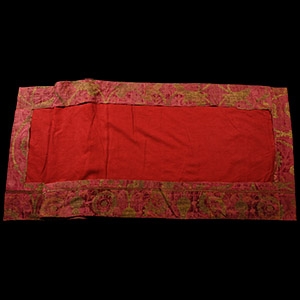
Post Medieval Altar Tapestry Frontal
16th century A.D.Sold for (Inc. bp): £208
Rectangular velvet tapestry panel with crimson field and gold-yellow detailing, made up from individual strips and with a central void; more recent fabric backing; the design an arcade with rosettes and tendrils. 2.6 kg, 90 x 243 cm
Ex central London gallery. This lot is accompanied by an illustrated lot declaration signed by the Head of the Antiquities Department, Dr Raffaele D’Amato.
