
Loading, please wait...
![Pyrite Crystal Chunk Group [100]](https://timelineauctions.com/zoom_images/zoomthumb/2/2/227948_900x900.jpg "Pyrite Crystal Chunk Group [100]")
![Pyrite Crystal Chunk Group [100]](https://timelineauctions.com/zoom_images/zoommap/2/2/227948_200x200.jpg "Pyrite Crystal Chunk Group [100]")
![Pyrite Crystal Chunk Group [100]](https://timelineauctions.com/upload/images/items/227948.jpg "Pyrite Crystal Chunk Group [100]")
LOT 2864
Pyrite Crystal Chunk Group [100]
5/8 - 1 1/4 in. (1.41 kg total, 18-32 mm).
Comprising one hundred variously sized chunks. [100, No Reserve]
ProvenanceFrom Peru.
Ex Mineral Imports, London, UK.
Gregory, Bottley & Lloyd (Gregory's), Harwich, UK.
TimeLine Auctions follows a vetting process to ensure the authenticity and legality of all items, reinforcing our commitment to integrity and responsible trading. Each antiquity, antique, and coin lot undergoes thorough examination by a vetting committee of at least ten external specialists, professional trade association members, scientists, and archaeologists: Our Vetting Process
AUCTIONS:
TimeLine is a leading auction house specialising in antiquities, ancient art, collectables, natural history, coins, medals, and books. Our auctions offer museums, collectors, historians, and enthusiasts the opportunity to acquire unique and historically significant pieces.
-
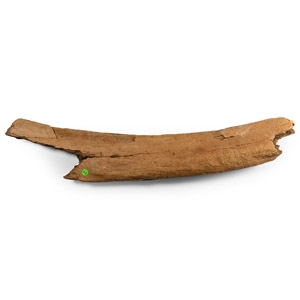
Fossil Woolly Mammoth Rib Bone Section
Devensian Period, 110,000-12,000 years B.P.Sold for (Inc. bp): £221
From Mammuthus Primigenius showing curvature and the inside structure. 502 grams, 37.5 cm
From Latton Gravels, Wiltshire, UK. Acquired from Milton Keynes Geological Society in 1999. From the private collection of Kenneth Machin (1936-2020), Buckinghamshire, UK; with collection no.VM99; his collection of antiquities and natural history was formed since 1948; thence by descent. -
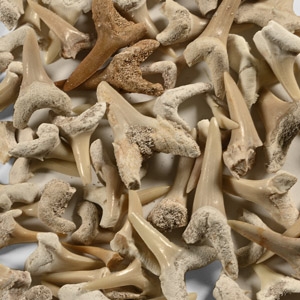
Fossil Sand Shark Teeth
Eocene Period, circa 56-33 million years B.P.Sold for (Inc. bp): £195
Comprising a large number of Otodus obliquus teeth. 50 grams total, 15-28 mm
From a Cambridgeshire, UK, collection. -
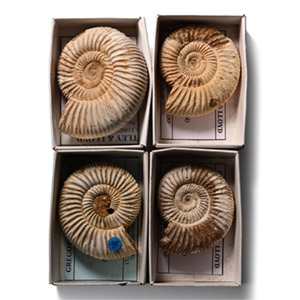
Boxed and Labelled Fossil Ammonite Collection
Middle Jurassic Period, circa 170 million years B.P.Sold for (Inc. bp): £85
Comprising four Perisphinctes sp. specimens in labelled specimen boxes. 320 grams total, 56-66 mm
From Madagascar. Ex Gregory, Bottley & Lloyd (Gregory's), Harwich, UK.
