
Loading, please wait...
LOT 1317
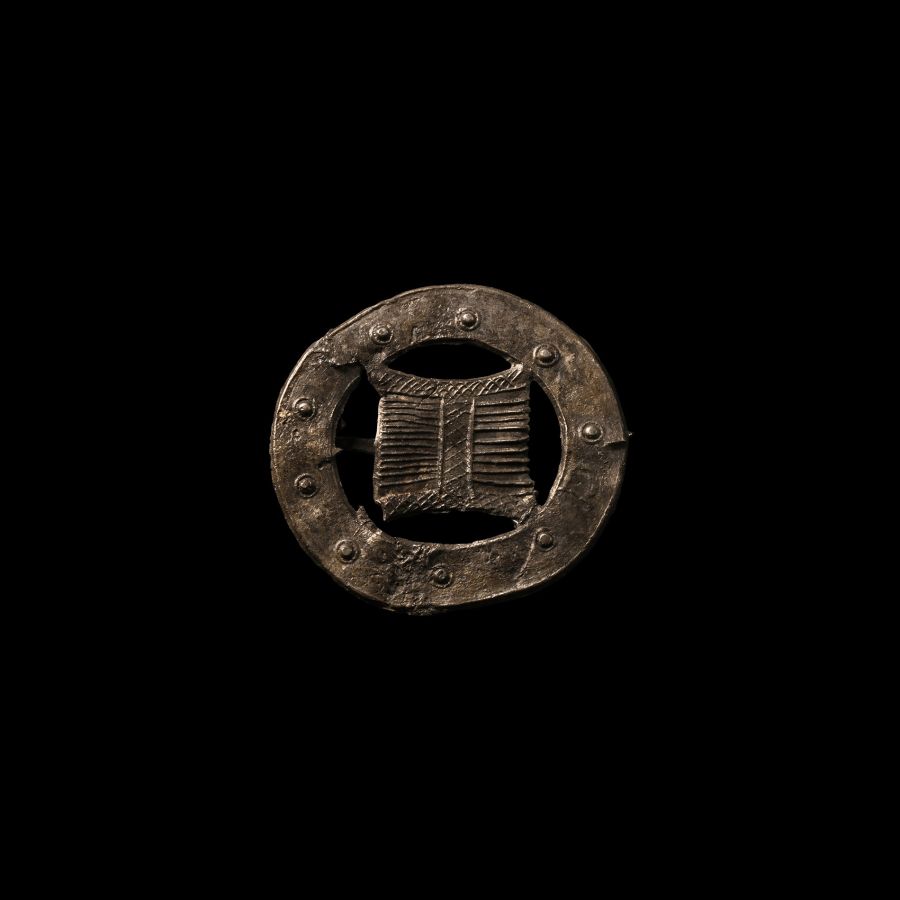
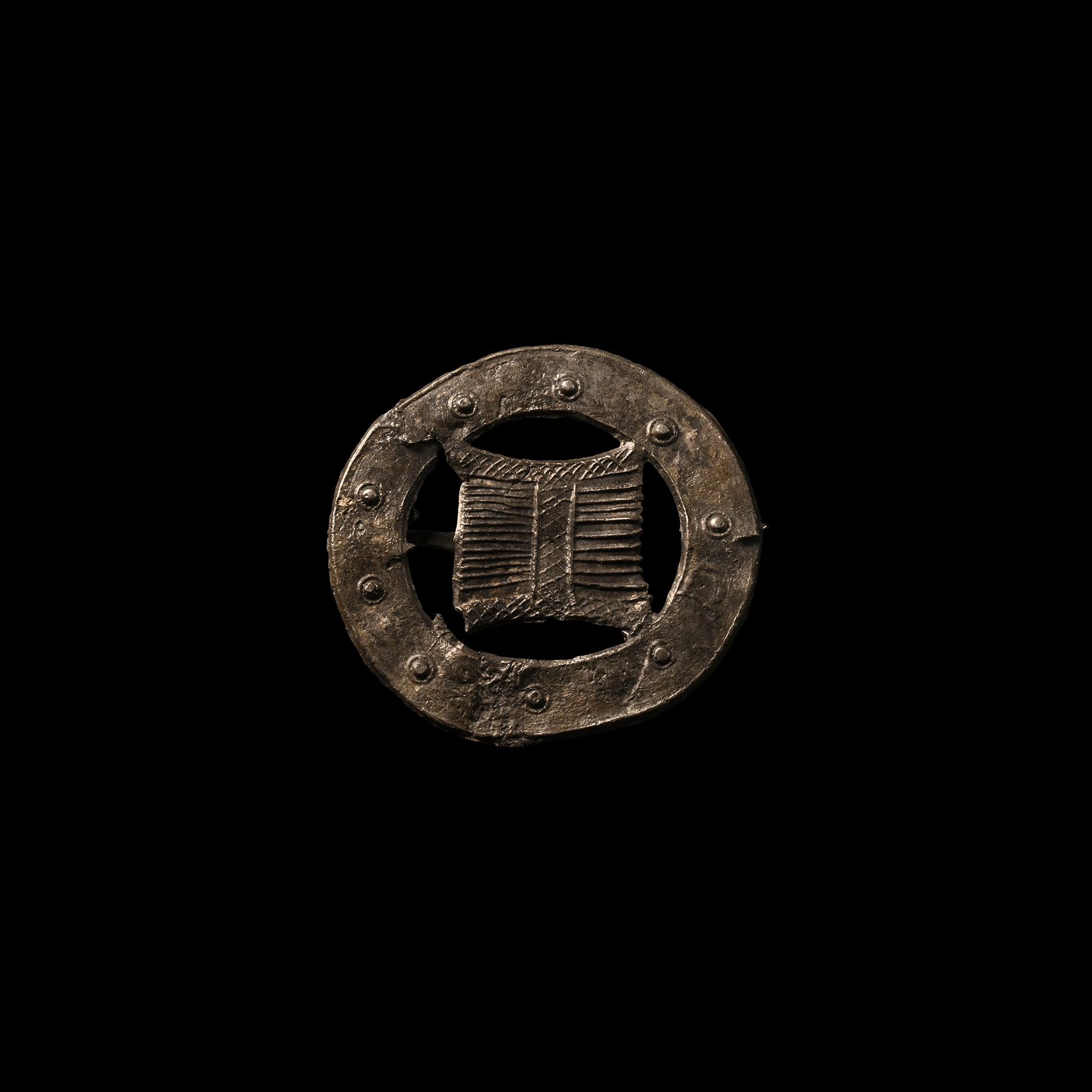
Published Medieval 'Thames' Saint Blaise of Canterbury Pilgrim's Badge
CIRCA 14TH-15TH CENTURY A.D.
1 1/8 in. (2.92 grams, 30 mm).
An openwork lead pilgrim's badge displaying the wool-combe emblem of St Blaise of Canterbury within a pelletted roundel; complete with pin. [No Reserve]
ProvenanceFound on the Thames foreshore, London, UK.
Acquired on the UK antiques market between 1974-1985.
Albert Ward collection, Essex, UK.
Spencer, B., Pilgrim Souvenirs and Secular Badges, Medieval Finds from Excavations in London, London, 2010, p.176, item 198e.
FootnotesSt Blaise is believed to have been a bishop located somewhere in Asia Minor who was martyred in the early 4th century by beheading, following a period of torture with iron combs which later became his emblem. Canterbury, where his shrine stood behind the high altar and near to that of Saint Thomas Becket, claimed to have relics directly associated with Blaise, and miracles attributed to the saint continued to attract pilgrims into the 15th century.
CONDITIONTimeLine Auctions follows a vetting process to ensure the authenticity and legality of all items, reinforcing our commitment to integrity and responsible trading. Each antiquity, antique, and coin lot undergoes thorough examination by a vetting committee of at least ten external specialists, professional trade association members, scientists, and archaeologists: Our Vetting Process
AUCTIONS:
TimeLine is a leading auction house specialising in antiquities, ancient art, collectables, natural history, coins, medals, and books. Our auctions offer museums, collectors, historians, and enthusiasts the opportunity to acquire unique and historically significant pieces.
LOT 1317
Published Medieval 'Thames' Saint Blaise of Canterbury Pilgrim's Badge
Sold for (Inc. bp): £546
-
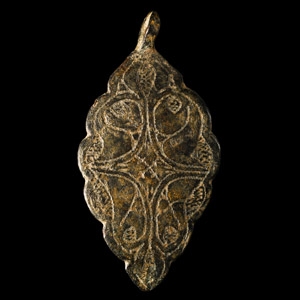
Large Medieval Gilt Heraldic Horse Harness Pendant
14th-15th century A.D.Sold for (Inc. bp): £104
A scalloped lozengiform horse harness pendant with integral suspension loop, central organic cross, the arms expanding into foliate forms; traces of gilding. 15.29 grams, 68 mm
Acquired early 2000s. Property of a Suffolk, UK, gentleman. Property of an Essex, UK, gentleman. -
.jpg)
Medieval 'Thames' Wine Tavern Token
Circa 14th-15th century A.D.Sold for (Inc. bp): £111
A lead-alloy bifacial token with on one face a hatched sexfoil rosette within a pelletted border, and the other two opposed birds supporting a processional cross. 0.84 grams, 16 mm
Found on the Thames foreshore, London, UK. Acquired on the UK antiques market between 1974-1985. Albert Ward collection, Essex, UK.
Tokens of this type were used in taverns and similar establishments. -
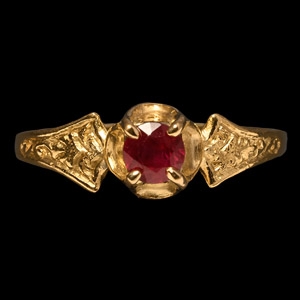
'The Purbeck' Medieval Gold Ring with Ruby
15th-16th century A.D.Sold for (Inc. bp): £1,105
A gold finger ring comprising a slender hoop developing to claw-shaped shoulders with reserved acanthus motif on a pounced field; tall pie-dish bezel with recessed sides, claw setting for the gemstone; repaired and polished, absent original stone replaced with a facetted ruby. 2.41 grams, 24.20 mm overall, 17.40 mm internal diameter (approximate size British N 1/2, USA 6 3/4, Europe 14.35, Japan 13)
Found whilst searching with a metal detector in Purbeck, Dorset, UK, in 2019. Declared as Treasure and disclaimed with treasure reference 2020 T34. Property of a Sussex, UK, teacher. Accompanied by a copy of the British Museum's Portable Antiquities Scheme report no.DOR-C7C656. Accompanied by a copy of a letter from the British Museum disclaiming the Crown's interest in the ring.
