
Loading, please wait...

LOT 0376
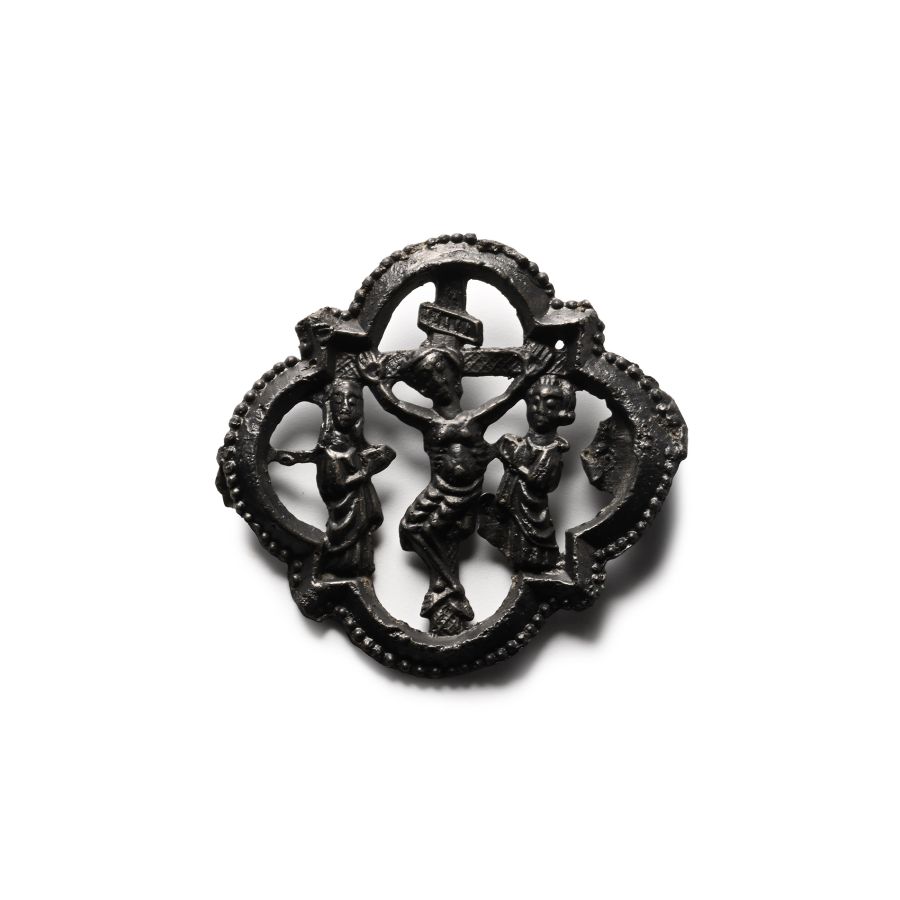
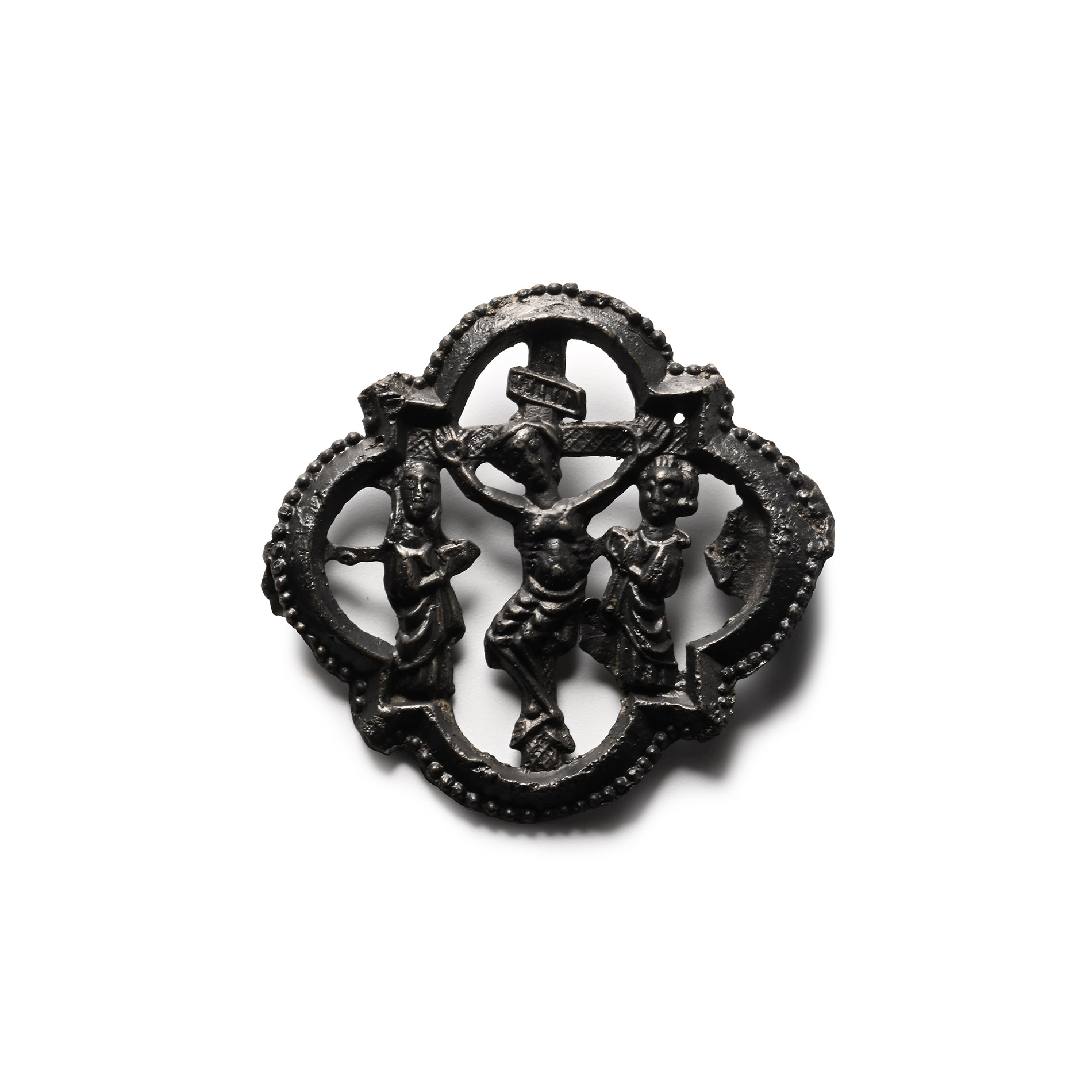
Published Medieval 'Thames' Pewter Rood Group Pilgrim's Badge with Crucifixion Scene
CIRCA 14TH-15TH CENTURY A.D.
1 1/2 in. (6.46 grams, 39 mm).
Openwork badge comprising a quatrefoil frame with interstitial barbs, beaded rim; central crucifixion scene; remains of pin-lug to the reverse. [No Reserve]
ProvenanceFound Billingsgate spoil from the Thames foreshore, London, UK, circa 1984.
Property of an Essex collector.
Spencer, B., Pilgrim Souvenirs and Secular Badges, Woodbridge, 2010, item 189a, p.169-170.
FootnotesA group of figures of this type is called the 'rood group' and was traditionally displayed, before the Reformation, in church on the 'rood screen', from Old English rod 'sign, emblem, display' referring to the visual depiction of the Crucifixion.
CONDITIONTimeLine Auctions follows a vetting process to ensure the authenticity and legality of all items, reinforcing our commitment to integrity and responsible trading. Each antiquity, antique, and coin lot undergoes thorough examination by a vetting committee of at least ten external specialists, professional trade association members, scientists, and archaeologists: Our Vetting Process
AUCTIONS:
TimeLine is a leading auction house specialising in antiquities, ancient art, collectables, natural history, coins, medals, and books. Our auctions offer museums, collectors, historians, and enthusiasts the opportunity to acquire unique and historically significant pieces.
LOT 0376
Published Medieval 'Thames' Pewter Rood Group Pilgrim's Badge with Crucifixion Scene
Sold for (Inc. bp): £442
-
Medieval and Later Bronze Ring Group
Circa 14th-18th century A.D.Sold for (Inc. bp): £182
Including discoid, scaphoid and trumpet-shaped bezels with various designs. 32 grams total, 18-24 mm
Ex North London, UK, gentleman, 1990s-2000s.. -
Medieval Printed Bible Page
Printed 1492 A.D.Sold for (Inc. bp): £234
Page of a rag-paper bible with text printed in two columns with marginal notes to both sides; portion of Luke, Chapters 3 and 4; rubrics applied by hand in red ink; printed in Strasbourg by Johann Grüninger with commentary by Nicholas de Lyra. 17 grams, 33 cm
Ex M.Cummings, UK, 1990s.
Johannes Grüninger (1455-1533) was a prolific German printer active from 1482 to 1533 who printed up to 80 books a year in Latin and in German, as well as wall-maps. His bible was issued in two volumes, which allowed it be produced on smaller pages than for most standard editions. -
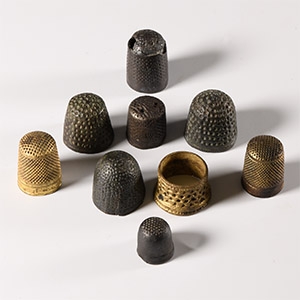
Medieval 'Thames' and Other Bronze Thimble Collection
Circa 15th-19th century A.D.Sold for (Inc. bp): £59
Mixed group including beehive and tailor's ring types. 42.9 grams total, 16-22 mm
Found Billingsgate spoil from the Thames foreshore, London, UK, and Essex, circa 1980s. Property of an Essex collector.
