
Loading, please wait...
LOT 0370
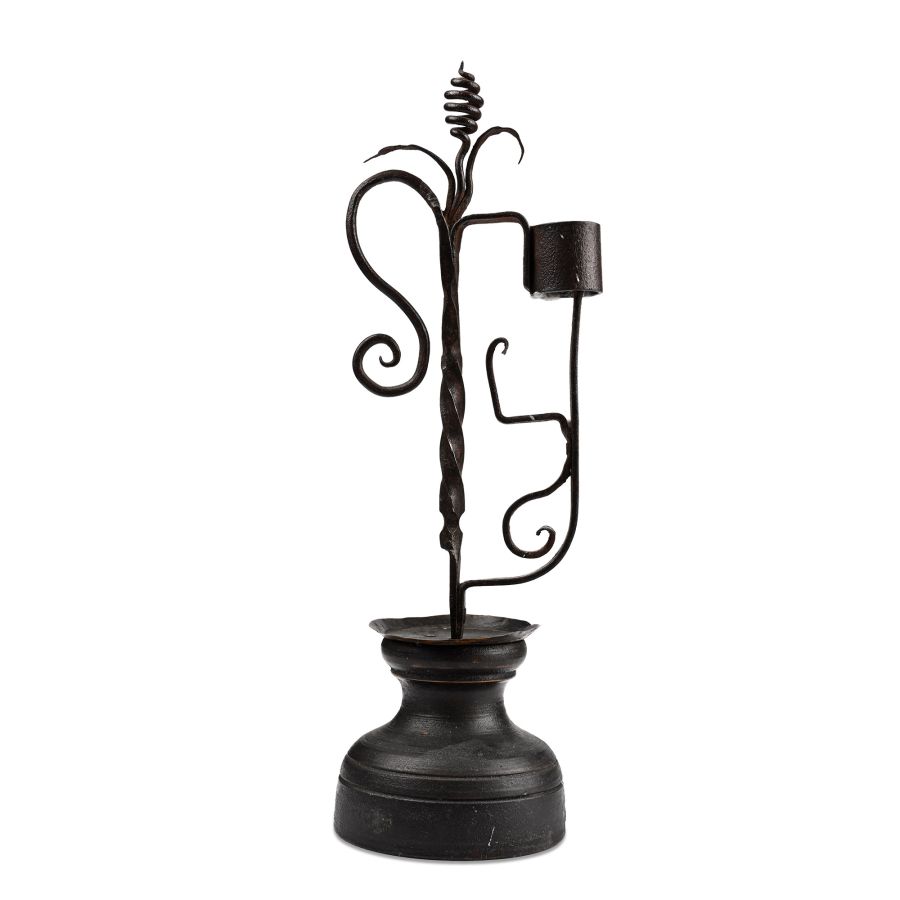
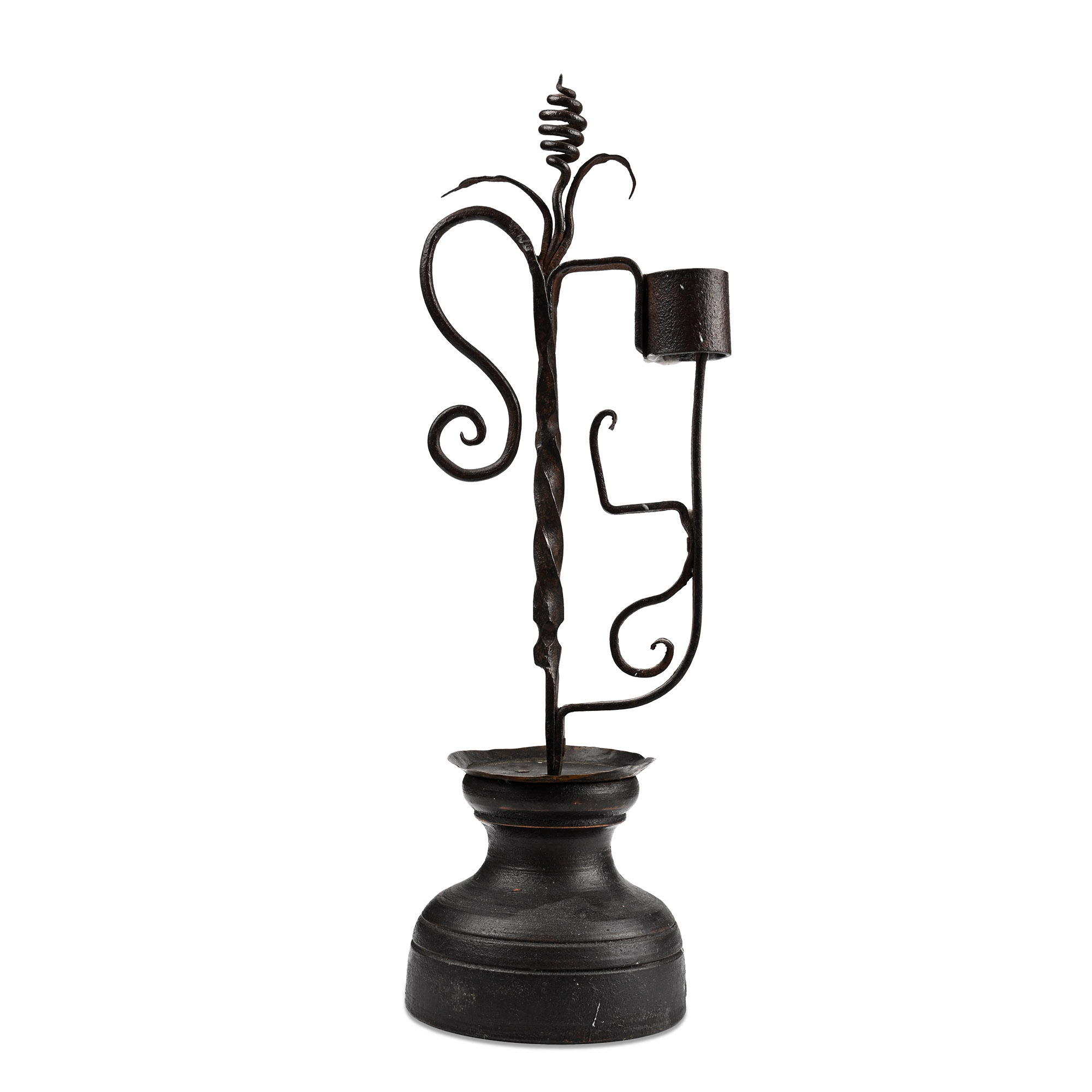
Published Iron Alpine Candle Holder
FRANCE OR SWITZERLAND, 19TH CENTURY A.D.
14 1/2 in. (687 grams, 36.5 cm).
With spring arm to secure the candle, with raised tray feature.
ProvenanceFrom a private collection.
Ex Nic McElhatton, former chairman of Christie's South Kensington.
Property of a Berkshire, UK, collector.
Accompanied by copies of the relevant book pages where published.
This lot is accompanied by an illustrated lot declaration signed by the Head of the Antiquities Department, Dr Raffaele D'Amato.
Ashley, Robert, The Rushlight and Related Holders - A Regional View, Ashley Publications, 2001, illustrated on p.302, no.274.
CONDITIONTimeLine Auctions follows a vetting process to ensure the authenticity and legality of all items, reinforcing our commitment to integrity and responsible trading. Each antiquity, antique, and coin lot undergoes thorough examination by a vetting committee of at least ten external specialists, professional trade association members, scientists, and archaeologists: Our Vetting Process
AUCTIONS:
TimeLine is a leading auction house specialising in antiquities, ancient art, collectables, natural history, coins, medals, and books. Our auctions offer museums, collectors, historians, and enthusiasts the opportunity to acquire unique and historically significant pieces.
LOT 0370
Published Iron Alpine Candle Holder
Estimate £400 - 600€460 - 700 (for guidance only)$540 - 810 (for guidance only)
-
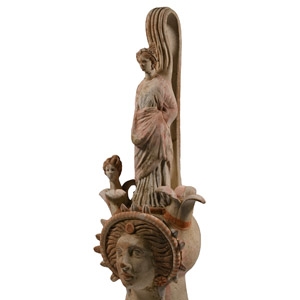
Large Greek Canosan Style Terracotta Figural Vessel
20th century A.D.Sold for (Inc. bp): £20
With a bulbous body and wide foot, the neck formed as a draped female figure with an opening on her back, ribbed strap handle; a flower on each side of the female figure with an emerging head of a lady to the centre (one absent); a large female face to the front of the body with elaborate coiffure and painted necklace. 2.56 kg, 53.5 cm
From the family collection of a Hampstead gentleman; formerly acquired in the 1980s. This lot is accompanied by an illustrated lot declaration signed by the Head of the Antiquities Department, Dr Raffaele D'Amato. -
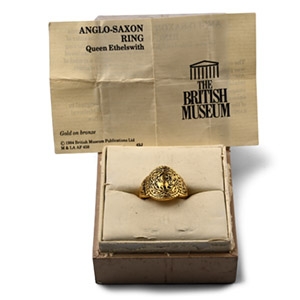
Anglo-Saxon Queen Ethelswith of Mercia Ring Replica
20th century A.D.Sold for (Inc. bp): £494
A gilt bronze finger ring moulded from the original in the British Museum, D-section hoop with expanding shoulders decorated with animal motifs, the central discoid plaque with Agnus Dei within foliate border, the underside inscribed with 'EADELSVID REGNA'. 6.69 grams, 22.21 mm overall, 17.20 mm internal diameter (approximate size British N, USA 6 1/2, Europe 13.72, Japan 13)
Property of a gentleman; acquired in 1984. Accompanied by the original 1984 British Museum information slip. This lot is accompanied by an illustrated lot declaration signed by the Head of the Antiquities Department, Dr Raffaele D'Amato. -
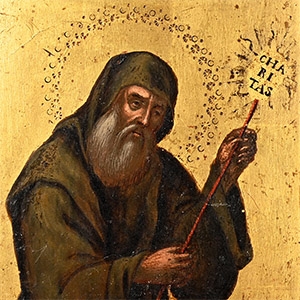
Veneto-Cretan Icon of St Francis of Paola
17th century A.D.Sold for (Inc. bp): £4,160
Tempera on wood panel, on a golden background, erect figure in three-quarter view in dark cowl and habit, holding a staff in both hands; halo ornately punched; the staff with nimbus finial surrounding majuscule legend 'CHA/RI/TAS' ('love, charity'); transverse mounting block to reverse and holes for another. 168 grams, 18.5 x 13 cm
Acquired on the European art market. Private collection, London, UK. This lot is accompanied by an illustrated lot declaration signed by the Head of the Antiquities Department, Dr Raffaele D'Amato.
Francis of Paola (1416-1507) was an Italian monk and the founder of the Order of Minims, a religious order focused on humility, penance, and charity. Born in Paola, Calabria, he was known for his ascetic lifestyle and deep spirituality. Francis was credited with performing miracles, including healing the sick and even crossing the sea on his cloak. He became a spiritual advisor to King Louis XI of France in his final years. Canonized in 1519, Francis of Paola is venerated as the patron saint of sailors and fishermen, symbolising humility and devotion to God.
