
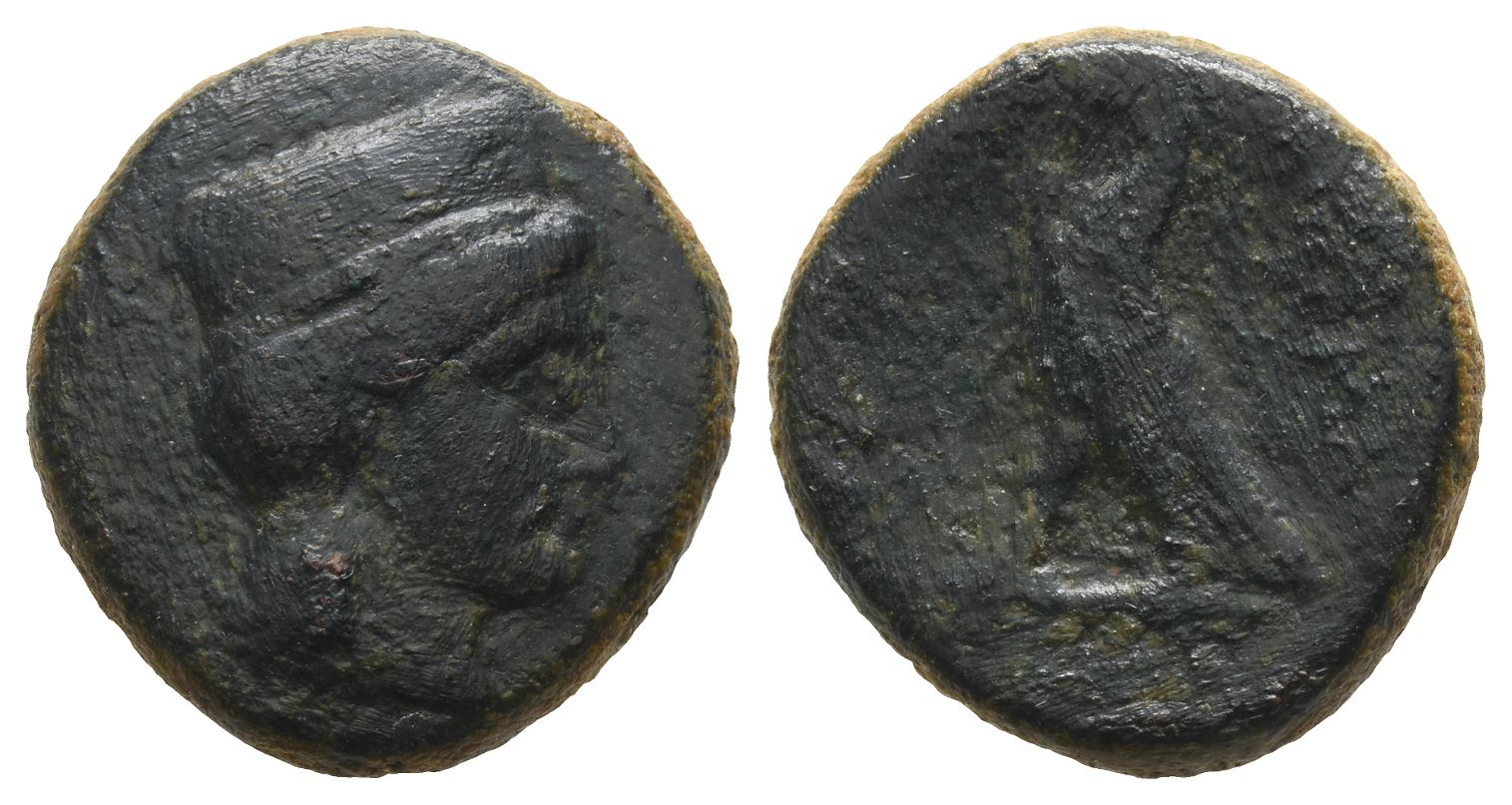
LOT 3316
Ptolemaic Kingdom of Egypt, Ptolemy I Soter AE Obol. Circa 294-282 BC. Palaipaphos mint.
Head of Aphrodite to right, wearing polos ornamented with palmettes / [ΠTO]ΛEMAI[OY], eagle with closed wings standing to left on thunderbolt. CPE B118; Svoronos 74; Cox, Curium 31. Very Fine. Tooled. Very rare.(9.52gr, 21mm, 1h.).
ProvenanceEx Roma Numismatics Ltd., E-Sale 98, 16 June 2022, lot 492.
Property of a Middlesex gentleman.
TimeLine Auctions follows a vetting process to ensure the authenticity and legality of all items, reinforcing our commitment to integrity and responsible trading. Each antiquity, antique, and coin lot undergoes thorough examination by a vetting committee of at least ten external specialists, professional trade association members, scientists, and archaeologists: Our Vetting Process
AUCTIONS:
TimeLine is a leading auction house specialising in antiquities, ancient art, collectables, natural history, coins, medals, and books. Our auctions offer museums, collectors, historians, and enthusiasts the opportunity to acquire unique and historically significant pieces.
-
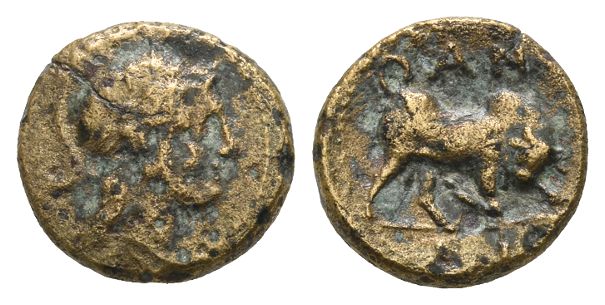
Seleukid Empire, Uncertain Ruler in the name of Antiochos I Soter(?) AE 12mm. 3rd century BC. Uncertain Western mint.
Sold for (Inc. bp): £59
Male head to right, wearing laureate and crested Attic helmet / AN-TI, bull butting to right. Cf. SC 354 (Apollo; perhaps Antioch on the Orontes); Roma Numismatics, e-Sale 112, 529 (hammer: 850 GBP); otherwise unpublished. 1.66gr, 12mm, 1h.
Near Very Fine. Exceedingly Rare; the third known example and of considerable numismatic importance.
Acquired on the European coin market. Property of a Kent, UK, gentleman.
The closest example to our coin is this of SC 354 (=SNG Spaer 216). Although the obverse is described as Apollo, it is nevertheless very worn. Upon closer examination one could see that the two coins share the same type. According to SC 354 note 'The Kritt specimen shows an apparent helmet crest behind Apollo's head, perhaps evidence for overstriking on an earlier variety featuring Athena'. SC's suggestion of Antioch as a possible mint is repeated from SNG Spaer. The reverse is similar to those from Seleukeia ad Tigrim but the fabric is quite different (cf. Brian Kritt, From Aï Khanoum to Samarqand. Seleucid Coins in Central Asia, pl. 8). Our coin is more reminiscent of western mints, but the identification of a specific mint is still impracticable. The most interesting feature, however, is the mysterious face depicted on the obverse, whose parallel example cannot be found in the references. -
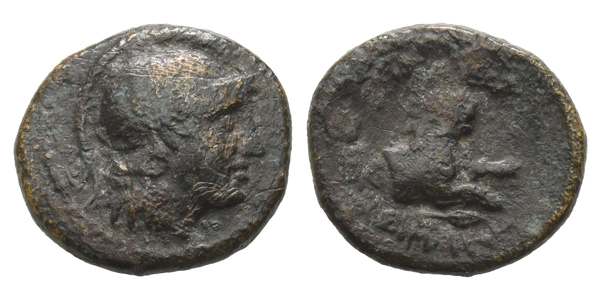
Kings of Thrace, Lysimachos AE 15mm. 305-281 BC. Lysimacheia mint.
Sold for (Inc. bp): £20
Head of Athena to right, wearing crested Attic helmet / Forepart of lion to right; BAΣΙΛΕΩΣ above, ΛYΣIMAXOY below, [kerykeion and monogram?] to left, spearhead below. Cf. SNG Copenhagen 1159; cf. SNG Tübingen 969; HGC 3.2, 1760. 2.70gr, 15mm, 12h.
Near Very Fine.
Acquired on the European coin market. Property of a Kent, UK, gentleman. -
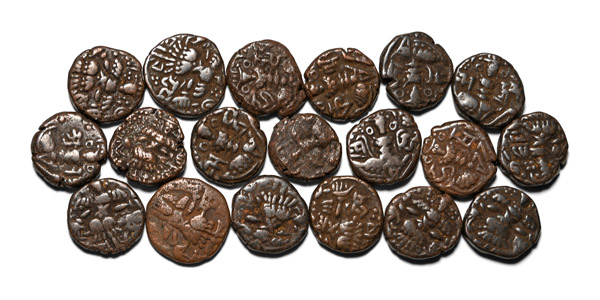
India. Group of Nineteen [19] AE Coins. Circa 10th century AD.
Sold for (Inc. bp): £98
Comprising: mixed rulers, denominations and reverse types. 111.17gr total, 17-20mm.
As shown.
Acquired on the UK art market. From the collection of Mr Carlos Bahamonde, Manchester, UK.
