
Loading, please wait...
_900x900.jpg "Proto-Sumerian Seal with Animals")
_200x200.jpg "Proto-Sumerian Seal with Animals")
.jpg "Proto-Sumerian Seal with Animals")
LOT 0233
Proto-Sumerian Seal with Animals
CIRCA 3000 B.C.
1 5/8 in. (37.4 grams, 40 mm).
Plano-convex stamp seal with design of two crouching quadrupeds placed tête-bêche; supplied with a museum-quality impression.
ProvenanceAcquired in Europe in 2002.
European private collection.
This lot has been cleared against the Art Loss Register database, and is accompanied by an illustrated lot declaration signed by the Head of the Antiquities Department, Dr Raffaele D'Amato.
The motifs have been created using a drill, hence the rounded appearance.
CONDITIONTimeLine Auctions follows a vetting process to ensure the authenticity and legality of all items, reinforcing our commitment to integrity and responsible trading. Each antiquity, antique, and coin lot undergoes thorough examination by a vetting committee of at least ten external specialists, professional trade association members, scientists, and archaeologists: Our Vetting Process
AUCTIONS:
TimeLine is a leading auction house specialising in antiquities, ancient art, collectables, natural history, coins, medals, and books. Our auctions offer museums, collectors, historians, and enthusiasts the opportunity to acquire unique and historically significant pieces.
LOT 0233
Proto-Sumerian Seal with Animals
Estimate £800 - 1,000€930 - 1,160 (for guidance only)$1,080 - 1,350 (for guidance only)
-
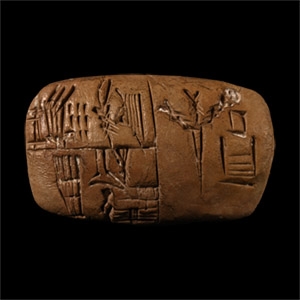
Proto-Sumerian Pictographic Terracotta Tablet
Uruk III, circa 3200-3000 B.C.Sold for (Inc. bp): £3,120
Lentoid in section with design to one face in three registers: left, large panel with impressed grid, square and spray; right, two smaller panels with hatching and geometric forms. 26.2 grams, 55 mm
From an important collection formed before 1988. Examined by Professor Wilfrid George Lambert FBA (1926-2011), historian, archaeologist, and specialist in Assyriology and Near Eastern archaeology, in the late 1980s and 1990s. This lot has been checked against the Interpol Database of stolen works of art and is accompanied by a search certificate number no.12543-231889. This lot has been cleared against the Art Loss Register database, and is accompanied by an illustrated lot declaration signed by the Head of the Antiquities Department, Dr Raffaele D'Amato. -
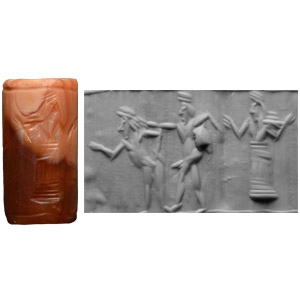
Neo Babylonian Agate Cylinder Seal
Circa 1000-800 B.C.Sold for (Inc. bp): £221
With a standing robed figure with his hands lifted in adoration, two nude advancing figures before him. 5.15 grams, 22 mm
UK private collection before 2000. Acquired on the UK art market. Property of a London gentleman. This lot has been cleared against the Art Loss Register database, and is accompanied by an illustrated lot declaration signed by the Head of the Antiquities Department, Dr Raffaele D'Amato. -
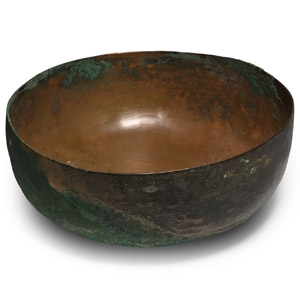
Large Western Asiatic Bronze Bowl
Circa 12th century A.D.Estimate: £200 - 300 (+bp*)
Opening Bid: £100
Raised from a single sheet with rounded base and slightly inturned walls. 427 grams, 20.5 cm
Acquired 1980-2015. Ex Abelita family collection. This lot has been cleared against the Art Loss Register database, and is accompanied by an illustrated lot declaration signed by the Head of the Antiquities Department, Dr Raffaele D'Amato.
