
Loading, please wait...
LOT 1203
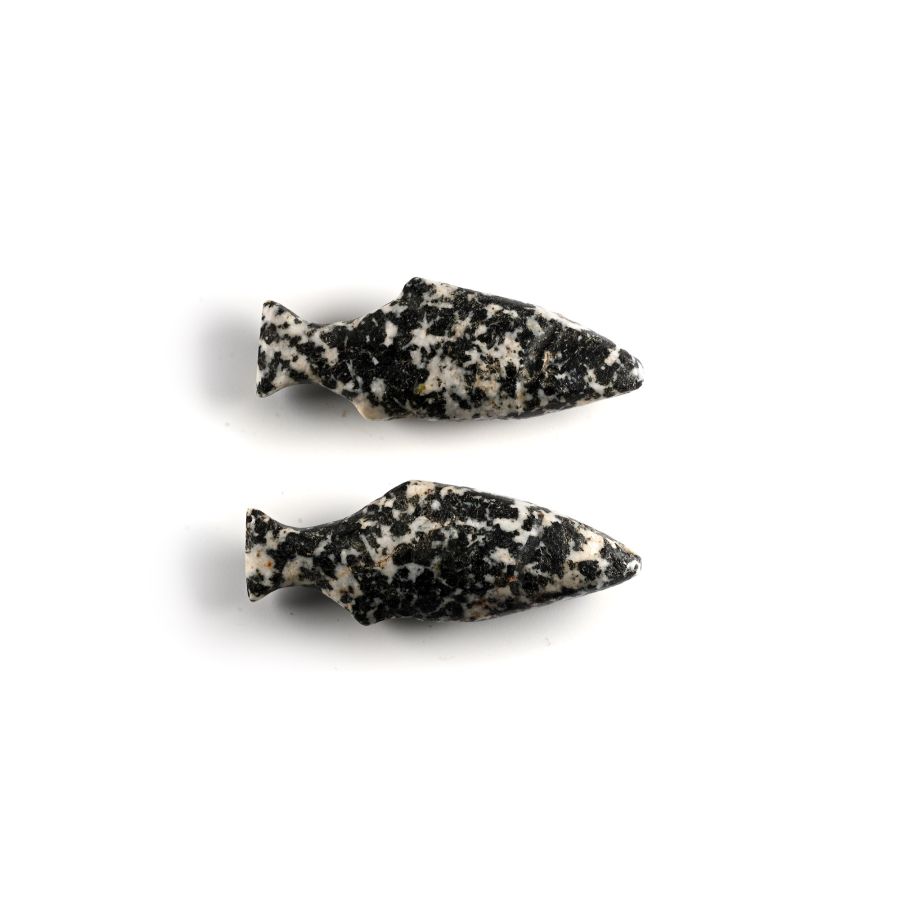
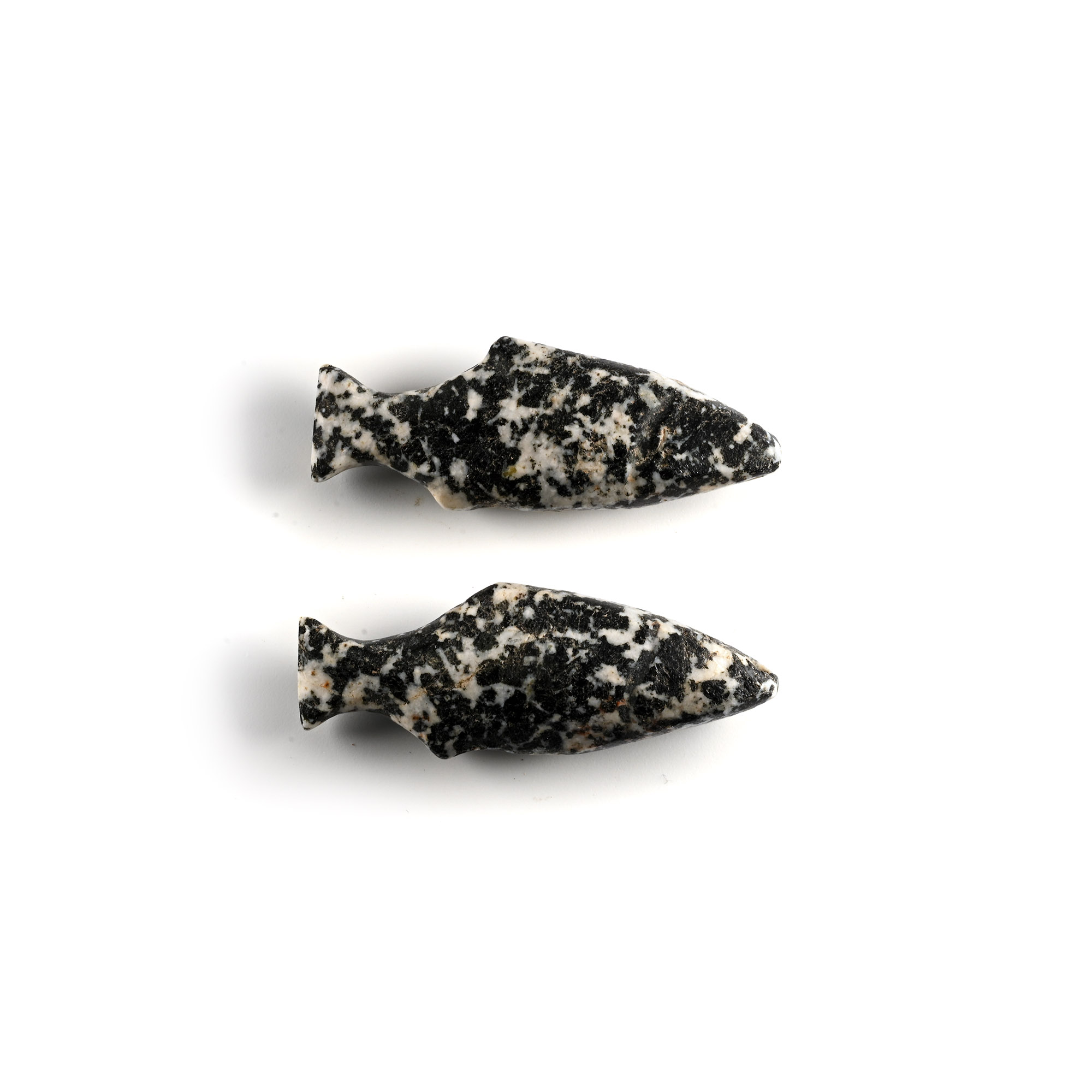
Proto-Sumerian Diorite Fish Pair
3RD MILLENNIUM B.C.
1 5/8 in. (17.1 grams total, 41-42 mm).
Two carved fish amulets, each pierced at the mouth for suspension. [2]
ProvenanceSwiss private collection, 1990s.
Acquired in 2002.
TimeLine Auctions follows a vetting process to ensure the authenticity and legality of all items, reinforcing our commitment to integrity and responsible trading. Each antiquity, antique, and coin lot undergoes thorough examination by a vetting committee of at least ten external specialists, professional trade association members, scientists, and archaeologists: Our Vetting Process
AUCTIONS:
TimeLine is a leading auction house specialising in antiquities, ancient art, collectables, natural history, coins, medals, and books. Our auctions offer museums, collectors, historians, and enthusiasts the opportunity to acquire unique and historically significant pieces.
-
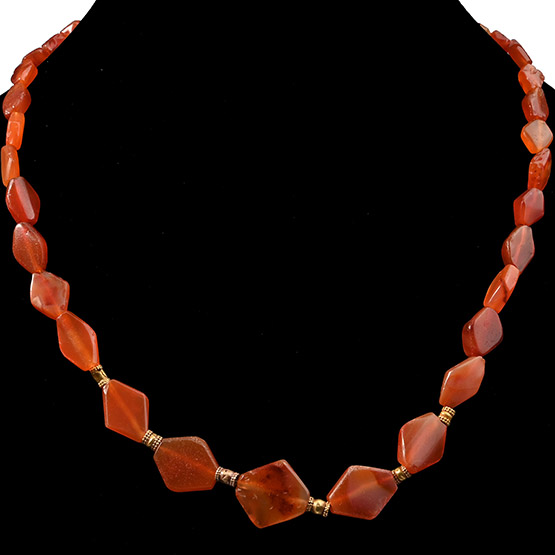
Western Asiatic Carnelian and Gold Bead Necklace
Late 1st millennium B.C. and laterEstimate: £700 - 900 (+bp*)
Opening Bid: £383
Restrung group of tabular, fusiform and other carnelian beads with granulated tubular gold collar spacers between. 45.5 grams, 55 cm
From the collection of a late Japanese gentleman, 1970s onwards. -
.jpg)
Western Asiatic Carnelian Scaraboid Seal with Bull
Late 2nd-3rd century A.D.Estimate: £500 - 700 (‡+bp*)
Opening Bid: £250
Rectangular in plan with pyramidal upper face, incuse bull and cow motif. 7.54 grams, 25 mm
Acquired in 2001. Private collection, Europe. -
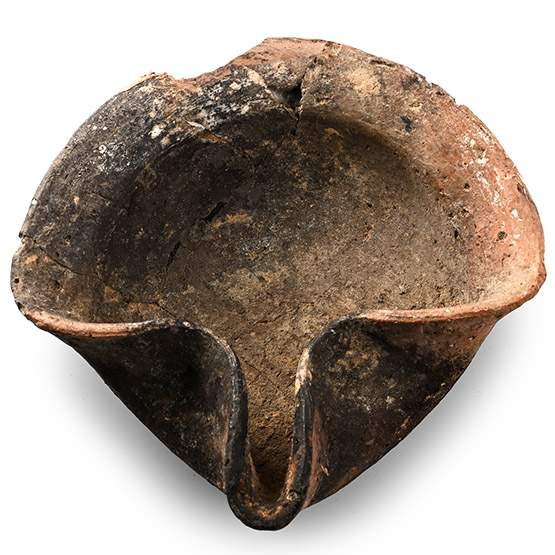
Bronze Age Holy Land Terracotta Pinched Rim Oil Lamp
Kingdom of Judah, circa 930-700 B.C.Sold for (Inc. bp): £104
Discoid in plan with flange rim and sidewall pinched to form a nozzle. 69 grams, 97 mm
From the Lloyd and Jeanne Raport collection, Washington, D.C. and Florida, USA, formed between 1972-2000. Acquired through Bonhams, London, UK.
