
Loading, please wait...
LOT 0085
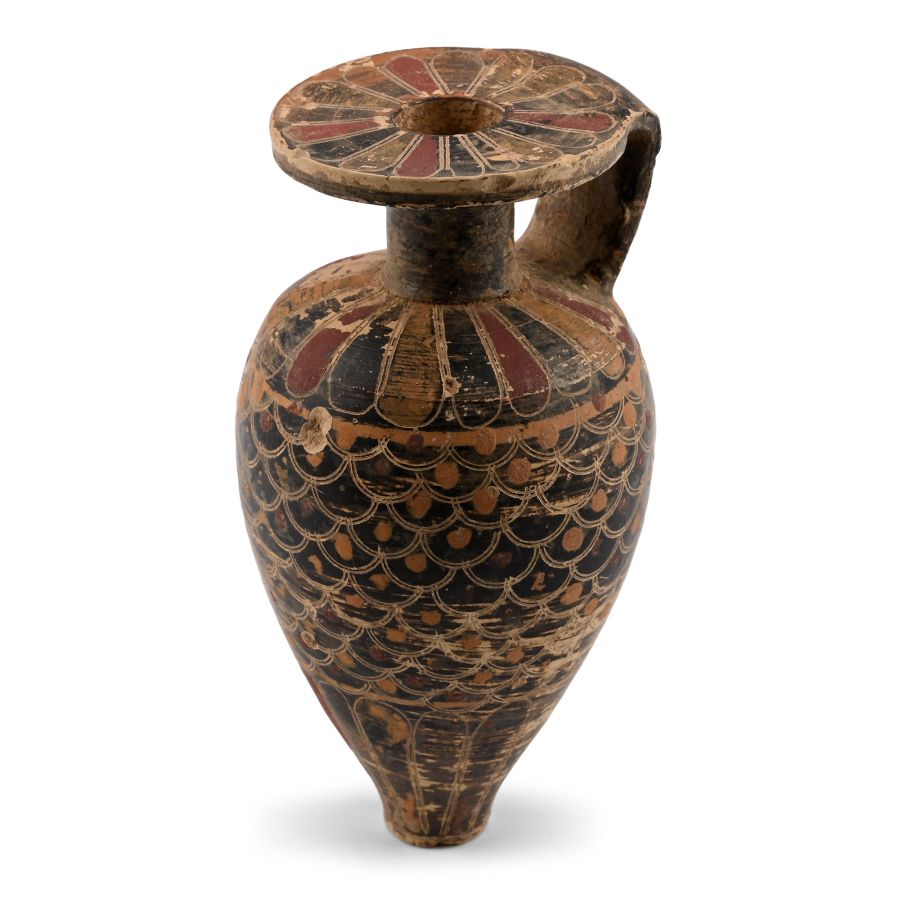
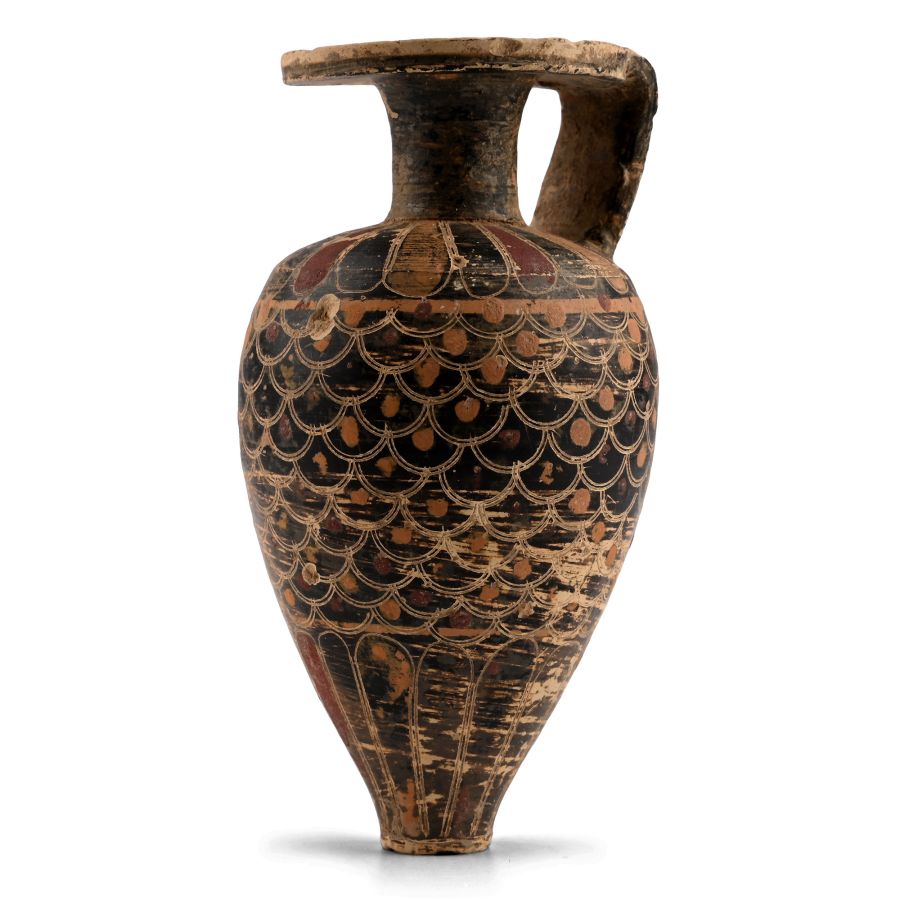
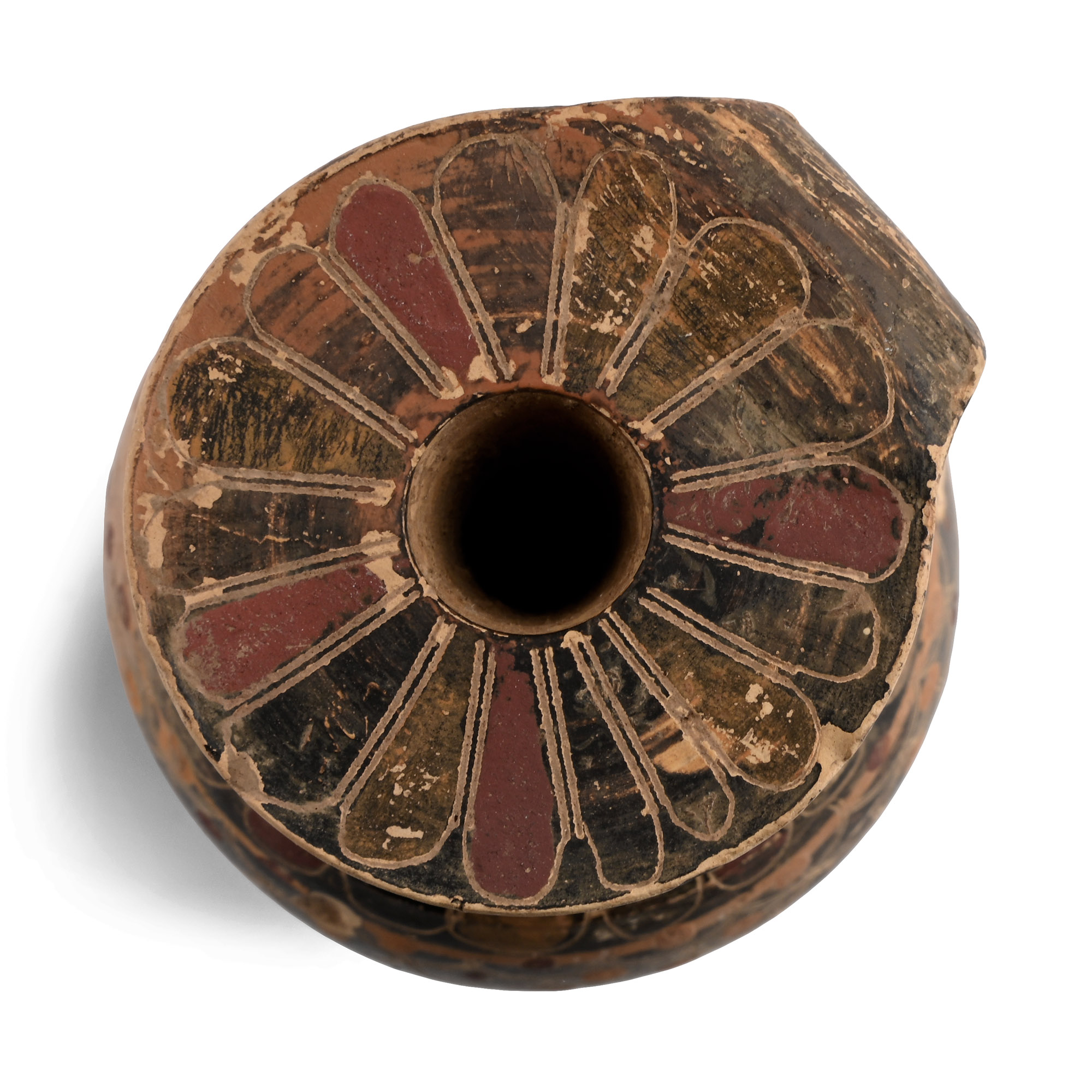
Proto-Corinthian Painted Terracotta Aryballos
7TH CENTURY B.C.
4 1/8 in. (79 grams, 10.5 cm).
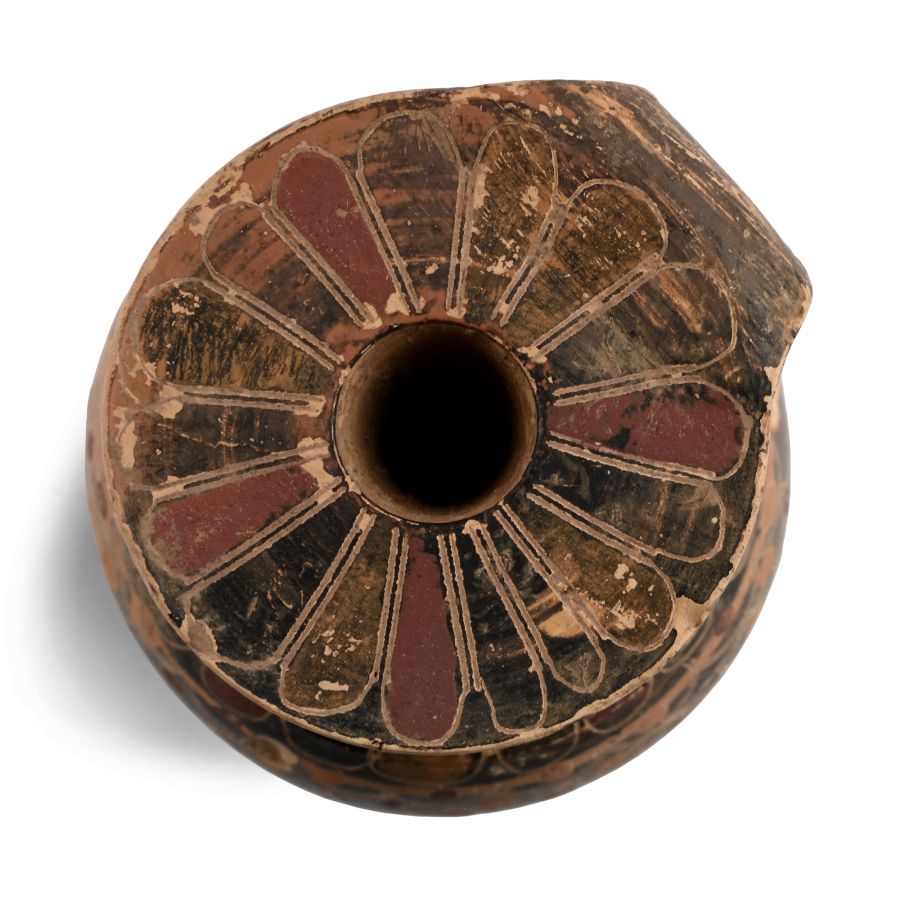
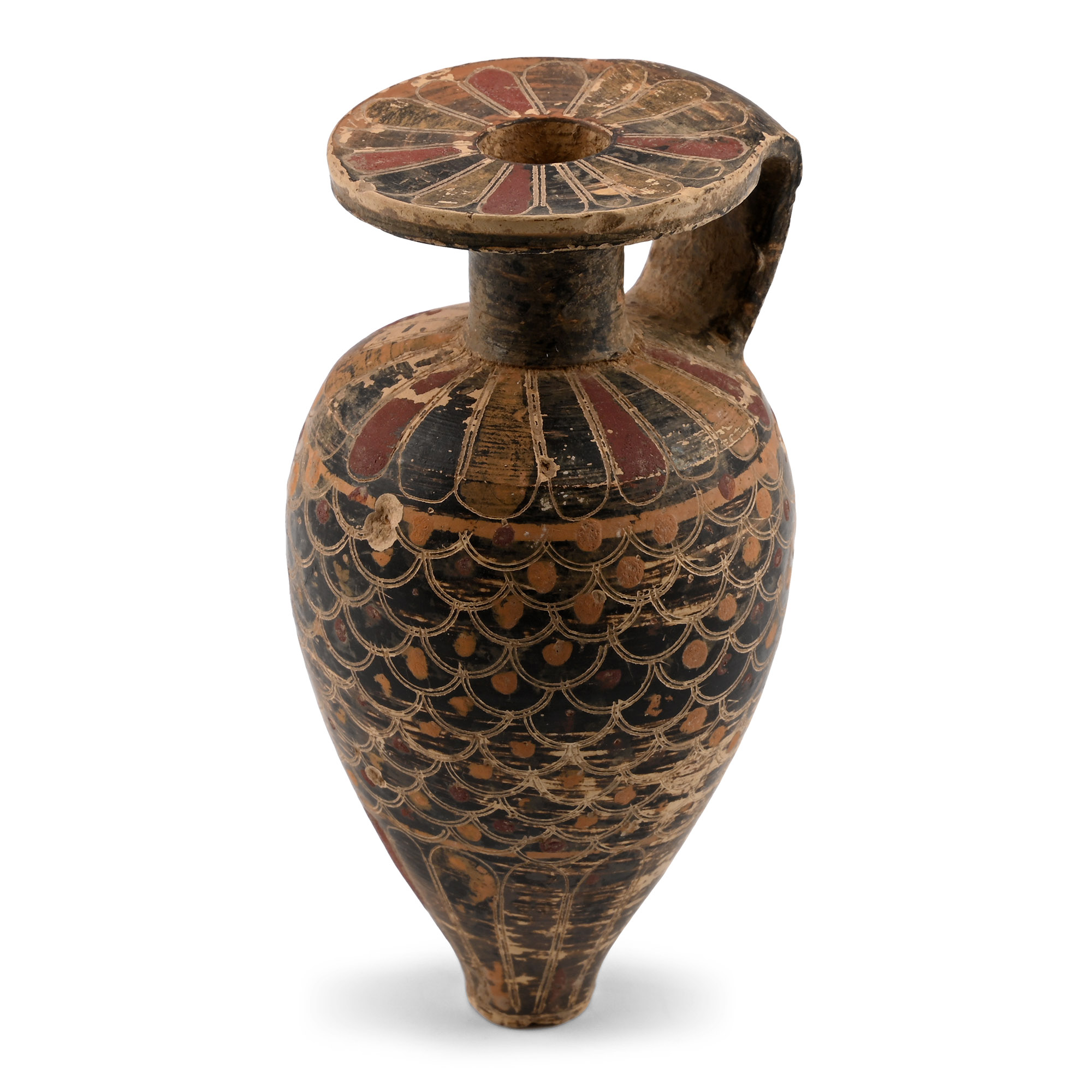
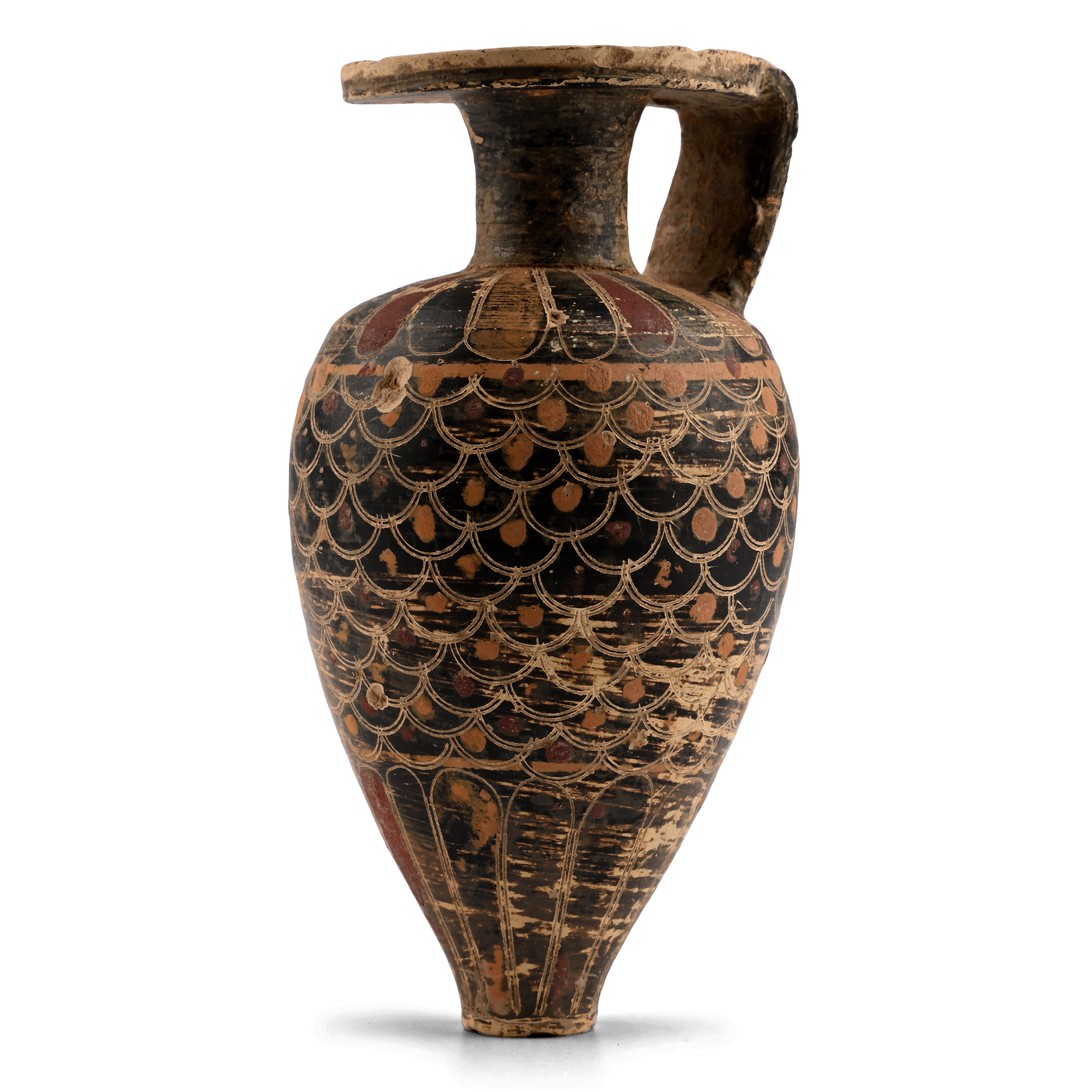
Comprising a piriform body and a tubular neck with a wide rim, a strap handle to the rear, the rim with painted polychrome petals, the pattern repeating beneath the neck and on the base of the vessel; the body decorated with fishscale decoration.
ProvenanceSwiss private collection, assembled in the 1960s and 1970s.
Acquired by the present owner in 2004.
Accompanied by an academic report by Dr Raffaele D’Amato.
This lot has been checked against the Interpol Database of stolen works of art and is accompanied by search certificate number no.30017-246794.
Cf. for similar aryballoi, the Metropolitan Museum of Art, New York, accession nos.37.128.1 and 07.286.38; cf. also Anderson, J.K., ‘The Corinthian Pottery’ in Annual of the British School at Athens, Vol.53/54 (1958/1959), pp.138-151, no.84 pl.24; Saka A. and Aktaş R., ‘A group of archaic pottery from Çandarli at the Izmir Archaeological Museum in Gürtekin Demir R.G., Cevizoğlu, H., Polat Y. & Polat G. (eds), Archaic and Classical Western Anatolia: New Perspectives in Ceramic Studies, Proceedings of the second Keramos international conference at Ege University, Izmir, 3–5 June, 2015, Leuven – Paris – Bristol, 2018 cat.12-13 p.272; a lower portion of a similar Proto-Corinthian piriform aryballos was found in Sardis, see Sardis Museum inventory no.P61.252, and Schaeffer, J., Monograph 10: The Corinthian, Attic, and Lakonian Pottery from Sardis, Harvard, 1997, cat.no.48; for a comprehensive list of other examples in public and private collections see the fundamental work of Neeft, C.W., Protocorinthian Subgeometric Aryballoi (Allard Pierson Series, vol. 7), Amsterdam, 1987, pp. 282f., list 274, CX, CXI, CXIII, CXIV: NC 478A type1; on the scale patterns in general, ibid. pp.275-289.
FootnotesThe aryballoi were used to hold perfumed oil, an essential item for the wealthy middle classes of the time. Similar piriform vases are fairly common in Corinthian contexts. There is utmost precision in both the potting and the execution of the incised scale pattern of the present example. The fish-scale decoration was realised with the incision technique, by executing the scales neatly with their ends meeting.
CONDITIONTimeLine Auctions follows a vetting process to ensure the authenticity and legality of all items, reinforcing our commitment to integrity and responsible trading. Each antiquity, antique, and coin lot undergoes thorough examination by a vetting committee of at least ten external specialists, professional trade association members, scientists, and archaeologists: Our Vetting Process
AUCTIONS:
TimeLine is a leading auction house specialising in antiquities, ancient art, collectables, natural history, coins, medals, and books. Our auctions offer museums, collectors, historians, and enthusiasts the opportunity to acquire unique and historically significant pieces.
LOT 0085
Proto-Corinthian Painted Terracotta Aryballos
Estimate £2,000 - 3,000€2,320 - 3,480 (for guidance only)$2,700 - 4,050 (for guidance only)
-
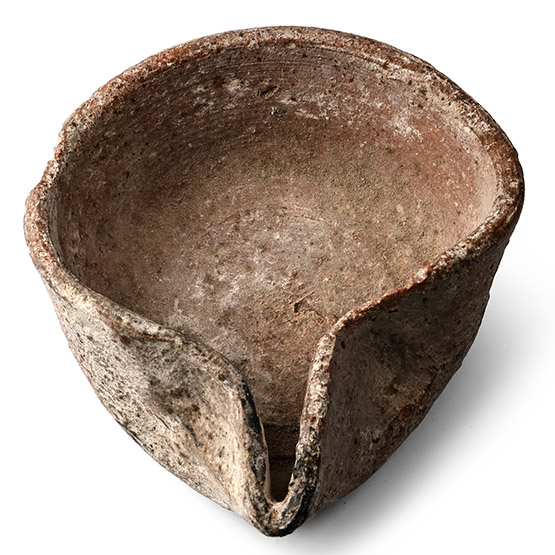
Greek Terracotta Pinched Rim Oil Lamp
Hellenistic, 2nd-1st century B.C.Sold for (Inc. bp): £117
Discoid in plan with sidewall pinched to form a nozzle; with old collector's tag '13 oil lamp of Hellenistic period'. 73 grams, 85 mm
From the Lloyd and Jeanne Raport collection, Washington, D.C. and Florida, USA, formed between 1972-2000. Acquired through Bonhams, London, UK. -
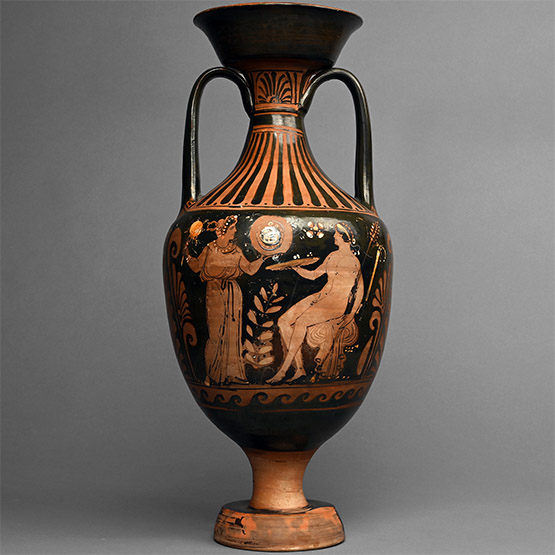
Large Greek Red-Figure Amphora with Dionysian Scenery
Apulian, 3rd-2nd century B.C.Sold for (Inc. bp): £3,640
The piriform body with broad, stepped rim and two lentoid-section handles; painted palemete beneath each handle and on the neck below the mouth; Side A: red-figure frieze depicting a standing woman wearing a himation and stephane, her hands raised supporting objects, a laurel frond before her and a seated nude male with thyrsus and other items; Side B: two opposed figures standing supported by staves, each wearing a loosely draped floor-length garment; objects in the field. 1.88 kg, 43 cm
Acquired on the art market between the late 1990s and mid-2000s. Estate of the late Barry Paul Buxton (1944-2024), Oakham, Rutland. Acquired on the UK art market, 2025. Accompanied by a thermoluminescence analysis report no.N126a18 from Oxford Authentication. This lot has been checked against the Interpol Database of stolen works of art and is accompanied by search certificate no.13075-248951.
The subject is standard, often representing the draped youths completely enveloped in their himatia. -
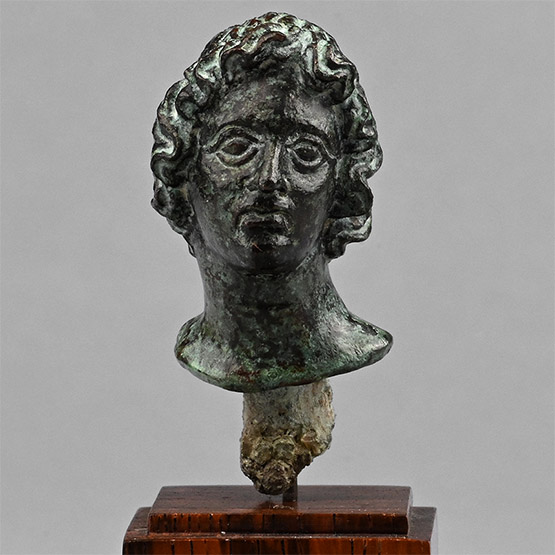
Greek Head of Alexander The Great
3rd-2nd century B.C.Sold for (Inc. bp): £5,720
Modelled in the round with wavy hair brushed forward, large lentoid eyes in low-relief, angular nose and small mouth; attachment lug to underside, rich lead/copper alloy; mounted on a custom-made stand. 142 grams total, 10.2 cm including stand
Collection of Mr C., Geneva, Switzerland (1936-2016), assembled between 1985 and 2010. This lot has been checked against the Interpol Database of stolen works of art and is accompanied by a search certificate number no.12857-241703.
