
Loading, please wait...

LOT 2017
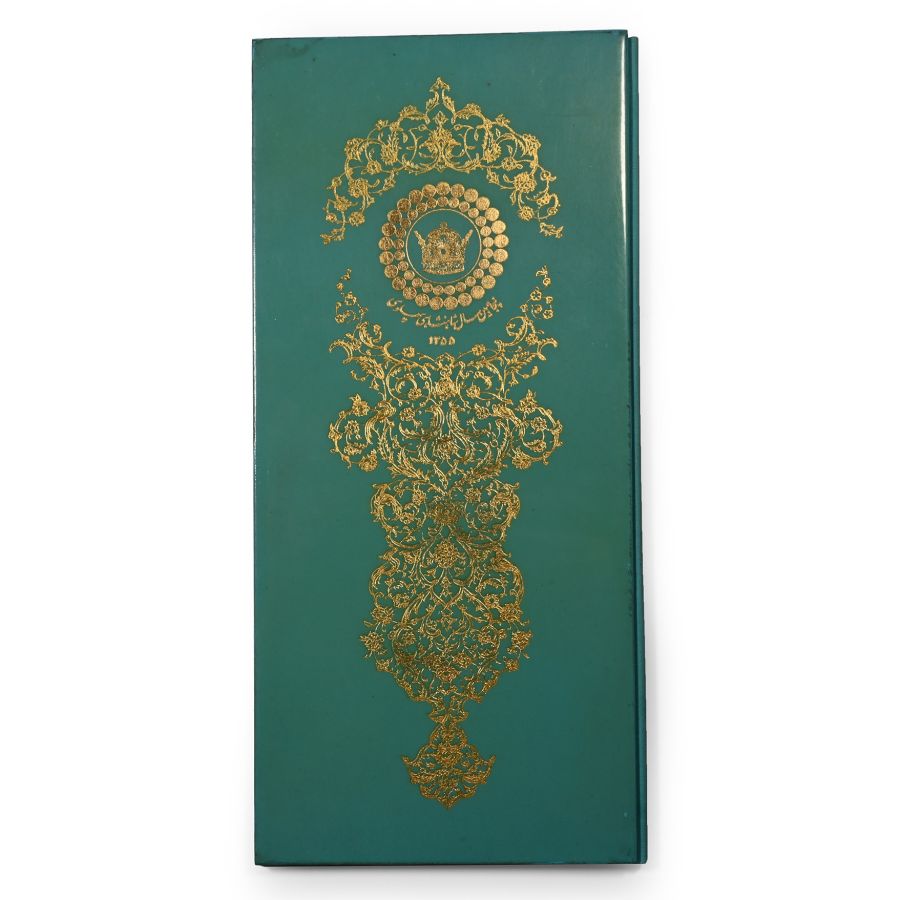
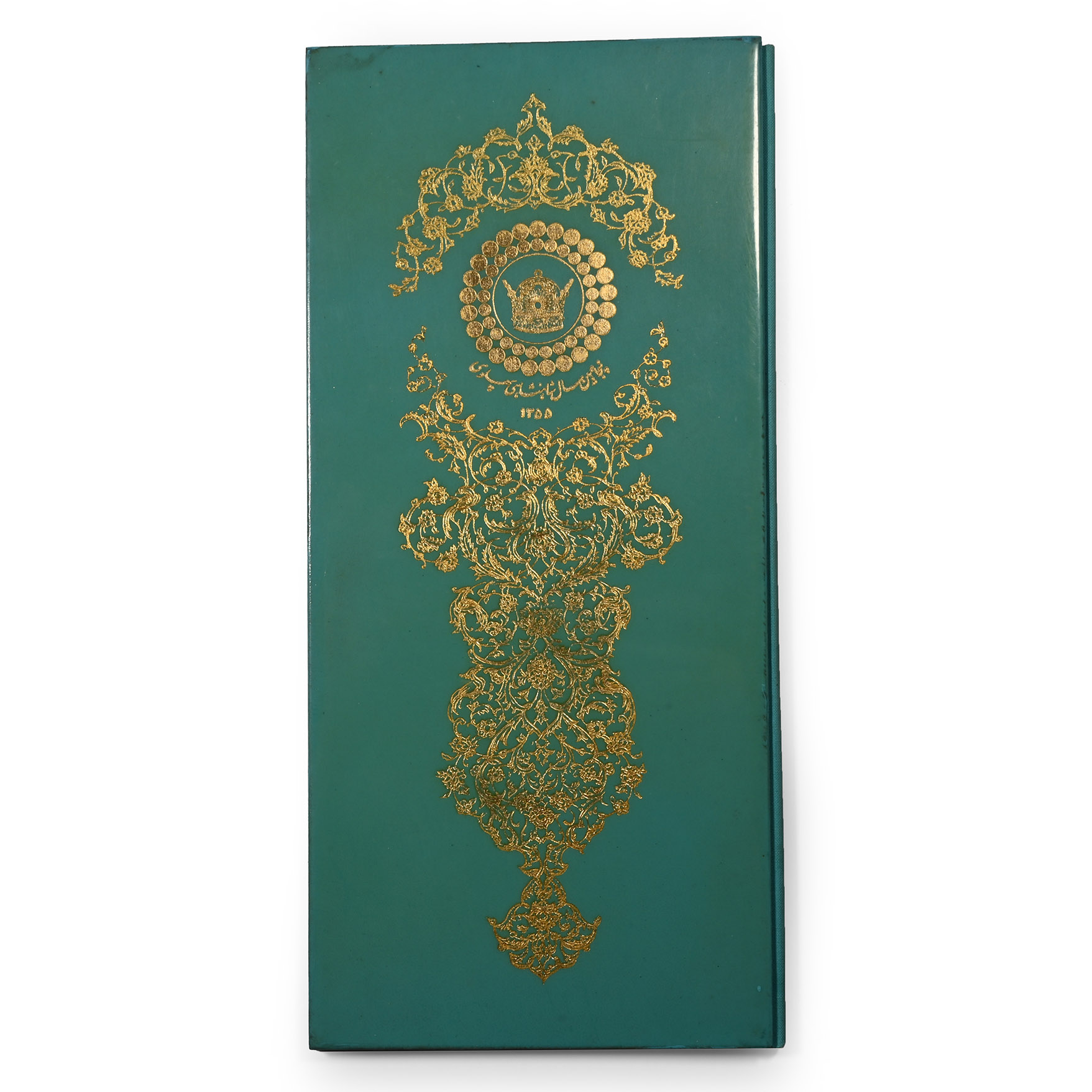
Program Cover of 50th Anniversary of The Establishment of The Pahlavi Dynasty
1255 A.H. (1864 A.D.)
12 3/8 x 5 3/4 in. (330 grams, 31.5 x 14.6 cm).
Rectangular, cloth-covered boards, silk cord to inner spine, front cover with gazed panel, royal insignia and date. [No Reserve]
ProvenanceProperty of a London gentleman.
CONDITIONTimeLine Auctions follows a vetting process to ensure the authenticity and legality of all items, reinforcing our commitment to integrity and responsible trading. Each antiquity, antique, and coin lot undergoes thorough examination by a vetting committee of at least ten external specialists, professional trade association members, scientists, and archaeologists: Our Vetting Process
AUCTIONS:
TimeLine is a leading auction house specialising in antiquities, ancient art, collectables, natural history, coins, medals, and books. Our auctions offer museums, collectors, historians, and enthusiasts the opportunity to acquire unique and historically significant pieces.
LOT 2017
Program Cover of 50th Anniversary of The Establishment of The Pahlavi Dynasty
Sold for (Inc. bp): £247
-
.jpg)
Gold Lion Earring Pair
20th century A.D. or earlierSold for (Inc. bp): £390
Each composed of an oblong base adorned with filigree and granules, a couchant lion modelled in the round on top, ear hook with decoratively twisted lower body. 9.06 grams total, 35 mm each
From the collection of a North American gentleman, formed in the 1990s. -
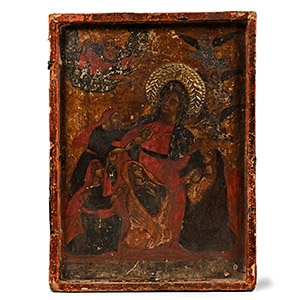
Wooden Icon of the Virgin Mary Blessed by Angels
Asia Minor, 18th century A.D.Estimate: £700 - 900 (+bp*)
Opening Bid: £350
Painted on a wooden board with raised frame, gessoed surface with painting of Mary adored by four kneeling females around her and three winged angels above; Mary clad in deep red floor-length robe with dark blue mantle; bearded God in upper corner releasing a dove (The Holy Spirit) towards her; Mary's nimbus emphasised with a gilt metal crescent around the head, with repoussé wreath detailing and pellets to the border; pins and suspension link to one edge of the frame. 755 grams, 21.6 x 29 cm
Ex Mehlis Auctions, Berlin, Germany. From an important collection of icons.
The view of Mary as the Comforter of the Afflicted is one of the oldest in the church. Here the painter combines the theme of the consoling mother with that of her being calling by God as Mother of Life, with the angels in devotion, while desperate human beings crowd at her feet. Here, God is sending his spirit in the form of a dove, to sanction the union between heaven and earth confirmed by Mary, who is the vas Christi. -
.jpg)
Marble Bust of Young Hadrian
19th century A.D.Sold for (Inc. bp): £1,690
Tastefully carved bust of a youthful male with abundant curly hair, broad brow and high cheekbones, mutton-chop whiskers, long sturdy neck; dressed in classical style with a loose mantle covering the broad shoulders and secured at the right shoulder by a knopped fastener. 40.9 kg, 54 cm
Acquired on the North American art market. Ex private collection, England.
