
Loading, please wait...
LOT 0308
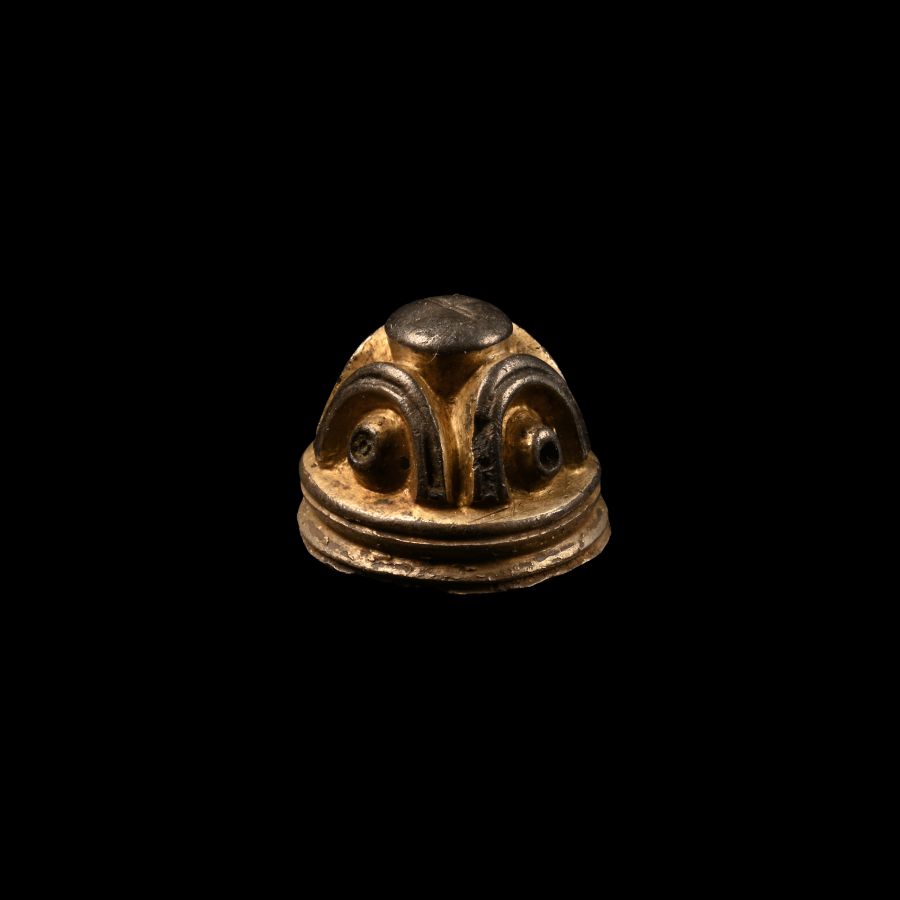
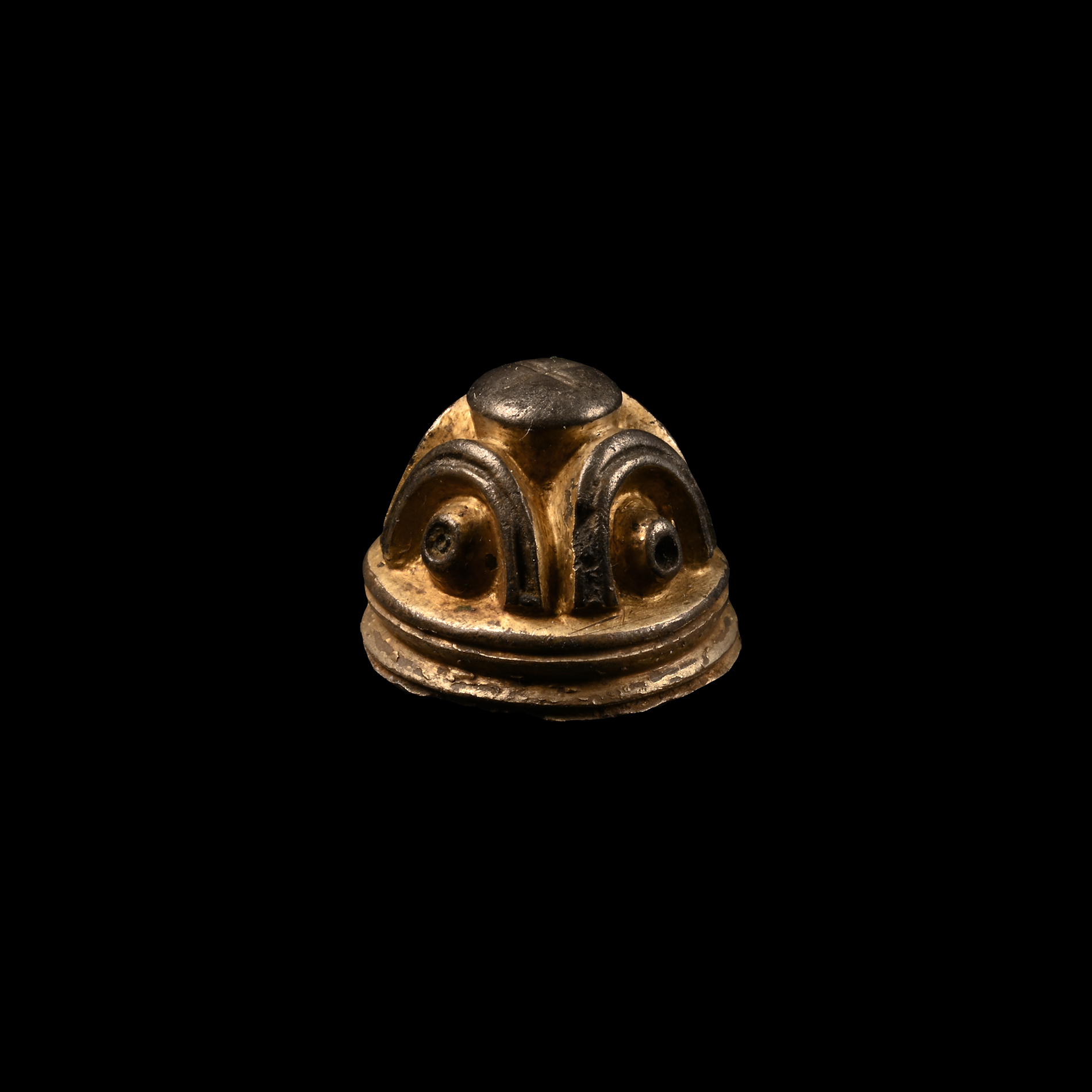
Pre-Viking Silver-Gilt Scabbard Mount
CIRCA 4TH-5TH CENTURY A.D.
5/8 in. (4.2 grams, 14 mm).
Domed and with a ribbed basal rim, the sidewall with four small circular bosses each framed by a bilinear arch; surmounted by a slightly convex disc bearing an incised cross; transverse bar to the underside; Mortimer's type 4iii.
ProvenanceAcquired early 1990s.
From an East Anglian private collection.
See Mortimer, P., A Pyramid Scheme. Pyramid Mounts from the 5th to the 7th century found in the United Kingdom, on academia.edu; Mortimer, P., Woden's Warriors, Ely, 2011, p.115-7.
FootnotesThe mount is an extremely early example of the so-called 'sword pyramid' mount which was used in the Vendel period as part of the sword-suspension system. It has a parallel in the find from Sandby Borg, Oland, Sweden where Style I masks also appear.
CONDITIONTimeLine Auctions follows a vetting process to ensure the authenticity and legality of all items, reinforcing our commitment to integrity and responsible trading. Each antiquity, antique, and coin lot undergoes thorough examination by a vetting committee of at least ten external specialists, professional trade association members, scientists, and archaeologists: Our Vetting Process
AUCTIONS:
TimeLine is a leading auction house specialising in antiquities, ancient art, collectables, natural history, coins, medals, and books. Our auctions offer museums, collectors, historians, and enthusiasts the opportunity to acquire unique and historically significant pieces.
-
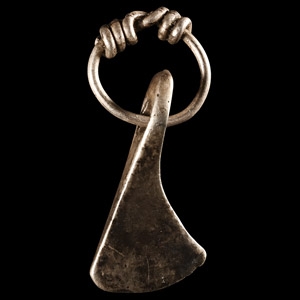
Viking Age Silver Axehead Pendant
Circa 9th-10th century A.D.Sold for (Inc. bp): £338
Composed of a slender hoop with coiled wire sleeves, suspending a free-running axehead pendant. 2.3 grams, 27 mm
Acquired 1960s-1970s. From the private collection of a Northern Ireland gentleman. -
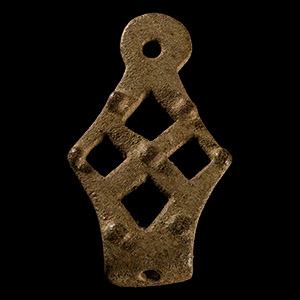
Anglo-Scandinavian Viking Bronze Stirrup Apex Mount
10th-11th century A.D.Sold for (Inc. bp): £72
Lozenge-shaped piercings and raised pellets to the body, a single piercing to both terminals. 12.3 grams, 47 mm
Found Nottinghamshire, UK. -
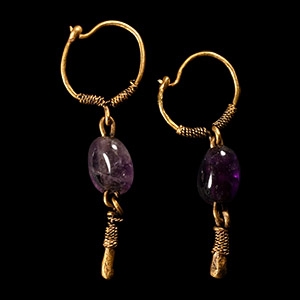
Viking Age Gold Earrings with Amethyst Gemstones
9th-11th century A.D.Sold for (Inc. bp): £1,040
Matched pair, filigree bands and amethyst olive drops with dangles. 9.65 grams total, 48-54 mm
Private collection formed in Europe in the 1980s. Westminster collection, central London, UK.
