
Loading, please wait...
LOT 1755
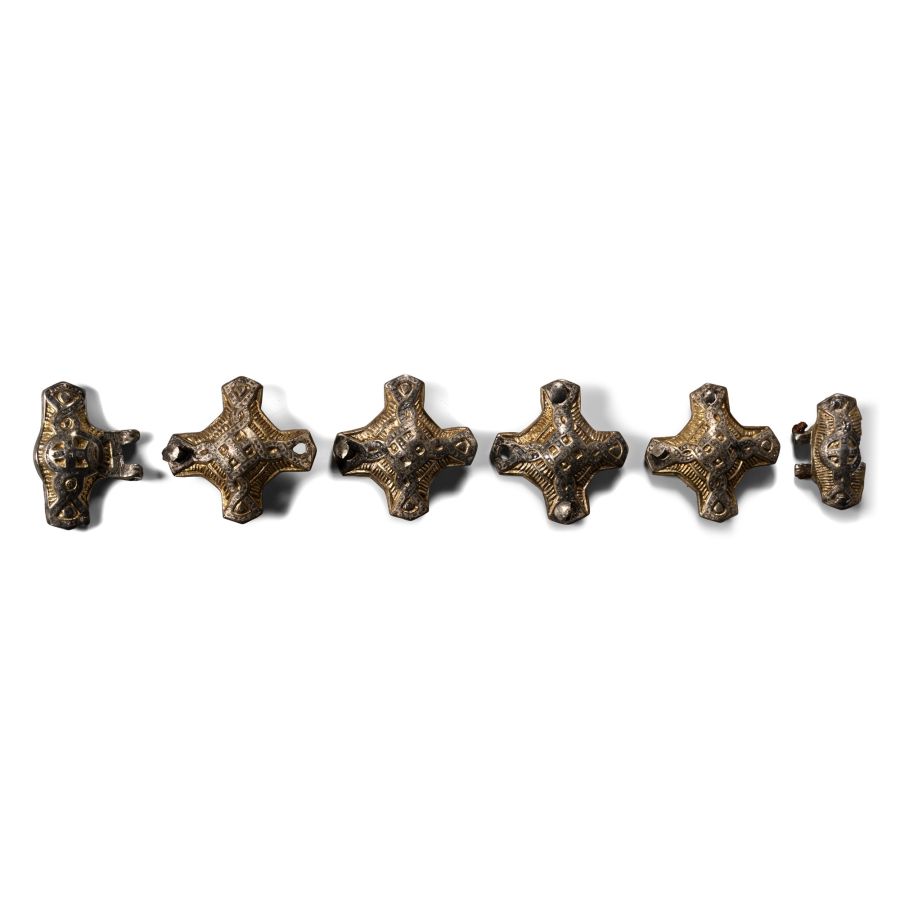
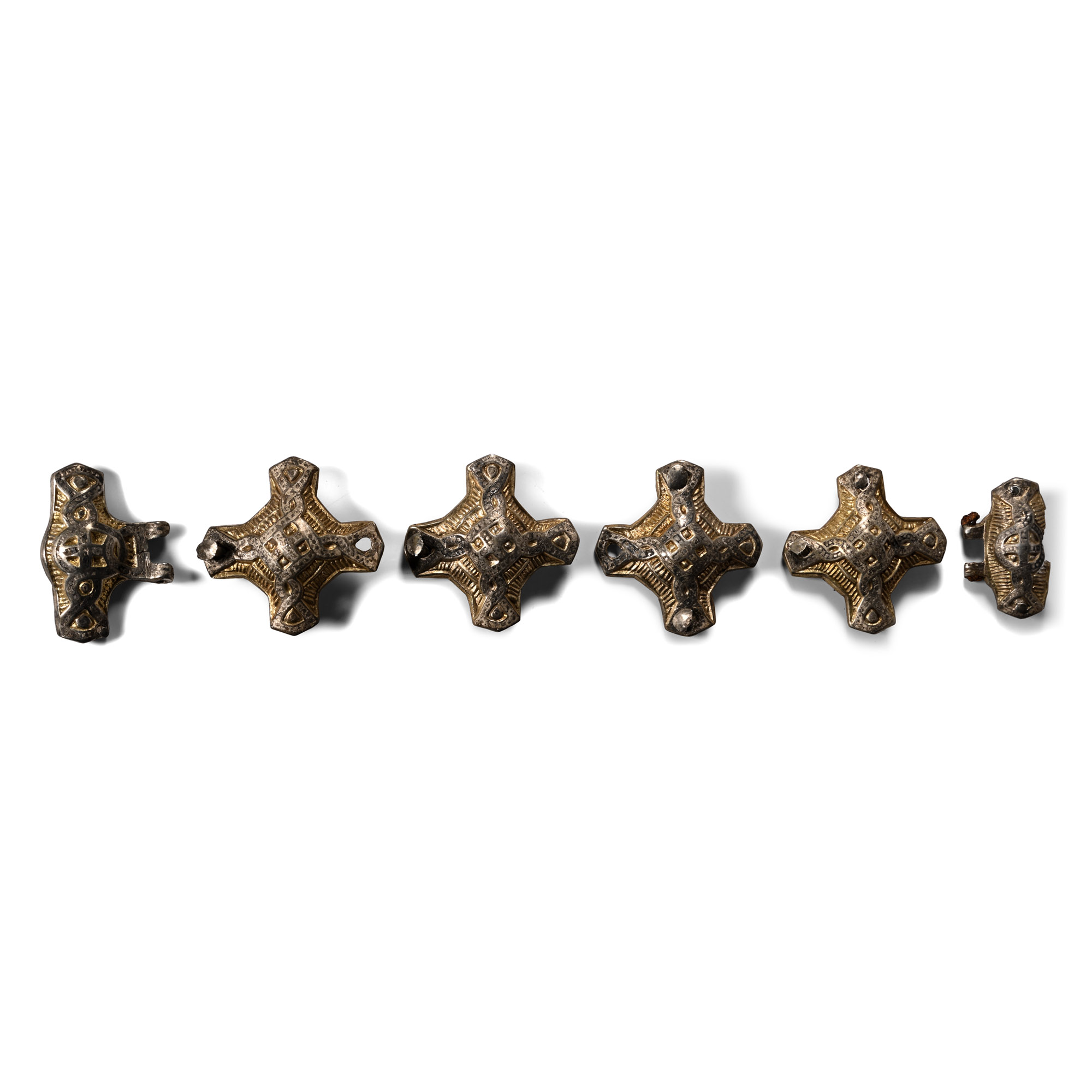
Pre-Viking Heavy Silver-Gilt Belt Mount Set
5TH-7TH CENTURY A.D.
1 5/8 - 2 in. (74 grams total, 41-49 mm).
Comprising: four cruciform mounts, each domed with reserved silver niello-filled interlaced cross on a billeted parcel-gilt field, mounting hole to each end, some with studs; T-shaped mount with reserved loops and bars on a billeted parcel-gilt field, loops above the vertical shank and fixing pin to angle; similar mount with ferrous remains to the hinge. [6]
ProvenanceEuropean art market.
Acquired in Münich in 2012.
European private collection.
This lot has been checked against the Interpol Database of stolen works of art and is accompanied by a search certificate number no.12289-222348.
This lot has been cleared against the Art Loss Register database, and is accompanied by an illustrated lot declaration signed by the Head of the Antiquities Department, Dr Raffaele D'Amato.
TimeLine Auctions follows a vetting process to ensure the authenticity and legality of all items, reinforcing our commitment to integrity and responsible trading. Each antiquity, antique, and coin lot undergoes thorough examination by a vetting committee of at least ten external specialists, professional trade association members, scientists, and archaeologists: Our Vetting Process
AUCTIONS:
TimeLine is a leading auction house specialising in antiquities, ancient art, collectables, natural history, coins, medals, and books. Our auctions offer museums, collectors, historians, and enthusiasts the opportunity to acquire unique and historically significant pieces.
LOT 1755
Pre-Viking Heavy Silver-Gilt Belt Mount Set
Estimate £3,000 - 4,000€3,480 - 4,640 (for guidance only)$4,050 - 5,400 (for guidance only)
-
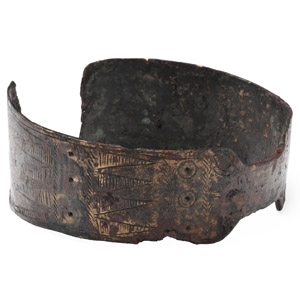
Viking Period Bronze Decorated Bracelet
9th-11th century A.D. or earlierSold for (Inc. bp): £117
Flat-section penannular body with slightly flared terminals, upper face with incised geometric motifs. 50 grams, 73 mm
UK private collection before 2000. Acquired on the UK art market. Private collection, London, UK. This lot is accompanied by an illustrated lot declaration signed by the Head of the Antiquities Department, Dr Raffaele D'Amato. -
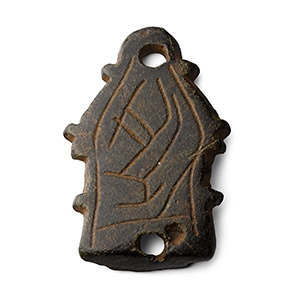
Anglo-Scandinavian Viking Bronze Stirrup Apex Mount
10th-11th century A.D.Sold for (Inc. bp): £104
Williams's Class A Type 1 with pentagonal profile and incised ornamentation depicting two crude enmeshed tendrils in Anglo-Scandinavian style; two rivet holes. 25.6 grams, 47 mm
Found Suffolk, UK, circa 2000. This lot is accompanied by an illustrated lot declaration signed by the Head of the Antiquities Department, Dr Raffaele D'Amato. -
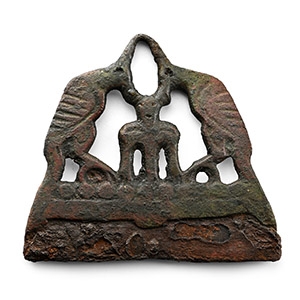
Viking Age Bronze Fire Steel with Odin and Ravens
10th century A.D.Sold for (Inc. bp): £780
Comprising a rectangular iron block with striking face mounted in a bifacial openwork bronze handle formed as two large ravens perching with necks bent over a central figure. 40 grams, 61 mm
From the private collection of a London gentleman, from his grandfather's collection formed before the early 1970s. This lot is accompanied by an illustrated lot declaration signed by the Head of the Antiquities Department, Dr Raffaele D'Amato.
