
Loading, please wait...
LOT 1364
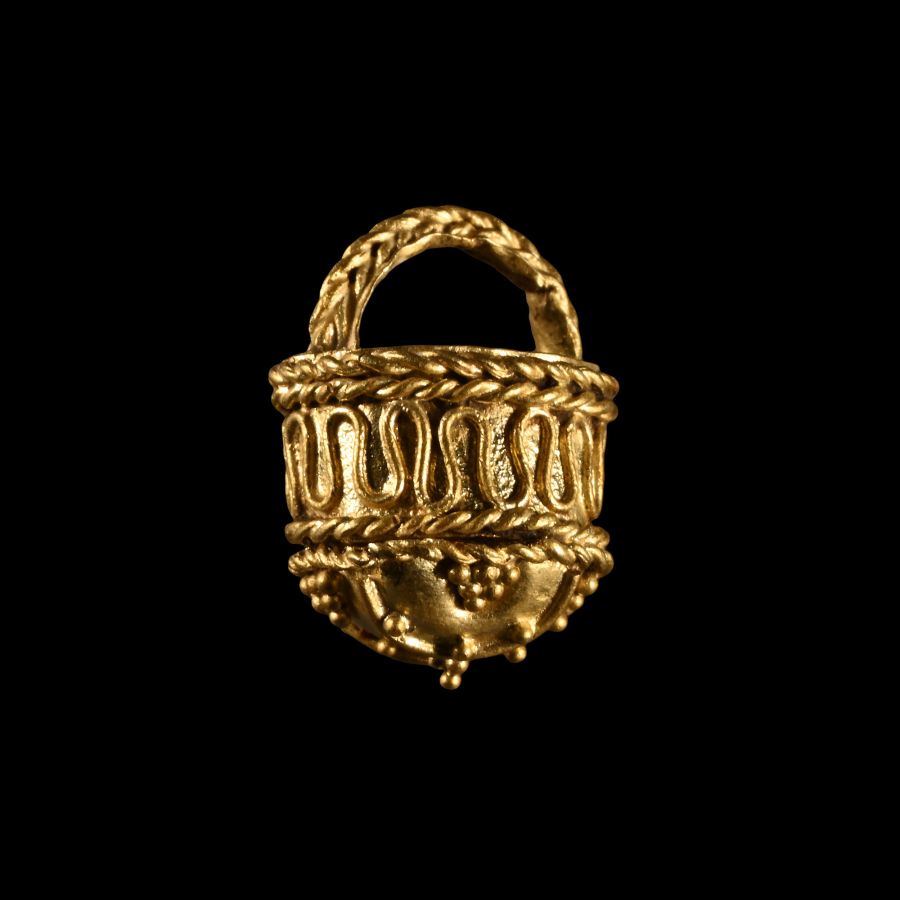
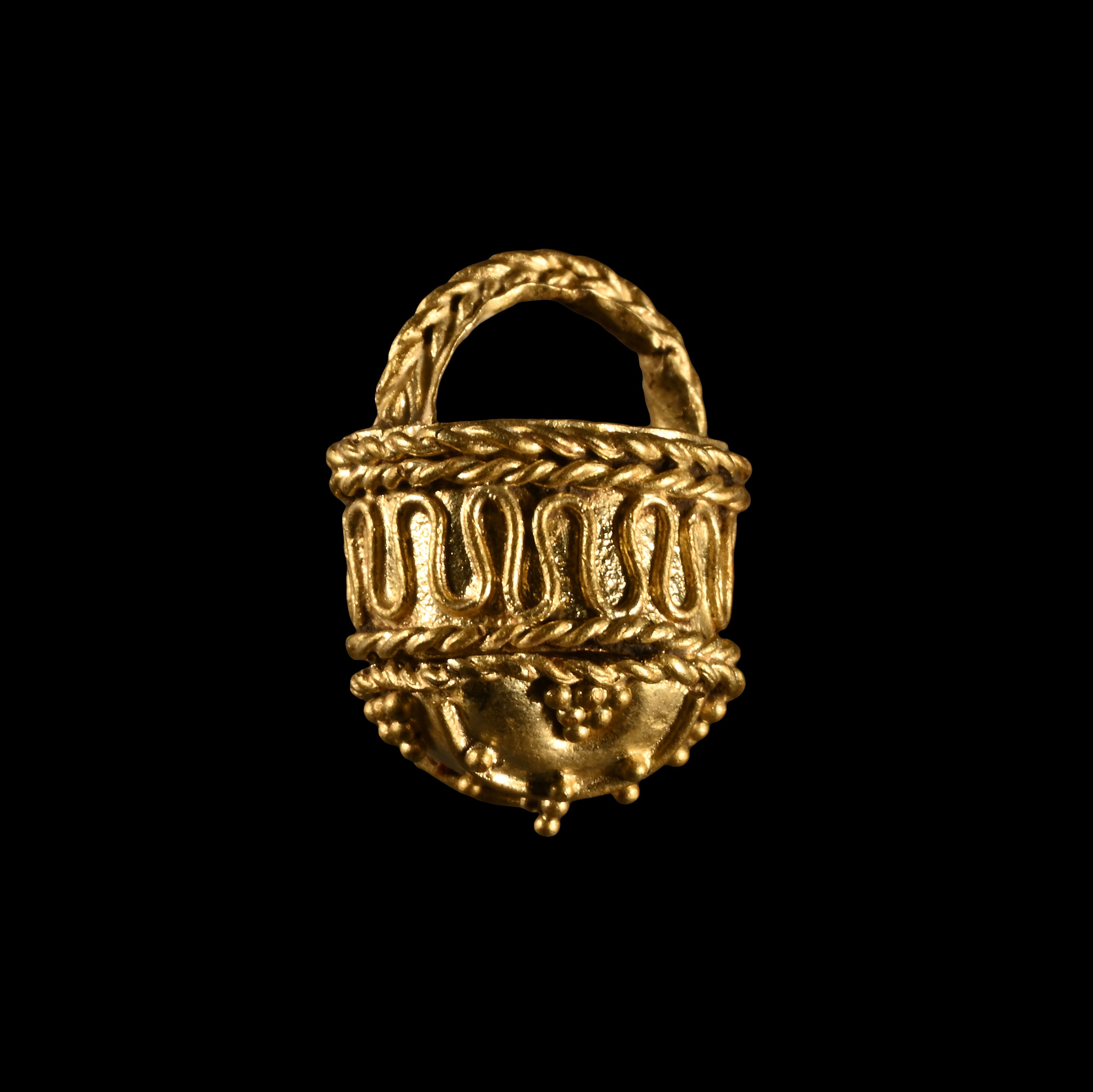
Pre-Viking Gold Filigree Aroma Bucket Pendant
4TH-7TH CENTURY A.D.
1/2 in. (1.19 grams, 13 mm).
Cup-shaped in sheet gold with applied filigree detailing and granule clusters. [No Reserve]
ProvenanceFrom the collection of a North American gentleman, formed in the 1990s.
LiteratureSee Meaney, A., Anglo-Saxon Amulets and Curing Stones, Oxford, BAR British Series 96, 1981, p.166-168, for discussion of the type.
FootnotesPendants in the form of miniature buckets have been found in a number of pagan Anglo-Saxon and Viking contexts and are generally made of bronze or iron, with gold examples being rare; three gold examples were found with the hoard from Hoen, Norway. Bronze bucket amulets have been found at Driffield in Yorkshire, and Vimose bog in Denmark, among other places. In form they represent wooden buckets bound with bronze or iron bands which have been found in Anglo-Saxon and Viking graves and are believed to have held mead or ale and were used to replenish the cups from which warriors drank. As amulets they probably represent the ecstatic power of alcoholic drink and the role of women as the dispensers of these precious beverages.
CONDITIONTimeLine Auctions follows a vetting process to ensure the authenticity and legality of all items, reinforcing our commitment to integrity and responsible trading. Each antiquity, antique, and coin lot undergoes thorough examination by a vetting committee of at least ten external specialists, professional trade association members, scientists, and archaeologists: Our Vetting Process
AUCTIONS:
TimeLine is a leading auction house specialising in antiquities, ancient art, collectables, natural history, coins, medals, and books. Our auctions offer museums, collectors, historians, and enthusiasts the opportunity to acquire unique and historically significant pieces.
-
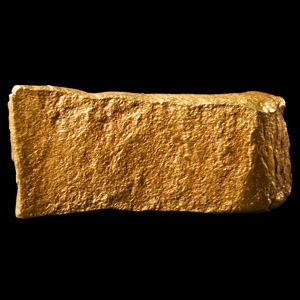
Viking Age Traded Hacked Gold Bar Section
9th-11th century A.D.Sold for (Inc. bp): £156
The rectangular bar with a cut at each end. 1.42 grams, 14 mm
Acquired on the UK art market. Property of a Somerset collector, UK, since at least the early 2000s. -
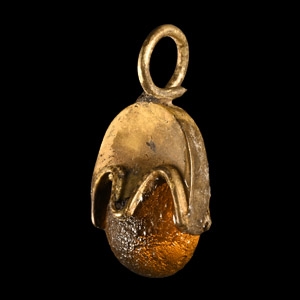
Viking Age Gold Elf Shot Pendant
9th-10th century A.D. or earlierSold for (Inc. bp): £390
Formed as a gold cap set with polished glass gem; suspension loop above. 0.85 grams, 17 mm
Acquired 1980-2015. Ex Abelita family collection.
This amulet was believed to offer protection against 'Elfshot'. The attack of elves was believed responsible for mysterious suffering in men and livestock. 'Elfshot' described sudden shooting pains localised to a particular area of the body, such as in rheumatism, arthritis or muscle stitches or cramps. Elves were thought to shoot darts or arrows where such pains had no obvious external cause. Belief in elfshot persisted into the 20th century in rural areas, and as proof country folk would sometimes find small arrowheads (the remains of Neolithic or Mesolithic flints, or naturally-occurring spear-shaped stones) that were believed to be the magical weapons that caused the afflictions. Belief in elfshot began in the Pagan Germanic period. -
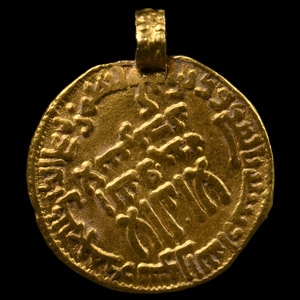
Viking Age Gold Plunder Dinar Coin Pendant
8th-9th century A.D.Sold for (Inc. bp): £598
Formed using an Abbasid Caliphate dinar coin with ridged suspension loop attached. 4.43 grams, 22 mm
Acquired in the late 1970s and 1980s. Ex property of a London gentleman.
Such Islamic coins were traded across the Viking world and have been discovered as grave goods or in hoards (as coins and as jewellery items) in Scandinavia and the Baltic area.
