
Loading, please wait...


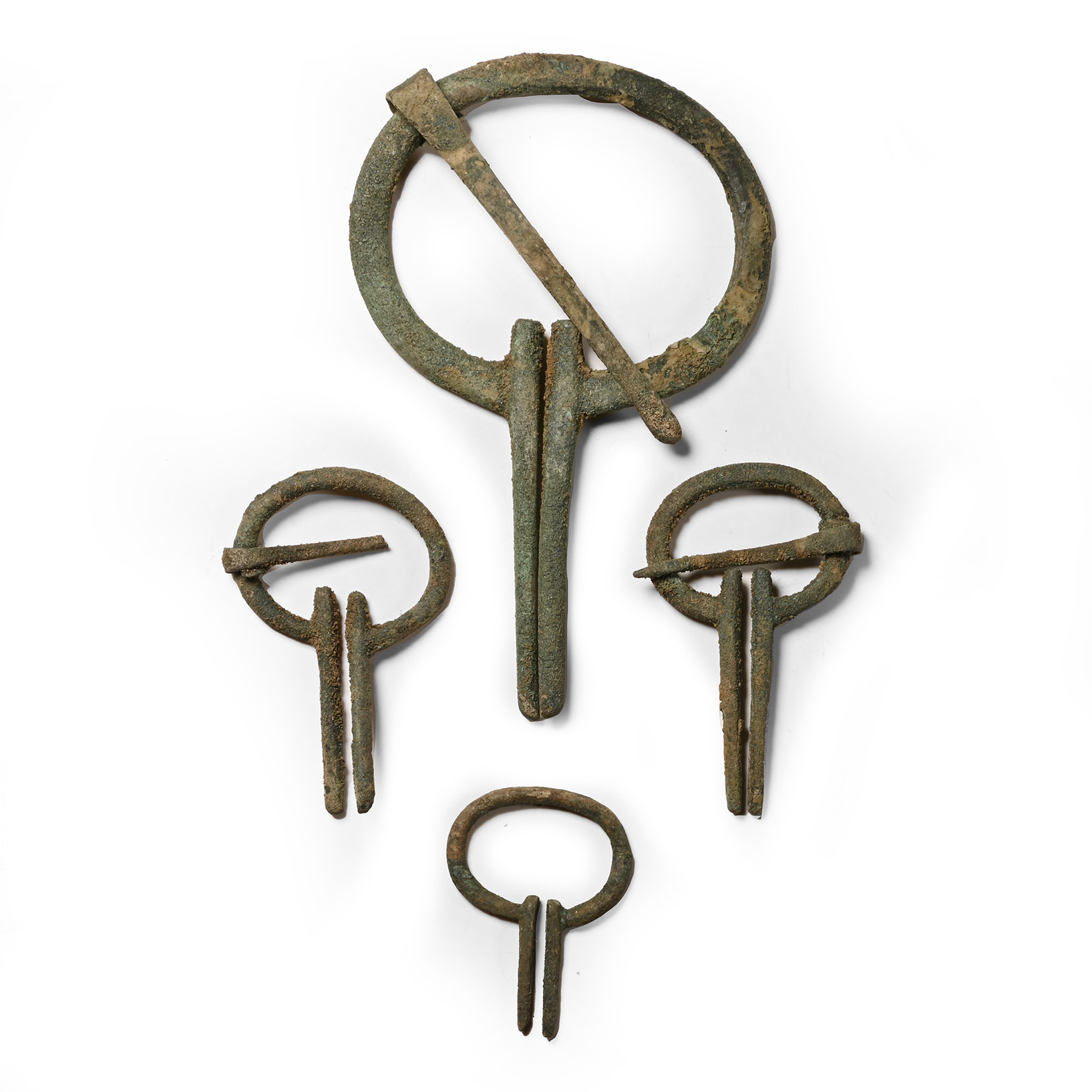
LOT 1772
Pre-Viking Bronze Penannular Brooch Collection
6TH-8TH CENTURY A.D.
1 3/8 - 4 in. (56 grams total, 3.6-10 cm).
Penannular brooches each with two parallel arms running perpendicular to the ends of the ring; Finnish or Baltic type. [4, No Reserve]
ProvenanceAcquired on the European art market since the early 2000s.
From the private Northern Ireland collection of R.M.
Cf. Sedov, B.B., Finno-Ugri i Balti v Epokhi Srednevekovija, Moscow, 1987, pl.XXVIII(2,3), XXXIII item 11.
CONDITIONTimeLine Auctions follows a vetting process to ensure the authenticity and legality of all items, reinforcing our commitment to integrity and responsible trading. Each antiquity, antique, and coin lot undergoes thorough examination by a vetting committee of at least ten external specialists, professional trade association members, scientists, and archaeologists: Our Vetting Process
AUCTIONS:
TimeLine is a leading auction house specialising in antiquities, ancient art, collectables, natural history, coins, medals, and books. Our auctions offer museums, collectors, historians, and enthusiasts the opportunity to acquire unique and historically significant pieces.
-
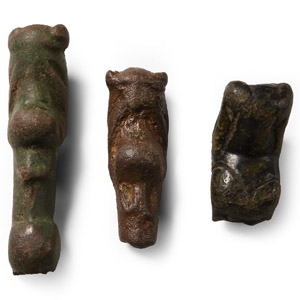
Anglo-Scandinavian Bronze Stirrup Mount Terminal Group
Circa 11th century A.D.Sold for (Inc. bp): £46
With beast-head and other detailing, hollow to the reverse. 51.4 grams total, 28-48 mm
Acquired on the European art market since the early 2000s. From the private Northern Ireland collection of R.M. -
.jpg)
Scandinavian Viking Bronze Drum Brooch with Interlaced Panels
8th-9th century A.D.Sold for (Inc. bp): £1,560
With four raised arms and central knop to the upper face, all with punched ring-and-dot detailing; the outer sidewall with four panels of knotwork, dividing vertical stems with ring-and-dot motif, each with a D-shaped protrusion; the upper face with dense zoomorphic ornament; pin and separate catchplate to the underside with central hole, five studs retaining it to the upper. 71.6 grams total, 45 mm
Fine condition, pin intact, backplate slightly cracked.
UK gallery, acquired in the 2000s. Property of an English gentleman. This lot has been checked against the Interpol Database of stolen works of art and is accompanied by search certificate no.11406-192532.
The type is known as a 'drum' brooch or 'box' brooch. They were apparently manufactured on the island of Gotland and all known examples probably have their origin there. Over time, the refinement of the earlier types (such as the present example) is superseded by cruder decoration consisting of dimples or simple dots. -
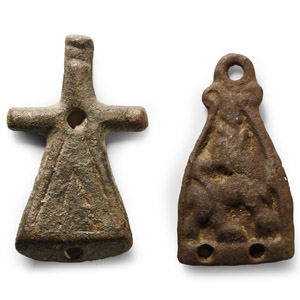
Anglo-Scandinavian Viking Bronze Stirrup Apex Mount Group
11th century A.D.Sold for (Inc. bp): £156
Comprising: a tongue-shaped mount of Williams's Class A Type II with pierced trefoil final, high-relief wolf in profile with head raised, two rivet-holes to the base and narrow ledge to the reverse; a triangular mount of Williams' Class A Type 14 with three radiating arms at the apex and rivet-hole between, low-relief chevron to the plaque, angled ledge to the lower edge with median rivet-hole. 43.3 grams total, 49-53 mm
Acquired on the UK art market in the 1980s. From an East Anglian private collection.
