
Loading, please wait...


LOT 2220
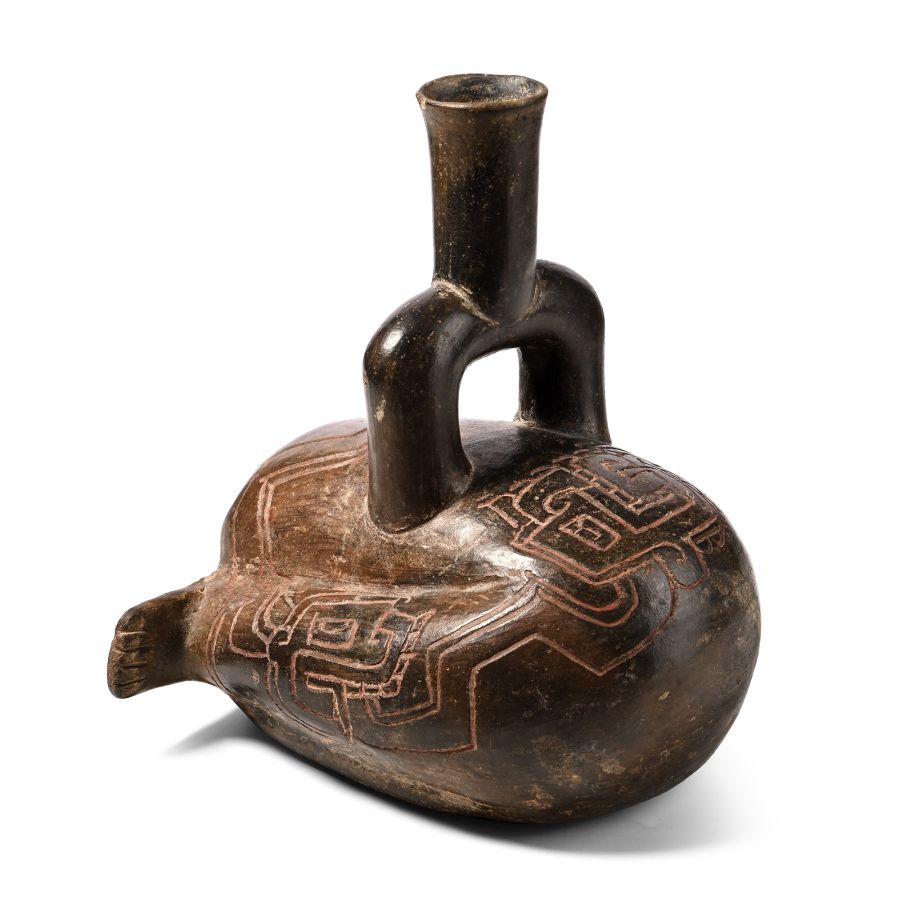
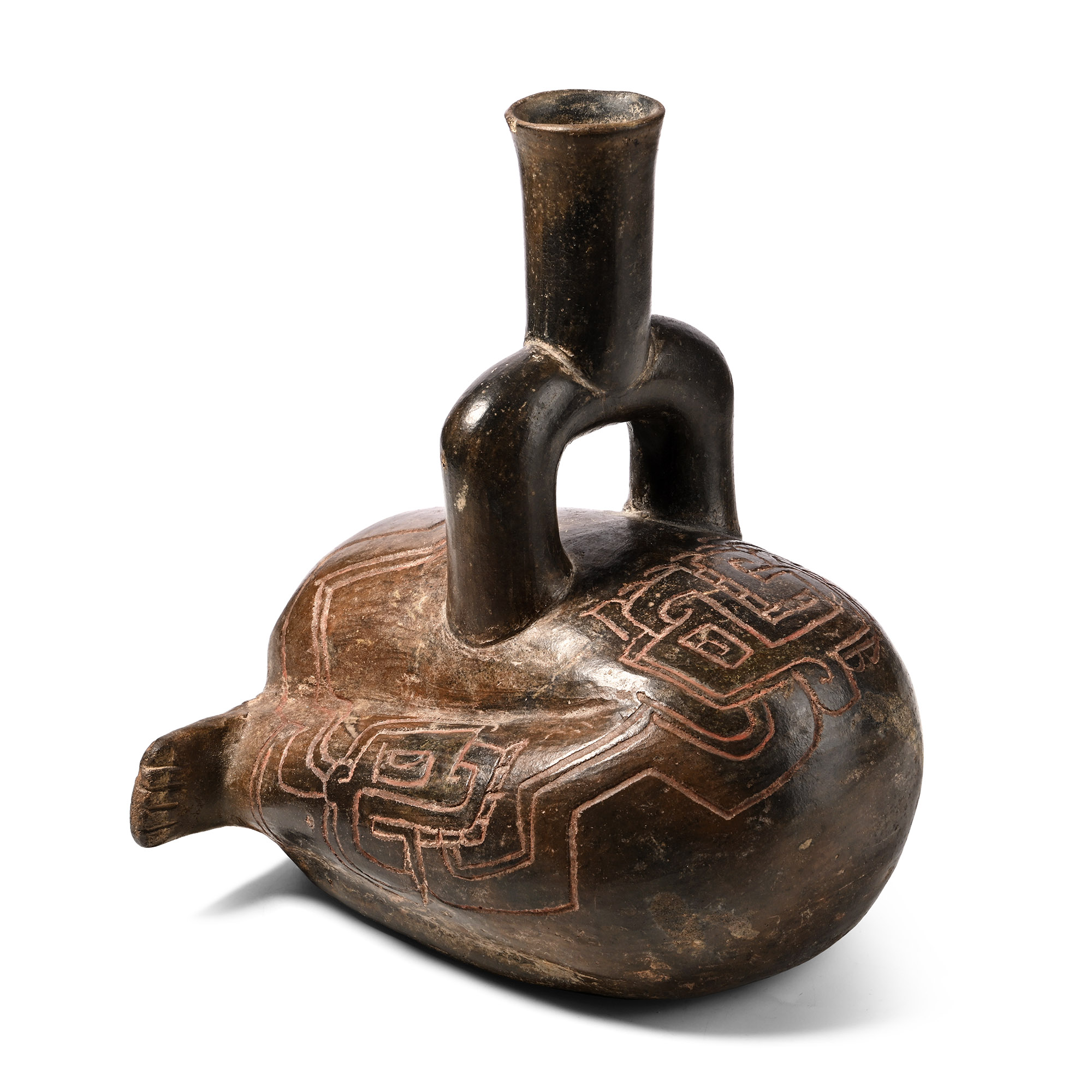
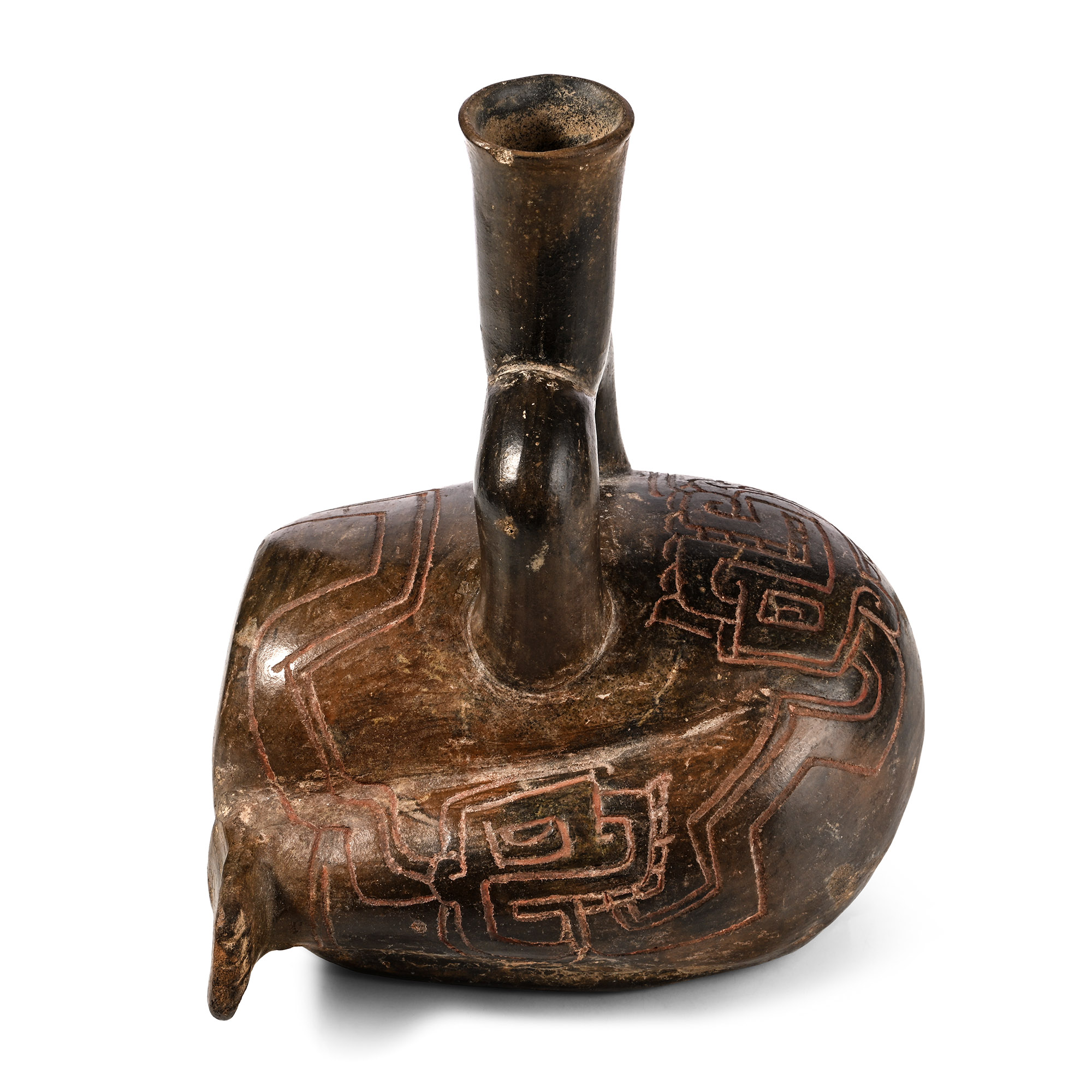
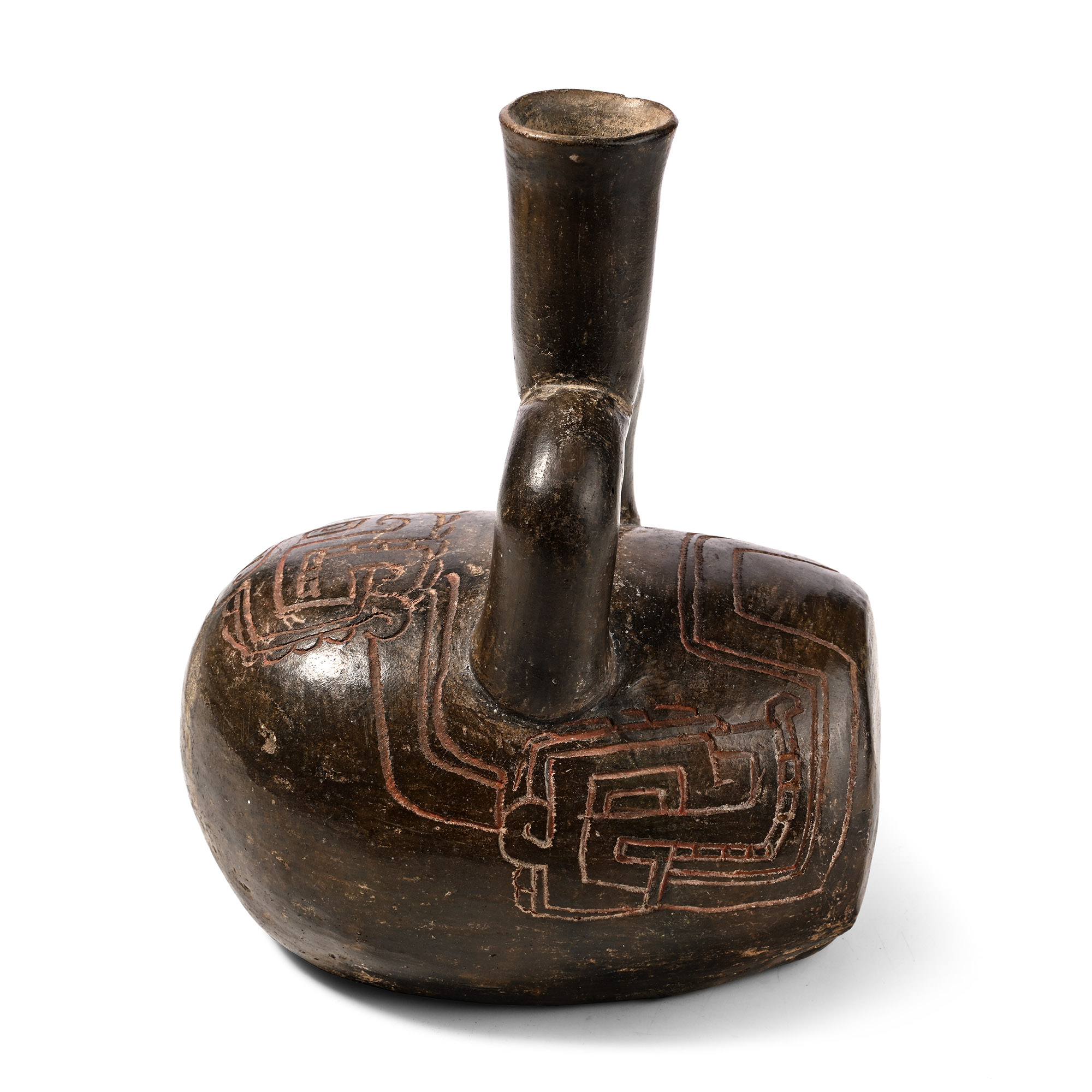
Pre-Columbian Tembladera Pottery Stirrup Vessel
CHAVIN CULTURE, TEMBLADERA PHASE, 1200-1000 B.C.
7 1/2 in. (609 grams, 19 cm high).
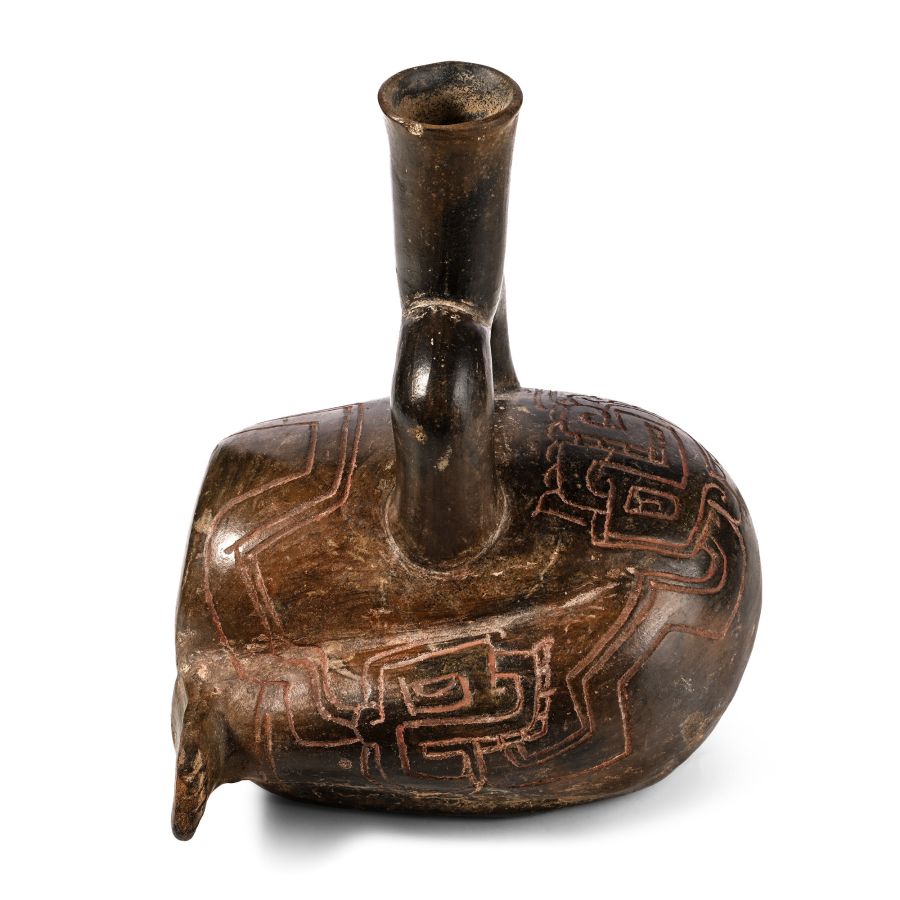
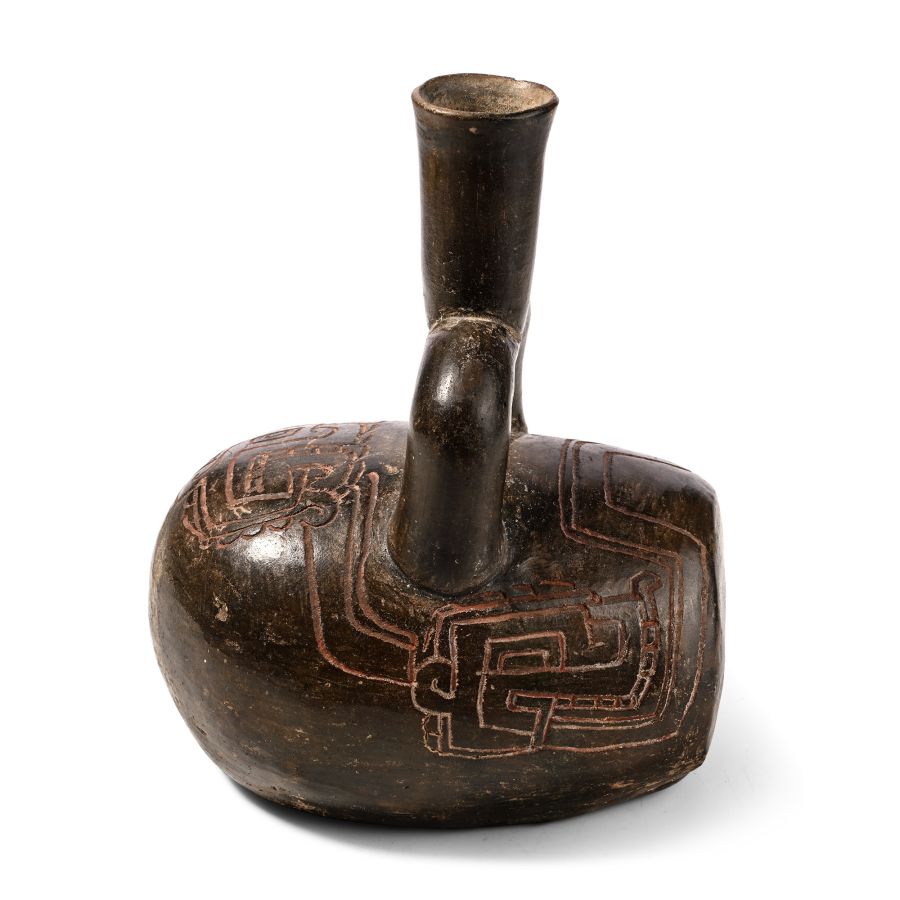
Modelled as a trophy leg; burnished pottery vessel with a planar base, a bulbous body shaped like a human thigh, shin, and foot; stirrup-shaped handle with broad corners, cylindrical spout with a flared lip; the upper face with incised glyphs: abstract jaguar-human heads bearing rectangular eyes, curled noses and ears, and gaping, toothy mouths; from each maw a flowing life-force trail that merges with the back of the next head; further embellished with red cinnabar pigment contrasted with the coffee-colored body; professionally repaired and restored.
ProvenanceHans Juergen Westermann, Germany, 1950s-1060s.
Private collection, Hawaii, USA.
with Artemis Gallery, 7 October 2020.
Private collection, London, UK.
Accompanied by a certificate of authenticity from Artemis Gallery.
A 'trophy leg' would occasionally be taken from a defeated enemy combatant along with the head.
CONDITIONTimeLine Auctions follows a vetting process to ensure the authenticity and legality of all items, reinforcing our commitment to integrity and responsible trading. Each antiquity, antique, and coin lot undergoes thorough examination by a vetting committee of at least ten external specialists, professional trade association members, scientists, and archaeologists: Our Vetting Process
AUCTIONS:
TimeLine is a leading auction house specialising in antiquities, ancient art, collectables, natural history, coins, medals, and books. Our auctions offer museums, collectors, historians, and enthusiasts the opportunity to acquire unique and historically significant pieces.
-
Pre-Columbian Tembladera Pottery Stirrup Vessel
Chavin Culture, Tembladera phase, 1200-1000 B.C.Sold for (Inc. bp): £1,820
Modelled as a trophy leg; burnished pottery vessel with a planar base, a bulbous body shaped like a human thigh, shin, and foot; stirrup-shaped handle with broad corners, cylindrical spout with a flared lip; the upper face with incised glyphs: abstract jaguar-human heads bearing rectangular eyes, curled noses and ears, and gaping, toothy mouths; from each maw a flowing life-force trail that merges with the back of the next head; further embellished with red cinnabar pigment contrasted with the coffee-colored body; professionally repaired and restored. 609 grams, 19 cm high
Hans Juergen Westermann, Germany, 1950s-1060s. Private collection, Hawaii, USA. with Artemis Gallery, 7 October 2020. Private collection, London, UK. Accompanied by a certificate of authenticity from Artemis Gallery.
A 'trophy leg' would occasionally be taken from a defeated enemy combatant along with the head. -
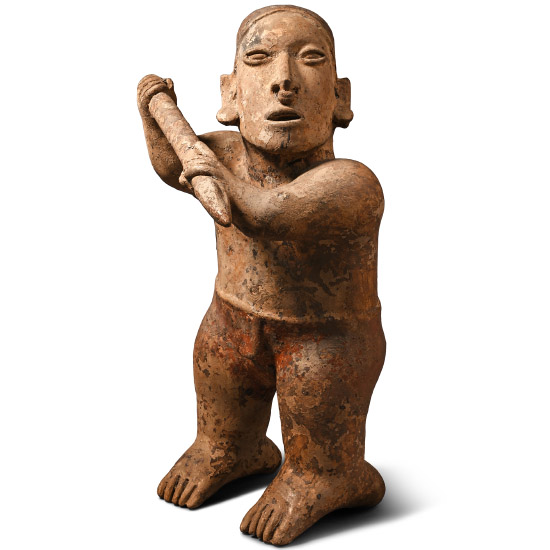
Jalisco Ceramic Figure of a Warrior
West Mexico, circa 200 B.C.-300 A.D.Sold for (Inc. bp): £1,820
Hollow-formed terracotta warrior in aggressive stance, holding a club menacingly in both hands, and wearing jewellery in the nose and ears, and a red loincloth knotted at the front, the face with painted detailing and a painted collar around the neck. 3.57 kg, 37.5 cm
Private collection of Leo (1922-1979) and Evelyn D. Farland (1930-2025), New York, thence by descent.
Jalisco warrior or guardian figures were produced to accompany and protect the deceased. The barrel-shaped armour and weapons adorning these figures offer a rare glimpse into how warfare may have been conducted in ancient west Mexico. -
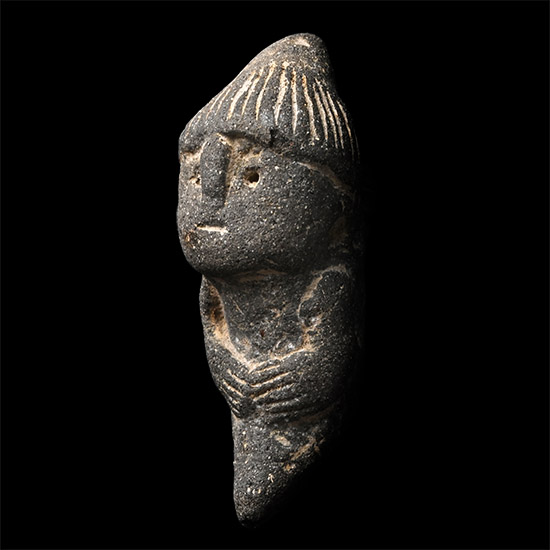
Pre-Columbian Anthropomorphic Terracotta Figure
Regional Development Period, 300 B.C.-600 A.D.Sold for (Inc. bp): £98
Depicting a highly stylised anthropomorphic character standing frontally, with a disproportionately large head, schematic facial features, and arms crossed over the chest, with the hands carefully indicated; the hair, or possibly a close-fitting headdress, rendered by a series of deeply incised parallel groove; the body tapering to a conical lower section, emphasising the abstract character of the representation; dark grey to black firing, with traces of light-coloured mineral encrustations. 8.18 grams, 41 mm
Acquired on the European art market in 1990s. English private collection.
