
Loading, please wait...
LOT 2711
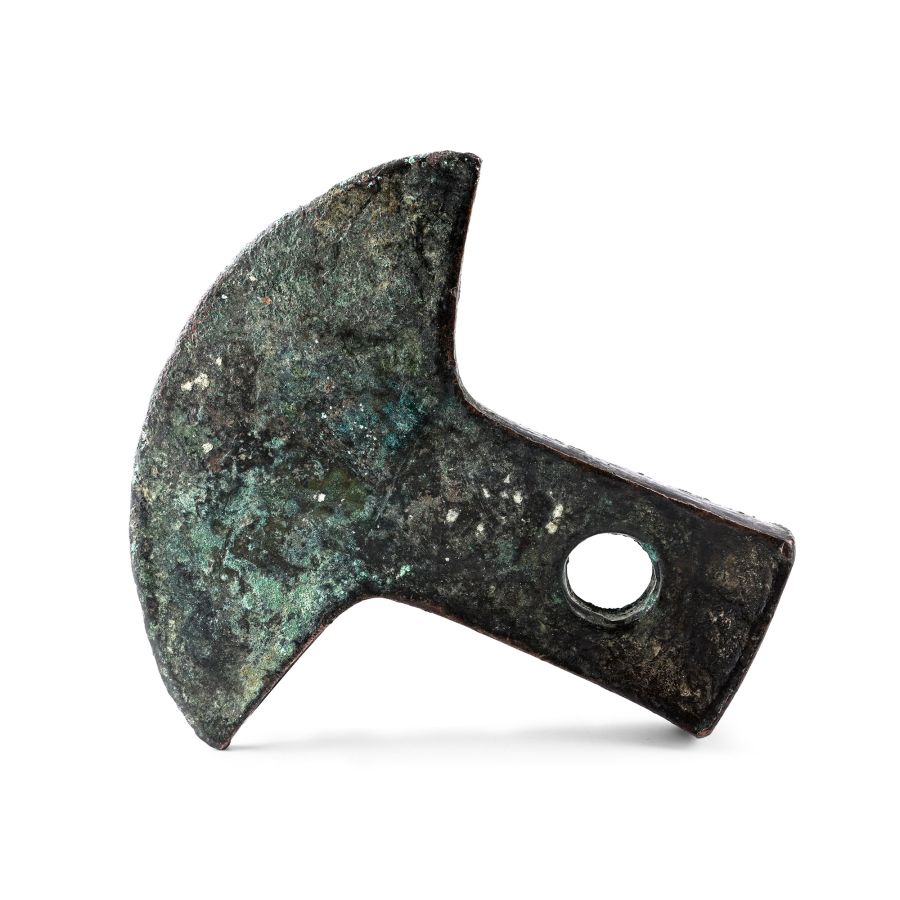
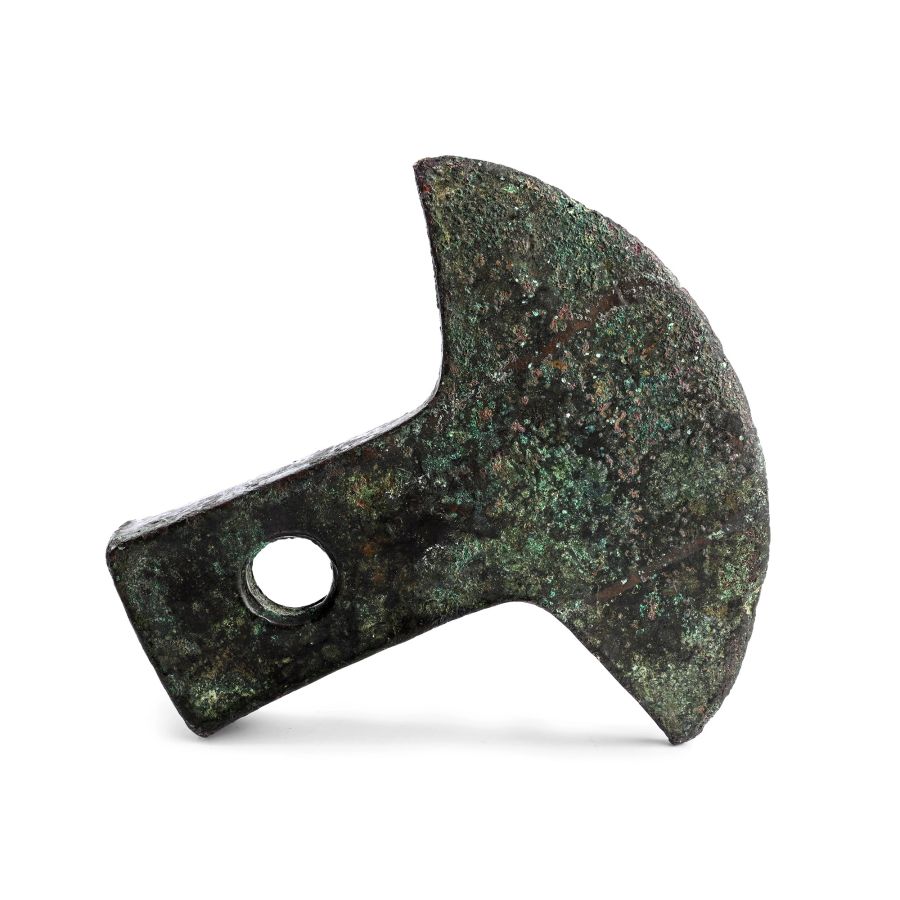
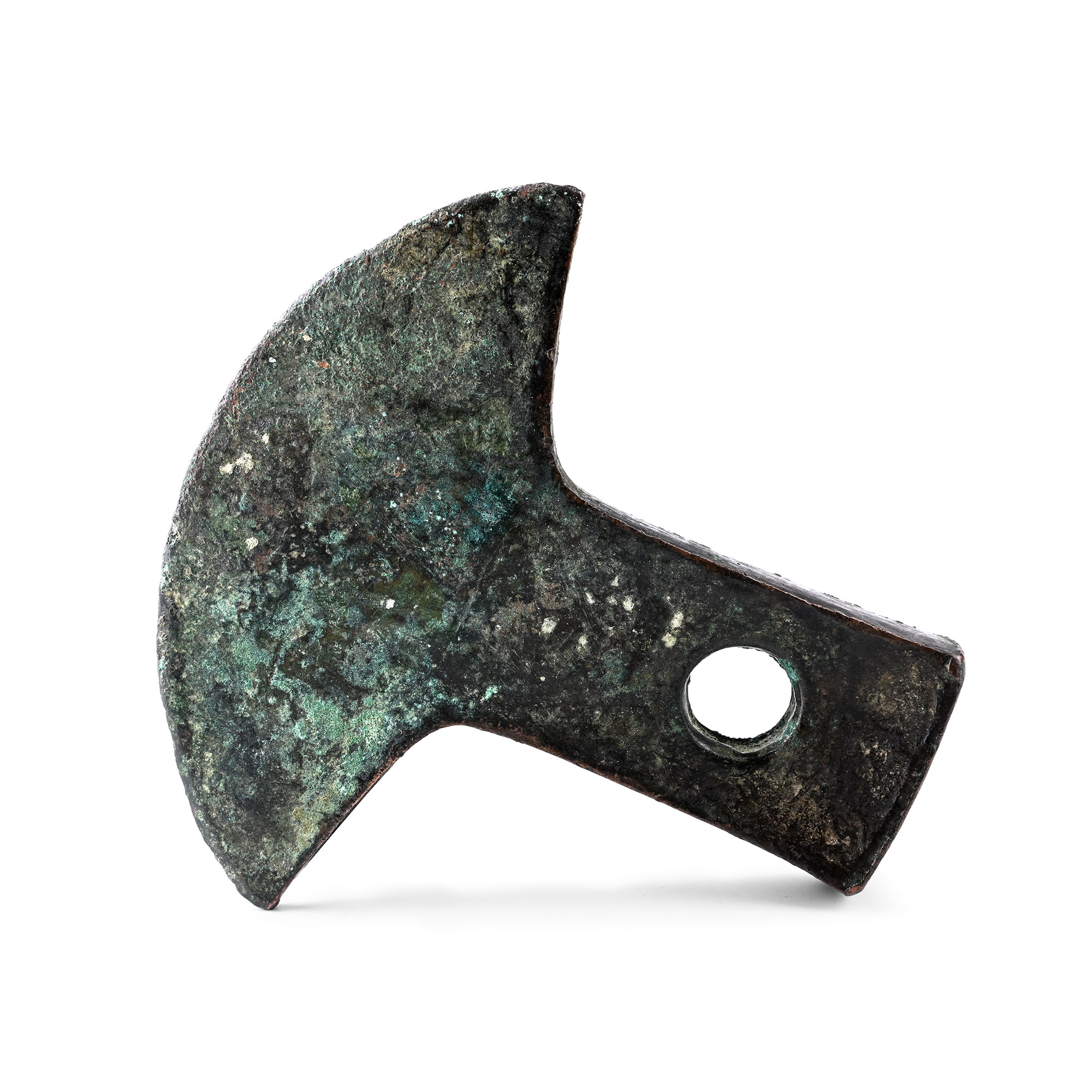
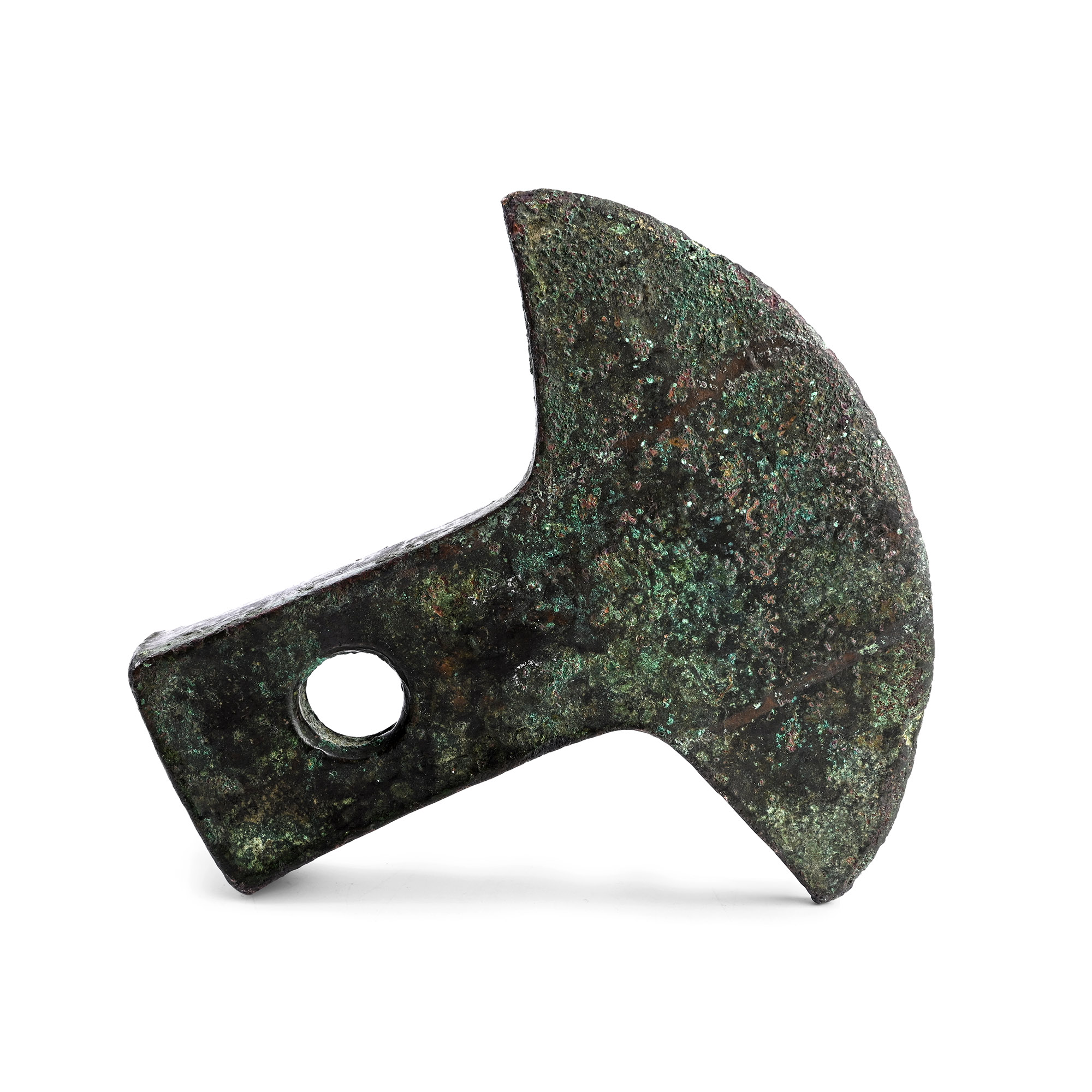
Pre-Columbian Semilunar 'Tumi Bronze Knife
INCA, 500 A.D.
5 5/8 in. (740 grams, 14.3 cm).
Curving blade and rectangular shank to rear with large central socket; square butt.
ProvenancePrivate collection, Israel.
Acquired in the 1992.
Private collection, Switzerland, thence by descent.
Private collection, since the late 1990s.
The Inca inherited a sophisticated metalworking tradition whose origins long predated the rise of their empire. Drawing on skilled artisans from across their territories, especially the north coast, they produced a wide range of objects in gold, silver, copper, and bronze at centres such as Cuzco. Among the most characteristic metal forms of the Inca period were tumis, ceremonial knives typically made of copper or tin bronze, distinguished by a long, curved blade set at a right angle to the handle. These handles could be flat or cylindrical and were often ornamented, while loops at the top suggest that some were suspended from the belt or worn as pendants. Tumis held an important place in ritual life in the Andes and had long been associated with sacrifice, both in ceremonial practice and in visual imagery, where they frequently appear in the hands of deities or supernatural beings. This example is especially striking: the upper handle is formed as the strong talons of a bird of prey, and the textured shaft recalls the rough surface of a raptor’s leg. Such imagery would have carried powerful associations with death and sacrifice, as scavenging and predatory birds were naturally linked with both. The blade also preserves textile impressions, probably the result of long burial.
CONDITIONTimeLine Auctions follows a vetting process to ensure the authenticity and legality of all items, reinforcing our commitment to integrity and responsible trading. Each antiquity, antique, and coin lot undergoes thorough examination by a vetting committee of at least ten external specialists, professional trade association members, scientists, and archaeologists: Our Vetting Process
AUCTIONS:
TimeLine is a leading auction house specialising in antiquities, ancient art, collectables, natural history, coins, medals, and books. Our auctions offer museums, collectors, historians, and enthusiasts the opportunity to acquire unique and historically significant pieces.
LOT 2711
Pre-Columbian Semilunar 'Tumi Bronze Knife
Estimate £800 - 1,000€930 - 1,160 (for guidance only)$1,080 - 1,350 (for guidance only)
-
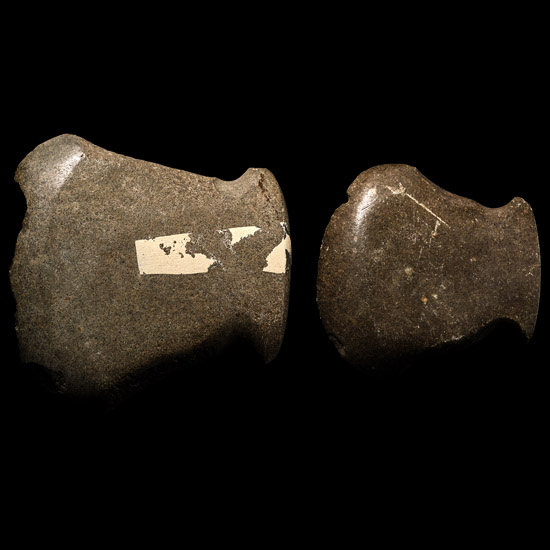
Pre-Columbian Polished Stone Axe Head Group
Inca, circa 1438-1533 A.D.Sold for (Inc. bp): £65
Each D-shaped in plan with broad cutting edge and transverse ledge to rear. 536 grams total, 75-93 mm
From the collection of a Hampshire, UK, gentleman, established from the 1960s. -
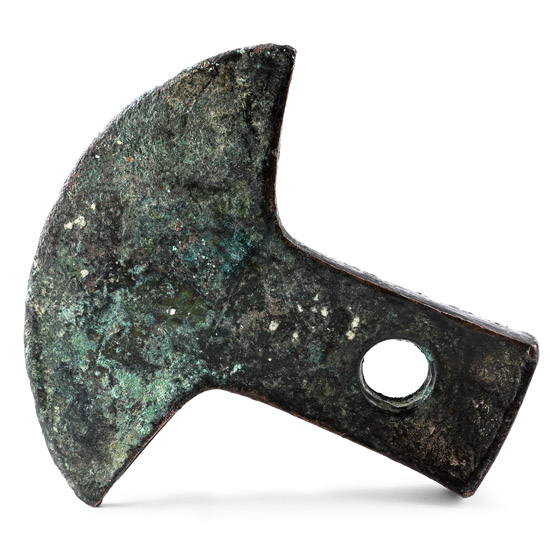
Pre-Columbian Semilunar 'Tumi Bronze Knife
Inca, 500 A.D.Estimate: £800 - 1,000 (‡+bp*)
Opening Bid: £400
Curving blade and rectangular shank to rear with large central socket; square butt. 740 grams, 14.3 cm
Private collection, Israel. Acquired in the 1992. Private collection, Switzerland, thence by descent. Private collection, since the late 1990s.
The Inca inherited a sophisticated metalworking tradition whose origins long predated the rise of their empire. Drawing on skilled artisans from across their territories, especially the north coast, they produced a wide range of objects in gold, silver, copper, and bronze at centres such as Cuzco. Among the most characteristic metal forms of the Inca period were tumis, ceremonial knives typically made of copper or tin bronze, distinguished by a long, curved blade set at a right angle to the handle. These handles could be flat or cylindrical and were often ornamented, while loops at the top suggest that some were suspended from the belt or worn as pendants. Tumis held an important place in ritual life in the Andes and had long been associated with sacrifice, both in ceremonial practice and in visual imagery, where they frequently appear in the hands of deities or supernatural beings. This example is especially striking: the upper handle is formed as the strong talons of a bird of prey, and the textured shaft recalls the rough surface of a raptor’s leg. Such imagery would have carried powerful associations with death and sacrifice, as scavenging and predatory birds were naturally linked with both. The blade also preserves textile impressions, probably the result of long burial. -
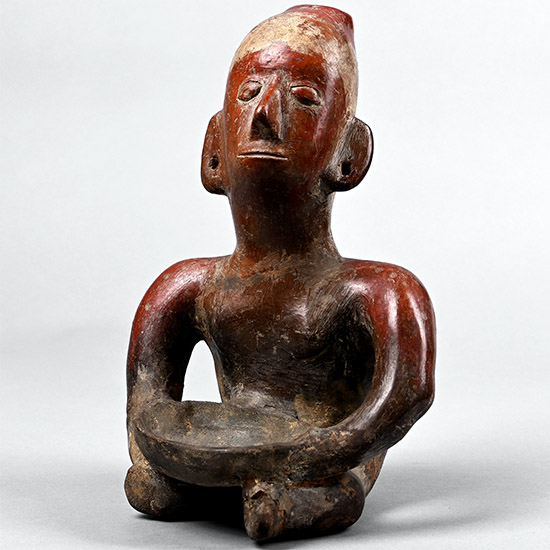
Colima Culture Terracotta Seated Figure
Circa 200 B.C.-300 A.D.Sold for (Inc. bp): £520
Hollow-formed figure in sitting pose with stub legs and shallow bowl on the lap; broad shoulders and bowed arms, elongated head with lentoid eyes and large ears pierced at the lower edge to accept rings; conical upper head developing to a spout; traces of pigment. 1.71 kg, 27 cm high
Previously in the private collection of Leo (1922-1979), and Evelyn D. Farland (1930-2025), New York; thence by descent.
